The #1 Musical Experience

The #1 Musical Experience

By Herb WilliamsArtsPerforming Arts
Download on the App Store

The #1 Musical Experience episodes

  • Violin Partita no. 2, BWV 1004 - 5. Chaconne [Piano arrangement]
    Johann Sebastian Bach wrote his Partita in D minor for solo violin, BWV 1004, from the year 1717 to 1723. It has been suggested that this partita, and especially its last movement, was conceived as a tombeau in memory of Bach's first wife Maria Barbara Bach (who died in 1720). The partita contains five movements, given in Italian as: Allemanda, Corrente, Sarabanda, Giga and Caccona.

    Hosted on Acast. See acast.com/privacy for more information.

    16 min
  • Favorites From The 50's
    A Certain Smile - A Teenager's Romance
    Among My Soveniers- Anytime Anywhere
    April Love - At The Hop
    Baby Talk - Bad Motorcycle
    Bananna Boat Song - Be My Guest
    Beep Beep - Beyond The Sea
    Bill Naley and The Comets
    Blue Suede Shoes - Blue Berry Hill
    Bobby Darin - Bonie Maronie
    Book Of Love - Born Too Late
    Bossa Nova Cassanoves - Party Doll

    Hosted on Acast. See acast.com/privacy for more information.

    51 min
  • The Classic String Ensemble - 1st Movement - Allegro vivace
    A string orchestra is an orchestra consisting solely of a string section made up of the bowed strings used in Western Classical music. The instruments of such an orchestra are most often the following: the violin, which is divided into first and second violin players (each usually playing different parts), the viola, the cello, and usually, but not always, the double bass.

    String orchestras can be of chamber orchestra size ranging from between 12 (4 first violins, 3 second violins, 2 violas, 2 cellos and 1 bass = 12) and 21 musicians (6 first violins, 5 second violins, 4 violas, 4 cellos and 2 double basses= 21) sometimes performing without a conductor. It could also consist of the entire string section of a large symphony orchestra which could have 60 musicians (16 first violins, 14 second violins, 12 violas, 10 cellos and 8 double basses = 6

    Hosted on Acast. See acast.com/privacy for more information.
    41 min
  • Schubert Chamber Group String Quintet In Cmajor II - Adagio
    Schubert String Quintet

    The String Quintet in C major, D. 956 - and often referred to as Op. posth. 163- was Franz Schubert's final chamber work. It is a cello quintet, in the sense that it is scored for a standard string quartet lineup plus an additional cello -with the viola being by far the most common choice. The work has been described as a chamber music masterpiece, and since its public performance in 1850 and its publication in 1853, it has gained status as one of Schubert's finest works.

    Hosted on Acast. See acast.com/privacy for more information.

    16 min
  • Giuseppe VerdiVoice(s) and Piano Attila
    Verdi Attila
    Sheet MusicGiuseppe VerdiVoice(s) and Piano Attila
    Attila is an opera in a prologue and three acts by Giuseppe Verdi to an Italian libretto by Temistocle Solera, based on the 1809 play Attila, König der Hunnen (Attila, King of the Huns) by Zacharias Werner. The opera received its first performance at La Fenice in Venice on 17 March 1846.
    About this Piece

    Hosted on Acast. See acast.com/privacy for more information.

    29 min
  • Bunch a Banjos on Broadway= Phillip Frederick “Freddy Morgan” Morgenstern
    American banjo musician, comedian, actor, songwriter and entertainer who gained fame as a featured member of the Spike Jones Band from 1947 to 1958. Born in New York City and raised in Cleveland Ohio, he went by "Freddy" since childhood. At age of 9, he began playing the ukulele after recovering from a serious accident. He studied banjo with Eddie Connors and at the age of 14, then teamed up with a school mate and fellow banjo enthusiast named Leo Livingston. The pair billed themselves as Morgan and Stone, and struck out for Broadway where they met with success. Morgan and Stone went on a 36-week nationwide tour, then traveled Europe and played the vaudeville circuit. Next, he teamed up with Australian banjoist Wally Hadley to form Morgan and Hadly from which a few recordings were produced in England.

    At the outbreak of WWII, he was stranded in Europe, and helped found the European Theater Artists Group, a forerunner to the United Service Organization (USO) to entertain troops abroad. When the war ended, Morgan auditioned for Spike Jones by telephone, spending 35 minutes barking like a dog and imitating Edward G. Robinson during the effort. For 11 years, he performed as a featured banjo player for Spike Jones, bringing laughter to audiences with his bowl haircut, his goofy grin and his absolute comedic personality.

    Morgan was always a first-rate player whose spirited performances contributed to a rise in banjo popularity over his lifetime. By the mid to late 1950's, he began branching out, first forming a banjo troup called the Sunnysiders which produced a hit record in 1955 called "Hey, Mr. Banjo", a nickname that stuck with him thereafter in show billings and musical references. A solo recording for Verve records came out in 1957 with his iconic mug gracing the cover. His final year with the City Slickers was in 1958.

    He was perpetually busy entertaining in clubs, fairs and concerts to his very last day, a Christmas time performance for veterans at the Oak Knoll Veterans Hospital in Oakland, California, when a heart attack ended his life during his performance. He was 60 years old.

    Hosted on Acast. See acast.com/privacy for more information.

    14 min
  • Carles Trepat - Spanish classical guitar
    Carles Trepat is a Spanish classical guitarist. He has won several international prizes, including the "Premio Tárrega" in the "Certamen Internacional Francisco Tárrega de Benicàssim". In July 2014, he was awarded with the "Honorific Prize José Tomás" in Petrer

    Hosted on Acast. See acast.com/privacy for more information.

    48 min
  • Giuseppe Verdi - Falstaff - 3
    Verdi's last opera, Falstaff, was his first comic opera in over 50 years. Verdi and his librettist, Boito, kept the composition secret since Verdi was somewhat less comfortable with comic opera, and he wanted to have the option of canceling the production—even after the dress rehearsal. Boito's libretto has its basis in Shakespeare's The Merry Wives of Windsor with additional material from Henry VI, parts 1 and 2. The premiere at the Teatro alla Scala was a triumph, but, as always, Verdi continued to make adjustments to the score for both the Rome and Paris premieres; these changes were incorporated into the final version of the score.

    Hosted on Acast. See acast.com/privacy for more information.

    23 min
  • Bach- French Suite no. 6, BWV 817
    The French Suites, BWV 812–817, are six suites which Johann Sebastian Bach wrote for keyboard between 1722-25. Although suites 1–4 are typically dated to 1722, it is possible that the first was written somewhat earlier. They were later given the name French. Likewise, the English Suites received a later appellation. The name was popularised by Bach's biographer Johann Nikolaus Forkel, who mentioned they were written in the French style. This, however, is inaccurate: like Bach's other suites, they follow a largely Italian convention. There is no surviving definitive manuscript of these suites, and ornamentation varies both in type and in degree across manuscripts. Some of the manuscripts that have come down to us are titled "Suites Pour Le Clavecin", which is what probably lead to the tradition of calling them "French" Suites.

    Hosted on Acast. See acast.com/privacy for more information.
    15 min
  • The Magic Harp, D. 644 - Overture. Rosamunde, Op. 26,
    The Magic Harp (Die Zauberharfe), D.644, is the incidental music composed for the play of the same name by F. Schubert. Written in 1819, premiered in 1820 in Vienna, and first published in 1891, the overture to this work has been long asociated with the Rosamunde incidental music, probably because they were first published together.

    Hosted on Acast. See acast.com/privacy for more information.
    59 min

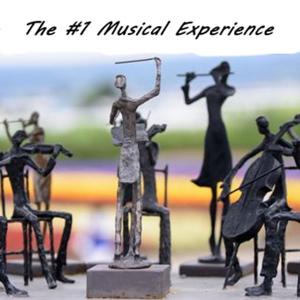
About The #1 Musical Experience

From the publisher's feed

Works of classical repertoire often exhibit complexity in their use of orchestration, counterpoint, harmony, musical development, rhythm, phrasing, texture, and form. Whereas most popular styles are…

More shows like The #1 Musical Experience

Classical Performance by Classical Performance

Classical Performance

348 Listeners

Classical Music Free by Shiloh worship music

Classical Music Free

199 Listeners

Sticky Notes: The Classical Music Podcast by Joshua Weilerstein

Sticky Notes: The Classical Music Podcast

2,182 Listeners

Boring Books for Bedtime Readings to Help You Sleep by Sharon Handy

Boring Books for Bedtime Readings to Help You Sleep

1,261 Listeners

Sleep - Meandering Piano by Meandering Piano

Sleep - Meandering Piano

256 Listeners

I Can’t Sleep by Benjamin Boster

I Can’t Sleep

1,057 Listeners

Get Sleepy: stories for sleep by Slumber Studios

Get Sleepy: stories for sleep

9,350 Listeners

Sleep Tight Relax - Bedtime Stories That Take You Somewhere Peaceful by Sleep Tight Media | Calming Bedtime Podcasts for Kids & Starglow Media

Sleep Tight Relax - Bedtime Stories That Take You Somewhere Peaceful

886 Listeners

Just Sleep - Bedtime Stories for Adults by Bedtime Stories with Taesha Glasgow

Just Sleep - Bedtime Stories for Adults

756 Listeners

Sleep Magic: Sleep Hypnosis & Meditation for Sleep Podcast by Sleepiest: Hypnosis for Sleep Podcast

Sleep Magic: Sleep Hypnosis & Meditation for Sleep Podcast

1,613 Listeners

White Noise and Sleep Sounds (12 Hours) by White Noise and Sleep Sounds (12 Hours) to Sleep | Study | Relax | Soothe a Baby

White Noise and Sleep Sounds (12 Hours)

236 Listeners

Sounds for Deep Sleep: White Noise, Ambience, Nature Sounds by Sounds for Deep Sleep

Sounds for Deep Sleep: White Noise, Ambience, Nature Sounds

92 Listeners

Sleep & Relaxation Music to Calm the Nervous System by SOMA Sound

Sleep & Relaxation Music to Calm the Nervous System

129 Listeners

Boring History for Sleep by Velvet

Boring History for Sleep

560 Listeners