
Sign up to save your podcasts
Or

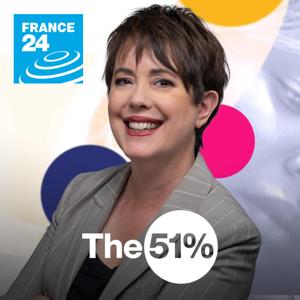


Now when you think of a psychopath, what images immediately come to mind? Most likely that of a man; be it Adolf Hitler, Jack the Ripper, Charles Manson or Joseph Stalin. Not so, says Annette Young's guest this week. Miriam Frankel, the Senior Science Editor at the Conversation Media Group, talks about why scientists have been seemingly reticent to explore dark traits among women. Also Western governments are massively slashing foreign aid budgets as they boost spending on defence with aid organisations saying it will be women and girls who will bear the brunt of such moves. Plus how the ballerinas from the Ukrainian national ballet have found a new lease of life as their art becomes a form of resistance.
With Donald Trump back in the White House; they've become the most controversial initials. That's DEI or diversity, equity and inclusion programs promoting equality in the workplace. The US president has declared war on DEI, declaring it to be "immoral." So what does it mean beyond American shores? Annette Young asks Dr Marcelle Laliberté, Chief DEI Officer at HEC, France's leading business school.
A few concepts arguably dominated remarks at the Artificial Intelligence Action Summit in Paris this February: inclusivity, ethics and deregulation. Debates about these themes, complimentary for some but conflicting for others, will have a significant impact on whether the technology can or will be used to address societal ills, including gender inequality. While the French government highlighted its pursuit of inclusive, open and safe AI, some of the world's biggest leaders in technology, including the US and the UK, refused to sign the joint declaration vowing to do the same. With the White House both ideologically opposed to such objectives and even linking them to stifled innovation, is it possible to use artificial intelligence as a tool to pursue gender equality? Erin Ogunkeye spoke to Dr. Eleanor Drage, senior research fellow at the University of Cambridge and Zinnya del Villar, Director of Data, Technology and Innovation at Data-Pop Alliance.
The brutal murder of Olympic runner Rebecca Cheptegei in September 2024 brought renewed global attention to a silent epidemic in Kenya: femicide and other forms of violence against women. With nearly 100 women murdered by men in just three months, 2024 was one of the deadliest years on record for Kenyan women. With mentalities slow to change and in the absence of a meaningful response from the government, some Kenyan women are taking matters into their own hands by enrolling in self-defence classes. And while William Ruto's government unveiled a 42-member task force to address gender-based violence in January, feminist activists are already voicing concerns it will do little make a significant impact. Erin Ogunkeye spoke to feminist and security professor Awino Okech of SOAS University of London for more. She's also the director of the Feminist Centre for Racial Justice.
In this edition, how amid grief comes strength. Mothers in the Brazilian city of Rio de Janeiro who lost their children due to gang violence, form a support network which also fights for justice. Also South Africa has one of the highest rates of femicide in the world yet despite this, half of the safe houses for domestic violence survivors in Cape Town, are facing closure. Plus we meet a group of Buddhist Nepalese nuns who've taken up kung fu as they seek to promote female empowerment.
In a special edition, we focus on how Afghanistan under the Taliban, has literally become hell on earth for women and girls. Annette Young meets Fawzia Koofi, a women's rights activist and a former member of the Afghan parliament who has also survived several assassination attempts. The two talk about the need for international efforts to end gender apartheid and the role of international sporting boycotts. Also, our colleagues at FRANCE 2 meet a group of Afghan women exiled in Paris who are producing a TV broadcast for women still living inside Afghanistan, offering a much-needed spark of hope.
With Donald Trump re-entering the White House, what will it mean for American women this time around? Annette Young talks to Carter Sherman, the reproductive health reporter for the Guardian US. Also the gender divide in South Korea is becoming all the more evident during this latest political crisis over the arrest of President Yoon Suk Yeol; with young men protesting against his impeachment while their female peers called for him to be detained. Plus the rise of e-sports or video gaming in China and how once again, women are finding themselves shut out of one of the world fastest-growing sectors.
Annette Young talks to American feminist writer, Soraya Chemaly, about her latest book, 'The Resilience Myth,' which questions the way we cope with trauma in our lives. Also how the fight against sexism and misogyny online has just got that much tougher due to Meta's decision to drop fact-checkers from Facebook and Instagram. Plus how women scientists in the Democratic Republic of Congo are seeking to encourage teenage girls to follow their path.
For the first show of 2025, we focus on that often-forgotten issue; girls' rights. Our team in Pakistan report on how climate change is resulting in a rise of child marriage in the country. Also we head to Senegal where the case of a nine-year-old girl, pregnant as a result of being raped by her Koran teacher, has sparked outrage particularly from human rights groups. Plus Annette Young talks to Memory Banda, a girls' rights activist in Malawi about how to engage communities in strengthening and protecting the rights of girls.
While Syrians celebrate the fall of Bashar al-Assad, concern is expressed over the need to protect women's rights in a country decimated by decades of cruel dictatorship. With Donald Trump heading back to the White House, what will it mean for women across the world particularly those reliant on US aid in the field of reproductive rights. Annette Young talks to journalist, Neha Wadekar, who's been investigating how right-wing American Christian groups are increasing their funding to the anti-abortion movement in Africa. And we meet noted Iranian singer, Sepideh Raissadat, who can perform everywhere except for her home country.
From the publisher's feed
A program about women who are reshaping our world. Join us every Friday at 4:15pm Paris time and check out our Facebook page: FRANCE24.51percent.

4 Listeners

0 Listeners

0 Listeners

2 Listeners

21 Listeners

5 Listeners

0 Listeners

4 Listeners

21 Listeners

6 Listeners

5 Listeners

39 Listeners

227 Listeners
3 Listeners
4 Listeners

5 Listeners

1 Listeners

0 Listeners
0 Listeners

0 Listeners