
Sign up to save your podcasts
Or

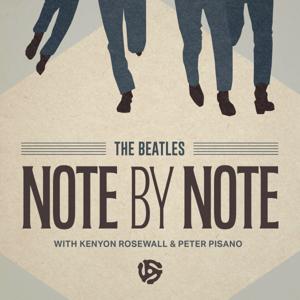


What happens when the Beatles take a Chuck Berry anthem and make it their own? In this episode, Peter and Kenyon dive into “Roll Over Beethoven,” a song they’d been playing since their earliest club days. Originally sung by John, the band handed vocal duties to George Harrison—an inspired choice that gave the track a youthful punch and raw authenticity. The hosts explore George’s biting vocal, slashing guitar tone, and how the Beatles’ version, recorded in just five takes, adds a muscular polish to Berry’s blueprint. They discuss the track’s place in the album With the Beatles and how George Martin halted Capitol Records from releasing it as a 1964 single. From live performance innovations to misheard lyrics and the infamous jelly bean attacks, this episode unpacks how “Roll Over Beethoven” became an early showcase of the Beatles’ roots, energy, and sheer charisma.
Website: https://www.notebynoteseries.com
Patreon: https://www.patreon.com/cw/NoteByNoteSeries
Instagram: https://www.instagram.com/notebynoteseries
Hosted on Acast. See acast.com/privacy for more information.
What happens when the Beatles take a Motown classic and make it their own? Please Mr. Postman was already a #1 hit for the Marvelettes, but John Lennon’s urgent, near-desperate vocal delivery transforms it into something raw and electrifying. In this episode, Peter and Kenyon explore how the Beatles' version differs from the original, from its tighter rhythm section to its heightened emotional intensity. The hosts discuss why this was the final girl-group cover the Beatles ever recorded and how their choice to include it reflected their deep admiration for American R&B. They also examine the recording session, highlighting the Beatles' decision to rework their live arrangement mid-session to better match the Marvelettes’ dynamic intro. Was this just a well-executed cover or something more? Join Peter and Kenyon as they break down Please Mister Postman and uncover why the Beatles’ version remains a fan favorite.
Website: https://www.notebynoteseries.com
Patreon: https://www.patreon.com/cw/NoteByNoteSeries
Instagram: https://www.instagram.com/notebynoteseries
Hosted on Acast. See acast.com/privacy for more information.
Could Till There Was You be the Beatles’ most unexpected choice for their early setlists? A show tune from The Music Man, it stood out in their catalog—earning both praise and skepticism from fans and even John Lennon himself. In this episode, Peter and Kenyon explore how Paul McCartney discovered the song through Peggy Lee’s jazz-infused version and why he insisted on including it in their performances. The hosts break down George Harrison’s intricate classical-inspired guitar work, Paul’s refined vocal delivery, and the song’s pivotal role in impressing George Martin at the Beatles' Decca audition. They also discuss how Brian Epstein strategically used Till There Was You to showcase the band’s versatility in high-profile performances, including the Royal Command Performance. A rare moment of theatrical elegance in the Beatles’ early years, this episode unpacks how the song helped shape their career and their ability to transcend genres.
Website: https://www.notebynoteseries.com
Patreon: https://www.patreon.com/cw/NoteByNoteSeries
Instagram: https://www.instagram.com/notebynoteseries
Hosted on Acast. See acast.com/privacy for more information.
Was "Little Child" ever meant to be sung by John Lennon? Originally intended as a showcase for Ringo Starr, the song took a different path when it proved a poor fit for his vocal range. In this episode, Peter and Kenyon explore how Lennon and McCartney crafted this high-energy track for With the Beatles, blending pounding piano, relentless harmonica, and a melody pulled from an unexpected Disney film. The hosts dive into the song’s chaotic recording process, which spanned multiple sessions and overdubs—unusual for the Beatles at the time. They also examine why Little Child feels unlike a typical Beatles track, from its bluesy aggression to its raw, almost punk-like intensity. Is it a hidden gem or just a throwaway rock and roll workout? Peter and Kenyon break down this frenetic, often-overlooked track, uncovering its unexpected influences and its place in the Beatles’ evolving sound.
Website: https://www.notebynoteseries.com
Patreon: https://www.patreon.com/cw/NoteByNoteSeries
Instagram: https://www.instagram.com/notebynoteseries
Hosted on Acast. See acast.com/privacy for more information.
In this lecture, Kenyon analyzes Little Child, a track from With the Beatles that began as a rejected Ringo Starr vocal before becoming one of the album’s most relentless rockers. Despite its simplicity, the song presents intriguing rhythmic and harmonic elements that set it apart from other early Beatles compositions. Kenyon examines its insistent triplet phrasing, harmonica-driven texture, and its lack of conventional song structure, leading to a sense of musical monotony that contrasts with the Beatles' usual dynamic approach. The lecture explores the peculiar lyrical choices, particularly the repeated use of "little child," and how cultural context may have shaped its phrasing. Additionally, Kenyon dissects the harmonic structure, noting the secondary dominants and jazz-inspired turnaround that hint at Lennon’s growing musical ambition. Through critical analysis, this lecture unpacks Little Child as both a curious outlier and a revealing study in the Beatles’ songwriting process.
Website: https://www.notebynoteseries.com
Patreon: https://www.patreon.com/cw/NoteByNoteSeries
Instagram: https://www.instagram.com/notebynoteseries
Hosted on Acast. See acast.com/privacy for more information.
What inspired George Harrison to write his first song, “Don’t Bother Me”? A bout of illness and some friendly pressure from Mersey Beat’s Bill Harry played a role. In this episode, Peter and Kenyon explore Harrison’s 1963 composition, marking his songwriting debut in the Beatles’ catalog. Written in a Bournemouth hotel room while George was bedridden, the track stands apart from Lennon-McCartney’s upbeat hits with its minor key and moody tone. The hosts discuss the song’s harmonic ambiguity, its unique blend of rock and Latin rhythms, and Harrison’s use of unconventional chords that add tension to the composition. They also delve into the recording process, including Ringo Starr’s use of a doumbek drum and the challenges of double-tracking George’s vocals. Discover why “Don’t Bother Me” is more than just a deep cut—it’s the first step in George Harrison’s journey as a songwriter.
Website: https://www.notebynoteseries.com
Patreon: https://www.patreon.com/cw/NoteByNoteSeries
Instagram: https://www.instagram.com/notebynoteseries
Hosted on Acast. See acast.com/privacy for more information.
In this lecture, Kenyon takes a detailed look at George Harrison’s songwriting debut with "Don’t Bother Me," from With the Beatles. Written during a bout of illness in a Bournemouth hotel room, the track showcases Harrison’s unique perspective, focusing less on heartbreak and more on isolation and frustration. Kenyon examines the song’s harmonic ambiguity, highlighting its blend of Dorian and Aeolian modes, and how its use of unconventional chord choices reflects Harrison’s experimentation. The session also explores the rhythmic complexity, with Latin-inspired percussion and George’s melodic phrasing, which outlines the pentatonic scale in fresh ways. Kenyon discusses how the song’s introverted themes and curmudgeonly tone differ from Lennon-McCartney’s approach, offering early insights into Harrison’s emerging voice as a songwriter. This lecture provides a comprehensive analysis of "Don’t Bother Me," revealing its place as a pivotal moment in Harrison’s artistic journey and the Beatles’ evolving sound.
Website: https://www.notebynoteseries.com
Patreon: https://www.patreon.com/cw/NoteByNoteSeries
Instagram: https://www.instagram.com/notebynoteseries
Hosted on Acast. See acast.com/privacy for more information.
What makes “All My Loving” the song that signaled a shift in the Beatles' dynamic? In this episode, Peter and Kenyon dive into Paul McCartney’s first major contribution to the Beatles’ catalog, written during a tour bus ride in 1963. The song marked a turning point as McCartney's melodic genius began to rival Lennon’s dominance. With influences ranging from country and western to pop balladry, the track introduced signature elements like John Lennon’s relentless triplet rhythm guitar and George Harrison’s Nashville-inspired solo. The hosts also explore how "All My Loving" became a cultural phenomenon, despite never being released as a single, with performances on The Ed Sullivan Show helping to ignite Beatlemania in the United States. Packed with surprising insights, this episode highlights the song's pivotal role in shaping the Beatles’ legacy and offers a fresh look at one of their most beloved tracks.
Website: https://www.notebynoteseries.com
Patreon: https://www.patreon.com/cw/NoteByNoteSeries
Instagram: https://www.instagram.com/notebynoteseries
Hosted on Acast. See acast.com/privacy for more information.
In this lecture, Kenyon explores "All My Loving," one of Paul McCartney’s standout tracks from With the Beatles. The session delves into the song’s unique blend of emotional resonance and technical sophistication, beginning with its 32-bar form and seamless integration of A and B sections. Kenyon highlights McCartney’s innovative bassline, which employs a walking pattern to create dynamic counterpoint with the melody, and examines John Lennon’s relentless triplet rhythm guitar, which lends the song its distinctive driving energy. The discussion extends to the harmonic structure, focusing on McCartney’s use of a flat-seven chord and descending thirds to evoke a sense of longing amidst the song’s upbeat tempo. By analyzing the lyrics, Kenyon uncovers the thematic interplay of anticipation and devotion, positioning "All My Loving" as a defining example of McCartney’s early mastery of songwriting. This lecture provides a deep dive into one of the Beatles’ most iconic love songs.
Website: https://www.notebynoteseries.com
Patreon: https://www.patreon.com/cw/NoteByNoteSeries
Instagram: https://www.instagram.com/notebynoteseries
Hosted on Acast. See acast.com/privacy for more information.
Although "It Won’t Be Long" kicks off With the Beatles with a jolt of energy and ambition, "All I’ve Got to Do" takes a quieter, more introspective approach, marking a surprising tonal shift. Written by John Lennon and inspired by Smokey Robinson and the Miracles, this track was one of the earliest Beatles songs to experiment with emotional vulnerability and minimalistic arrangements. Peter and Kenyon explore the song's sparse yet impactful instrumentation, Lennon's unadorned vocal delivery, and the intriguing harmonic shifts that lend the track its brooding atmosphere. They also discuss how the song’s use of "call and response" hints at the band’s deepening understanding of soul and R&B traditions. Despite being overshadowed by other tracks on the album, "All I’ve Got to Do" offers a fascinating study in restraint and raw emotion, revealing a side of the Beatles that feels both deeply personal and musically innovative.
Website: https://www.notebynoteseries.com
Patreon: https://www.patreon.com/cw/NoteByNoteSeries
Instagram: https://www.instagram.com/notebynoteseries
Hosted on Acast. See acast.com/privacy for more information.
From the publisher's feed
A Beatles podcast that goes song-by-song through every Beatles release in chronological order. We focus on the music itself, breaking down what you’re hearing and why it works.
Website:…
Patreon: https://www.patreon.com/cw/NoteByNoteSeries
Instagram: https://www.instagram.com/notebynoteseries
Hosted on Acast. See acast.com/privacy for more information.
Ranked by our users in the last 21 days
137 Listeners
84 Listeners
446 Listeners

3,180 Listeners
33 Listeners

1,008 Listeners
384 Listeners
360 Listeners
122 Listeners
85 Listeners
65 Listeners
12,713 Listeners

1,223 Listeners
6 Listeners
2 Listeners