
Sign up to save your podcasts
Or



Based on Podcast App listening data
Send us Fan Mail
The stock market looks like a party, but the bond market is acting like a lifeguard waving both arms. That contrast is what makes us uneasy right now, because when US Treasury yields surge day after day while equities sit near record highs, something is off. We walk through why that relationship matters, what it can signal about stress in the financial system, and why “everything is awesome” can be the most dangerous mood in markets.
We also dig into bond volatility in plain English, including the MOVE Index and why it deserves attention even if you never trade a single bond. Big rate moves can break things quickly, and we point to Silicon Valley Bank as a reminder of how interest rate risk can turn into a real-world crisis. If you want a simple next step, we give you a homework assignment: research what is happening in the US debt market and what rising volatility often means for liquidity and stability.
From there, we get practical and personal. We talk about reviewing spending habits, strengthening savings, and prioritizing variable-rate debt like credit cards that can get brutal as rates rise. We also keep the conversation grounded in faith: preparation without fear, trust in God when events move beyond our control, and taking General Conference counsel seriously while staying spiritually awake.
If you want updates on the upcoming masterclass and study guide, sign up for the newsletter at thelost10Tribes.com. Subscribe, share this with a friend who watches markets or worries about rates, and leave a review with your biggest question about what happens next.
Support the show
They that seek shall find
Send us Fan Mail
A sitting congressman repeats a briefing he says came from a uniformed Army insider: secret locations, “non-human biologics,” and hybrid breeding programs. That claim sounds outrageous on its face, so we do what we always do here we slow down, compare sources, and ask what kind of world would have to exist for stories like this to keep surfacing.
My guest, author Phil Wright (Return From RISA), helps me connect the dots between modern whistleblower narratives and long-running alien abduction patterns. We talk about Marine Michael Herrera’s account of a black triangle craft and alleged human involvement on the ground, and we bring in Dr. John Mack’s Harvard-era research into experiencers who report eerily consistent details: missing time, examination scenarios, gestation rooms, and hybrid children. Even if you’re skeptical, the repetition of motifs across unrelated people raises hard questions about psychology, culture, and the limits of what we think is “possible.”
We also get personal. Phil shares a multi-witness UFO sighting from his youth and the uncomfortable silence that followed, a reminder that social stigma can be as powerful as any official secrecy. From Travis Walton parallels to the “maybe table” idea, we explore how to stay curious without becoming gullible and how to hold faith steady when the normalcy bias finally cracks.
If you care about UAP disclosure, alien abduction claims, hybrid program allegations, and the human cost of taboo, this conversation will give you a clearer framework for thinking. Subscribe, share this with a friend, and leave a review with your take: does this belong on your yes table, no table, or maybe table?
Support the show
They that seek shall find
Send us Fan Mail
Isaiah doesn’t describe the gathering of Israel like a gentle parade. He describes an ensign lifted up “from far,” a force that moves fast, doesn’t tire, and leaves the ashes of the wicked its wake, and that should make any serious reader of the Book of Mormon stop and reread the chapter.
We walk through 2 Nephi 15 (Isaiah 5) and 2 Nephi 23 (Isaiah 13) to show a consistent theme: covenant restoration is paired with a purging day of the Lord. Then we widen the lens to Joel’s terrifying army, Doctrine and Covenants 101’s parable of the vineyard and the redemption of Zion, and Christ’s warnings in 3 Nephi about Gentile pride, secret combinations, and a remnant of Jacob moving among the nations “as a lion.” Along the way, we connect Moroni’s added Malachi language about a day that burns “as an oven,” Doctrine and Covenants 133’s picture of the lost tribes from the north returning with miraculous power, and Jeremiah 51’s blunt label for the remnant of Jacob as the Lord’s “battle axe.”
The goal is not panic. It’s pattern recognition, better scripture study, and clearer expectations about last days prophecy, the restoration of Israel, and the redemption of Zion in North America. We also talk about why I focus on events rather than vague signs, and what turning points I’m watching next.
Subscribe for what’s coming, share this with a friend who loves prophecy and scripture deep-dives, and leave a review if this helped you connect the dots.
Support the show
They that seek shall find
Send us Fan Mail
The Watchers in the Book of Enoch are a deal-breaker for a lot of readers, not because the story is complicated, but because it sounds impossible: “angels” descend to Earth, corruption explodes, and giants appear. If your brain has ever hit the eject button on Enoch, I get it. So we slow way down and do something most people do not do: we let restored scripture define the terms and we follow the footnotes where they actually lead.
We start in the Pearl of Great Price with Moses 7, where Enoch witnesses two distinct descents from heaven. One group is tied to woe, Satan, chains of darkness, and rejoicing in deception. The next group comes bearing testimony of the Father and the Son, and people who listen are caught up into Zion. That contrast changes everything, because it shows “angels” can describe messengers on very different missions. From there we connect Moses to 2 Peter and Jude, where the language of sinning angels and chains under darkness lines up directly with the Watchers tradition.
Then we tackle the question underneath the question: what does the word angel even mean? Using the Joseph Smith Translation of Genesis 19, Matthew 13, and 3 Nephi 21, we explore how angels can sometimes be holy men, mortal messengers sent on the Lord’s errand. That opens a way to read Genesis 6, the sons of God, and the giants narrative without forcing the Watchers into categories that do not fit. We also talk through translated beings, resurrected bodies, and why the Watchers story points to something embodied, accountable, and dangerously persuasive.
If the last days demand discernment between true and false messengers, this is not “weird lore,” it is preparation. Subscribe for more, share this with a friend who has questions about Enoch, and leave a review with the strangest scripture you have struggled to take seriously.
Support the show
They that seek shall find
Send us Fan Mail
The U.S. Treasury just drew a brighter line in the sand: support Iran and you could be pushed out of the dollar-based system entirely. I walk through what “Operation Economic Outcast” is really signaling, why SWIFT matters as the settlement backbone, and why the debanking of a UAE institution feels like a new phase of economic enforcement rather than business-as-usual sanctions. If access to dollars can be revoked at the network level, then “reserve currency” is no longer only about liquidity and yield. It becomes about permission.
That’s where the second-order effects get dangerous. BRICS nations have every incentive to speed up an alternative international settlement system so they are not hostage to Western payment rails. I connect the timing of a major BRICS meeting and the scale of China’s presence to a potential “kickoff” moment, then tie that to a striking macro trend: gold overtaking U.S. Treasuries as the top reserve asset. With interest rates high, that shift is not what you’d expect in a healthy global financial system, which raises the uncomfortable question: what do central banks think is coming?
From there, I explain how I interpret these developments through an event-driven end-times framework. I outline why major financial shocks historically expand control, how programmable digital currency could turn “sanctions” into individual-level exclusion, and why Revelation 13’s buy-or-sell constraint implies an infrastructure that must be built before the final phase arrives. If you care about de-dollarization, CBDCs, global financial surveillance, or the spiritual meaning of economic coercion, this conversation will give you a sharper map. Subscribe, share this with a friend, and leave a review with your take: are we watching a policy tool or the early scaffolding of a controllable economy?
Support the show
They that seek shall find
Send us Fan Mail
A single YouTube comment kicks off a much bigger question: am I reading scripture with an open mind, or am I just hunting for proof of what I already believe? I take that challenge head-on by putting two texts side by side the Book of Enoch (chapters 6 to 7) and Moses 8 from the Pearl of Great Price and letting the wording and the timeline do the heavy lifting.
We walk through Enoch’s claims about “angels, the children of heaven,” their descent, the oath on Mount Hermon, and the transfer of forbidden knowledge. Then we grapple with the giants: what the text actually says, why the units of measure matter, and how biblical references to giants (even after the flood) keep the subject from being easy to wave away. Along the way, I bring in the idea that labels like “angel” can describe observed capabilities as much as spiritual status, which matters when people try to map ancient language onto modern UAP conversations.
Then we pivot to Moses 8 and ask the uncomfortable but necessary question: what if these passages are not competing accounts of the same event? If Enoch is anchored to Jared’s day while Moses 8 is anchored to Noah’s day, the “men of old” line starts to sound like a historical callback, not a contradiction. The bigger takeaway is a framework: use the restored gospel as guardrails, do the legwork before black swan events force a rushed worldview, and don’t dismiss something just because it sounds strange.
If you find this helpful, subscribe for more scripture-first analysis, share the episode with a friend who loves hard questions, and leave a review with your take on whether the timeline reconciliation holds up.
Support the show
They that seek shall find
Send us Fan Mail
Something feels off when markets keep climbing while debt, inflation, and geopolitics keep flashing red. So I step back and name the black swan risks I think are building in plain sight, starting with a financial engine most people never talk about: the yen carry trade. When investors can borrow near 0% in Japan and pour that money into US Treasuries and equities, “free” liquidity doesn’t just boost returns, it can distort price discovery and push US stock market valuation into bubble territory. I walk through why that matters, where the hidden fragility sits, and what could happen if the trade unwinds fast.
From there, I connect the AI boom to a more uncomfortable question: what if the biggest near term payoff from AI is payroll reduction? We look at huge AI data center spending commitments, the risk of overbuild, and the possibility of a cannibalistic loop where automation drives layoffs, layoffs shrink consumption, and shrinking demand pressures companies into even more automation. If the middle class is the consumption engine, what happens when efficiency targets the engine itself?
We also zoom out to sovereign debt stress and money supply expansion, why long term bond demand matters, and why precious metals like gold and silver keep coming up as a hedge when currencies debase. Then we widen beyond finance into resource shock risks, private credit and commercial real estate “extend and pretend,” and the ultimate non financial black swan: disclosure and what it could do to trust, institutions, and belief.
If this connects dots you’ve been thinking about, subscribe, share this with a friend, and leave a review. What black swan risk are you watching most closely right now?
Support the show
They that seek shall find
Send us Fan Mail
Some spiritual ideas don’t sound evil at all. They sound exciting, “deeper,” and confidently delivered and that’s exactly why they can be dangerous. We talk about how to avoid deception in the last days without shrinking into fear or refusing to learn. For us, the goal is simple: pursue personal revelation and real growth while staying on the covenant path and inside the guardrails of the gospel of Jesus Christ.
We walk through a set of practical discernment tests rooted in scripture: the law and the testimony as two rails you never cross, why you can’t pry a single verse loose and build a whole theology on it, and why gospel standards don’t change even when the culture tries to move the goalposts. We also get specific about “channels” of revelation, using the Hiram Page warning to show why unauthorized “new scripture” claims should be a non-starter for faithful Saints.
Then we bring it down to everyday decision-making: the priestcraft test, Christ’s “by their fruits” filter, and why knowledge without charity is a dead end. We also address a modern flashpoint around Asherah and praying practices, explaining why shiny doctrines that make you feel advanced but not more repentant are often the clearest red flag. If you want scripture-based spiritual discernment, steady faith, and a clearer way to tell the Lord’s quiet voice from the adversary’s loud one, this conversation is for you. Subscribe, share this with a friend who’s sorting through spiritual noise, and leave a review with the guardrail that helps you most.
Support the show
They that seek shall find
Send us Fan Mail
Secret combinations get talked about like they’re only political conspiracies or criminal networks, but I think that framing misses the center of gravity. I walk through Moses 5–7 and argue the root is covenantal: secret oaths, enforced silence, and a supernatural bid for power that begins with Cain and becomes organized through “brethren” rather than isolated bad actors. Once you see that pattern, the early scriptural details start to feel less like trivia and more like a map.
From there, we connect a strange scriptural clue many people skip: two parallel seven generation genealogies from Adam that stop abruptly. One line ends with Lamech as Master Mahan, the other with Enoch, whose faithfulness is so defining that the priesthood is named after him. Then the Book of Enoch sharpens the picture with the Watchers on Mount Hermon, the rise of Azazel, and a technological infusion that rapidly overtakes earlier secret combinations. We also trace how Enochic language echoes across Daniel, the New Testament, and Christ’s own use of “Son of Man,” tying ancient prophecy to a consistent end-times storyline.
We finish by linking Enoch to Melchizedek through the Joseph Smith Translation of Genesis 14, including the difference between priesthood keys (valid ordinances) and priesthood power (rare, survival-level endowment). Finally, we lay out last days parallels from Daniel and Revelation: Babylon-like structures collapse, a consolidator figure rises, and covenant people are sifted, gathered, and empowered in ways that look uncomfortably pre-diluvian. If you want a framework that treats prophecy, scripture, and modern “black swan” disruption as connected patterns, this one will challenge you.
Subscribe for the next release, share this with someone who reads prophecy seriously, and leave a review with your biggest question from the conversation.
Support the show
They that seek shall find
Send us Fan Mail
Prophecy gets real when you stop assuming tomorrow will look like yesterday. We close out the season by walking verse by verse through Doctrine and Covenants 133 and reading it with the Book of Enoch in mind, because that context changes what words like “ungodly,” “judgment,” and “prepare” are doing on the page. I also share why we’re taking a short break and what I’m building next: a Book of Enoch reference guide designed to make Enoch easier to study without needing to tackle a 1,200-page commentary.
From “come out of Babylon” to solemn assemblies, we talk about holiness as kadosh separation and why Zion is described as refuge, not fantasy. We dig into the gathering of Israel “from the four winds” and even “from one end of heaven to the other,” then zoom in on the practical implications: Gentiles first, Jews last, and two distinct gathering points, New Jerusalem and Jerusalem. We also explore prophetic details around the Temple Mount, the Mount of Olives, and the idea of sacred structures connected to the last days.
Then we go straight into the strange stuff D&C 133 refuses to apologize for: the “great deep,” islands becoming one land, the earth returning to how it was before it was divided, and the “north countries.” I lay out multiple historical accounts that attribute to Joseph Smith a dramatic explanation of the lost ten tribes returning with a restored portion of the earth, plus why that claim is tied to “stars falling,” restitution of all things, and the future role of the 144,000. We end with a blunt warning about pride, a plea to study Isaiah, and a simple invitation to seek.
Subscribe for the next season, share this with someone who wrestles with prophecy, and leave a review if this show helps you think more clearly. What part of D&C 133 do you find hardest to take literally?
Support the show
They that seek shall find
From the publisher's feed
NEW EPISODES EVERY FRIDAY
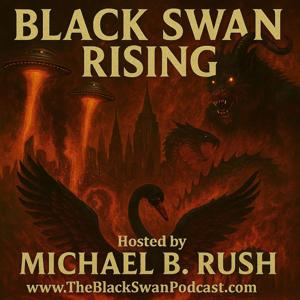
In a world shrouded in mystery, The Black Swan Rising Podcast seeks to reconcile the inexplicable with the work and glory of…
Ranked by our users in the last 21 days
1,499 Listeners
1,007 Listeners

1,166 Listeners

1,060 Listeners
1,804 Listeners
2,582 Listeners
10,727 Listeners
986 Listeners

614 Listeners
546 Listeners

1,564 Listeners
2,024 Listeners
805 Listeners

17 Listeners
28 Listeners