
Sign up to save your podcasts
Or

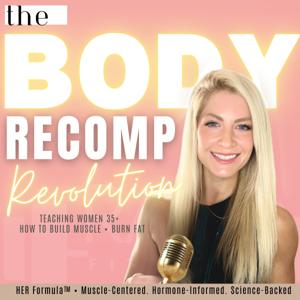


Can HRT help with weight loss? Do you need hormone testing for perimenopause? Can eating too little affect your hormones and metabolism? Should you change your workouts or calories during your period?
In this episode of The Body Recomposition Revolution, Robyn summarizes the most useful lessons from an entire week devoted to women’s hormones and body composition after 35.
You’ll learn:
The central message is simple: hormones matter, but the foundational principles of body recomposition still apply at every age and every hormonal stage.
Eat enough protein. Strength train intensely. Recover deliberately. Pay attention to your symptoms. Use hormone therapy or testing when there is a legitimate clinical reason, not because someone convinced you that every struggle after 35 requires a specialized hormonal solution.
Six Biggest TakeawaysMentioned in This Episode
Take the Low Energy Availability questionnaire on Instagram: @RACfitness_
For a personalized macro formulation completed by Robyn, email:
Have a question you want answered before the 90-Day Summer Recomp Series ends? Email me!
If this episode helped you, follow The Body Recomposition Revolution, share it with another woman who needs this information and leave a rating or review so more women can find the show.
Today’s Three RAC Recomp Targets
Should you work out on your period? Should you eat more calories during your period? And does cycle syncing actually work? Today we’re separating menstrual-cycle science from social-media hype.
We cover whether you should lift weights, do cardio, rest, eat more, or change your workouts during your period, plus what research actually says about strength, muscle growth, HRV, cramps, hunger and temporary period weight gain.
The bottom line: your period doesn’t automatically mean you should train harder OR take it easy. Train based on how you actually feel and perform, not what a cycle-syncing calendar tells you to do.
TODAY’S RECOMP TARGETS
💪 PROGRESS: Add weight or reps to one exercise next workout.
🥗 PLAN: Pre-log tomorrow’s meals tonight.
🚶♀️ MOVE: Get up and move for a few minutes every hour.
💪 WANT THE WORKOUTS?Stop guessing in the gym. Join the RAC Recomp Collective for progressive strength training inside the RAC app.
🥗 WANT YOUR MACROS?Stop guessing what to eat. Get your Custom Macro Formulation: [email protected]
📲 WANT THE CHEAT SHEET?I posted the Period Training Cheat Sheet on Instagram @RACFitness_
⭐ WANT THE NEXT EPISODE?Follow the show so Day 70 lands right in your feed.
⭐ FOUND THIS HELPFUL?Tap the stars. It takes seconds and helps more women find the show! 🤍
Can eating more fix a slow metabolism? What is reverse dieting, how do you reverse diet after eating too little, and how can you increase calories without gaining fat? In Day 68 of the Body Recomposition Revolution, we're talking about reverse dieting, metabolic adaptation, low energy availability, chronic dieting, under-eating, hormones, metabolism, muscle loss, and weight gain.
I share my own experience increasing my intake by roughly 800 calories per day, initially gaining weight, then eventually eating dramatically more while sleeping better, recovering better, training harder, and building more muscle.
We also look at research showing that increasing energy intake can improve reproductive function in exercising women with menstrual dysfunction. But here's the important distinction: eating more doesn't magically cause fat loss, and reverse dieting isn't a metabolism hack. The goal is to adequately fuel everything you're asking your body to do.
Today's 3 RAC Recomp Targets:
🥗 Eating too little, eating too much, or have no clue? Email [email protected] for a custom macro formulation based on your body, activity, and body-recomposition goals.
💪 Need the workouts too? Join the RAC Recomp Collective for progressive monthly strength training inside the RAC app for $29.99/month.Join the RAC Recomp Collective
📲 Follow @RACFitness_ on Instagram for daily body recomposition education and episode takeaways.
🎧 Follow + rate The Body Recomposition Revolution on Spotify
Can eating too little damage your hormones or metabolism? How do you reverse low energy availability, increase calories after dieting, and lose body fat without sacrificing muscle?
short LEA questionnaire posted on insta RACfitness_
In Day 67 of the Body Recomposition Revolution, we're answering the question that naturally follows yesterday's episode: If I've been under-eating and over-exercising, did I permanently screw up my hormones or metabolism?
Good news: your body adapts in both directions.
A calorie deficit does not automatically damage your hormones. You can absolutely eat in a strategic calorie deficit and lose body fat. The problem is when a controlled fat-loss phase becomes chronic under-fueling relative to how much exercise and activity you're asking your body to support.
Research and clinical guidelines show that improving energy availability can help reproductive function recover. For women with functional hypothalamic amenorrhea, the Endocrine Society recommends correcting the energy imbalance by increasing calories, improving nutrition, decreasing exercise, or some combination of the three.
So where do you start?
If you estimated your TDEE yesterday, compare that with what you're actually eating and how much activity you're doing. Maybe you need more food, less exercise, or both. If increasing calories feels intimidating, you can do it gradually. There isn't anything magical about adding exactly 50 calories per week. The goal is to adequately fuel your body again.
And yes, the scale might increase. That doesn't automatically mean something has gone wrong. In cases of significant energy deficiency, some weight gain may actually be part of recovery.
The body-recomposition goal is NOT:
eat less → plateau → eat even less → add cardio → repeat
It's to fuel enough to train, train to build muscle, use an appropriate calorie deficit when fat loss is the goal, and remember that more restriction does not always mean more progress.
TARGETS
🥗 Love training but have no idea how much you should actually be eating to support your body and your goals? I offer custom macro formulations based on your body, activity level, and body-recomposition goals.
NEED HELP FIGURING OUT HOW MUCH YOU SHOULD EAT? Email me: [email protected]
💪 Need the strength-training side handled too? Ready to build muscle while losing fat? Join the RAC Recomp Collective for progressive monthly strength-training programs inside the RAC app for $29.99/month. JOIN THE RAC RECOMP COLLECTIVE
📲 Follow @RACFitness_ on Instagram for the daily infographics, research takeaways, and evidence-based body recomposition strategies for women 35+.
🎧 Doing the 90-Day Body Recomposition Revolution with me? Follow the show and leave a rating so you don't miss the next episode.
FOLLOW + RATE THE BODY RECOMPOSITION REVOLUTION ON SPOTIFY
What happens to your hormones when you don’t eat enough? Can eating too little affect your metabolism, period, estrogen, progesterone, thyroid hormones, recovery, and ability to build muscle? In Day 66 of the Body Recomposition Revolution, we’re talking about low energy availability (LEA) and why eating too little relative to how much you exercise can eventually work against your body-recomposition goals.
Low energy availability is not simply being in a calorie deficit. It happens when the energy you’re taking in compared with the energy you're expending through exercise leaves too little energy for everything else your body needs to do.
We break down how prolonged, problematic low energy availability can affect reproductive hormone signaling, ovulation, estrogen and progesterone, T3 thyroid signaling, leptin, cortisol, recovery, and performance. And surprisingly, you can still have a period while reproductive function is already being affected.
We also look at fascinating research in trained women showing that just 10 days of low energy availability reduced muscle protein synthesis. That's a pretty important finding when your entire goal is to lose fat while maintaining or building muscle.
But here's the distinction I don't want you to miss:
A calorie deficit does NOT automatically damage your hormones.
You can absolutely lose body fat intentionally. The problem is when eat less + exercise more becomes chronic under-fueling.
And this is only Part 1. Tomorrow we're answering the question you might already be asking: If I've been under-eating for years, did I damage my hormones or metabolism, and can I reverse it?
3 DAILY RAC RECOMP TARGETS
TARGET 1: SPREAD OUT YOUR PROTEIN No saving all your food for one giant dinner. Aim for 30–40g of protein at 3–4 meals throughout the day.
TARGET 2: FIND YOUR TDEE Search for a free TDEE calculator and estimate how many calories your body burns per day. You don't need to treat that number as perfect. Today, we're just getting a starting point.
TARGET 3: PRE-LOG TOMORROW Tonight, enter tomorrow's three main meals into your food tracker. You don't need every snack planned. Get breakfast, lunch, and dinner in so you know roughly where your calories and macros are headed.
💪 Want the workouts handled for you? Ready to build muscle while losing fat? Join the RAC Recomp Collective for progressive monthly strength-training programs inside the RAC app. $29.99/month, billed monthly, cancel anytime.
🥗 Not sure how much you should actually be eating? Get a custom RAC macro formulation built around your body, activity, and body-recomposition goals. Email [email protected].
📲 Want the visuals and daily takeaways? Follow @RACFitness_ on Instagram for evidence-based body recomposition strategies for women 35+.
🎧 Following the 90-Day Body Recomposition Revolution? Follow the show on Spotify so tomorrow's Part 2 lands right in your feed.
FOLLOW THE BODY RECOMPOSITION REVOLUTION ON SPOTIFY
How Do I Know If I’m in Perimenopause? Do I Need Hormone Testing or HRT?
How do you know if you’re in perimenopause, do you need hormone testing, and what doctor should you see for perimenopause or HRT? In Day 64 of the Body Recomposition Revolution, we’re answering the question that comes after learning about estrogen, progesterone, testosterone, menopause and HRT: Okay...now where do I actually start?
We break down why your symptoms, menstrual changes and medical history may tell your provider more than one random hormone test, why you often do not need hormone labs to identify routine perimenopause, and why ACOG does not recommend routine hormone testing before starting hormone therapy for typical menopause symptoms.
You’ll also learn who to call first, when a menopause specialist or endocrinologist may make sense, what to ask an HRT or hormone optimization clinic, why you should be cautious about chasing arbitrary “optimal” hormone levels, and the simple roadmap for getting help:
SYMPTOMS → PROVIDER → EVALUATION → TESTING IF NEEDED → TREATMENT IF NEEDED → FOLLOW-UP
The goal isn’t to ask, “Which hormones should I take?”
It’s to ask, “What am I experiencing, what could be causing it, and what am I actually trying to improve?”
TODAY’S 3 RAC RECOMP TARGETS
1. TRACK: Write down your 3 biggest symptoms today and rate each from 1–10.
2. PRE-LOG: Log tomorrow’s food tonight so you go into the day with a plan instead of trying to piece your nutrition together as you go.
3. NO NAKED CARBS: Pair your carbohydrates with a source of protein.
💪 Want me to take the guesswork out of your strength training? APP
Follow @RACFitness_ for the episode infographics, body recomposition education, and evidence-based fitness strategies for women 35+.
Does HRT help with weight loss, belly fat or muscle gain during perimenopause and menopause? And what’s the difference between estrogen, progesterone, testosterone, patches, pills and pellets?
In Day 64 of the Body Recomposition Revolution, we break down the treatment options women hear about constantly but rarely get explained simply.
We cover estrogen, progesterone, testosterone, HRT, patches vs. pills, testosterone pellets and non-hormonal options, plus why progesterone is generally needed with systemic estrogen if you have a uterus.
And because this is a body recomposition podcast, we answer the big question: Will HRT actually help you lose belly fat, build muscle or look more toned?
HRT is not a weight-loss treatment. But treating disruptive symptoms like hot flashes and night sweats may help you sleep, recover, train and feel better, which can make the habits that change your body easier to maintain.
TODAY’S 3 RECOMP TARGETS
🥩 PROTEIN: Hit 30–40g at each meal.
💪 STRENGTH: Complete one resistance-training session in the next 3 days.
📝 SYMPTOMS: Write down what you’re experiencing. Better data helps you make better decisions.
WANT THE WORKOUTS?
Ready to build muscle while losing fat? Join the RAC Recomp Collective
DON’T KNOW YOUR MACROS?
Stop guessing. Get your Custom Macro Formulation → [email protected]
WANT THE QUICK VERSION?
Follow @RACFitness_ on Instagram for research-backed body recomposition tips for women 35+.
⭐ Learned something? Follow the show + tap the stars it helps another woman find it
Hormones and weight gain after 35: do estrogen, progesterone, testosterone, thyroid changes and perimenopause actually cause belly fat, muscle loss or a slower metabolism?
Day 63 is your hormone-week cheat sheet. We’re pulling together what the research actually says about hormonal weight gain, belly fat, muscle loss, metabolism and body composition during perimenopause and menopause.
One of the most surprising findings? In the SWAN study, women’s rate of fat gain roughly doubled while lean mass declined during the menopause transition, yet their rate of weight gain did not significantly accelerate.
Translation: the scale can stay similar while your body changes significantly.
We recap thyroid, estrogen, testosterone, progesterone and perimenopause, then finish with a simple 8-step action plan for what you can actually control: lift, eat enough protein, move, train your heart, protect your sleep, track trends, treat real medical issues and get curious about your labs.
TODAY’S 3 RECOMP TARGETS
💪 LIFT: Schedule next week’s strength workouts.
🥩 PROTEIN: Prep your protein before the week starts.
📊 TRACK: Pick one meaningful metric beyond scale weight and start collecting data.
WANT THE WORKOUTS?Build muscle while losing fat with the RAC Recomp Collective inside the RAC app.
DON’T KNOW YOUR MACROS?I’ll calculate them for you. Custom Macro Formulations: [email protected]
WANT THE 8-STEP CHEAT SHEET?It’s on Instagram -> @RACFitness_
# 8 Labs Promo code: RAC20
⭐ Found this helpful? Follow the show + tap the stars. It helps another woman find it.
Am I in perimenopause? How can I tell? Why am I gaining belly fat even though I haven't changed how I eat or exercise?
In Day 62 of the Body Recomposition Revolution, we're breaking down what perimenopause actually is, why it is better understood as a period of hormonal variability rather than simply “low estrogen,” and why one random hormone blood test may not give you a clear yes-or-no answer.
We also cover why your body can start looking different even when your weight barely changes, including shifts in belly fat, muscle mass, metabolism, sleep, recovery and fat distribution during the menopausal transition.
Most importantly, this episode explains why perimenopause does not mean you're powerless over your body composition. Strength training, protein, daily movement, cardio, sleep and tracking your own patterns still matter enormously.
TODAY'S RECOMP TARGETS
READY TO TAKE ACTION?
💪 WORKOUTS: Ready to build muscle while losing fat? Join the RAC Recomp Collective for progressive monthly strength-training programs inside the RAC app.
📐 CUSTOM MACROS: Still guessing how much you should eat? Get your personalized calorie + macro targets: [email protected]
📲 INSTAGRAM: Want the quick version? Follow @RACFitness_ for evidence-based body recomposition tips for women 35+.
⭐ FAVOR: Follow the show on Spotify and tap the stars. It helps more women find the podcast and keeps new eps on your feed
Does low progesterone cause weight gain, poor sleep, or those frustrating 2–3 AM wake-ups during perimenopause? Progesterone changes as ovulation becomes less predictable, but the relationship between hormones, sleep and body composition is more complicated than blaming one hormone.
Day 61 of the Body Recomposition Revolution breaks down low progesterone symptoms, perimenopause sleep problems, waking up at 3 AM, weight gain after 35, hormone changes and body composition.
💪 Ready to recomp? Join the RAC Recomp Collective for monthly progressive strength training in the RAC app
We cover why progesterone follows ovulation, why progesterone becomes less predictable during perimenopause, how it interacts with brain pathways involved in sleep, and one cool fact: progesterone actually raises your body temperature after ovulation.
And the big body recomposition question:Does low progesterone make you gain weight? Not directly.
Hormonal changes can disrupt sleep and recovery, which can influence hunger, energy, movement and training quality. Your hormones can change the environment, but they don't erase the fundamentals.
DAY 61 RECOMP TARGETS
😴 TRACK: Bedtime, wake time, nighttime wake-ups and cycle day.
❄️ COOL: Keep your bedroom cool, dark and boring. Your body needs to lose heat to initiate sleep.
🛏️ PROTECT: Give yourself a 7-9 hour sleep opportunity. You can't force sleep, but you can make room for it.
- - -
📲 Follow @RACfitness_ for the research without the hormone hype.
📊 Want your calories + macros built for YOUR body? Custom Macro Formulations: [email protected]
⭐ Follow the show + leave a 5-star rating. It costs you nothing. It helps me a ton. Follow & rate The Body Recomposition Revolution on Spotify
Tomorrow: Perimenopause vs. Menopause. What is actually happening to your body?
From the publisher's feed

227,484 Listeners

171,957 Listeners

12,109 Listeners

2,479 Listeners

555 Listeners

35,874 Listeners
156 Listeners

2,318 Listeners

29,163 Listeners
35 Listeners

1,100 Listeners

228 Listeners

19,028 Listeners

1,214 Listeners
605 Listeners