
Sign up to save your podcasts
Or

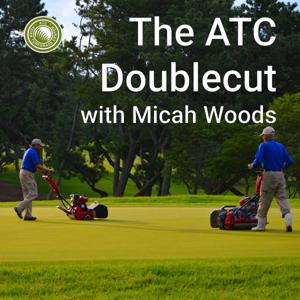


Maggie Reiter joined me to discuss her "Finding Turf Twitter" analysis, her analysis of current turf research topics at the ASA-CSSA-SSSA meetings, tropical grasses, and irrigation water requirements.
We discussed:
Scientific writing is not always as clear as this. There's an article I really enjoyed that stated right at the start, in the abstract, that core aeration "might not be worth doing."
Dr. Kaminski joined me from his sabbatical in Australia to discuss flights, turf photos, and what he's been doing on his sabbatical.
This episode answers that question with how I recommend doing this. For today, we don't need to add N. But the soil nutrient levels decrease with time, we can predict how much the grass will use, and I make fertilizer recommendations looking into the future, rather than waiting to test again before making a decision to apply.
Joe Gulotti joined me to give the doublecut treatment to the top posts of 2025 on the ATC blog, plus a bit of holiday extravaganza.
When grass clippings are returned to the turf, the quantity of nutrients required as fertilizer is decreased. In this episode I discuss how I handle the clippings returned situation.
The #MLSN method for nutrient recommendations involves an MLSN value that the soil is not supposed to drop below. But what does this value mean, when converted from the usual units of ppm (mg/kg) to how many years it would take grass to use that much of the element?
This episode explains the steps I'd take to change greens from too hard (surface hardness and ball bounce, not hard as in difficulty) to just right. It follows that the opposite steps could be taken to move greens from too soft to just right.
The blog post discussed is https://www.asianturfgrass.com/post/to-keep-green-soft/
The ball bounce video from Dan Dinelli is at https://youtu.be/r1LV77z_Ziw
Read more about all kinds of turfgrass topics at https://www.asianturfgrass.com/
Find a suite of decision-making tools at https://www.paceturf.org/
Get free ATC newsletters at https://www.asianturfgrass.com/newsletter/
Expressing sand quantities as a depth makes communication easier. But to know the depth, you need to know how much sand was applied to begin with. I've been surprised at how many turf managers don't know the exact amount applied. This short episode explains why I think you should measure sand amounts.
I explain how I answered a couple questions about how much N and how much sand a particular grass might require. Specifically, I recommend adjusting N based on #ClipVol and sand based on #OM246.
Blog post discussed: https://www.asianturfgrass.com/post/sand-nitrogen-measuring-guessing/
OM246 calculator: https://asianturfgrass.shinyapps.io/om246/
Read more about all kinds of turfgrass topics at https://www.asianturfgrass.com/
Find a suite of decision-making tools at https://www.paceturf.org/
Get free ATC newsletters at https://www.asianturfgrass.com/newsletter/
From the publisher's feed

22 Listeners

1,726 Listeners

29 Listeners

19 Listeners

21 Listeners

14 Listeners

1 Listeners

7 Listeners

21 Listeners

50 Listeners

11 Listeners

11 Listeners

108 Listeners

0 Listeners

3 Listeners