
Sign up to save your podcasts
Or

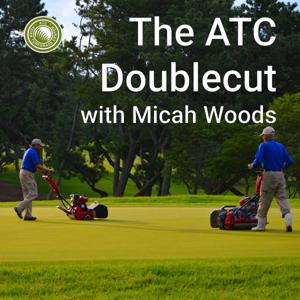


I recommend 4 podcast episodes and one useful app that calculates sand topdressing amounts, then quickly discuss the top 10 new posts from the ATC website in 2024.
Would you like to comment or have questions about this episode? Reply on Bluesky
Read more about all kinds of turfgrass topics at https://www.asianturfgrass.com/
Get ATC newsletters at https://www.asianturfgrass.com/newsletter/
Turfgrass information and decision-making tools at https://www.paceturf.org/
PACE Turf YouTube channel at https://www.youtube.com/user/paceturf
ATC's YouTube channel at https://www.youtube.com/asianturfgrasscenter
Green speed varies because of many factors. One of those factors is clipping volume. I discuss that relationship and give some advice for those getting started with clipping volume and wanting to know how to adjust it.
Did you know there was a time when up to to 2 lbs N per 1000 square feet per growing month, the equivalent of 100 kg of actual N per ha per month, was a standard recommendation for putting green turf? I talk about this and some implications in this episode.
The ATC post getting the double cut treatment is https://www.asianturfgrass.com/post/nitrogen-rate-as-a-pendulum-swing/
I also took a look at the Historical Nitrogen Rates post from PACE Turf at https://www.paceturf.org/memberedition/historical-nitrogen-rates
Read more about all kinds of turfgrass topics at https://www.asianturfgrass.com/
Get ATC newsletters at https://www.asianturfgrass.com/newsletter/
Turfgrass information and decision-making tools at https://www.paceturf.org/
PACE Turf YouTube channel at https://www.youtube.com/user/paceturf
ATC's YouTube channel at https://www.youtube.com/asianturfgrasscenter
Bill Kreuser from GreenKeeper joined me to discuss how much grass grows, the complicated problems involved when sand is mixed with clippings, growth regulator adjustments, leaf nutrient content, soil surfactant effect duration, and more. #ClipVol
We discussed the "Sand in clippings" post from the ATC website: https://www.asianturfgrass.com/post/sand-in-clippings/
You can read more about our discussion of topics such as PGR and soil surfactant scheduling at https://www.greenkeeperapp.com/
Frank Rossi, Ph.D. is the New York State extension turfgrass specialist at Cornell University. We talked about mentorship, potassium, turf nutrition, smoothness of putting greens, dogma, data, budgets, and more.
Here are some links:
- https://cals.cornell.edu/frank-s-rossi
- New podcast, Turf Without Borders: https://turfwb.asianturfgrass.com/episodes/st-andrews-old-new-jubilee-with-jon-wood
- https://doublecut.asianturfgrass.com/episodes/frank-rossi-and-i-discuss-what-ive-called-my-least-favorite-experiment-ever
- https://www.asianturfgrass.com/post/do-you-have-an-idea-why-they-recommend/
- Video with Dr. Rossi & I on smoothness and trueness of putting greens: https://youtu.be/xIlgspZfzbg?si=9iPeueL5Y16Uk5qv
- https://www.asianturfgrass.com/post/five-different-ways-to-measure-smoothness-trueness-ball-roll/
The PACE Turf growth potential equation has one variable (the actual air temperature) and two constants. The constants are optimum air temperature and a term for variance that controls the shape of the curve as the actual temperature moves away from the optimum temperature. It's a little more complicated than that, because the constants change depending on whether you are making the calculation for cool-season grass, warm-season grass, and on whether you are using the Fahrenheit temperature scale or the Celsius temperature scale.
You can expect soil organic matter to be 5% nitrogen, and you can expect from 1 to 4% of that organic nitrogen to mineralize in one year. You can also calculate estimated daily mineralization and sum it to get weekly, monthly, and annual totals.
The blog post discussed is: https://www.asianturfgrass.com/post/estimating-nitrogen-mineralization-an-example/
Subscribe to the Turf Without Borders podcast: https://turfwb.asianturfgrass.com/subscribe
Read more about all kinds of turfgrass topics at https://www.asianturfgrass.com/
Get ATC newsletters at https://www.asianturfgrass.com/newsletter/
Turfgrass information and decision-making tools at https://www.paceturf.org/
PACE Turf YouTube channel at https://www.youtube.com/user/paceturf
ATC's YouTube channel at https://www.youtube.com/asianturfgrasscenter
This episode introduces multiple experiments that have demonstrated a link between rapid measurement of clipping volume and the clipping yield. Clipping yield is typically expressed as dry weight per area. Links to the articles discussed are in the blog post.
Leah Brilman, Ph.D., is the Director of Product Management & Technical Services for Seed Research by DLF. We discussed velvet bentgrass, creeping bentgrass, and browntop bentgrass, along with seed production and grass performance.
Read more about all kinds of turfgrass topics at https://www.asianturfgrass.com/
Get ATC newsletters at https://www.asianturfgrass.com/newsletter/
Turfgrass information and decision-making tools at https://www.paceturf.org/
PACE Turf YouTube channel at https://www.youtube.com/user/paceturf
ATC's YouTube channel at https://www.youtube.com/asianturfgrasscenter
Andrew McDaniel has been watching webinars to get education points, and some of these have been about management of soil organic matter on putting greens. We discussed a particular article and whether that method is something that seems reasonable today.
From the publisher's feed

22 Listeners

1,726 Listeners

29 Listeners

19 Listeners

21 Listeners

14 Listeners

1 Listeners

7 Listeners

21 Listeners

50 Listeners

11 Listeners

11 Listeners

108 Listeners

0 Listeners

3 Listeners