
Sign up to save your podcasts
Or

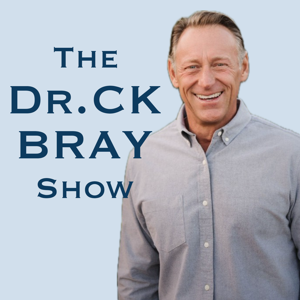


In this episode, Dr. Bray explores the rapid rise of Bossware, the workplace surveillance software tracking clicks, keystrokes, idle time, screen activity, webcam presence, and productivity scores. What began as a tool for accountability and security is quickly becoming a defining issue in modern work culture. Dr. Bray breaks down why companies are using these systems, what leaders hope to gain, and why measuring activity is often very different from measuring real value.
You will also learn the deeper neuroscience behind what happens when employees feel constantly watched. Surveillance can shift attention from meaningful work to self-protection, lower trust, reduce creativity, and quietly erode engagement. Dr. Bray explains the hidden cost of bossware, the ethical questions every organization should be asking, and why the future of performance will belong to companies that build trust, not just track behavior.
Quotes by Dr. Bray
"What can be measured is not always what matters most."
"Deep thinking creates enormous value—even when it leaves no digital trace."
"Employees want accountability with clarity and respect—not control without context."
"Technology can measure behavior—but only leadership can build trust."
In this episode, Dr. Bray explores the quiet workplace shift happening inside many companies right now. Paid time off is being reduced, parental leave is shrinking, flexibility is tightening, and performance expectations are rising. These may look like small policy changes, but together they reveal a major shift in how organizations view people, power, and productivity.
You will learn why this is happening now, the hidden brain science behind how employees respond when support is taken away, and why some companies may be creating long-term performance problems while chasing short-term savings. If you want to understand where work culture is headed next, this is an episode you do not want to miss.
This podcast was inspired by a Business Insider article written by Sarah E. Needleman. "PTO, parental leave, pensions: Even the most prized benefits are on the chopping block."
Quotes by Dr. Bray
"Benefits were never just perks—they were signals of partnership."
"One of the most powerful forces in motivation is perceived fairness."
"Continuous output without recovery degrades judgment, patience, and decision-making."
"People don't give their best because they're paid—they give their best when they feel safe, valued, and fairly treated."
You interact with people every day and feel like you understand them. Their tone, their behavior, their reactions. But what if you're only seeing a small fraction of who they really are? In this episode, Dr. Bray challenges a powerful assumption we all make and reveals why your brain is constantly filling in gaps with stories that feel true, but are often incomplete. What if the way you see people is limiting not only them, but your relationships, your leadership, and your ability to truly connect?
Drawing on neuroscience, behavioral psychology, and deeply human insight, this episode uncovers why we misread others, how quickly we turn moments into identities, and what it actually takes to see people more clearly. You'll walk away with a simple but transformative shift that can change how you lead, communicate, and connect in every interaction. Because the question is not whether you're missing part of someone's story. The question is… what will you do when you realize you are?
Quotes by Dr. Bray
"You are making a decision about a person based on a fraction of who they are."
"The story we tell ourselves says more about our own fears than it does about the other person."
"Sometimes the most powerful thing you can do is not fix someone, but simply see them."
There are moments in your life that quietly change everything. Not because you planned them or earned them, but because someone stepped in at just the right time. A door opened. A chance was given. You "caught a break." In this episode, Dr. Bray explores the hidden role those moments play in shaping our lives, and why some of the most important turning points are not the result of effort alone, but of people who chose to believe in us when we were not quite ready.
Through powerful stories and real-life experiences, including a leader who built a 50-year career from one unexpected opportunity and a man who helped save hundreds of children simply by choosing to act, this episode challenges how you think about success, gratitude, and responsibility. More importantly, it asks a question that may stay with you long after you listen: who gave you a break, and who needs one from you right now?
https://turnanewleaf.org/
Quotes by Dr. Bray
"A break is often just someone deciding to care and to step in at the right moment."
"You are not where you are only because of what you have done. You are also here because of individuals who helped you along the way."
"Sometimes someone else's small decision can become someone else's turning point."
Last week, Dr. Bray explored the cost of hurry and what moving too fast does to your brain, your thinking, and your ability to lead and connect. This week, he goes deeper into the question that naturally follows: if we know we are moving too fast, why is it so hard to slow down? In this episode, Dr. Bray introduces the concepts of time poverty and time sickness, the hidden psychological forces that leave so many high performers feeling behind, even when they are doing more than ever.
Blending neuroscience, psychology, and real-life experiences, Dr. Bray unpacks how the brain begins to interpret time as scarce, why urgency becomes a default state, and how constant motion prevents us from ever feeling caught up. More importantly, he shares a new way to think about time, not as something to manage, but as something to experience differently, along with simple shifts that can help you regain clarity, presence, and a sense of control in a world that never slows down.
Quotes by Dr. Bray
"Time poverty is not just about how much time you have. It is about how your brain is interpreting time."
"The experience of time is not just measured in minutes. It is shaped by where your mind is."
"What you want is a sense of progress instead of constant continuation."
"You can change your life by training your brain and changing your perception of time."
The Hidden Cost of Hurry: Why Slowing Down Is the Ultimate Performance Advantage
We live in a world that rewards speed, responsiveness, and constant motion. But what if the very pace that makes us feel productive is actually working against how our brain is designed to function at its best? In this episode, Dr. Bray explores the hidden cost of hurry through both a human and neuroscience lens, and why so many high performers feel busy yet disconnected, productive yet not at their best. Drawing on insights from John Ortberg and John Mark Comer, along with research on attention, stress, and cognitive performance, this conversation unpacks what hurry does to your brain and why slowing down is not a luxury but a strategic advantage. You will walk away with a new perspective on performance, along with practical ways to regain clarity, presence, and control in a world that never seems to slow down.
Quotes by Dr. Bray
"Hurry is not just a schedule problem. It is a deeper issue that affects how we live, lead, and relate to other people."
"The faster you move without intention, the more likely you are to drift away from what actually matters."
"When you never slow down, you lose more than clarity—you lose connection."
"Slowing down, even in small ways, is not falling behind. It is how you stay effective in an environment that is constantly speeding up."
Most companies are letting some of their most experienced, valuable talent walk out the door, and they do not even realize what they are losing. Retirement has long been treated as an endpoint, but that model no longer fits today's workforce or today's business needs. In this episode, Dr. CK Bray explores why experienced employees are not looking to stop contributing, just to contribute differently, and how organizations are missing a massive opportunity to retain knowledge, leadership, and performance.
More importantly, he introduces a new way to think about this transition. From phased roles and mentorship to redefining how work fits into later career stages, you will learn how to keep your best talent engaged, energized, and adding value. Because the future of work is not about replacing experience. It is about redesigning how we use it.
*HBR March-April 2024. "Redesigning Retirement."
Quotes by Dr. Bray
"Today's workforce is in unprecedented flux—and organizations can't afford to let their best talent walk out the door."
"Retirement is no longer an endpoint—it's a redesign."
"Older workers aren't stepping away—they're looking for ways to stay meaningful and productive."
"Working longer is linked to lower mortality and greater well-being."
"Older workers offer something organizations are losing: commitment, loyalty, and engagement."
Most people think of retirement as a finish line. You stop working, slow down, and finally relax. But neuroscience tells a different story. Retirement is not an event. It is a major shift in identity, structure, and purpose. In this episode, Dr. CK Bray explores what actually happens in the brain when you remove the daily goals, feedback, and meaning that work provides, and why so many high performers feel unexpectedly lost or disengaged in the first year.
More importantly, he shares a simple, practical framework for navigating retirement the right way. You will learn how to build your "next scoreboard," why purpose and contribution are directly tied to long-term health and longevity, and how to design a next chapter that is not about slowing down, but about making a meaningful impact. Because the goal is not just to retire. It is to live well for a very long time.
Quotes by Dr. Bray
"Retirement is not an event. It is a neural, psychological, and identity transition."
"Work gives you structure, goals, feedback—and most importantly—identity."
"Isolation accelerates decline, while connection protects the brain."
"Retirement is not about escaping work—it's about replacing it with something meaningful."
"The goal is not just to retire. The goal is to live well for a long time."
The Loudest Voice in the Stadium
You can have the right strategy, the right experience, and even the right preparation, and still underperform. Why? Because in the moments that matter most, the loudest voice in the stadium is not your boss, your team, or the situation. It is the voice in your head.
In this episode, Dr. CK Bray explores one of the most overlooked drivers of performance, stress, and burnout in the workplace today: your internal dialogue. If you have ever felt overwhelmed even when your workload seems manageable, stuck in your thinking during high-pressure moments, or like you are working hard but not performing at your best, this conversation will connect the dots.
Drawing on neuroscience and real-world leadership experience, this episode explains why your brain treats negative self-talk as a threat, and how your brain filters reality to match the story it is already telling, often without you even realizing it.
More importantly, you will walk away with two practical tools you can use immediately to improve how you think and perform under pressure. You will learn how to create distance from your thoughts so they stop controlling you, and how to shift from emotional overwhelm to clear, focused action in real time.
This conversation will challenge how you think about stress, confidence, and performance, and give you a new lens for understanding your own brain behavior. If you want to perform at a higher level in a world that is not slowing down, it starts with learning how to manage the loudest voice in the stadium.
Quotes by Dr. Bray
"The loudest voice in high-pressure moments is the one in your own head."
"The voice in your head is not just describing your experience—it is shaping your ability to perform in it."
"Your brain generates thoughts—you decide what to do with them."
"The advantage will not go to the person with the least stress, but to the one who knows how to work with their brain under stress."
Why do so many capable, intelligent people keep saying yes when they mean no? In this episode, Dr. Bray explores the quiet pattern of self-compromise that slowly erodes confidence and self-respect. This is not about being weak in an obvious way. It is about the subtle moments where we trade alignment for approval in work, relationships, dating, and everyday interactions.
Dr. Bray breaks down why our brains are wired to prioritize belonging, how chronic self-abandonment damages internal strength, and the practical steps to build what he calls internal authority. You will learn how to pause under pressure, tolerate discomfort, set clear boundaries, and stop betraying yourself in small moments. This episode will challenge you in the best way and give you a path toward becoming steady, aligned, and powerful without becoming harsh.
Quotes by Dr. Bray
"When you say yes but mean no, you think no one will notice—but the most important person notices: you."
"Every time you compromise who you are to avoid discomfort, you teach your nervous system that your authenticity is dangerous."
"If you do not define your standards in calm moments, you will abandon them in intense ones."
"Feeling uncomfortable when you stop compromising does not mean you are wrong. It means your nervous system is adjusting."
From the publisher's feed

32,017 Listeners

1,713 Listeners
30,168 Listeners
1,516 Listeners

1,217 Listeners

1,723 Listeners

39,377 Listeners

905 Listeners
10,770 Listeners
989 Listeners

1,571 Listeners

19,273 Listeners

2,024 Listeners

15,960 Listeners

8,465 Listeners