
Sign up to save your podcasts
Or

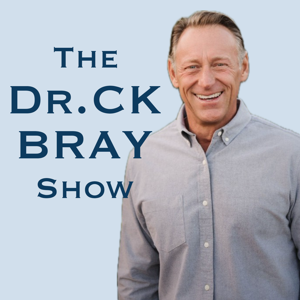


"The 5 Regrets Exercise That Could Change Your Life"
What if you could look ahead and sidestep the regrets that often surface at life's end? In this new episode, Dr. Bray delves into the profound insights of Bronnie Ware, an Australian palliative nurse who spent years caring for patients in their final days. Through heartfelt conversations, she uncovered the top five regrets that people commonly express when reflecting on their lives.
But this isn't just about acknowledging regrets, it's about taking proactive steps to live intentionally and authentically. We'll explore a powerful exercise designed to help you identify potential regrets and implement actionable strategies to prevent them. This practice isn't merely reflective; it catalyzes personal growth and fulfillment.
What You'll Learn:
• The Top Five Regrets of the Dying: Discover the most common regrets people have at the end of their lives and what they reveal about living meaningfully.
• The Neuroscience of Regret: Understand how the brain processes regret and how this awareness can motivate positive change.
• The Regret Reflection Exercise: Engage in a guided activity to pinpoint potential future regrets and develop a plan to address them now.
By tuning into this episode, you'll gain insights into leading a life aligned with your true self, fostering deeper connections, and embracing opportunities without fear. Don't wait for a wake-up call—take charge of your life's direction today.
QUOTES BY DR. BRAY "You always have to have something to look forward to." "Happiness is a choice." "Do one thing every day that scares you."
Are you ready to boost your brainpower and calm your anxiety? In this episode of The Dr. CK Bray Show, Dr. Bray reveals groundbreaking research that shows how something as simple as sitting too long can shrink your brain and increase your risk for Alzheimer's, even if you exercise. But don't worry, he's got practical, science-backed strategies to help you protect your cognitive health, starting today.
That's not all. Dr. Bray also uncovers a powerful new approach to mindfulness that's tailored to your specific anxiety type. Whether you're a chronic worrier or someone constantly on edge, you'll learn which meditation style can help you regain focus, regulate emotions, and take back control of your thoughts. Tune in now to discover two simple, life-changing habits that can dramatically improve your mental clarity and emotional well-being. Your brain will thank you!
QUOTES BY DR. BRAY "Even five minutes of movement every hour can protect your brain for years to come." "Every moment you spend sitting is a choice; every moment you move is an investment in your future."
You walk into the office or log on to your morning meeting, and something feels off. One of your most reliable team members is distracted, quiet, and not meeting expectations. You wonder if you should say something… but you don't want to overstep. You're not a therapist. What if you say the wrong thing?
In this episode, Dr. Bray explores what managers should do when they notice signs of emotional distress in an employee. Inspired by the Harvard Business Review article "Helping an Employee in Distress" and grounded in real-world psychology, this conversation will give you the language, mindset, and confidence to lead with both care and clarity.
You will learn:
How to recognize red flags without becoming intrusive
What to say when you notice something is wrong
How to respond with empathy while protecting healthy boundaries
What research tells us about listening, validation, and psychological safety
How one manager's simple conversation helped turn around a difficult situation
You will hear stories similar to Jordan's, a creative lead known for his big ideas and positive energy. When he started arriving late and keeping his camera off in meetings, his manager, Taylor, gently checked in. That five-minute conversation revealed that Jordan was quietly navigating burnout and family stress. Taylor did not try to solve it, but she listened, offered support, and pointed him to resources. That small moment of connection helped Jordan feel seen and gave him the space to get back on track.
This is not about having all the answers. It is about knowing how to open the door and walk alongside your people when it matters most.
Tune in and learn how to support your team through challenging moments without compromising performance, professionalism, or humanity.
QUOTES BY DR. BRAY
"Empathy is not about offering sympathy, but about being committed to fully understanding someone's experience."
"Cognitive reframing is a process of replacing unhelpful thoughts with a more realistic and balanced view of a situation."
"Even a 5 to 7 minute conversation can really change things."
Your top performer just isn't themselves. They're distracted, quiet, and missing minor details. You know something's off, but you're not a therapist, and you're not sure what to say.
In this episode, Dr. Bray delves into a powerful conversation about how leaders can effectively support employees in distress without crossing boundaries or becoming overwhelmed. Inspired by insights from Harvard Business Review and grounded in the tools of modern psychology, we explore how frameworks like Cognitive Behavioral Therapy (CBT) and Acceptance and Commitment Therapy (ACT) offer surprising and practical ways to lead with clarity, empathy, and purpose.
You'll learn:
Why your instinct to "fix" things might backfire
How to use simple CBT strategies to help people shift stuck thinking
Why ACT's message—that we can move forward even in discomfort is precisely what your team needs
What to say (and what not to say) when someone's having a hard day
How to create a culture where emotional well-being and high performance go hand in hand
Whether you manage a team of five or lead a division of five hundred, this episode will leave you with tools to support your people with confidence, humanity, and science on your side.
Tune in to discover why the most effective leaders today aren't just strategic, they're psychologically savvy.
QUOTES BY DR. BRAY
"With the right training and tools, support in the moment can make all the difference."
"Managers today are leading anxious workforces, and the need for emotional support is more critical than ever."
"Sometimes we don't need a major intervention, just a low-level conversation with someone who listens."
You know that thing you do; the way you obsessively rearrange pens before a meeting, the random-but-brilliant ideas you toss out mid-conversation, or your love of color-coded spreadsheets? The thing you might've been told was "a little much"?
Yeah. That might be your superpower.
In this episode, we dive into the fascinating world of quirks, those small, unique traits that often get brushed off as eccentric or awkward. But according to new research in Psychology Today and backed by neuroscience, your quirks are more than harmless habits. They might be the secret to your creativity, resilience, productivity, and leadership.
Spoiler alert: Your brain isn't built to fit in. It's wired to stand out.
Today Dr. Bray dives into Quirks at Work:
How quirks drive innovation and problem-solving at work
Why high-performing teams need their "oddballs"
Simple ways to identify and own your quirks—and help your team do the same
Whether you're the quiet notetaker, the idea machine, or the person who can't not ask "what if," this episode will show you how to turn what makes you different into what makes you indispensable.
Because let's face it, the world doesn't need more polished, perfect professionals.
It needs real ones: quirks and all.
QUOTES BY DR. BRAY"We all have different operating systems that in some way make us different from anybody else." "In the human brain, quirks foster love, they foster connection." "We need to really view quirks as strengths. And when we do that, it liberates not just ourselves but other people." "Really, the secret to your success lies in your quirkiness."
What if the biggest thing holding you—or your team—back isn't lack of skill, clarity, or confidence... but the fear of what other people think?
In this episode, we're diving into a powerful concept that's quietly shaping how we show up at work: FOPO—Fear of People's Opinions. Backed by neuroscience and field-tested with everyone from PGA golfers to Fortune 100 CEOs, FOPO is the silent performance killer that keeps leaders from taking risks, teams from speaking up, and cultures from thriving.
You'll hear:
Why a seasoned golf pro crumbled under pressure, while an amateur thrived
How performance-based identity traps us in stress and self-doubt
What purpose-based leadership actually looks like—and how to build it
A simple mindset shift that top performers use to stay grounded and bold under pressure
If you've ever second-guessed an idea, softened your voice in a meeting, or let fear of judgment steer your decisions, this one's for you.
QUOTES BY DR. BRAY
"In the desire for approval, we give up control of our lives."
"Purpose becomes the filter through which we arrive at our decisions, establish priorities, and make choices."
"Take time to contemplate your purpose — it's worth repeating."
What got you here… won't get you there.
In the boardrooms of the early 2000s, executive presence was a well-guarded formula: confidence, a polished suit, a commanding voice, and just the right amount of detachment. You knew it when you saw it—and if you didn't look the part, you probably didn't get it.
But in 2024, everything has changed. The pandemic, social movements, hybrid work, generational shifts, and the rise of authenticity have completely rewritten the rules. And if you're still playing by the old ones, you will get left behind.
In this episode, Dr. Bray takes you inside the new world of executive presence—what it looks like now, why it's changing, and how to master it without losing who you are. We'll explore:
Whether you're aiming for the C-suite, coaching emerging leaders, or simply navigating how to show up more powerfully in your role, this episode is your blueprint for presence that works in the modern workplace.
This isn't about fitting into the mold. It's about breaking it with purpose.
QUOTES BY DR. BRAY
"Being real is the win."
"Respect for others... involves acquiring a body of knowledge that allows you to understand the lived experience of those whose identity or heritage is different from your own."
"People now gravitate more towards leaders who listen and learn from others before they make decisions."
What if the biggest thing holding you back isn't your circumstances, but the story you've been telling yourself about them? We all experience setbacks—failure, rejection, trauma, or just plain bad luck. But instead of seeing these moments as chapters in a bigger story, we often let them define us. We replay the past, reinforce limiting beliefs, and convince ourselves that nothing will ever change. The problem isn't just what happened—it's the meaning we attach to it. And sometimes, that meaning is completely wrong.
In this episode, Dr. Bray dives into the science of learned helplessness, brain predictions, and the power of rewriting our stories. From Martin Seligman's research on why we stop trying to Viktor Frankl's powerful insights from the Holocaust, Dr. Bray will explore how adversity shapes our minds—and how we can reshape them. Most importantly, we'll uncover practical tools to shift from victimhood to resilience, from feeling trapped to taking control. Because while we can't change the past, we can change the meaning we give it. And that changes everything. Tune in and learn how to break free from the mental loops keeping you stuck.
QUOTES BY DR. BRAY "While your past will never change, you can." "'WHY' questions trap us in our past. 'What' questions can help us create a better future."
Is telepathy real, or is it just a fantasy fueled by sci-fi movies and wishful thinking? In this episode, Dr. Bray goes to the edges of science and dives into the science, the skepticism, and the surprising research that suggests telepathic communication might not be as impossible as we once thought. From groundbreaking neuroscience studies using brain-to-brain communication technology to Dr. Diane Hennacy Powell's fascinating work with autistic savants who seem to transmit thoughts without words, we're uncovering the truth about telepathy—what's myth, what's real, and what the future could hold.
Neuroscientists are beginning to explore the brain's electromagnetic activity and the role of mirror neurons, which may provide a scientific basis for telepathic-like experiences. Meanwhile, technology is making what was once science fiction a reality, with researchers successfully transmitting thoughts between human brains using neural interfaces. Could telepathy simply be an untapped human ability? Could meditation, deep focus, or brain training enhance it? And if it's real, how could it change the way we connect, communicate, and understand one another?
Join Dr. Bray as he breaks down the science, examines the skeptics' arguments, and explores the mind-blowing potential of thought-to-thought communication. Whether you're a believer or a skeptic, this episode will challenge everything you think you know about the limits of the human mind. Tune in now and decide for yourself!
QUOTES BY DR. BRAY
"The brain's capacity to internalize and reflect the mental state of others demonstrates how deeply we are wired for connection."
"Techniques such as mindfulness, meditation, and visualization are believed to strengthen the mind-body connection, unlocking hidden potentials."
The return-to-office (RTO) debate is no longer just about where people work—it's about why companies are making this shift. With office attendance jumping from 35% in 2023 to 68% in 2024, businesses claim that in-office work fuels collaboration, innovation, and culture. But is that the driving force behind these mandates? Or is this shift rooted in financial pressures, leadership challenges, and outdated ways of thinking?
In this episode, Dr. Bray breaks down both sides of the argument, from the employee's demand for autonomy and flexibility to the employer's need to sustain business outcomes and justify office investments. Research shows that employees with a say in their work arrangements are 55% more productive and 40% more likely to stay with their company—yet, forced RTO mandates lead to higher disengagement and turnover. Meanwhile, executives worry that remote work is eroding mentorship, culture, and long-term career development. So, who's right? And is there a middle ground?
Dr. Bray also explores the generational divide shaping the future of work. Baby Boomers report 80% satisfaction with RTO, while Gen Z is the most resistant at just 68% satisfaction—but why? Are younger employees missing out on crucial networking opportunities, or are they simply redefining what productivity looks like in a digital-first world? And what should companies be doing to ensure they attract and retain top talent across all generations?
The real question isn't whether RTO is good or bad—it's about how companies structure work to drive real results. Tune in as we unpack the neuroscience, leadership strategies, and future trends shaping this conversation, and learn how businesses can strike the right balance between flexibility, trust, and collaboration.
QUOTES BY DR. BRAY
"It's not about where you work, it's HOW you work."
"Autonomy is one of the three psychological pillars of motivation. We love choices."
"Location alone doesn't determine your success. What matters most is how intentional companies are about making work collaborative, innovative, and meaningful."
From the publisher's feed

32,017 Listeners

1,713 Listeners

30,168 Listeners

1,516 Listeners

1,217 Listeners

1,723 Listeners
39,377 Listeners

905 Listeners
10,770 Listeners
989 Listeners

1,571 Listeners

19,273 Listeners

2,024 Listeners

15,960 Listeners
8,465 Listeners