
Sign up to save your podcasts
Or



Jake Ernst is focused on solving a modern, high-stakes problem: technology and algorithm-driven platforms are replacing real human attachment and co-regulation, contributing to distraction, distress, and disconnection—especially for kids and teens, but increasingly for adults too.
In today’s conversation Jake Ernst explores how modern tech is reshaping our brains, relationships, and family life—and why many parents are effectively “co-parenting with the internet.” He breaks down the rising pattern of distraction, distress, and disconnection, and explains how screen-mediated communication can undermine the social and emotional signals we need to feel truly connected. Jake and Dr. Greg then pivot to solutions: digital hygiene, restoring face-to-face connection, and helping kids build the real-world skills that screens can quietly erode.
Dr. Scott Forbes is trying to cut through the hype and misinformation around creatine so listeners can understand what creatine actually is, what it truly does (and doesn’t do), and how to use it safely and effectively for performance, brain health, and healthy aging.
In today’s conversation Dr. Forbes explores why creatine has become one of the most talked-about supplements—and how to separate real science from social-media noise. He explains what creatine is (and why it’s not a steroid), how it supports short-duration high-intensity performance, and what the research says about strength, muscle, endurance “bursts,” and recovery. Scott also dives into emerging findings on brain energy demands—especially under stressors like sleep deprivation and mental fatigue—and why creatine may matter more as we age.
You will learn how creatine works in the body’s energy systems, what benefits are realistic (small but meaningful), and how those gains can compound over time. You’ll also learn practical dosing strategies (loading vs. steady daily use), why creatine monohydrate is the best-studied form, how timing fits into the routine, plus the science behind common concerns like hair loss and kidney markers.
You will discover that creatine’s biggest strength is “quiet consistency”: it can modestly expand rapid-energy capacity and help maintain performance during physical or mental stress—without needing complicated protocols.
Scott helps solve the challenge of making a confident, evidence-based decision about whether creatine belongs in your routine—without fear, myths, or marketing-driven confusion.
Dr. Elaine Chin is trying to solve the problem of people aging into chronic inflammation, fatigue, and disease because they are surrounded by confusing wellness advice and are guessing instead of using a science-based, personalized approach to healthspan. In this episode, she frames the answer as precision medicine built on measurable biology and consistent daily habits.
In today’s conversation Elaine Chin explores how precision medicine and lifestyle medicine can work together to improve healthspan and lifespan. She and Dr. Wells discuss telomeres, inflammation, Mediterranean-style eating, hydration, movement, recovery, and the role of purpose in healthy aging. The conversation stays grounded in practical decisions people can make every day while also emphasizing the value of understanding biomarkers and hormones. Overall, this episode helps listeners cut through health misinformation and return to a more evidence-informed foundation for wellbeing.
You will learn how Dr. Chin thinks about lifestyle medicine as an “orchestra” that requires sleep, nutrition, movement, mindfulness, and social wellbeing to work together. You will also hear her explain why she pays close attention to telomeres, chronic inflammation, hydration, ultra-processed foods, omega-3 fats, and biomarker testing. The episode also clarifies the difference between exercise and general activity, and why small daily habits can shape long-term health more than extreme interventions.
You will discover that many of the most powerful longevity tools are still the fundamentals: sleep, purpose, movement, hydration, and food quality. Dr. Chin’s core insight is that these are not just “healthy habits”; they are biological signals that shape inflammation, recovery, and the pace of aging.
This episode helps solve the challenge of not knowing where to start with health and longevity when the wellness space feels noisy, extreme, and contradictory. Dr. Chin brings the listener back to a simpler model: understand your biology, focus on the basics, and use data to guide smarter decisions.
Key take aways:
Lifestyle medicine works best in combination.
Telomeres reflect the wear of aging.
Ultra-processed foods drive inflammation.
Movement all day matters.
Know your biology before guessing.
Dr. Kang is tackling a modern, high-impact problem: our relationship with technology (and “perma-crisis” busyness) is driving stress, disconnection, and attention fragmentation—especially in kids and teens—unless we build a healthier “tech diet” and lifestyle that restores regulation, connection, and play.
In today’s conversation Dr. Shimi Kang explores how brain science can help us thrive in a world shaped by stress, constant change, and persuasive technology. She shares her origin story—from early fascination with the brain to work with the World Health Organization—and explains why mind and body are inseparable in real life. Together, Dr. Kang and Dr. Wells unpack the “tech diet” (toxic, junk, and healthy tech), why kids are uniquely vulnerable, and how simple daily practices—movement, connection, downtime, and music—restore brain health and motivation.
High performers often know what to do—but in decisive moments they get pulled into thoughts, feelings, fear, and outcome-focus, which breaks execution. Dana’s work solves the “pressure gap” by giving people a simple, repeatable plan to get calm-ish and refocus on task actions—so they can perform when it matters most.
In today’s conversation Dana Sinclair explores why pressure doesn’t ruin performance—drifting into feelings and outcomes does. She breaks down her practical “shift when you drift” approach: get calm-ish (often with breath), identify what’s getting in your way, and lock onto a small number of task cues you can execute right now. Together, Dana and Dr. Wells unpack why confidence and rituals can be overrated if they distract from execution, and how tiny in-the-moment behaviors create better results under stress.
You will learn… how to get “calm-ish” quickly using breathing (nose breathing + longer exhales), how to identify your top 2–3 pressure “hotspots” (fear, expectations, mistakes, outcome), and how to turn those into a simple sticky-note performance plan. You’ll also learn how to use performance cues (task actions), build a “facts list” to steady your self-talk, and use brief “daydreaming” (micro-imagery) to rehearse composure and execution.
You will discover… that great performance is less about building the “right” feeling and more about choosing the “right” actions—especially when pressure spikes. Dana’s core idea: calm-ish + task cues = results, and results are what eventually build confidence (not the other way around).
This episode helps the listener stop getting hijacked by pressure and outcome-thinking—and instead execute a simple in-the-moment reset that brings them back to what they can control: breathing, focus, and the next action.
Hello everyone. Welcome back.
This week I am trying an experiment. I gave 3 blog posts that I have written about heat exposure to Google's Notebook LM and asked it to make me a podcast.
This podcast today is the result. I think it is pretty good and I actually listened to the whole conversation.
I think you'll find this really interesting. Not just for the content but also that I literally gave the AI a few articles and it created this pretty good podcast episode.
This is not the future of my podcast by any means but it is an interesting experiment I wanted to share with you.
Have a listen and let me know what you think!
Recent research and expert perspectives highlight that having fun is essential for a balanced, healthy life. Fun isn't just about amusement; it's a cornerstone of mental and physical well-being, helping us relieve stress, strengthen social bonds, and boost creativity.
This podcast explores why having fun is more important than you might think and offers ways to integrate play into your daily life.
Enjoy the episode!
From the publisher's feed
Healthy High Performance for a Limitless Life
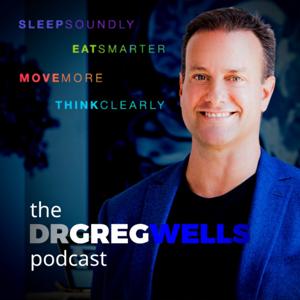
You can get healthier, improve your wellness, and live a limitless life and physiologist Dr. Greg Wells would love to be your trusted guide on that adventure.
Dr. Greg is one of the rare scientists who can take research and make it understandable so that you can have a clear path to achieving your goals.
In every episode, Dr. Greg and his expert guests will explain the science of how your body and brain work in a way that you can understand so you that you can get healthy, perform better, and live a limitless life.

90,991 Listeners

9,620 Listeners
11,782 Listeners

10,714 Listeners
12,708 Listeners

3,457 Listeners

19,271 Listeners