
Sign up to save your podcasts
Or

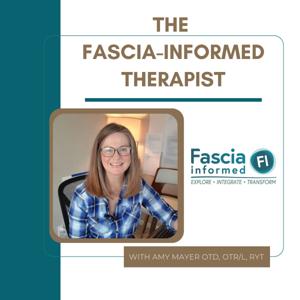


What do you do when a client comes to you following advice that doesn’t align with your approach? In this episode, we explore how to navigate those moments with professionalism and clarity. Learn how to explain your clinical reasoning, educate in a way clients can understand, and empower them to make their own informed decisions without dismissing or undermining another practitioner. Through a fascia-informed lens, we focus on communication that builds trust, supports autonomy, and transforms care.
Fascia Informed Newsletter
In this episode of The Fascia-Informed Therapist Podcast, I introduce my recently published book,
The Occupational Therapy Practitioner’s Guide to Fascia-Informed Practice
This episode outlines the clinical and conceptual motivations behind the text, including the need for a more integrative framework that bridges emerging fascia research with occupational therapy practice. It reflects on gaps in traditional models of care and the growing interest among practitioners in approaches that support more comprehensive assessment, clinical reasoning, and intervention planning.
The book was written to offer a structured, evidence-informed perspective on fascia as a clinically relevant system, while remaining accessible and applicable to everyday practice. It is intended for occupational therapy practitioners seeking to expand their theoretical foundation and consider new dimensions of patient care.
Listeners will gain insight into the purpose, scope, and intended application of the book, and may find it particularly relevant if they are interested in advancing their clinical reasoning or integrating fascia-informed concepts into their work.
Join our Community: Fascia Informed Community
In this episode, I sit down with Madeline Seide, OTD, OTR/L, RYT, LSVT-BIG, to explore how trauma shows up across the clients we work with every day. We discuss what current research is revealing about trauma’s impact on the brain, why understanding trauma matters for all healthcare professionals, and how it can influence behavior and engagement in therapy. Madeline and I also share practical ways we apply trauma-informed principles in our daily practice to create safer, more effective therapeutic environments.
Join our community to stay updated on all we have to offer health and wellness providers on fascia-informed care: Fascia Informed Subscriber
In this episode, I’m sharing one of the most foundational parts of my fascia‑informed approach: the progression of matching, pacing, and leading. Before I introduce any hands‑on work, movement exploration, or self‑treatment strategies, I focus on helping the client’s nervous system settle enough to participate.
I talk about how I attune to a client’s initial tempo, tone, and level of activation, and how that simple act of matching creates the safety their fascia and nervous system need. From there, I share how I gradually shift the rhythm of the session—using posture, breath, cadence, and presence—to support regulation without forcing change.
You’ll hear how I use these relational cues as the first intervention in fascia‑informed care, and why this sequence makes such a difference in interoception, tissue responsiveness, and therapeutic outcomes. If you’re looking for practical, immediately usable ways to help clients arrive more fully in their bodies, this episode will give you a clear, grounded framework you can bring straight into your next session.
Join our community: Fascia Informed CE Subscriber
Recent headlines have once again brought childhood sexual abuse into public view, often in ways that expose survivors while protecting systems of power. In this episode, we shift the focus away from spectacle and back to care.
Using evidence from two large systematic reviews, we explore how childhood sexual abuse, often occurring alongside other adverse childhood experiences, shapes nervous system development and increases the risk of chronic pain and pain-related disability in adulthood. We discuss how long-standing threat responses can amplify pain even decades later.
For fascia-informed therapists, this episode offers a clear rationale for trauma-informed evaluation, education, and referral which are grounded in science, not assumption. Pain, in this context, is not a failure of tissue, but a signal from a system that learned to survive.
Join us: Fascia Informed CE Subscriber
References from the podcast:
Fascia has become a popular word in health and movement spaces, but what does it actually mean?
In this episode, I explore why definitions matter and why fascia is not a fixed concept. How we define fascia shapes the questions we ask in research, the way clinicians think about the body, and how we explain pain, healing, and recovery to the people we serve.
I walk through the key definitions that have influenced my own thinking, starting with the traditional structural perspective found in Gray’s Anatomy, moving into the widely accepted definition from the Fascia Research Society that reframed fascia as a three-dimensional environment, and then exploring the function-focused definition proposed by John Sharkey and Mark Flannigan.
The heart of the episode focuses on a 2024 update to fascial nomenclature by Bordoni and colleagues, which challenges long-held assumptions by grounding the fascial system in embryology. This work expands the fascial continuum beyond solid connective tissues, emphasizing how tissues that develop together, function together, and communicate together cannot be fully understood when separated conceptually. https://doi.org/10.7759/cureus.53995
Rather than offering a final answer, this episode highlights fascia as a living, adaptive continuum and invites a wider view based on embryology.
As our science evolves, our language and perspective must evolve with it.
Join the Fascia-Informed way of thinking: Fascia Informed CE Subscriber
You can get CE for this episode! More here: Podcast CE
In this episode, we explore Dr. Patricia Huston’s 2022 paper proposing a new way to understand chronic disease. Huston suggests that unhealthy lifestyle patterns don’t just strain the heart, lungs, or muscles directly. Rather, they change the behavior of interstitial cells, especially macrophages and fibroblasts. These cells orchestrate inflammation, healing, and tissue remodeling throughout the body.
Using a six-level hierarchical network model, Huston shows how environmental pressures, social context, lifestyle habits, and nervous system activity converge on the interstitial microenvironment. When this system becomes overwhelmed, macrophages get stuck in a chronic inflammatory state and fibroblasts begin laying down excessive collagen, leading to fibrosis and organ dysfunction. This stalled healing process provides a unified explanation for why so many chronic diseases progress in similar ways.
We discuss why this theory is groundbreaking for fascia-informed therapists and how it aligns with salutogenesis—a health-focused approach centered on restoring interstitial fluid flow, tissue mobility, movement, and self-regulation. This episode offers a science-backed lens for understanding the transformative potential of fascia-based therapy in supporting long-term health and resilience.
Join our community of fascia-informed therapists: Fascia Informed CE
One option for explaining this simply to clients:
Your daily habits change the environment your cells live in. The fascia is your cells' environment. And cells behave differently depending on that environment.
This means lifestyle does not just affect symptoms. It affects how your cells decide whether to heal or stay inflamed.
In this episode I share a concept about new year resolutions that I address with all my clients. You must meet your body where it is at. Are you ready to jump into a new fitness program or is there are more important place to begin? Join me as a run through the foundations to healthy fascia and finding success with a new fitness goal.
I've also changed email platforms. If you haven't joined our community, now is the time! CLICK HERE
In this episode, we explore the powerful and often misunderstood connection between the mind and the body. Drawing from recent research across psychology, behavioral medicine, neuroscience, and aging studies, we break down what the science actually says about mindset and how beliefs, expectations, and interpretations of symptoms can directly influence the physical experience of health.
This is not about pretending everything is fine or relying on blind positivity. Instead, we examine the measurable ways that a growth health mindset, mindfulness, and intentional positive thinking can shape pain perception, inflammation, recovery, motivation, and overall well-being. We also look at how cultural narratives, stereotypes, and clinician language can create either healing momentum or nocebo effects that worsen symptoms.
You’ll hear insights on:
Whether you are a healthcare provider, someone living with chronic symptoms, or simply curious about how mindset intersects with health, this episode offers a grounded, science-informed perspective and practical ways to support healing from the inside out.
Tune in to learn how shifting the way you think about health can shift the way you experience it emotionally, behaviorally, and physiologically.
Study referenced:
Parsamanesh, P., & Vysochyn, M. (2024). A Psychological Exploration of the Power of Our Mindset and Its Influence on Physiological Health. Cureus, 16(1), e52505. https://doi.org/10.7759/cureus.52505
Join Us for the March CE Weekend! Fascia-Informed Continuing Education - The Fascia-Informed Therapist ™
Join us for a special episode introducing “Fascia-Informed Practice: An Experiential CE Weekend for Practitioners”, happening March 28–29, 2026. This weekend-long continuing education course offers hands-on training in fascia science, therapeutic techniques, movement, breathwork, and client education all rooted in evidence-based fascia theory and a whole-person lens.
Whether you’re an occupational therapist, wellness practitioner, movement specialist, or bodywork professional, this CE will deepen your understanding of fascia, equip you with safe and effective manual therapy and self-care tools, and transform how you view and treat the body. Space is limited to 14 participants so we can have a true immersive learning experience.
Tune in to hear why fascia matters, what you’ll learn, and how this weekend could reshape your practice and healing philosophy.
Join the newsletter for updates: Health and Wellness Practitioners
From the publisher's feed

10,653 Listeners
244 Listeners

9,140 Listeners

86 Listeners

46,839 Listeners
227 Listeners

19 Listeners

39,386 Listeners

29,014 Listeners

2,064 Listeners

18,897 Listeners

9 Listeners
18 Listeners

13 Listeners
1,141 Listeners