
Sign up to save your podcasts
Or

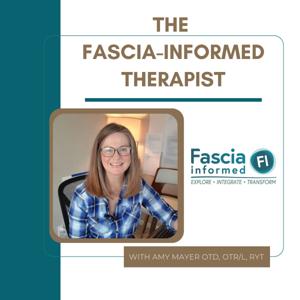


In this episode, we unpack the Interstitial Inflammatory Stasis (IIS) hypothesis introduced by Tuckey et al. (2021) in Frontiers in Pain Research. The authors propose that after injury or immune activation, inflammation can become “trapped” within the body’s microscopic fluid channels creating a self-perpetuating loop of congestion, fascial tension, and pain.
You’ll learn how this model integrates existing pain theories into one fascia-based framework. We’ll also explore how these ideas align with occupational therapy practice: restoring interstitial flow through movement, breath, manual therapy, and autonomic regulation.
Join the fascia-informed conversation: The Fascia-Informed Therapist ™ - Grounded in science. Practicing on the cutting edge.
References
Benias, P. C., Wells, R. G., Sackey-Aboagye, B., Klavan, H., Reidy, J., Buonocore, D., Miranda, M., Kornacki, S., Wayne, M., Carr-Locke, D. L., & Theise, N. D. (2018). Structure and Distribution of an Unrecognized Interstitium in Human Tissues. Scientific reports, 8(1), 4947. https://doi.org/10.1038/s41598-018-23062-6
Tuckey, B., Srbely, J., Rigney, G., Vythilingam, M., & Shah, J. (2021). Impaired Lymphatic Drainage and Interstitial Inflammatory Stasis in Chronic Musculoskeletal and Idiopathic Pain Syndromes: Exploring a Novel Mechanism. Frontiers in pain research (Lausanne, Switzerland), 2, 691740. https://doi.org/10.3389/fpain.2021.691740
If you’ve ever had a loved one in the hospital, you know the range of emotions that comes with it including fear, frustration, hope, and gratitude, often all at once. In this episode, I share my personal experience navigating my father’s recent hospitalization for an acute illness (on top of a long-term disability) and what it has reminded me about the human side of healthcare. When we take the time to truly see and understand our patients including their history, their challenges, their stories, we can provide care that is not just skillful, but compassionate. This episode is both a reflection and a reminder of why understanding and empathy must remain at the heart of our fascia-informed practice.
Join the conversation: The Fascia-Informed Therapist ™ - Grounded in science. Practicing on the cutting edge.
In this episode, we explore compartment syndrome (CS), a condition where pressure builds within the body’s muscular compartments, restricting blood flow, causing pain and threatening tissue health. You’ll learn the difference between acute and chronic (exertional) forms, how fascia’s properties play a role in pressure dynamics, and what recent research says about both surgical and conservative management. We'll also discuss the role habits may play in the development and management of CS as I share experiences with my own clients.
Whether you work in orthopedics, rehabilitation, or wellness, this episode highlights the types of CS and how understanding fascia can help you better educate your client and perhaps even your referral sources.
Join our community of fascia-informed practitioners: Health and Wellness Practitioners Email List
Cleveland Clinic. Compartment Syndrome Overview.
StatPearls. Exertional Compartment Syndrome – NCBI Bookshelf.
Elsenosy, A. M., Elnewishy, A., Hassan, E., & Delewar, R. A. (2024). Outcomes of Fasciotomy Versus Conservative Management for Chronic Exertional Compartment Syndrome: A Systematic Review and Meta-Analysis. Cureus, 16(12), e75803. https://doi.org/10.7759/cureus.75803
Altan, L. (2023). Postoperative Rehabilitation of Compartment Syndrome Following Fasciotomy. Turkish Journal of Physical Medicine and Rehabilitation, 69(2), 133–139. https://doi.org/10.5606/tftrd.2023.13041
In this short episode, I’m sharing a quick but important update about how the U.S. government shutdown is affecting websites like PubMed, and what that means for those of us who rely on up-to-date health information to serve our clients.
If you use free online resources to guide your work in health or wellness, this episode is for you. Let’s talk about how defunding impacts practitioners like us—and what we can do to stay informed and keep moving forward.
Stay up to date and join the community: The Fascia-Informed Therapist ™ - Grounded in science. Practicing on the cutting edge.
In this episode, we explore the remarkable relationship between sound baths and the fascial system. Learn how sound doesn’t just soothe your mind—it actually moves through your fascia, stimulating deep healing at the cellular level.
I share about my experience at Sound Bath Workshop I recently took for my RYT, why I chose to attend, as well as what the most recent research says about sound baths (citations below). At the end I share with you the meditation I created and presented during the workshop. Of course, it focused on fascia and my reflections on how I see all this information intersecting with fascia.
Join the conversation and sign up for our newsletter: Health and Wellness Practitioners
References:
Stanhope, J., & Weinstein, P. (2020). The human health effects of singing bowls: A systematic review. Complementary Therapies in Medicine, 51, 102412. https://doi.org/10.1016/j.ctim.2020.102412
Seetharaman, R., Avhad, S., & Rane, J. (2024). Exploring the healing power of singing bowls. Explore (New York, N.Y.), 20(1), 39–43. https://doi.org/10.1016/j.explore.2023.07.007
Cai, Y., et al. (2025). Therapeutic effects of singing bowls: A systematic review. Integrative Medicine Research, 14(2), 101144. https://doi.org/10.1016/j.imr.2025.101144
Hasani, Z., Mohammadi, S., & Karimi, H. (2025). Effect of Singing Bowl Sound on Anxiety and Physiological Variables of Patients Awaiting Angiography. Journal of Perianesthesia Nursing, 40(2), 305–309. https://doi.org/10.1016/j.jopan.2024.04.012
Listen in as a critical thinker shares her key takeaways from the Fascia Congress. Madeline Seide OTD, OTR/L, RYT, LSVT-BIG shares insights from several of the keynote speakers from the importance of the lumbosacral fascia to how we stretch to prepare our bodies for functional activity and sports. We also discuss the contradictory nature of the word stiff and the Dunning-Kruger effect.
Make sure you join our community at The Fascia-Informed Therapist ™ - Grounded in science. Practicing on the cutting edge.
In this episode, I sit down with Kaitlyn Rambo, OTD, OTR/L, PAMS, LSVT-BIG to explore her top takeaways from the recent Fascia Research Conference. With a unique lens as a practicing OT, Kaitlyn shares the most impactful insights, emerging research, and clinical applications that caught her attention. We discuss what this evolving science means for occupational therapists and other health professionals working with the body in dynamic and therapeutic ways. If you couldn’t attend the conference—or just want a grounded, practical recap—you won’t want to miss this conversation.
Join our community and get a link to the book mentioned at FasciaInformed.com.
Season 2 kicks off with a personal reflection on my own journey through burnout and recovery. In this episode, I share lessons learned, strategies I tried, and how therapists can rediscover energy and purpose in their work.
Join the fascia-informed conversations here: The Fascia-Informed Therapist ™ - Grounded in science. Practicing on the cutting edge.
In this short episode, I’m letting you know that I’ll be pressing pause on new episodes until September. Why? Because something meaningful is calling: the final chapters of the book I’ve been pouring myself into. I also share a brief reflection on Die with Zero, a book that challenges us to consider what it really means to live without regrets. This break isn’t about stepping back—it’s about leaning into purpose, presence, and creation. See you in September, refreshed and ready.
Put September 7th in your calendar for the next episode and be sure to get on the newsletter list.
The Fascia-Informed Therapist ™ - Grounded in science. Practicing on the cutting edge.
In this episode I take a break from the science and share what we're working on for September 2025.
Be sure to get on our email list so you can get registered!
The Fascia-Informed Therapist ™ - Grounded in science. Practicing on the cutting edge.
From the publisher's feed

10,653 Listeners
244 Listeners

9,140 Listeners

86 Listeners

46,839 Listeners
227 Listeners
19 Listeners

39,386 Listeners

29,014 Listeners

2,064 Listeners

18,897 Listeners

9 Listeners
18 Listeners

13 Listeners
1,141 Listeners