
Sign up to save your podcasts
Or

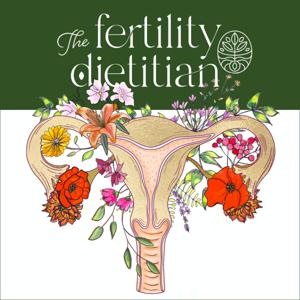


Estrogen gets a bad rap in the fertility world. If you've ever been told you have "estrogen dominance," you've probably been made to feel like estrogen is the problem — something to suppress, detox, or eliminate. But here's the truth: estrogen is essential for fertility, pregnancy, and long-term health. We don't want to get rid of estrogen. We want to help her stay balanced and working with your body, not against it.
In this episode of The Fertility Dietitian Podcast, we're breaking down what estrogen actually does in the body, how both high and low estrogen can interfere with fertility, and the biggest nutrition and lifestyle factors that influence estrogen metabolism. This is a short but powerful episode (15 minutes) that will completely change how you think about estrogen, hormone balance, and what actually supports healthy cycles and implantation.
"Estrogen isn't the villain — she's essential. The goal isn't suppression, it's balance." - Brooke Boskovich.
In This Episode, You'll Learn:
Why estrogen is a Goldilocks hormone — and why both high and low levels can impact fertility
Common signs and symptoms of high estrogen vs. low estrogen
How estrogen supports ovulation, implantation, cervical mucus, mood, bone health, and heart health
Why "normal" estrogen labs don't always tell the full story
The critical role of progesterone in balancing estrogen
How gut health and the estrobolome influence estrogen recycling
Why liver function matters for estrogen detox and metabolism
How blood sugar, stress, over-exercising, and under-fueling disrupt estrogen balance
The nutrients required for healthy estrogen metabolism
Why genetics is not destiny when it comes to hormones
My top three nutrition and lifestyle strategies to support estrogen balance
Why blindly supplementing to "lower estrogen" can backfire
When deeper testing (like the DUTCH test) is actually helpful
—
Connect & Learn More:
We talk a lot around here about gut health, hormones, blood sugar, inflammation, and nutrient status—all the big pillars that influence fertility. But today, we're backing things up literally to the mouth. Because here's something that still surprises a lot of couples: you cannot fully optimize fertility without paying attention to oral health.
What's happening in your mouth does not stay in your mouth. Oral bacteria and gum inflammation directly impact systemic inflammation, immune function, hormone signaling, sperm quality, implantation, pregnancy outcomes, and miscarriage risk. And yes—this matters for both female and male fertility. Oral health is now considered a critical part of preconception care, not just something to think about when you're due for a dental cleaning.
"Bleeding gums are common, but they are not normal—and inflammation anywhere affects fertility everywhere." - Brooke Boskovich.
In This Episode, You'll Learn:
How oral bacteria enter the bloodstream and drive systemic inflammation
Why gum disease is linked to longer time to conception and pregnancy complications
The connection between oral health, sperm quality, and DNA integrity
Signs your oral health may be impacting fertility (even subtle ones)
Fertility-friendly oral hygiene habits you can start today
Key nutrients that support both oral and reproductive health
—
Connect & Learn More:
If you haven't listened to Episode 27 on iron supplementation and fertility yet, I highly recommend starting there. In that episode, we broke down why blindly supplementing iron can actually backfire, why low iron on labs doesn't automatically mean iron deficiency, and why iron never works alone. Today's episode builds on that foundation and goes even deeper into what's really going on with iron and fertility.
Here's the truth most women are never told: fertility-related iron issues are rarely about iron intake. They're about iron regulation. Transport. Binding. Inflammation. And clotting risk. Your body is actually very efficient with iron — so when labs look "low," the real question isn't how much iron are you eating? It's why isn't your body able to use the iron it already has? That's exactly what we're unpacking today.
"Most iron issues in fertility aren't about intake — they're about regulation." - Brooke Boskovich.
In This Episode, You'll Learn:
Why most fertility-related iron issues are regulation problems, not true iron deficiency
How inflammation causes iron to get "stuck" — and why supplementing often makes this worse
The critical role copper, ceruloplasmin, vitamin A, and magnesium play in iron transport
Why food-based (heme) iron supports fertility better than iron supplements
How excess or poorly regulated iron increases clotting risk and can impair implantation
The specific lab patterns that point to functional iron deficiency vs. true deficiency
—
Connect & Learn More:
If you've been trying to get pregnant and ovulation feels confusing, stressful, or like a moving target every single month — this episode is for you. Ovulation is talked about constantly in the TTC world, but very rarely explained in a way that actually helps you understand what your body is doing in real time. And without that clarity, timing can quickly turn into pressure instead of empowerment.
In this episode, I'm breaking down ovulation from the inside out — what healthy ovulation truly looks like, how to identify your fertile window with confidence, and why timing matters more than frequency when it comes to conception. This is your Ovulation 101 reset, so you can stop guessing and start working with your body instead of against it.
"Cervical mucus isn't gross — it's one of the most powerful fertility signs you have." - Brooke Boskovich.
In This Episode, You'll Learn:
What ovulation actually is (and why it's a hormonal event, not just a calendar day)
The signs of healthy ovulation and what they should look and feel like
How cervical mucus signals your fertile window — and what's considered normal
When LH strips should be darkest, and what a positive test really means
How to confirm ovulation using basal body temperature and blood work
The best day to try for conception (and why trying more isn't always better)
How progesterone reflects egg quality and ovulation strength
Why stress, under-fueling, and poor sleep quietly disrupt ovulation
—
Connect & Learn More:
So many women and couples come to me feeling overwhelmed, standing in the supplement aisle, wondering if this next thing will finally be the answer. Today's episode cuts straight through that noise. We're talking about the most powerful fertility tools available to you — and they don't cost a single dollar.
These are foundational, science-backed strategies that regulate your hormones, calm your nervous system, and shift your body out of survival mode and into reproductive mode. If you've been doing "all the things" but still feel stuck, this episode is your reminder that fertility doesn't require more — it requires safety, rhythm, and consistency.
"Sunlight is the trigger. Sleep is the repair crew." - Brooke Boskovich.
In This Episode, You'll Learn:
Why sunshine before screen time can dramatically improve ovulation, hormone balance, and sleep
How sleep acts as your fertility repair crew (and why you can't out-supplement it)
The role of gentle, consistent movement in supporting egg quality and cycle health
How breathwork directly impacts cortisol, digestion, and reproductive hormones
Why nervous system safety is the missing link for so many fertility journeys
—
Connect & Learn More:
When we talk about fertility, blood flow rarely gets the spotlight, but it should. Healthy circulation is what delivers oxygen, nutrients, antioxidants, and hormones to your ovaries, uterus, and sperm-producing tissue. When blood flow is sluggish, those essential building blocks struggle to reach where they're needed most, impacting egg quality, uterine lining development, and sperm health.
The good news is that supporting circulation doesn't require extreme protocols or expensive interventions. Small, consistent shifts with food, movement, hydration, and lifestyle can make a meaningful difference. In this episode of The Fertility Dietitian Podcast, I walk you through simple, research-supported ways to nourish reproductive blood flow for both partners—because fertility is always a couple-level conversation.
"Blood flow is the delivery system for oxygen, nutrients, hormones, and antioxidants—and fertility depends on all of it." - Brooke Boskovich.
In This Episode, You'll Learn:
Why blood flow is foundational for egg quality, uterine lining health, and sperm DNA integrity
How oxidative stress and poor circulation affect both male and female fertility
Fertility-supportive foods that naturally enhance nitric oxide and vascular function
Why hydration and mineral balance matter for blood volume and circulation
The role of movement, clothing, and heat exposure in reproductive blood flow
Gentle, holistic strategies to support pelvic circulation without over-stressing the body
Connect & Learn More:
Subscribe on Apple Podcasts: apple.co/4faTvVq
Support the show: Please leave me a comment or a review wherever you listen to this podcast
Learn more about this episode: thefertilitydietitian.health
Contact me: [email protected]
Check out my Digital Store: thefertilitydietitian.health/shop
Facebook: facebook.com/BrookeTheFertilityDietitian
Instagram: instagram.com/the.fertility.dietitian
YouTube: youtube.com/@TheFertilityDietitianPodcast
I am so excited to share another very special client story. Meghann and her husband trusted me to help uncover the barriers behind their recurrent losses, even when they were repeatedly told it was "just her age" and IVF was the only option.
Today, Meghann is 26 weeks pregnant with a healthy baby boy at 41 years old—conceived naturally. I hope her story brings you hope and inspiration.
"Age is a piece of the puzzle—but it's a much smaller piece than most couples are told." - Brooke Boskovich.
In This Episode, You'll Learn:
How recurrent loss often stems from deeper issues—not age alone
Why gut health and nutrient absorption are foundational for fertility
How hair tissue mineral analysis (HTMA) reveals hidden energy and hormone barriers
The overlooked thyroid patterns that were triggering Meghann's miscarriages
Why early pregnancy labs (TSH, free T4, progesterone, HCG) can be game-changing
How lifestyle and nutrition shifts regulated her cycles within one month
The role progesterone played in sustaining her successful pregnancy
Why advocating for yourself matters at every step of the journey
How Meghann conceived naturally at 41 after three miscarriages—without IVF
Connect & Learn More:
Subscribe on Apple Podcasts: apple.co/4faTvVq
Support the show: Please leave me a comment or a review wherever you listen to this podcast
Learn more about this episode: thefertilitydietitian.health
Contact me: [email protected]
Check out my Digital Store: thefertilitydietitian.health/shop
Facebook: facebook.com/BrookeTheFertilityDietitian
Instagram: instagram.com/the.fertility.dietitian
YouTube: youtube.com/@TheFertilityDietitianPodcast
Building a fertility-friendly environment doesn't require a full lifestyle overhaul or endless product research—it starts with a few strategic, high-impact swaps. In this episode, I'm walking you through the exact places to begin so you can lower endocrine-disrupting chemical (EDC) exposure and protect your egg and sperm health with confidence. We're using a simple, practical framework: what goes in your body, what goes on your body, and what goes around your body.
From cookware and food storage to underwear fabrics, dish soap, water filtration, fragrances, deodorants, and indoor air quality, this episode breaks down the swaps that matter most—and the ones that aren't worth your stress. You'll walk away knowing where to start, how to choose safer products, and which daily habits help reduce toxic load while supporting healthy cycles, implantation, and better reproductive outcomes.
"Protecting egg and sperm health starts with reducing the exposures you can control." - Brooke Boskovich.
In This Episode, You'll Learn:
How everyday EDCs (BPA, BPS, phthalates, PFAS, parabens) impact ovarian function, sperm health, implantation, and IVF outcomes
The cookware materials that protect fertility—and why nonstick pans are a hidden exposure source
How plastic food storage and heating increase BPA migration (and what to use instead)
The most important water-filtering steps for reducing PFAS and chlorine exposure
Why thermal paper receipts are a major source of BPA/BPS absorption
The safest swaps for laundry detergent, dish soap, and home cleaning products
How fragrance in personal care products disrupts hormones
Which fabrics positively or negatively affect reproductive health
The safest sunscreen, lotion, and deodorant choices for preconception
How candles, air fresheners, and indoor dust influence hormone health
The simple home-air improvements that immediately lower toxic burden
Practical, budget-friendly ways to start swapping without overwhelm
Connect & Learn More:
Subscribe on Apple Podcasts: apple.co/4faTvVq
Support the show: Please leave me a comment or a review wherever you listen to this podcast
Learn more about this episode: thefertilitydietitian.health
Contact me: [email protected]
Check out my Digital Store: thefertilitydietitian.health/shop
Facebook: facebook.com/BrookeTheFertilityDietitian
Instagram: instagram.com/the.fertility.dietitian
YouTube: youtube.com/@TheFertilityDietitianPodcast
Today we're unpacking a buzzy wellness trend: cold plunging. You've probably seen the hype—ice baths, breathwork, big promises. But when it comes to female fertility, the picture is more nuanced. Cold plunging is not the superpower habit it's marketed to be, especially if you're trying to conceive.
Timing and context matter. And once we factor in menstrual cycle physiology, the story changes even more. Male fertility is a different conversation, with clearer potential benefits around temperature management for sperm. In this episode, we walk through physiology, fertility-specific research, and the real-world considerations to help you decide what's right for you.
"Your luteal phase runs warmer for a reason—fighting that natural heat with a cold plunge works against your biology." - Brooke Boskovich.
In This Episode, You'll Learn:
Why cold plunging is not a fertility booster for women trying to conceive
How a woman's core body temperature shifts across the menstrual cycle
Why the luteal phase is especially vulnerable to cold-induced stress
How cold exposure affects stress hormones, cortisol, and norepinephrine
When (and if) women can safely use cold exposure without disrupting ovulation
Signs you should avoid cold plunging altogether
Why targeted cooling—not whole-body plunges—may support male fertility
Lifestyle factors that increase scrotal heat and impair sperm parameters
How to think about metabolic and mitochondrial claims around cold exposure
What to choose instead if you love the mental health benefits of cold
Connect & Learn More:
Subscribe on Apple Podcasts: apple.co/4faTvVq
Support the show: Please leave me a comment or a review wherever you listen to this podcast
Learn more about this episode: thefertilitydietitian.health
Contact me: [email protected]
Check out my Digital Store: thefertilitydietitian.health/shop
Facebook: facebook.com/BrookeTheFertilityDietitian
Instagram: instagram.com/the.fertility.dietitian
YouTube: youtube.com/@TheFertilityDietitianPodcast
Fibermaxxing is one of the biggest wellness trends on social media right now.
In this episode, I share what fibermaxxing is, what the benefits are, and how to put it into practice in your life to help you on your fertility journey.
Listen in to learn the relationship between your gut and your body's overall health.
Find out about the different kinds of fibers and why variety matters.
"A balanced gut helps regulate inflammation and hormone detoxification, which are key for conception and a healthy pregnancy." - Brooke Boskovich.
In This Episode, You'll Learn:
What fibermaxxing actually is — and how to do it right
How your gut microbiome impacts hormones, fertility, and even your future baby's health
Why gut health influences inflammation, estrogen metabolism, and implantation success
The three key types of fiber (soluble, insoluble, and resistant starch) and how each supports fertility
How to increase fiber intake without bloating or discomfort
The link between gut health and mood, stress, and immune balance
Practical ways to support your gut through diverse plant foods, hydration, and mindful eating
The truth behind how short-chain fatty acids from fiber benefit egg and sperm quality
Connect & Learn More:
Subscribe on Apple Podcasts: apple.co/4faTvVq
Support the show: Please leave me a comment or a review wherever you listen to this podcast
Learn more about this episode: thefertilitydietitian.health
Contact me: [email protected]
Check out my Digital Store: thefertilitydietitian.health/shop
Facebook: facebook.com/BrookeTheFertilityDietitian
Instagram: instagram.com/the.fertility.dietitian
YouTube: youtube.com/@TheFertilityDietitianPodcast
From the publisher's feed

14,883 Listeners

8,463 Listeners

3,612 Listeners

164,509 Listeners
389 Listeners

25,782 Listeners
1,106 Listeners

4,088 Listeners
1,404 Listeners
285 Listeners
1,546 Listeners

19,270 Listeners
1,192 Listeners

590 Listeners
378 Listeners