
Sign up to save your podcasts
Or



There is good news on inflation in store for Americans. The Labor Department is expected to report that overall inflation fell to about 3% in June, the lowest in two years. Excluding volatile food and energy prices, core consumer price inflation is expected to drop to around 5%, an 18-month low, from 5.3%. Economists think core inflation could ebb further in coming months, to between 3.5% and 4%, depending on the price index. The bad news: Getting inflation down further from there, to the Federal Reserve’s 2% target, will prove difficult if the economy keeps chugging along. That could force the Fed to keep monetary policy tight until the labor market weakens.
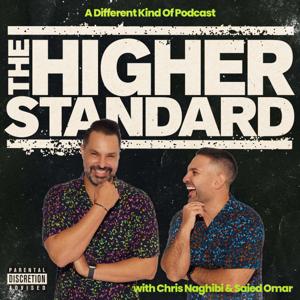
In this episode of The Higher Standard, Chris and Saied examine this news and determine the effect it will have on the economy as a whole.
They discuss a Labor Department report indicating that nonfarm payrolls increased 209,000 in June and the unemployment rate was 3.6%. That compared with the Dow Jones consensus estimates for growth of 240,000 and a jobless level of 3.6%.
Chris and Saied look at comments from JPMorgan Chase CEO Jamie Dimon, following the winning bid for First Republic, a lender to rich coastal families that had $229 billion in assets, who claimed that "This part of the crisis is over."
They also offer some thoughts on Fitch analyst Chris Wolfe's assertion that half the country’s banks will likely be swallowed by competitors in the next decade.
Join Chris and Saied for this fascinating and informative conversation.
Enjoy!
What You’ll Learn in this Show:
Resources:
"Treasury yields fall as investors look to key economic data" (CNBC)
"America’s Biggest Banks Are Going to Need More Capital" (The Wall Street Journal)
"Everyone Wants Interest on Their Deposits. That’s Bad for Main Street Banks" (The Wall Street Journal)
"Last Mile of the Inflation Fight Will Be the Hardest" (The Wall Street Journal)
"Payrolls rose by 209,000 in June, less than expected, as jobs growth wobbles" (CNBC)
"Job openings fall by half a million" (CNBC)
"The American banking landscape is on the cusp of a seismic shift. Expect more pain to come." (CNBC)
The Commerce Department is reporting that the US economy expanded at a much faster pace in the first three months of the year than previously estimated. Consumer spending accounts for about 70% of America’s gross domestic product, the broadest measure of the economy, so it’s nearly impossible to enter a recession when spending is growing. Over the pandemic, historic levels of stimulus cash boosted household income significantly. Spending, meanwhile, was severely curtailed as the economy shut down. Personal saving rates soared as a result, with US households amassing about $2.3 trillion in savings in 2020 and through the summer of 2021, according to Federal Reserve economists. That’s about $2 trillion more than they would have saved under normal circumstances.
In this episode of The Higher Standard, Chris and Saied examine this news and determine the effect it will have on the economy as a whole.
They discuss a warning from the Federal Trade Commission, indicating that scammers are likely to target student loan borrowers after the Supreme Court struck down the Biden administration’s debt forgiveness plan, and as loan repayments are poised to restart in the fall.
Chris and Saied look at a report from payroll processing firm ADP, showing that private sector jobs surged by 497,000 for the month, well ahead of the downwardly revised 267,000 gain in May and much better than the 220,000 Dow Jones consensus estimate. The increase resulted in the biggest monthly rise since July 2022.
They also offer some thoughts on comments from Epiq Bankruptcy, a provider of US bankruptcy filing data, which claims that Chapter 11 bankruptcy filings jumped 68% in the first half of 2023 from a year earlier.
Join Chris and Saied for this fascinating and informative conversation.
Enjoy!
What You’ll Learn in this Show:
Resources:
(Chart of the Day via Instagram)
"The Fed can’t decide how much money US households have left" (CNN)
"Mortgage rates hit the highest point of the year" (Yahoo! Finance)
"America's economy rapidly shifts south" (Axios)
"Bankruptcy filings surge in first half of 2023 in US, Epiq says" (Reuters)
"CRE Nightmare For CMBS Holders: Office Mortgage Delinquency Rate Suffers Biggest 6-Month Spike Ever" (Zerohedge)
"Private sector companies added 497,000 jobs in June, more than double expectations, ADP says" (CNBC)
"Payrolls report Friday likely to show a jobs market that is still hot" (CNBC)
"Fed sees more rate hikes ahead, but at a slower pace, meeting minutes show" (CNBC)
"FTC warns about student loan scams following Supreme Court decision" (CNBC)
"Corporate America Faces a Bankruptcy Boom" (New York Times)
"Inflation Keeps The Housing Market Afloat — For Now" (Forbes)
"Some Fed Officials Supported Raising Rates in June" (The Wall Street Journal)
Millions of Americans will have to prepare to repay the entire balance of their student debt now that the Supreme Court has overturned President Biden’s loan-forgiveness plan. After a three-year pause in payments and months of uncertainty and legal challenges, the program won’t be allowed to move forward. The Biden administration’s forgiveness plan would have wiped out up to $20,000 in federal student-loan debt for qualified borrowers. The court ruled in a 6-3 decision Friday that the Education Department doesn’t have the authority to implement a program that would change student loans this way.
In this episode of The Higher Standard, Chris and Saied examine this news and determine the effect it will have on the economy as a whole.
They discuss comments by Wharton professor Jeremy Siegel, who says he is not ruling out an interest rate cut by the Federal Reserve by the end of the year, despite market expectations.
Chris and Saied look at a Commerce Department report, indicating that the core personal consumption expenditures price index, a number closely watched by the Federal Reserve, increased 0.3% for the month. On the year, core PCE inflation increased 4.6%, though the headline number was up just 3.8%.
They also offer some thoughts on data from Redfin, showing that nationwide, the median U.S. home sale price fell 4.1% ($17,603) year over year in April to $408,031. That’s the biggest drop on record in dollar terms and the largest decline since January 2012 in percentage terms. April marked the third consecutive month of year-over-year declines following roughly a decade of increases.
Join Chris and Saied for this fascinating and informative conversation.
Enjoy!
What You’ll Learn in this Show:
Resources:
"Supreme Court Throws Out Biden’s Student-Loan Relief Plan" (Bloomberg)
"US corporate bankruptcies are on the rise" (QZ)
"This economist says he can’t rule out a Fed interest-rate cut by year-end. Here’s why." (MarketWatch)
(Reventure Consulting via Instagram)
"Homes in Austin and Boise are Selling for $80,000 Less Than a Year Ago" (Redfin)
"Median Sales Price for New Houses Sold in the United States" (St. Louis Federal Reserve)
"Key Fed inflation measure shows prices rose just 0.3% in May" (CNBC)
"What the Supreme Court’s Rejection of Student-Loan Forgiveness Means for You" (The Wall Street Journal)
"People Hire Phone Bots to Torture Telemarketers" (The Wall Street Journal)
The U.S. economy showed much stronger-than-expected growth in the first quarter than previously thought, according to a big upward revision Thursday from the Commerce Department. GDP increased at a 2% annualized pace for the January-through-March period, up from the previous estimate of 1.3% and ahead of the 1.4% Dow Jones consensus forecast. This was the third and final estimate for Q1 GDP. The growth rate was 2.6% in the fourth quarter.
In this episode of The Higher Standard, Chris and Saied examine this news and determine the effect it will have on the economy as a whole.
They discuss data from Realor.com, indicating that the number of homes for sale this month was actually 7% higher than June of last year. However, in just the last week, that comparison went negative, with the number of homes for sale falling below year-ago levels for the first time in 59 weeks.
Chris and Saied look at a report from the Labor Department, shown that initial jobless claims decreased by 26,000 to 239,000 in the week ended June 24, lower than all the estimates given in a recent survey of economists.
They also offer some thoughts on cryptocurrency's lack of government regulation and the opportunities it offers to traders wishing to bypass government red tape. However its lack of formal oversight also makes it ripe for abuse.
Join Chris and Saied for this fascinating and informative conversation.
Enjoy!
What You’ll Learn in this Show:
Resources:
"First-quarter economic growth was actually 2%, up from 1.3% first reported, in major GDP revision" (CNBC via Instagram)
"World's dealmakers are down $1 trillion in one of worst years for M&A and IPOs in decades" (Bloomberg Business via Instagram)
"Dealmakers Adrift as $1 Trillion Vanishes in First Half" (Bloomberg)
"Prices for luxury Swiss watches are near the lowest in almost two years on the secondary market" (Businessweek via Instagram)
"Popularity of Apps for Early Paydays Masks Added Risks" (Bloomberg)
"House hunting is already tough. Guess what? It’s about to get harder" (CNBC)
"First-quarter economic growth was actually 2%, up from 1.3% first reported in major GDP revision" (CNBC)
"He lost $340,000 to a crypto scam. Such cases are on the rise" (NPR)
https://www.npr.org/2023/06/25/1180256165/crypto-scam-senior-victims-spirebit
"US Jobless Claims Drop by Most Since 2021 in Holiday Week" (Bloomberg)
"Airbnb Could Be in Trouble — Here’s What You Need to Know" (Architectural Digest)
In New York and London, owners of office towers are walking away from their debt rather than pouring good money after bad. The landlords of downtown San Francisco’s largest mall have abandoned it. A new Hong Kong skyscraper is only a quarter leased. The rot inside commercial real estate is like a dark seam running through the global economy. Even as stock markets rally and investors are hopeful that the fastest interest-rate increases in a generation will ebb, the trouble in property is set to play out for years.
In this episode of The Higher Standard, Chris and Saied examine this news and determine the effect it will have on the economy as a whole.
They discuss a prediction from Chapman University economists, calling for a mild national recession in the second half of the year, driving down the coastal community's year-end local median sales price to $885,000 — an 11 percent drop from $993,000 in June and 19 percent off the $1.1 million high of spring 2022.
Chris and Saied look at announcements from several big companies, including Apple, JPMorgan Chase, and Amazon, who are attempting new pushes to “return to office” after previous attempts foundered. However, the pandemic has showed that many jobs can be done remotely, while a tight labor market and successful pandemic policy has given employees the confidence to push for better working conditions.
They also offer some thoughts on data from Moody’s Investors Service, which indicates that corporate defaults rose last month, with 41 in the U.S. so far this year. That’s more than double the same period last year.
Join Chris and Saied for this fascinating and informative conversation.
Enjoy!
What You’ll Learn in this Show:
Resources:
"Cinemark closing theater complex at Westfield" (NBC via Instagram)
"OC home prices expected to fall by 11% as recession looms" (TheRealDeal via Instagram)
"Silicon Valley vacancy jumps to 17% as tech firms shed floors" (TheRealDeal via Instagram)
"Return to office? How COVID-19 and remote work reshaped the economy" (Princeton University Press)
"Corporate bankruptcies and defaults are surging – here’s why" (CNBC)
"The World’s Empty Office Buildings Have Become a Debt Time Bomb" (Bloomberg)
"U.S. new home sales jump in May; median house price falls" (Reuters)
"U.S. Home Prices Posted First Annual Decline Since 2012 in April" (The Wall Street Journal)
"Airbnb CEO says this is ‘loneliest time in human history’ and we need to ‘rebuild physical community’" (Fortune)
"The office real estate crash will be so sharp and deep that Capital Economics thinks office values are unlikely to recover by 2040" (Fortune)
"The Debt Crisis Looming in Commercial Real Estate" (Bloomberg)
Fed Chairman Jerome Powell has affirmed that more interest rate increases are likely ahead until additional progress is made on bringing down inflation. Speaking a week after FOMC officials decided for the first time in more than a year not to push rates higher, the central bank leader indicated that the move likely was just a brief respite rather than an indication that the Fed is done hiking.
In this episode of The Higher Standard, Chris and Saied examine this news and determine the effect it will have on the economy as a whole.
They discuss a forecast by London-based research firm Capital Economics, indicating that US office buildings are unlikely to regain their peak pre-pandemic values until at least 2040 as demand for desk space weakens.
Chris and Saied look at a Labor Department report, stating that initial jobless claims held at 264,000 in the week ended June 17 after a slight upward revision to the previous week’s figures. This was above the median forecast of a survey of economists, who estimated 259,000 new claims.
They also offer some thoughts on data from S3 Partners LLC, showing that total US short interest, or the amount traders have spent betting against US equities, exceeded $1 trillion this month as the S&P 500 Index extended its advance. The tally reached the highest since April 2022 before retreating slightly with stocks down for a third straight day.
Join Chris and Saied for this fascinating and informative conversation.
Enjoy!
What You’ll Learn in this Show:
Resources:
"Senator Elizabeth Warren pressures Federal Reserve Chair Jerome Powell on the SVB and FirstRepublic bank failures" (Bloomberg via Instagram)
"Higher Interest Rates Hit Home Prices Again" (The Wall Street Journal)
"Powell expects more Fed rate hikes ahead as inflation fight ‘has a long way to go’" (CNBC)
"Fed Chair Powell says smaller banks likely will be exempt from higher capital requirements" (CNBC)
"US Office Owners Get Dire Warning: Rebound Unlikely Before 2040" (Bloomberg)
"US Jobless Claims Hold at Highest Level Since October 2021" (Bloomberg)
"Short Bets on US Stocks Hit $1 Trillion, Most Since April 2022" (Bloomberg)
"Existing Home Sales Unexpectedly Improve in May Amid Multi-Family Gains" (MSN)
US Federal Reserve officials struck a hawkish tone in their first comments since the central bank held the policy interest rate steady at its meeting this week but signaled that rate hikes will likely resume. Federal Reserve Governor Christopher Waller said that changes in US credit conditions since the failure of Silicon Valley Bank in early March were 'in line' with financial tightening that was already underway due to Federal Reserve interest rate increases - comments that downplayed the idea a worse-than-anticipated contraction in credit might make further Fed rate increases less necessary.
In this episode of The Higher Standard, Chris and Saied examine this news and determine the effect it will have on the economy as a whole.
They discuss a report by John Burns Real Estate Consulting, indicating that the monthly premium on home ownership is up to $1,030 per month — up 17 percent from this month last year, when the difference favored renters by $884 per month.
Chris and Saied look at the staggering $1.3 billion every day the government pays in interest on its debt. This means that a substantial portion of taxpayer money is being allocated solely to cover the interest costs of the national debt.
They also offer some thoughts on Economist Nouriel Roubini's doubling down on dire warnings about the US, saying the nation is headed for a recession as a combo of higher interest rates, sticky inflation, and a credit squeeze barrel the economy.
Join Chris and Saied for this fascinating and informative conversation.
Enjoy!
What You’ll Learn in this Show:
Resources:
"...there will 'certainly' be a recession: Nouriel Roubini" (Yahoo! Finance via YouTube)
"Fed policymakers deliver hawkish vibe after pause decision" (Reuters)
"Why economists say it’s a near certainty that housing inflation will soon fall" (CNBC)
"The government is paying $1.3 billion in interest on its debt every day" (Wealth via Instagram)
"Tech-Stock Boom Pits AI Against the Fed" (The Wall Street Journal)
"Lots of Hiring, but Not So Much Working" (The Wall Street Journal)
"Biden Touts Job Growth in First Re-Election Campaign Rally" (The Wall Street Journal)
"A recession is ‘at our doorstep,’ but investors are falling for a goldilocks scenario, Wells Fargo says. It ‘isn’t going to end all that well’" (Yahoo! Finance)
"U.S. Apartment Values 'Will Plunge A Further 20%,' Economists Say, But Wall Street Still Sees Major Upside In These REITs — Be Greedy When Others Are Fearful?" (Yahoo! Finance)
"Buying costs $1000 more per month than renting" (TheRealDeal via Instagram)
The stock market is growing more optimistic about US regional banks, but the lenders still face serious pressure. A credit "contraction is invariably coming," Soros Fund Management Chief Executive Officer Dawn Fitzpatrick has said, adding that additional banks will fail because "there are more problems under the surface." One further source of trouble for the industry will be commercial real estate, an area that in recent years smaller and regional banks have become a bigger force in.
In this episode of The Higher Standard, Chris and Saied examine this news and determine the effect it will have on the economy as a whole.
They discuss a report stating that the Federal Reserve will pause its historic rate-hiking campaign as it waits for the effects to trickle further through the economy, while also signaling that additional rate hikes are likely this year.
Chris and Saied look at data from the Labor Department indicating that the inflation rate cooled in May to its lowest annual rate in more than two years, likely taking pressure off the Federal Reserve to continue raising interest rates.
They also offer some thoughts on the Consumer Price Index showing that inflation has been cut by more than half from last year’s peak. On an annual basis, prices rose by 4% compared to a year ago. That’s a significant decline from April, when annual inflation was 4.9%.
Join Chris and Saied for this fascinating and informative conversation.
Enjoy!
What You’ll Learn in this Show:
Resources:
"The Fed holds rates steady, pausing its rate-hiking campaign" (CNN)
"Fed Chair Powell says more rate hikes coming this year" (CNBC via Instagram)
"Instant Reaction: Fed Decision June 14, 2023" (NARresearch via Instagram)
"Westfield leaving downtown San Francisco amid declining sales" (NBC via Instagram)
"Goldman Sachs CEO David Solomon says the U.S. economy has been incredibly resilient" (CNBC via Instagram)
"Inflation rose at a 4% annual rate in May, the lowest in 2 years" (CNBC)
"Here’s the inflation breakdown for May 2023, in one chart" (CNBC)
"CPI Report Shows Inflation Has Been Cut in Half From Last Year’s Peak" (The Wall Street Journal)
"Regional Banks Face Years of Trouble" (The Wall Street Journal)
"The Richest Person In Every State" (Forbes)
"Fed Holds Rates Steady but Expects More Increases" (The Wall Street Journal)
"Fed, SEC Probing Goldman Sachs’s Role in SVB’s Final Days" (The Wall Street Journal)
"Goldman Sachs Is at War With Itself" (The Wall Street Journal)
"Renters Are About to Get the Upper Hand" (The Wall Street Journal)
"There’s More Trouble Coming for Regional Banks" (Bloomberg)
The Federal Open Market Committee (FOMC) is expected to maintain its benchmark lending rate at the 5%-5.25% range, marking the first skip after 10 consecutive increases going back to March of last year. While officials’ efforts have helped to reduce price pressures in the US economy, inflation remains well above their goal. Investors’ focus will be on the Fed’s quarterly dot plot in its Summary of Economic Projections, which is expected to show the policy benchmark rate at 5.1% at the end of 2023.
In this episode of The Higher Standard, Chris and Saied examine this news and determine the effect it will have on the economy as a whole.
They discuss comments from Goldman Sachs CEO David Solomon, who claims to be surprised at the way the US economy has weathered higher interest rates, elevated inflation, and banking turmoil over the past year.
Chris and Saied look at recent Fed data, indicating that Americans have a record amount of credit card debt right now — close to $990 billion.
They also offer some thoughts on a revised home prices forecast from Goldman Sachs strategists, who now predict a smaller decline this year — 2.2% decline in 2023, down from 6.1%.
Join Chris and Saied for this fascinating and informative conversation.
Enjoy!
What You’ll Learn in this Show:
Resources:
"The U.S. economy has been incredibly resilient,” Goldman Sachs CEO" (CNBC)
"Americans have almost $990 billion in credit card debt" (Marketplace)
"The hidden risk on bank balance sheets" (Axios)
"'I told you so': Dave Ramsey made the correct call on US real estate 18 months ago — but is he still right about housing in 2023? Here's what the financial guru thinks now" (Moneywise)
https://moneywise.com/real-estate/dave-ramseys-2023-real-estate-predictions
"Wall Street is divided on the outlook for US house prices. Here's what 6 experts have recently said." (Markets Insider)
"Fed Is Set to Pause and Assess the Effect of Rate Hikes" (Bloomberg)
According to Michael Gapen, Bank of America's chief economist, the US economy will likely face a mild recession later this year, but the risk of a severe economic downturn appears low as of now. A correction of labor-market imbalances is needed to bring inflation back down to the Federal Reserve's 2% target, and that typically looks like a mild recession. With risks receding, stress in the banking sector stabilizing, and macroeconomic trends looking good, Gapen said the Fed faces a tough decision regarding interest rates and investors can't completely rule out the possibility of another hike.
In this episode of The Higher Standard, Chris and Saied examine this news and determine the effect it will have on the economy as a whole.
They discuss a report from the Labor Department, indicating that initial filings for unemployment benefits totaled a seasonally adjusted 261,000 for the week ended June 3, an increase of 28,000 from the upwardly revised level of the previous period.
Chris and Saied look at data from Realtor.com with the National Association of Realtors, showing that the popular 30-year fixed mortgage rate hovered in the high-6% range in May. At that level, buyers with an annual income of $100,000, slightly above the national median, could afford a house with a maximum price of about $341,000, however just 39% of the homes for sale were listed at or below that price point in May.
They also offer some thoughts on a new real estate transfer tax in Los Angeles, that was supposed to give the city an average of $56 million a month in its first year. However, in its first month, the Measure ULA tax took in $3.6 million. For transactions closing in April, the city received the revenue from five deals that were subject to the new tax.
Join Chris and Saied for this fascinating and informative conversation.
Enjoy!
What You’ll Learn in this Show:
Resources:
"The US will face a mild recession, but the risk of a 'hard landing' is currently low, Bank of America's chief economist says" (Business Insider)
"Jobless claims increase more than expected to their highest since October 2021" (CNBC)
"U.S. consumer-credit growth accelerates in April to fastest pace in five months" (MarketWatch)
"The shortage of houses is hitting some people and areas harder than others" (CNBC)
"The “mansion tax” was supposed to bring in $56M monthly. It took in $3.6M" (TheRealDeal)
"Larry Summers says that the Fed should consider doubling down on interest rates in July if it pauses in June because the risk of ‘overheating the economy’" (Fortune)
"Are home prices falling? See what it’s like in your area." (Washington Post)
From the publisher's feed
Ranked by our users in the last 21 days
3,223 Listeners

30,704 Listeners

32,763 Listeners

12,106 Listeners
577 Listeners

4,444 Listeners

2,288 Listeners

1,565 Listeners

4,040 Listeners
2,302 Listeners

2,639 Listeners
543 Listeners

46,019 Listeners

792 Listeners

4,217 Listeners