
Sign up to save your podcasts
Or

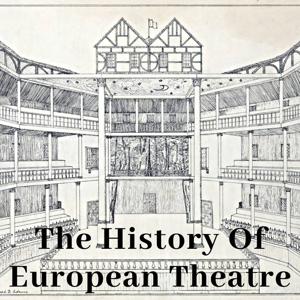


In the third part of this series of guest episodes before we get back to continuing the journey through the Shakespeare and Jonson cannon, we are going deep into the world of the renaissance period boy actors, or perhaps, as they should more properly be called, apprentice players. The habit of the period of young actors playing female roles is well known, but when I had the chance to talk to Roberta Barker about her study of apprentice players it soon became very clear that there is a lot more to their position in the playing company than that and we get to meet some of them as personalities in their own right.
Roberta Barker is a member of the Joint Faculty of King’s College, London, where she is Professor of Theatre teaching in the Foundation Year and Early Modern Studies programs, and Dalhousie University, Halifax Nova Scotia, where she teaches Theatre in the Fountain School of Performing Arts. Her research interests centre upon the relationship between performance and the social construction of identity and has explored such topics as the representation of gender and class in early modern tragedy, the early modern careers and modern afterlives of Shakespeare’s boy players, and (most recently) the role played by the performance of illness on the nineteenth-century stage in the evolution of realist style. She is also a theatre and opera director.
Support the podcast at:
www.thehistoryofeuropeantheatre.com
www.patreon.com/thoetp
www.ko-fi.com/thoetp
Hosted on Acast. See acast.com/privacy for more information.
Episode 154
As you know form last week’s episode I’m running a short series of guest episodes before we get back to continuing the journey through the Shakespeare and Jonson cannon. Today’s episode is a repeat of episode 30 of the podcast, first released in late 2020. At the time I was discussing the early theatre of Rome and with the Ancient Greek theatre already under my belt I had started to reach out to academics and authors who could add depth and colour to the research that I had been able to do. This episode with Dr Elodie Palliard was, I thought, particularly helpful in describing the likely developments in theatre in the murky period between the end of recorded Athenian theatre and early Roman theatre. It is, I think, worthy of another listen if you heard it at the time, or a first listen if you have only joined us for the later theatrical periods.
Dr Elodie Paillard is currently an Honorary Associate in the Department of Classics and Ancient History at the University of Sydney, and a Partner Investigator in the Australian Research Council discovery project 'Theatre and Autocracy in Ancient Greece'. She is also a Project Leader at the University of Basel, financed by the Swiss National Science Foundation. After completing a PhD thesis on the staging of socio-political groups in Sophocles, and a postdoc on Greek theatre in Early Imperial Rome and Campania, Elodie is now working on Greek theatre in Republican Italy (500-27BC). She is also a member of the editorial board of the journal Mediterranean Archaeology.
Support the podcast at:
www.thehistoryofeuropeantheatre.com
www.patreon.com/thoetp
www.ko-fi.com/thoetp
Hosted on Acast. See acast.com/privacy for more information.
Episode 153
Today’s guest episode serves as a great precursor to what is to come. The discussion that you are about to hear with Charles Mosely focusses on Shakespeare as a man of the theatre and discusses how the plays were created for and affected by the Theatre, the Audience and the conventions of the time. And that brief description does not do this wide ranging and detailed discussion any sort of justice. I think all of the thoughts that Charles discusses are well worth holding I mind as we work through the plays of Shakespeare and Jonson over the coming months.
Charles Moseley is a difficult man to summarise in a few words. He is a historian, literary critic and travel writer, but that only touches on part of his extensive output and experience. Most relevant for our purposes today are his years as College Lecturer in English
at Magdalene College, Cambridge, then Director of Studies in English (and later Fellow) of Wolfson College, and finally Senior Tutor and Director of Studies in English at Hughes Hall, Cambridge. The depth of knowledge and enthusiasm that Charles holds for his subject is, I think, quite self-evident and I am sure you will enjoy every moment of this, just as I did.
To see more about Charles, his publications, and other writings, including a fuller biography you can go to www.charlesmoseley.com
Support the podcast at:
www.thehistoryofeuropeantheatre.com
www.patreon.com/thoetp
www.ko-fi.com/thoetp
Hosted on Acast. See acast.com/privacy for more information.
Episode 152
Following on from my thoughts on A Midsummer Night’s Dream last time I’m very pleased to welcome back Rachel Aanstad to the podcast for further thoughts on the play. You may remember from our previous conversation about Twelfth Night that Rachel has devoted a lifetime to both the study and presentation of Shakespeare plays and as with Twelfth Night she has written an Illustrated Handbook and Encyclopaedia on ‘A Midsummer Night’s Dream’. This includes a complete rendition of the play along with a detailed glossary of terms, scene by scene analysis, an examination of characters and themes and practical advice for anyone directing, acting in or producing the play. I found it invaluable in helping me to solidify my thoughts about the play and highly recommend it, whatever your interest in the play.
Rachel Aanstad is a writer, artist, historian and self-confessed Shakespeare nerd. She has an MFA in theatre and is the former Artistic Director of Rose City Shakespeare Company. She lives in the pacific Northwest from where she writes books about Shakespeare’s plays. For our purposes today she is supremely well qualified to discuss ‘A Midsummer Night’s Dream’ as, apart from her lifelong love of the play and her academic study, she has directed three productions of the play, one that was circus based, one that was burlesque based and one audio production.
Links to ‘A Midsummer Night’s Dream: An Illustrated Handbook and Encyclopaedia':
UK link: https://www.amazon.co.uk/Midsummer-Nights-Illustrated-Handbook-Encyclopedia/dp/B09PKSTL1S/ref=sr_1_2
US link : https://www.amazon.com/Midsummer-Nights-Illustrated-Handbook-Encyclopedia/dp/B09PKSTL1S/ref=sr_1_2
Support the podcast at:
www.thehistoryofeuropeantheatre.com
www.patreon.com/thoetp
www.ko-fi.com/thoetp
Hosted on Acast. See acast.com/privacy for more information.
Episode 151
Having finished with Ben Jonson’s biography we can now go back in time just a little to work through Shakespeare’s and Jonson’s plays in more detail. By the early 1590s was then the man of the theatrical moment, no longer the young upstart, but the proven playmaker and ‘A Midsummer Night’s Dream’ surely did nothing but enhance that reputation and it has been popular ever since.
A brief synopsis of the play
The dating of the play
Suggested settings for the play as a wedding celebration
The sources for the play
Biblical influences
Publication of the play
The central themes of the play
The darker elements of the play
Theseus and Hippolyta and the setting of the play
The blindness of desire and passion
The question of the nature of attraction
The four lovers as exemplars of romantic love
The significance of the play within the play
The role of the rude mechanicals
How the play within the play tells us something about theatre practice at the time
Barriers to love – including a wall
A brief performance history of the play
Links to ‘A Midsummer Night’s Dream: An Illustrated Handbook and Encyclopaedia' by Rachel Aanstad:
UK link: https://www.amazon.co.uk/Midsummer-Nights-Illustrated-Handbook-Encyclopedia/dp/B09PKSTL1S/ref=sr_1_2
US link : https://www.amazon.com/Midsummer-Nights-Illustrated-Handbook-Encyclopedia/dp/B09PKSTL1S/ref=sr_1_2
Support the podcast at:
www.thehistoryofeuropeantheatre.com
www.patreon.com/thoetp
www.ko-fi.com/thoetp
Hosted on Acast. See acast.com/privacy for more information.
Episode 150:
For this very appropriately timed guest episode, which is released on the 6th January, Rachel Aanstad kindly agreed to come on the podcast and talk about the Elizabethan twelfth night traditions and Shakespeare’s play of the same name. As you will hear our discussion became very much more wide ranging than that, as is often the way when we talk about Shakespeare. Rachel’s close study of the play came about not only because she has written on the play in her book 'A Bawdy Twelfth Night or What You Will an Encyclopaedia & Dramaturgical Handbook', but because she has directed productions of the play. You will hear more on both those subjects as part of our conversation. Rachel Aanstad is a writer, artist, historian and self-confessed Shakespeare nerd. She has an MFA in theatre and is the former Artistic Director of Rose City Shakespeare Company. She lives in the pacific Northwest from where she writes books about Shakespeare’s plays and is currently writing about Shakespeare’s Influences for Pen and Sword which is to be published in 2026.
Link to Twelfth Night or What You Will an Encyclopaedia & Dramaturgical Handbook:
https://www.amazon.co.uk/Encyclopedia-Dramaturgical-Shakespearean-Encyclopedias-Handbooks/dp/B0BT2DZGTK/ref=sr_1_2?crid=270NMNCDMCX6J&dib=eyJ2IjoiMSJ9.tVcWzIabdRqiYBHGeNEcEPE_eYeRCTf2qEk6LRL3xtSgV8Xm38761BsX6tFKvqjKVi4kgv9kswwDFah3JLS67KX0r09uWKDy68AO_XpCOAQ.4HjwcRalbW8x65UhvPQl4quprJrQQPJUaajyTm9xVYs&dib_tag=se&keywords=r+k+aanstad&nsdOptOutParam=true&qid=1735475971&sprefix=r+k+aanstad%2Caps%2C89&sr=8-2
Hosted on Acast. See acast.com/privacy for more information.
Episode 149
The life story of Ben Jonson concludes with events after the publication of his first folio to his death in 1637.
‘Bartholomew Fair’, a different sort of Jonson play.
The finances of the court become more problematic, and Jonson earns and spends money.
The trend for ‘projectors’ and Jonson becomes involved with Sir Willian Cockayne.
‘The Devil is an Ass’ satires money making projects.
Jonson is honoured by Oxford and Cambridge universities.
Jonson devotes a decade to poetry and scholarship.
‘The tribe of Ben’ forms at the Apollo Room.
Jonson’s library burns in a house fire.
Jonson’s health begins to decline.
The death of King James and the marriage and coronation of Charles 1st.
‘The Staple of the News’, Jonson’s first play for a decade.
Jonson’s health declines further.
Jonson is appointed as Chronologer to the City of London.
Jonson complains of poverty and receives money from supporters.
The late Jonson plays fail to impress at the playhouse.
‘A Tale of a Tub’.
A posthumous play, a play fragment and a collaboration.
Jonson dies in 1637 and is buried in Westminster Abbey.
Appreciation of Jonson since his death.
Support the podcast at:
www.thehistoryofeuropeantheatre.com
www.patreon.com/thoetp
www.ko-fi.com/thoetp
Hosted on Acast. See acast.com/privacy for more information.
'Will, Ben and Tom at Christmas' is an affectionate pastiche, with my very best wishes to you all for Christmas and the New Year.
Support the podcast at:
www.thehistoryofeuropeantheatre.com
www.patreon.com/thoetp
www.ko-fi.com/thoetp
Hosted on Acast. See acast.com/privacy for more information.
Episode 148:
The life of Ben Jonson continues after he is released from prison after the publication of 'Eastward Ho!'
Jonson’s possible involvement in the gunpowder plot and it’s aftermath.
Jonson writes a masque for the marriage of Frances Howard and Robert Devereaux.
Jonson defends his religious position in the face of recusancy fines.
‘Volpone’ is performed at The Globe as Jonson continues to produce masques.
‘Epicene or the Silent Woman’ is performed at the Whitefriars Theatre.
‘The Alchemist’ is performed at Oxford in a time of plague.
The club at the Mermaid tavern.
The return to the Anglican Church.
Parliament’s financial settlement for the King curtails the expense on masques
‘Catiline his Conspiracy’ gets a rocky reception.
Jonson works as a tutor for the Sydney family.
The ‘grand tour’ with Wat Raleigh.
The scandal of Robert Carr and Frances Devereaux.
Johnson is granted a pension.
The first folio of ‘The Works of Benjamin Jonson’.
For your copy of ‘Cakes and Ale: Mr Robert Baddeley and his 12th Night Cakes’ by Nick Bromley go to www.lnpbooks.co.uk. The special offer price of £9.99 including UK postage is available until 6th January 2025
Support the podcast at:
www.thehistoryofeuropeantheatre.com
www.patreon.com/thoetp
www.ko-fi.com/thoetp
Hosted on Acast. See acast.com/privacy for more information.
One of the generally accepted facts about theatre in the time of Shakespeare and Jonson is that boy actors took female roles and women were banned from appearing on the stage. This is in fact only partly true and my guest for today’s episode has made a study of how early modern actresses, from traditions on the European continent, influenced the English stage. During out conversation we covered aspects of European theatre from the early 1500’s, and Commedia Dell’arte in particular. You will find my take on this in season three of the podcast and if you have already listened to that hopefully some of the names will still sound familiar. We also talked about the influence of actresses on playwrights and plays from the period and hopefully you will remember Lilly, Marlowe and Kyd and The Spanish Tragedy from season four of the podcast. All those episodes are still out there on your podcast feed if you need a refresher.
Pamela Allen Brown is Professor Emerita of English, University of Connecticut. Her monograph The Diva’s Gift to the Shakespearean Stage: Agency, Theatricality, and the Innamorata was published by Oxford in 2021. With Julie Campbell and Eric Nicholson, she edited and translated Isabella Andreini's Lovers' Debates for the Stage, The Other Voice in Early Modern Europe (Iter, 2022). Previous books include Better a Shrew than a Sheep: Women, Drama and the Culture of Jest in Early Modern England; As You Like It: Texts and Contexts (co-authored with Jean E. Howard); and Women Players in England 1500-1650: Beyond the All-Male Stage (co-edited with Peter Parolin). She is a founding member of Theater Without Borders, a working group of scholars of early modern transnational drama, and she recently joined the New Books Network as a podcast host. Her poetry has appeared in Epiphany, First Literary Review East, New Square, Visual Verse, Public, Out of Sequence, and P/rose. For more on her work see:
https://www.pamelaallenbrown.com/
Support the podcast at:
www.thehistoryofeuropeantheatre.com
www.patreon.com/thoetp
www.ko-fi.com/thoetp
Hosted on Acast. See acast.com/privacy for more information.
From the publisher's feed
Hosted on Acast. See acast.com/privacy for more information.

5,482 Listeners
3,202 Listeners
4,397 Listeners
1,858 Listeners
6,486 Listeners

823 Listeners
1,472 Listeners
1,120 Listeners
6,223 Listeners
743 Listeners
358 Listeners
3,379 Listeners
1,892 Listeners
2,056 Listeners
214 Listeners