
Sign up to save your podcasts
Or

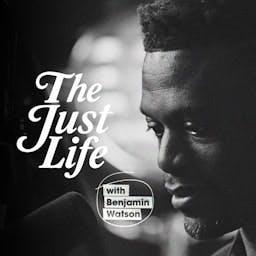


In this episode of The Just Life, host Benjamin Watson sits down with award-winning rapper, educator, activist, and entrepreneur David Augustine Jr (Dee-1).
Dee-1 made headlines when he challenged some of the biggest names in the hip hop industry. But through the controversy a new movement has emerged that he describes as “The Shift.” From his early roots in New Orleans East to his work as a middle school math teacher, Harvard fellow, and college professor, Dee-1 has dedicated his career to using hip-hop as a vehicle for empowerment, education, and social justice.
Together, Benjamin and Dee-1 explore what it means to stand for truth in a culture that often rewards what is wrong. They discuss the profound influence of family mentorship, the difference between narration vs. glorification in music, the accountability of independent and corporate music funders, and the spiritual conviction required to speak out against negative messages in mainstream media.
Takeways:
Making Righteous Noise: As Dee-1 has grown older, peace has come not from playing it safe, but from becoming bolder, more well-studied in the Word of God, and making intentional, "righteous noise."
Foundation of Mentorship & Family: Dee-1 shares how watching his hard-working father and receiving early spiritual guidance from his grandfather (who introduced him to prayer, bowling, and selfless caregiving) shaped his integrity and worldview.
The Watchman's Responsibility: Drawing inspiration from Ezekiel 3, Dee-1 reflects on his calling to sound the alarm on toxic rhetoric in the music industry rather than staying silent to protect status or relationships.
Narration vs. Glorification: A critical breakdown of the fine line in hip-hop lyrics between simply reporting harsh street realities versus glamorizing murder, drug use, and materialism as aspirational lifestyles.
Industry Accountability: Examining how negative themes are financially incentivized by labels, investors, and even independent Black creators who profit off messaging that undermines their own communities.
Learn more about your ad choices. Visit podcastchoices.com/adchoices
In this powerful, previously aired episode of The Just Life, Benjamin Watson sits down with poet, author, and apologist Preston Perry. Preston shares his journey from the South Side of Chicago, where he witnessed the harsh realities of murder and systemic neglect, to becoming a leading voice in Christian apologetics. The conversation takes a deep dive into the necessity of empathy, the dangers of prioritizing political positions over people’s stories, and how the Gospel provides the ultimate framework for both righteousness and justice.
Key Takeaways:
- The Power of Story: Preston discusses how creativity and poetry can humanize complex issues like immigration and racial injustice, inviting people into a world they might otherwise argue against.
- Innate Justice: Why every human has an innate sense of justice because we are created in the Imago Dei (Image of God).
- The Pharisee Trap: A reflection on John 9, exploring how modern believers often mirror the Pharisees by caring more about a person’s camp or political landing spot than the miracle of God’s work in their life.
- Apologetics as Empathy: Preston redefines apologetics not just as a defensive argument, but as a bridge-building tool rooted in gentleness and respect for those who are hurting.
- Sharing in Suffering: A poignant look at the Black American experience and how it uniquely mirrors the suffering and resilience found in the Gospel.
Check out the video version at
https://www.youtube.com/@thejustlifeofficial
Connect with Benjamin at
https://benjaminswatson.com/
Learn more about your ad choices. Visit podcastchoices.com/adchoices
What if our understanding of money, wealth, and power is completely upside down? In this powerful and candid conversation on The Just Life, host Benjamin Watson sits down with John Hope Bryant, founder, chairman, and CEO of Operation HOPE, the nation’s largest provider of financial empowerment services.
Over more than three decades, John’s nonprofit and for-profit enterprises have driven over $5 billion in capital deployment into underserved communities. He has advised two U.S. presidents, helped make financial literacy official national policy, and inspired the renaming of the historic Freedmen’s Bank building on the White House campus.
Recently named to the Forbes 250 Greatest Living Self Made Americans, John Hope Bryant is also the author of Capitalism for All, where he argues that economic opportunity is a matter of justice. He challenges us to consider how systems that exclude people from building wealth undermine human dignity and why creating pathways to financial freedom is essential to building a more just society.
Takeways:
Conquering the Self First: John explains why he wears Nelson Mandela’s prison number on his wrist, detailing how internal transformation and mastering one's own character are prerequisite steps to changing the world.
Money vs. Wealth vs. Freedom: Why money is simply a mechanism for exchanging value, while real wealth builds freedom—the freedom of time, agency, and space to focus on what truly matters.
Flow vs. Plumbing: The critical distinction between creating cultural influence ("flow") and building permanent economic foundation ("plumbing") like high credit scores, homeownership, and financial institutions in underserved communities.
Software Upgrades for Humanity: A hard-hitting look at historical disruptions (from Kodak and Blockbuster to the automobile) and practical steps for adapting to technological change rather than choosing irrelevance.
Capitalism for All: How to refine, un-game, and redirect economic systems to unleash untapped human potential at scale rather than tear them down.
Resources Mentioned:
Capitalism for All by John Hope Bryant
Operation HOPE
Money and Wealth with John Hope Bryant
Learn more about your ad choices. Visit podcastchoices.com/adchoices
In this episode of The Just Life, host Benjamin Watson sits down with fellow Georgia Bulldog and chief political reporter for the Atlanta Journal-Constitution, Greg Bluestein. Together, they break down the shifting political landscape of Georgia, from a reliably red state to one of the most critical battlegrounds in the nation. Greg shares perspectives on the rise of campaign spending, the true impact of gerrymandering and redistricting, and how everyday citizens can engage in politics to create real change in their local communities.
Key Takeaways
Reconnecting in Athens: Benjamin and Greg reminisce about their days at the University of Georgia and Greg’s roots as editor of The Red and Black.
What Happened to Georgia?: A look at the 20-year political shift, from Brian Kemp’s early legislative run in 2002 to demographic shifts, suburban realignments, and the influence of incoming residents.
The Power of the Middle Voter: Why primary elections drive extreme rhetoric while general elections focus on kitchen-table economic issues like inflation, gas, and grocery prices.
Gerrymandering & Voting Rights: Clarifying redistricting, the impact of recent Voting Rights Act rulings, and how redrawn lines affect representation across the South.
Money in Politics: The reality of leadership committees, multi-million-dollar campaigns, and what high-stakes spending means for the average voter.
Making a Local Impact: Practical advice on how everyday citizens can show up at city council meetings, engage local representatives, and enact justice starting in their own backyards.
Resources
Listen to the Politically Georgia podcast and read Greg's coverage at the Atlanta Journal-Constitution.
Check out Greg’s book: Flipped: How Georgia Turned Purple and Broke the Monopoly on Republican Power.
See the full video interview here.
Learn more about your ad choices. Visit podcastchoices.com/adchoices
In this compelling episode of The Just Life, host Benjamin Watson sits down with Dr. Terence Lester: public scholar, author, community activist, and founder/Executive Director of Love Beyond Walls. Dr. Lester shares his journey from dropping out of high school as a teenager to earning five degrees, including a PhD in public policy. He discusses his firsthand experience sleeping under bridges and in tents alongside Atlanta’s unhoused community, exploring the stark difference between surface-level charity and transformative justice, the power of human dignity, and why true compassion requires closing the distance between ourselves and those who suffer.
Key Takeaways
The Origin of Love Beyond Walls: How a conversation with an unhoused friend named Kurt led Terrence and his family to make the bold decision to spend winter nights sleeping on the streets of Atlanta.
Lessons from the Streets: Humiliation, societal invisibility, and the incredible generosity found among those who have the least.
From Dropout to PhD: How words of encouragement from an unhoused man and dedicated teachers spoke life into a struggling teenager and sparked a journey to earn five degrees.
Defining Dignity vs. Distance: Why distance is the enemy of belonging, and why dignity requires recognizing an individual’s agency, humanity, and interior worth.
Charity vs. Justice: Moving beyond quick fixes (handing out sandwiches) to asking deeper systemic questions about redlining, housing policy, criminalization of homelessness, and educational inequality.
Systemic Traps & Individual Responsibility: Why choices happen inside systems, and why housing is the floor that makes personal responsibility possible rather than a reward for it.
Learn more about your ad choices. Visit podcastchoices.com/adchoices
In this eye-opening episode of The Just Life, host Benjamin Watson sits down with Brian Orme, CEO of Global Christian Relief (GCR). A former pastor, journalist, and media leader, Brian shares how personal grief and a transformative encounter with a North Korean refugee completely altered his understanding of faith, suffering, and the global church.
Benjamin and Brian dive deep into the realities facing over 380 million persecuted Christians worldwide, from the systemic bonded slavery of brick kiln workers in Pakistan to the targeted violence and mass displacement occurring in Nigeria. They challenge the Western church to close the distance between comfortable faith and the frontlines of persecution, reframing the global church not as distant strangers, but as family.
Takeways:
The Personal Turning Point: How losing a loved one pushed Brian to confront a "false gospel" of suffering-free Christianity, and how meeting a North Korean believer revitalized his faith.
Shrinking the Distance: Why the Western church often remains disconnected from global Christian persecution, and how to develop a visceral, family-level empathy rather than passive sympathy.
The Crisis in Pakistan: A look inside the bonded labor system in brick kilns, how GCR helps purchase families' freedom out of generational debt, and the long-term vision to eradicate modern slavery in the region.
The Reality in Nigeria: Addressing the targeted attacks on Christian pastors and villages, the complexities behind the "farmer-herder" narrative, and why official recognition and protective metrics are urgently needed.
Faith Under Fire: Inspiring stories of resilience, such as Suzanne, a Nigerian woman who faced violent extremism, lost her sight, yet chooses to extend Christlike forgiveness to her attackers.
Global Christian Relief
See the full interview here: https://www.youtube.com/@TheJustLifeOfficial
Learn more about your ad choices. Visit podcastchoices.com/adchoices
In this episode of The Just Life, host Benjamin Watson sits down with author Delano Squires to unpack a crucial yet frequently overlooked dimension of social justice: marriage, fatherhood, and family structure. Drawing from his personal background growing up in New York, his experience in local government, and insights from his book, The Vanishing Black Family, Delano shares why human flourishing ultimately begins in the home.
The conversation probes the stark disparities in family structure, redefines justice through the lens of children's rights, and addresses the political and cultural obstacles standing in the way of a true marriage revival.
Takeaways:
Marriage as a Public Good & Justice Issue: Why conversations around family often prioritize adult desires over the fundamental rights of children and why every child deserves to be raised in a loving, low-conflict home with their mother and father.
The Reality of Family Disparities: Delano outlines key statistics (such as the 70-percentage-point gap in unmarried vs. married birth rates between Black and White families in D.C.) and discusses why family structure should be recognized as a core social indicator.
The Role of the Church: A candid look at how sections of the Black church traded biblical fidelity on sex, marriage, and family for political engagement and how returning to a scripture-grounded foundation is essential for renewal.
Navigating the dynamic between acknowledging systemic and historical harms while encouraging individuals and communities to take ownership of their future.
Resources Mentioned
The Vanishing Black Family by Delano Squires
The DeVos Center for Human Flourishing at The Heritage Foundation
Them Before Us (Founded by Katie Faust)
The Last Seen Project
See the full video episode here.
Learn more about your ad choices. Visit podcastchoices.com/adchoices
Host Benjamin Watson sits down with Connecticut State Representative Treneé McGee, the youngest Black woman ever elected to the Connecticut General Assembly (116th District). A former actress, studio founder, and self-described political "unicorn," Representative McGee shares her unique journey from studying film and acting to running for public office, taking a stand for her faith, and advocating for a holistic approach to justice.
Takeaways:
From the Stage to the Statehouse: McGee reflects on her life in the arts, the spiritual fast and community calling that shifted her path toward public office, and how her parents provided the foundational anchor of faith that guides her career.
The "Unicorn" Label & Whole-Life Advocacy: As a pro-life Democrat, McGee addresses being labeled an anomaly in her party, her shift toward a "womb-to-the-tomb" approach to justice, and her experiences navigating national media attention.
Maternal Health & Systemic Disparities: A deep dive into the work of the Black Maternal and Infant Health Caucus, including recent Connecticut legislation focused on hospital accountability report cards, safe haven laws, and child welfare reforms.
Gen Z, Cultural Shifts, and Bipartisanship: McGee and Watson discuss generational shifts regarding social issues, why the political middle is often composed of Black and Latin communities, and the reality of cross-aisle collaboration in state government.
Learn more about your ad choices. Visit podcastchoices.com/adchoices
What happens when a culture pursues justice while ignoring God’s standard of righteousness? In this deeply insightful episode of The Just Life, host Benjamin Watson welcomes legendary pastor, author, and theologian Dr. Tony Evans. Founder of The Urban Alternative and Oak Cliff Bible Fellowship, Dr. Evans reflects on over five decades of ministry, his personal journey growing up in Baltimore, and the spiritual roots of his "Kingdom Agenda."
Dr. Evans unpacks the inseparable relationship between biblical righteousness (God’s standard of right and wrong) and justice (the equitable application of that standard), calling them the "Siamese twins" of God's throne. Together, Benjamin and Dr. Evans examine how split theology, political idolatry, and cultural misdefinitions lead to societal chaos. From practical family discipleship around the dinner table to the prophetic responsibility of the local church, Dr. Evans calls believers to live fully under God’s authority to bring lasting restoration to their homes, communities, and nation.
Takeaways:
Roots & Radio Beginnings: Dr. Evans shares how a tiny, 1970s broadcast in a cubicle sparked five decades of global teaching, and the legacy projects currently carrying God's word to 85% of the world's population.
Family as the First Sphere of Justice: The importance of identifying a child's unique "bent" and using the family dinner table for active discipleship rather than passive entertainment.
Righteousness vs. Justice Defined: Understanding righteousness as God's divine prescription and justice as the fair, equitable pharmacy that dispenses it to society.
The Danger of Splitting "Twin Towers": Why separating social justice from biblical truth leads to legalism, confusion, and systemic failure.
The Gospel Beyond the Sanctuary: Unpacking Galatians 2 to show how Paul addressed Peter’s personal hypocrisy and prejudice by calling him back to his primary identity in Christ.
The Passive Wrath & Judgment of God: How societal division, systemic injustice, and national chaos emerge when the Church abdicates its biblical role.
Resources:
The Kingdom Agenda by Dr. Tony Evans
The Tony Evans Study Bible & Tony Evans Bible Commentary
The Urban Alternative
Learn more about your ad choices. Visit podcastchoices.com/adchoices
In this episode of The Just Life, host Benjamin Watson sits down with Joe Knittig, CEO of Care Portal and The Global Orphan Project. Joe shares his journey from working as a labor attorney to shifting his focus to family preservation and child welfare. The conversation explores the limitations of traditional charity, the distinctions between poverty-driven neglect and abuse, and how local communities can step in to prevent family separation before it turns into a foster care crisis.
Takeaways:
Going Upstream: Rather than reacting to crises after a child enters foster care, real systemic change requires addressing practical needs and isolation beforehand to keep families intact.
Charity vs. Relational Justice: Transactional charity (writing a check or making a donation) offers short-term relief, but long-term transformation happens through relational, incarnational presence in people's lives.
Understanding Neglect vs. Abuse: A majority of children entering the foster care system do so because of neglect—often driven by extreme poverty, relational isolation, or lack of resources—rather than physical abuse.
The "50 in 5" Reality: 50% of the children entering foster care in the United States originate from just 5% of counties. Because these needs are geographically concentrated, focused community intervention makes this a solvable problem.
Empowering the Local Community: Government and large non-profits cannot replace the role of neighbors and local churches. Sustainable family support relies on activating local networks to care for vulnerable families right where they live.
Learn more about your ad choices. Visit podcastchoices.com/adchoices
From the publisher's feed

15,935 Listeners

1,120 Listeners

4,432 Listeners
118 Listeners
7,104 Listeners

36 Listeners

1,929 Listeners

564 Listeners
93 Listeners
113 Listeners
242 Listeners
61 Listeners

913 Listeners

0 Listeners

4 Listeners