
Sign up to save your podcasts
Or

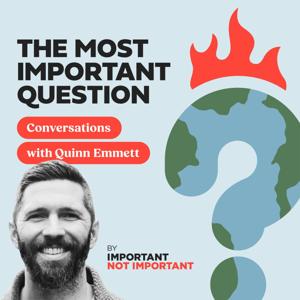


I’m back today to share my 2023 wrap-up. It’s a pretty stream-of-consciousness endeavor, but I think it sums up where I was right in my 2023 preview, where I was very wrong, how the world changed — or didn’t — and most importantly, how we responded.
Here's What You Can Do:Donate to CAMFED to help them educate 5 million girls in Africa by 2030 (educating girls is key to building climate resilience!)
Volunteer with Action for the Climate Emergency, a network of young people working in key states to register young voters and educate them on climate change and climate justice.
Get educated about your country’s GHG emissions to thoroughly understand how and where to prioritize decarbonization resources using the Country Emissions Inventory from Climate Trace. Filter by year, sector, and type of GHG.
Be heard about protecting pregnant people at a federal level and urge your representative to support codifying abortion access.
Invest in solar and electrification by opening a bank account with ATMOS.
Get more news, analysis, and Action Steps at importantnotimportant.com
Support our work and become a Member at importantnotimportant.com/upgrade
Got feedback? Email us at [email protected]
Follow us on Twitter at @importantnotimp
Subscribe to our YouTube channel
Take a nap you deserve it
Advertise with us: importantnotimportant.com/c/sponsors
How will the universe end?
That's today's big question, and my guest is Sarafina El-Badry Nance.
Sarafina is an NSF graduate research fellow, astrophysics Ph.D. candidate, and Forbes 30 Under 30 Science 2022 honoree, specializing in supernova and cosmology.
She's also the author of the new, honest, and empowering memoir "Starstruck: A Memoir of Astrophysics and Finding Light in the Dark".
Sarafina and I recorded this conversation back in 2021, and not only is it an all-time listener favorite, well, the universe at large hasn't ended yet, even though it's felt like it was coming sometimes. We've all been through a lot since then, and this conversation is still and will remain, evergreen.
Sarafina's goal is to measure the rate of the expansion of the universe as propelled by dark energy. And, I'm sorry if that isn't exciting enough for you, I don't know what to tell you.
-----------
Have feedback or questions? Tweet us, or send a message to [email protected]
New here? Get started with our fan favorite episodes at podcast.importantnotimportant.com.
-----------
INI Book Club:
"Untamed" by Glennon Doyle
Find all of our guest recommendations at the INI Book Club: https://bookshop.org/lists/important-not-important-book-club
Links:
starafina.com
Instagram: @starstrickensf
Twitter: @starstrickenSF
LinkedIn: linkedin.com/in/sarafina-nance-7a5888a0
Watch: Constellations
girlswhocode.com
thebreasties.org
Follow us:
Subscribe to our newsletter at importantnotimportant.com
Support our work and become a Member at importantnotimportant.com/upgrade
Follow us on Twitter: twitter.com/ImportantNotImp
Subscribe to our YouTube channel
Follow Quinn: twitter.com/quinnemmett
Edited by Anthony Luciani
Produced by Willow Beck
Intro/outro by Tim Blane: timblane.com
Advertise with us: importantnotimportant.com/c/sponsors
Why does it matter who reviews our video games?
That's today's big question, and my guest is Swapna Krishna.
Swapna and I recorded this conversation in 2022, and as gaming and the entire media ecosystem changes and evolves and is pulled apart and merged, it's more important than ever to find reputable sources we not only trust, but who we have a connection with, and that's why representation matters so much.
Swapna is a writer and journalist covering space, science, tech, and pop culture, and writes some of the most empathetic tech, and pop culture commentary on the web.
She writes everywhere from Fast Company to StarWars.com, from StarTrek.com to Business Insider and the LA Times, Bitch Magazine, Bustle, Mental Floss, and more.
Swapna has appeared on a bazillion excellent podcasts, she's been at ComicCon, she's the co-host of the Desi Geek Girls Podcast, and the host of PBS's show, Far Out.
-----------
Have feedback or questions? Tweet us, or send a message to [email protected]
New here? Get started with our fan favorite episodes at podcast.importantnotimportant.com.
-----------
INI Book Club:
Sword Stone Table by Swapna Krishna and Jenn Northington
Stay tuned for Roshani Chokshi's new book
Find all of our guest recommendations at the INI Book Club: https://bookshop.org/lists/important-not-important-book-club
Links:
Follow Swapna on Twitter and Instagram
Follow Swapna on TikTok
Watch PBS Terra's Far Out on YouTube or their website
Listen to and follow Desi Geek Girls
Check out NASA Social
Follow us:
Subscribe to our newsletter at importantnotimportant.com
Support our work and become a Member at importantnotimportant.com/upgrade
Follow us on Twitter: twitter.com/ImportantNotImp
Subscribe to our YouTube channel
Follow Quinn: twitter.com/quinnemmett
Edited by Anthony Luciani
Produced by Willow Beck
Intro/outro by Tim Blane: timblane.com
Advertise with us: importantnotimportant.com/c/sponsors
How do we get our attention back?
That's today's big question. I think about it every day, and my guest is Johann Hari. Johann and I recorded this conversation in 2022, and with the Internet in general and social networks of the past fifteen years being straight-up pulled apart, I think it's more relevant than ever.
Johann Hari is the author of three New York Times best-selling books, an executive producer of an Oscar-nominated movie, and an eight-part series starring Samuel L. Jackson. His books have been translated into thirty-eight languages, and his TED Talks have been viewed more than eighty million times.
Johann is the author of the new book, from last year called Stolen Focus: Why You Can't Pay Attention and How to Think Deeply Again.
No matter what you do, we are each and all being pulled in so many different directions. If we can't pay attention to what's going on with our planet and our communities, we're going to have a hard time fixing any of it.
Our attention is spread too thin. And where this all clicks for me, is that we need to dial in more than ever before, and we also need space to let go, to understand, and marinate on big problems consciously, and subconsciously. Right now, we don't have room for any of it, and it really matters.
-----------
Have feedback or questions? Tweet us, or send a message to [email protected]
New here? Get started with our fan favorite episodes at podcast.importantnotimportant.com.
-----------
INI Book Club:
The Anatomy of a Moment by Javier Cercas
The Apology by Eve Ensler
Find all of our guest recommendations at the INI Book Club: https://bookshop.org/lists/important-not-important-book-club
Links:
Read Johann's book, "Stolen Focus"
Follow Johann on Twitter
Discover more of Johann's work
Follow us:
Subscribe to our newsletter at importantnotimportant.com
Support our work and become a Member at importantnotimportant.com/upgrade
Follow us on Twitter: twitter.com/ImportantNotImp
Subscribe to our YouTube channel
Follow Quinn: twitter.com/quinnemmett
Edited by Anthony Luciani
Produced by Willow Beck
Intro/outro by Tim Blane: timblane.com
Advertise with us: importantnotimportant.com/c/sponsors
How's your mental health around climate change?
That is today's big question, and my guest is Britt Wray. Britt and I recorded this conversation in 2022. It is an all-time favorite of mine and of our listeners.
Britt is the author of the fantastic book, Generation Dread: Finding Purpose in an Age of Climate Crisis. She has a passionate generational perspective on how to stay sane amid climate disruption. Britt has a PhD in science communication from the University of Copenhagen. She's the author of The Rise of the Necrofauna: The Science, Ethics, and Risks of De-Extinction.
Britt has a PhD in science communication from the University of Copenhagen. She has hosted several podcasts, radio, and TV programs with the BBC and CBC, and is a TED resident. Britt is currently a postdoctoral fellow at Stanford University and the London School of Hygiene and Tropical Medicine where she is researching the mental health impacts of climate change on young people.
Britt is also the author of Gen Dread, the first newsletter that shares wide-ranging ideas for supporting emotional health and psychological resilience in the climate and wider ecological crisis. I read it every week.
-----------
Have feedback or questions? Tweet us, or send a message to [email protected]
New here? Get started with our fan favorite episodes at podcast.importantnotimportant.com.
-----------
INI Book Club:
Generation Dread: Finding Purpose in an Age of Climate Crisis by Britt Wray
Greek Myths by Gustav Schwab
Find all of our guest recommendations at the INI Book Club: https://bookshop.org/lists/important-not-important-book-club
Links:
Follow Britt Wray on Twitter
Follow @gen_dread on Instagram
Gen Dread Newsletter
Climate Awakening
Climate Café
Good Grief Network
Work That Reconnects
Climate Psychology Alliance
Climate Psychiatry Alliance
Follow us:
Subscribe to our newsletter at importantnotimportant.com
Support our work and become a Member at importantnotimportant.com/upgrade
Follow us on Twitter: twitter.com/ImportantNotImp
Subscribe to our YouTube channel
Follow Quinn: twitter.com/quinnemmett
Edited by Anthony Luciani
Produced by Willow Beck
Intro/outro by Tim Blane: timblane.com
Advertise with us: importantnotimportant.com/c/sponsors
Has there ever been a more important time, a more consequential time, to lead with ethics?
That's today's big question, and my guest is Dr. Susan Liautaud. Susan is the author of The Power of Ethics and of the Little Book of Big Ethical Questions.
She teaches cutting-edge ethics courses at Stanford University. She is the Chair of the Council Trustees at the London School of Economics and Political Science. She's the Vice Chair of the Global Partnership for Education, and is Chair of the Stanford University Freeman's Spogli Institute for International Studies Advisory Council.
She also serves with the Stanford Institute for Human Centered Artificial Intelligence, which is obviously really important, and the AI Ethics Advisory Panel. Other boards include Benevolent AI, the Yale Divinity School Advisory Council, the Carnegie Endowment for International Peace, among many others.
Her work and her frameworks reverberate through so many decision-making apparatuses today. I have been trying to learn from and operate from Susan's work personally and in this work for a long time because it's easy to feel incapable, not skilled enough, or not practiced enough in this moment of big decisions.
This moment, at the intersection of technology and society and personal impact where a better, healthier, cleaner future, however imperfect, is within our hands, will require each of us to adopt and then practice a framework to consider who we want to be and who we see ourselves as, and then what that means in practice in each situation, on a day to day level, and when we're faced with the big stuff.
A framework that interrogates the information available to us, that honestly asks who could be affected by our decisions, including ourselves, and what would it be like to be affected by our decision, now and way down the line.
-----------
Have feedback or questions? Tweet us, or send a message to [email protected]
New here? Get started with our fan favorite episodes at podcast.importantnotimportant.com.
-----------
INI Book Club:
The Hero's Journey by Joseph Campbell
Find all of our guest recommendations at the INI Book Club: https://bookshop.org/lists/important-not-important-book-club
Links:
Read Susan's books The Power of Ethics and The Little Book of Big Ethical Questions
Connect with Susan on LinkedIn
Follow us:
Subscribe to our newsletter at importantnotimportant.com
Support our work and become a Member at importantnotimportant.com/upgrade
Follow us on Twitter: twitter.com/ImportantNotImp
Subscribe to our YouTube channel
Follow Quinn: twitter.com/quinnemmett
Edited by Anthony Luciani
Produced by Willow Beck
Intro/outro by Tim Blane: timblane.com
Advertise with us: importantnotimportant.com/c/sponsors
What are the best holiday gifts that aren't privacy nightmares?
That's today's big question, and my guest is Jen Caltrider.
Jen is the lead researcher for Mozilla's Privacy Not Included program where since 2017 Mozilla has published 15 editions of Privacy Not Included, their Consumer Tech Buyer's Guide.
They've reviewed over 500 gadgets, apps, cars now, and more, assessing their security features what data they collect from you and your loved ones, and who they share that data with or sell it to. They have even built the first annual Consumer Creep-o-meter, distilling what's good, what's bad, and what's just plain creepy in the world of consumer tech.
While I love new tech and I own quite a bit of it, I have become pretty obsessed with at least understanding what I'm getting myself into and getting my kids into.
Part of that's for myself and my family, but obviously, so I can share it with you all as well.
-----------
Have feedback or questions? Tweet us, or send a message to [email protected]
New here? Get started with our fan favorite episodes at podcast.importantnotimportant.com.
-----------
INI Book Club:
Blitz by Daniel O'Malley
Find all of our guest recommendations at the INI Book Club: https://bookshop.org/lists/important-not-important-book-club
Links:
Privacy Not Included website
Report about your car spying on you
Who is collecting data from your car? by The Markup
Facebook data being used in court post-Dobbs
10 Questions You Need To Ask Right Now, before using an AI tool
Follow us:
Subscribe to our newsletter at importantnotimportant.com
Support our work and become a Member at importantnotimportant.com/upgrade
Follow us on Twitter: twitter.com/ImportantNotImp
Subscribe to our YouTube channel
Follow Quinn: twitter.com/quinnemmett
Edited by Anthony Luciani
Produced by Willow Beck
Intro/outro by Tim Blane: timblane.com
Advertise with us: importantnotimportant.com/c/sponsors
How the hell does the brain work? And what does it have to do with lemonade stands and school supplies?
Here's What You Can Do:Donate to support The Markup’s invaluable work examining the ways technology is being used to change society.
Volunteer with your local Surfrider chapter to keep our waterways, oceans, and beaches clean.
Get educated about the easiest ways your company can improve sustainability by reading this article from Protocol.
Be heard about clean water as a human right by urging your Members of Congress to support the WATER Act.
Invest in industries that will measurably move the needle using the IEEFA’s financial research.
Get more news, analysis, and Action Steps at importantnotimportant.com
Support our work and become a Member at importantnotimportant.com/upgrade
Got feedback? Email us at [email protected]
Follow us on Twitter at @importantnotimp
Subscribe to our YouTube channel
Take a nap you deserve it
Advertise with us: importantnotimportant.com/c/sponsors
I think about time a lot. Some days I feel ancient, some days I can’t believe how old I am.
I’ve got kids, too. I can’t believe how fast they’ve grown up already. They love so many things. Swimming. Cooking. Plain pasta. The beach. Vegetables, somehow. Their friends. Their family. Dinosaurs.
Man, oh man, do they love dinosaurs.
I love to challenge them, to help them think about how long ago it all was, and how long it lasted. How different the world was. How the land under their feet was an ocean, once.
And of course, knowing what we know now, how fast it can all change. How an asteroid - or a virus, or a fire, or a flood - can change your life forever.
As much progress as we’ve made in these 300,000 years of Homo sapiens, from fire to wheels to meat to agriculture to handwashing – we are in a moment when we are challenged yet again on a global scale, and unlike the dinos, our future is of our own making.
In this episode from 2022, our guest is Riley Black.
Riley is a science writer and amateur paleontologist based in Salt Lake City, Utah, right in the center of dinosaur country, where she chases tales of vanished lives from museum collections to remote badlands.
Riley’s published books include Written in Stone, my favorite and critically acclaimed My Beloved Brontosaurus, When Dinosaurs Ruled, Prehistoric Predators, and The Last Days of the Dinosaurs.
Riley’s journey and storytelling are powerful and so important at this moment when we’re so ready to move on to the next thing that we haven’t taken the time to cherish the people, the places, the world around us, and how lucky we are to have them.
-----------
Have feedback or questions? Tweet us, or send a message to [email protected]
New here? Get started with our fan favorite episodes at podcast.importantnotimportant.com.
-----------
INI Book Club:
Why Won't You Apologize? by Harriet Lerner
The Last Days of the Dinosaurs by Riley Black
My Beloved Brontosaurus by Riley Black
Find all of our guest recommendations at the INI Book Club: https://bookshop.org/lists/important-not-important-book-club
Links:
Follow Riley on Twitter
Find more of Riley's work on her website
Follow us:
Subscribe to our newsletter at importantnotimportant.com
Support our work and become a Member at importantnotimportant.com/upgrade
Follow us on Twitter: twitter.com/ImportantNotImp
Subscribe to our YouTube channel
Follow Quinn: twitter.com/quinnemmett
Edited by Anthony Luciani
Produced by Willow Beck
Intro/outro by Tim Blane: timblane.com
Advertise with us: importantnotimportant.com/c/sponsors
How did the female body drive 200 million years of human evolution? And why the hell are we just finding out about it now?
That's today's big question, and my guest is Cat Bohannon.
Cat is the author of the incredible new book, “Eve: How the Female Body Drove 200 Million Years of Human Evolution”. Cat is also a researcher and author with a Ph.D. from Columbia University in the evolution of narrative in cognition. Cat's essays and poems have appeared in Scientific American, Mind, Science Magazine, The Best American, Non Required Reading, The Georgia Review, Story Collider, and Poets Against the War.
Look, for a very long time, scientists ignored everything about the female body, except for how to have sex with it. And even that, they barely understood (and still don't). They didn't think or care to ask helpful questions like: How did we get here? What else about the female biological body is different from the traditional male body? Why might those differences matter? And how might they have gotten us to where we are today, atop the animal kingdom, for better or worse, and a huge outlier in about 500 different ways from even our closest primate cousins?
Why are we so weird?
Cat's book asks all of these questions, and I genuinely cannot wait for you to listen to this conversation, and read the book.
-----------
Have feedback or questions? Tweet us, or send a message to [email protected]
New here? Get started with our fan favorite episodes at podcast.importantnotimportant.com.
-----------
INI Book Club:
Behind The Beautiful Forevers by Katharine Boo
Find all of our guest recommendations at the INI Book Club: https://bookshop.org/lists/important-not-important-book-club
Links:
Read Cat's book "Eve: How the Female Body Drove 200 Million Years of Human Evolution"
Keep up with Cat's work
Our World in Data: Life Expectancy
Support the Trevor Project
Follow us:
Subscribe to our newsletter at importantnotimportant.com
Support our work and become a Member at importantnotimportant.com/upgrade
Follow us on Twitter: twitter.com/ImportantNotImp
Subscribe to our YouTube channel
Follow Quinn: twitter.com/quinnemmett
Edited by Anthony Luciani
Produced by Willow Beck
Intro/outro by Tim Blane: timblane.com
Advertise with us: importantnotimportant.com/c/sponsors
From the publisher's feed

6,766 Listeners

9,191 Listeners

10,732 Listeners

8,440 Listeners
466 Listeners

9,619 Listeners

2,052 Listeners

87,142 Listeners

111,766 Listeners

25,140 Listeners

10,275 Listeners

6,371 Listeners

15,872 Listeners

3,452 Listeners
609 Listeners
51 Listeners