
Sign up to save your podcasts
Or



Based on Podcast App listening data
LT COL Charles Anderson was placed in a very difficult moral dilemma at Parit Sulong.
We look at his actions in WW1 in Africa and his Reserve service in the interwar period and how he comes to be the CO of the 2nd/19th Battalion.
We also briefly look at BRIG Maxwell, the previous CO of the 2nd/19th.
Check out the resources for this podcast, specifically the books by Farrell and Pratten.
We look at the events around the engagement that the 2nd/29th fought and pick up the story with the 2nd/19th moving out to hold the ground at Bakri.
BRIG Duncan attempts to consolidate his position whilst under attack from the Japanese. Anderson's counterattack sees the Japanese literally 'running around in circles'. However the Japanese are also moving to cut of the lines of retreat.
The Japanese 3rd Air Brigade starts attacking the retreating troops, striking the Brigade HQ and killing many of the staff, and wounding BRIG Duncan, making Anderson the commander of the BDE Column.
We look at Anderson's retreat of 24km to Parit Sulong from Bakri. The column moves out at walking pace and meets the first Japanese roadblock just 1.5 km down the road. Anderson displays physical courage leading an assault on the road block.
BRIG Duncan leads a counterattack with the Jats, and is killed. Anderson discovers that the bridge at Parit Sulong is held by the Japanese. This leaves Anderson needing to clear the bridge to be able to cross the river and move closer to friendly lines.
The column is unable to clear the bridge, ammunition is low and casualties are mounting. He is left with the dilemma of what to do - surrender, attack again or leave the wounded and escape in small groups.
Overnight the Japanese attack with tanks and a deadly battle between the tanks, the artillery and tank hunting parties goes on through the night.
There were only 3 survivors of the massacre at Parit Sulong. What actions did Bennett take to rescue the column?
What is the role of the Battalion Commander? When should they personally lead attacks?
We look at the role of LT GEN Takuma Nishimura in the Parit Sulong massacre.
He confided in the Medical Officer that he had never been so scared as during the retreat from Bakri, but it never showed to the men that he lead as he worked to save the column. This is the fine example of courage and leadership that he set and why he was awarded the VC for his actions.
Check out the show notes for the podcast for images and more details for this and other podcast episodes.
A lot of this story has come from an audio interview of LT Russell 'Bill' McCure. It is an amazing record of the preparation, conduct and aftermath of his participation in the Malaya Campaign.
LT McCure started out in the 53rd Ack Ack Search Light Bty and he wanted to join the 2nd AIF. The only way was for him to obtain a commission. He undertook that and was assigned to the 58th Infantry Battalion. The CMF was parading 2 nights a week.
LT McCure showed multiple examples of Moral Courage. This made it difficult for him to do his job, but he understand what was required of him, in spite of the direct orders from his CO.
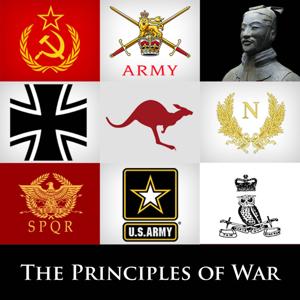
We look at the Battle of Bakri, especially the initial contacts with the Gotanda Tank Detachment. The Japanese attacked without infantry support and because of the actions of LT McCure they pay the price. Too often in the Malaya campaign, the Japanese weren't held to account for paying off some of the Principles of War. The lack of cooperation of the infantry created the losses at Bakri for the Japanese tanks.
How did the 2nd/29th's CO, LT COL Robertson's training let him down when it came to combined arms training?
The withdrawal from Bakri was hellish. The Japanese had manoeuvred around the 2nd/29th and cut them off. LT COL Anderson in command of the 2nd/19th pushes forward to bring out the 2nd/29th, but Bill is stuck behind enemy lines.
He stays in Malaya for the rest of the war. He spends time attacking Japanese troop, supplies and trains. He ends up with a group of Malay Communists until the end of the war.
Bill's story is a great example of Moral Courage and and story that too few people have heard, especially considering that he was active in Malaya for the rest of the war.
As we transition to look at some vignettes of Leadership in Malaya, we pause to look at the composition of the 8th Division.
The Commander, Bennett, was a CMF soldier, as were the 3 BDE COMDs. In Malaya, only LT COL Boyes, CO of the 2/26th Bn was PMF. The 8th had more regular officers than the 6th Division, which was the first 2 AIF Division to be raised.
We look at Walter Brown VC. He was awarded his VC at Villers-Bretonneux and rejoined the Army to serve in WW2.
We discuss the 8 Bn COs to look at the differences between the COs and how that effected each of the Bns. We ponder the difference between authority and leadership.
LT COL Black Jack Galleghan was given command of the 2/30th after 4 previous attempts to get a Bn to command. Was it a case of 5th time lucky or was there a dearth of talent in the officer pool?
Was he a martinet? How did he deal with a mutiny across the entire Battalion?
He expected unwavering loyalty from below, but was scant in offering to his superiors.
The role of the 2IC, Gentleman George Ramsay and the role he played in managing Galleghan.
We moved onto the conduct of the ambush at Gemas. How were the Japanese shaped into playing into the ambush?
B Coy was chosen by lot to conduct the ambush. What actions did Galleghan take that minimised the impact of the ambush?
Was Galleghan hamstrung by the lack of training in combined arms?
We look at his moral courage in his inability to engage the Japanese with Artillery at Gemas. Why was this and is it fair?
Galleghan had abandoned his wireless equipment! Why did he do this?
He certainly was a colourful character. When he 'requisitioned' telephone cable from a passing Indian Signals SGT, he told the SGT that it had been taken by 'Colonel Ned Kelly of Australia.'
Galleghan came into his own as the Commander of Australian troops at Changi. This is an interesting example of how a leadership styles effectiveness is set in the context of the situation of where it is exercised.
Check out the show notes for the podcast for images and more details for this and other podcast episodes.
Good leadership, thorough training and success on operations will all contribute to high morale. We contrast LT COL Stewart and with other units.
The Indian and Australian armies had a lot of new troops, with varying degrees of training. This contrasts with battle hardened IJA troops, some who had many years of experience.
Kampar was the high point for the Allied morale.
The conduct of the withdrawl is difficult to do and it is difficult to maintain morale during the withdrawl. This continually eroded Allied morale with many of the Brigades.
Lack of training in tank fighting was evident in most Brigades. This led to poor performance against the Japanese tanks which eroded morale.
Too many senior officers weren't team players. Morale in BDE and DIV HQs was often poor because of the friction generated within the HQs. This impacted decision making and lead to further defeats.
The way the Japanese fought neglected many of the principles of war. Trust and co-ordination with units staying in place would have enabled fierce and effective counter attacks.
We look at the importance of fighting the battle in the enemy commanders mind and how that impacts the battle.
We look at Moral Dislocation, a concept that both Clausewitz and Liddell Hart had discussed. The moral dislocation of the Indian troops. The Japanese Co-Prosperity Sphere wanted to deliver Asia for the Asians. The Japanese were coming as liberators of the Indian people. The Indian workers were underpaid. The evacuation of Penang helped dislocate the locals from the British morally.
Lastly the operationally tempo increased inversely with morale.
The moral dislocation by the Japanese was crowned with the creation of the Indian National Army, consisting of Indian troops wanting to fight the British.
The Japanese Army had troops, bought up on a modified Bushido code in school, that were successful, highly motivated and fighting for a cause that they all believed in.
What role does / should the education system play in a national defence strategy?
Lastly, despite Yamashita's high tempo, he was still able to rotate troops out of the front line for a few days rest. Fresh troops were able to continually harass defeated, depleted and over tired Allied troops with predictable results.
Check out the show notes for the podcast for images and more details for this and other podcast episodes.
Colourised image courtesy of Colours of Yesterday. It is a great picture showing the moral of the Australian troops.
We look at how the Japanese were able to use operational manoeuvre from the sea as a part of their approach to flexibility. We look at their history of amphib operations and how they developed their capability.
We look at the Shanghai Incident and how the IJN demonstrated their already impressive amphib capability.
The Japanese are able to launch 3 independent landings to start the offensive in Malaya.
We look at the Battle of Kampar and how the Japanese assault bogged down and how they were able to respond to a change in the tactical situation. BRIG Paris wanted a more offensive defence. How did Kampar mask the limitations of the Allied forces?
We look at the performance of the British Battalion at Kampar, which differs markedly from that exhibited from a lot of the Allied forces.
How was LT COL Stewart was able to train a Battalion that was able to operate effectively in the jungle. How did he do it? Did he use Mission Command to manage for the difficulties created by jungle fighting.
What are the requirements for mission command and were they displayed within 8th Division.
Check out the show notes for the podcast for images and more details for this and other podcast episodes.
Sustainment - often the least considered of the principles. How did logistics impact the conduct of the Malaya
We look at the interplay of logistics between the forces. There
The Japanese were operating from an amphibious operation which severely constrained their operations. The British were fighting a defensive battle, with a lot of trucks on well made roads.
What was the relationship between the two?
What were the Churchill supplies and why were they so important?
How did the conduct of the British withdrawal impact the Japanese supplies?
With constrained sea lines, what action did Yamashita take to ensure that he could supply his 4 divisions.
What was Yamashita's mobility solution that helped solve his logistics problem and enabled him to outmanoeurve the British by moving a lot quicker than the defenders could.
What are the similarities between Sherman's march to the sea with Yamashita's march to Singapore.
Malaya and Economy of Effort
We look at the definition and how the Japanese and Allies applied this principle. For the Allies there was too much economy and not enough effort.
There wasn't enough resources available to prepare the defences so Allied troops spent a lot of time digging in rather than training. The Royal Navy, Air Force and Army all allocated insufficient resources to be able to achieve the mission.
There was a lot of economy of effort in the hope that the US would be able to assist in the defence of Singapore.
By the time the perilous situation was realised, it was too late to reinforce before Singapore fell.
Synchronisation and Orchestration are implicit in cooperation, so where did the wheels fall off the wagon?
It is every commanders job to work towards cooperation, building harmonious relationships between agencies.
The base building program for the RAF was kept from the Army.
The British provided no strategic guidance provide by higher in London. Brooke Popham was the first Air Force commander of a Joint Command. How did he do?
The defence often gives the defender the ability to choice the ground that they will fight on. Percival lost that right because the locations was dictated by the location
We look at Brig Ivan Simpson, the CRE for Malaya Command. He was energetic, thoughtful and planned extensive defensive works to slow the Japanese advance. His work was largely ignored for a range of reasons.
A lack of training and understanding of the work that engineers do was replicated with other Corps. There was little understanding of the employment of Artillery, Signals was understood poorly. There was very little combined arms training. Artillery was employed by Bn COs, often in the wrong place, meaning that the troops did not receive the support that they needed.
Malaya was a secondary effort of secondary effort for both the British and the Japanese - so how does Concentration of Force work for secondary efforts?
Force Z was HMS Prince of Wales and HMS Repulse. A force too small to effect the outcome, but too large to lose.
1 Squadron RAAF conduct the first air strike against the Japanese in WW2.
How did Admiral Tom Phillips plan to interdict the Japanese landing forces? What is the role of the naval LO?
Why did CAPT Tennant disobey orders about radio silence?
RAAF support for Force Z was too little, too late.
Churchill described this as the most direct shock that he had ever received after Force Z was sunk.
Force Z was the first capital ships sunk by air power alone, this is a great example of technological surprise.
The Japanese create a turbulent and rapidly deteriorating situation - how did this impact the British decision making.
Don't penny packet your Battleships.
The IJA stacked the deck in aircraft. More aircraft and aircraft that were better with better pilots - this helps swing the balance for the Japanese.
The force ratios for the Japanese were very low. They never achieved overwhelmingly combat power, but they achieved overwhelming success.
They had 11 Divisions for their land operations across the Pacific AO. How did Yamashita entirely pay of Concentration of Force and still succeed?
Leadership, training, doctrine, planning, morale, combined arms and audacity. Do this and pay of concentration of force at your leisure.
"Read this alone and the war can be won" was the book that built the moral case for the offensive and covered the tactics as well that would lead to victory.
How did Security and Surprise impact operations in Malaya and Singapore?
There was little security in the Malaya campaign for the Allies. The Japanese had a strong expat community.
We look at the work of Patrick Heenan, a Kiwi born British and Indian Army Officer who became a spy for the Japanese, betraying the Air Force base at Alor Star. Not sure why he did, but he took a 6 month secondment to Japan prior to the war.
We also look at how the Japanese learnt that the British had no capability to reinforce Singapore and Malaya when a highly sensitive document from the British War Cabinet for Brooke Popham was captured on the SS Automedon.
Security for the Allies created a reluctance to use wireless, which inhibited tactical flexibility.
Japanese security was tight enough to limit the time available for Brooke Popham to be able to make a decision.
Percival conducted an appreciation in 1937 that was very accurate in regards to how the Japanese would attack Singapore and yet there was little work done in the 4 years before the Japanese landing.
The Allies are surprised because they fundamentally under rated the technical and operational capabilities of the Japanese. The British were reading Japanese diplomatic messages one month before the invasion, but it still did not start ringing alarm bells.
The British did not think that the Japanese would attack during the wet season - why were the Japanese in the wet, with the much more difficult conditions for troops and movement.
How about in the Australian Army? Were we surprised?
Where do you find the Officers and SNCO's when you raise 3 new divisions?
What impact did the death of Australia's ablest soldier on 13 August 1940 have on the Australian Army?
Gordon Bennett gets the Div Comd job that he so desperately wanted. Sixth time lucky after being rejected 5 times prior!
How did the battalions prepare for the Malaya campaign? We look at a PAR report from 6 months before the Japanese invasion.
Surprise sees Australia commit 2 BDEs to Malaya, poorly equipped and poorly trained - we look at the reasons.
How can a country improve the Whole of Government approach when moving over onto a war footing?
Lastly we look at what happens when the Japanese pay off security entirely and repeatedly.
We look at the dithering that occurred in the British Malaya Command.
We look at Operation Matador and how centralised control lead to delays and an inability to execute on an offensive defence that was planned.
How do you think a Combat Team assault would go against a prepared Divisional defensive position? We find out as we look at the Battle of Jitra.
The application of manouevre requires:
How does all of this relate to the Japanese conduct of their offensive.
We look at the Japanese driving charge and how it harnessed offensive action. At the tactical level, this looks like the filleting attack whereby tanks fight through the defensive positions on the road and push through into the rear of the defense.
The driving charge along with poor British training and decision making enabled Yamashita to attack with a 1:3 numerical inferiority and win. The strategic and tactical operational tempo created an OODA loop that was much tighter than that of the British.
The defence of Jitra was unprepared for the Japanese assault. How long did they have to prepare their defences?
We look at the Saeki Detachment, their training, their tactics and their success at Jitra. The Japanese win the Battle of Jitra and win 3 months of ammunition and 300 trucks. 75% of the Indian casualties are taken as prisoners of war. Jitra saw 500 troops against 14,000 troops.
The British are able to defend successfully at the Battle of Kampar, only withdrawing after being forced to withdraw when the Japanese are able to threaten their Main Supply Route.
We look at Slim River, where the Allies had 500 KIA and 3,200 POW, and Japanese suffered 17 KIA and 60 wounded. It was described as reckless and gallant determiniation.
LT COL Stewart admitted the position of BDE HQ was not very good and he should have used the artillery in an anti-tank roll, but he had never taken part in an exercise with an anti tank component. He was surprised at the use of tanks on a road and at night.
From the publisher's feed
Ranked by our users in the last 21 days
538 Listeners
1,234 Listeners

1,048 Listeners

4,761 Listeners
653 Listeners
466 Listeners
1,411 Listeners

3,364 Listeners
923 Listeners

22 Listeners

496 Listeners

1,886 Listeners
335 Listeners
790 Listeners
136 Listeners