
Sign up to save your podcasts
Or

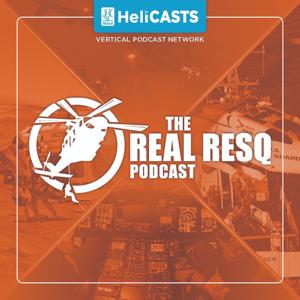


In this episode of The Real ResQ Podcast, host Jason Quinn sits down with Chief Pilot Ryan Petersen, Sergeant and instructor SAR pilot Dave Brooks, and search and rescue officers TJ Keller and Jared Wicks.
Recorded in their hangar in Las Vegas following a week of training with SR3 Rescue Concepts, this conversation takes listeners inside the teamwork, judgment, and preparation behind the department’s aviation and search and rescue missions.
The four guests share the paths that brought them to the unit—from a childhood visit to the police hangar to careers in patrol, SWAT, and climbing. They reflect on the mentors who helped shape them and explain how their pilots, rescue officers, and highly skilled volunteers work together when someone needs help in difficult terrain.
Their stories take us into snow-covered canyons, onto steep mountain slopes, and hundreds of feet up the walls of Red Rock Canyon. A search for three young hikers caught in a winter storm becomes a test of patience, coordination, and persistence. Another nighttime mission puts a helicopter crew above a stranded hiker as snow complicates their ability to see and operate. Along the way, the team shares first-rescue memories, unexpected encounters, and the humor that comes with working closely together under pressure.
The crew also breaks down the seven-hour rescue of a seriously injured climber on the Dream Safari route. With their hoist-equipped helicopter unavailable for maintenance, rescuers combine technical rope systems, medical care on the wall, volunteer support, and precision flying to get him to definitive care. It is a detailed look at how a rescue continues to evolve after the team reaches the patient—and how much work remains before everyone is safely off the mountain.
Throughout the conversation, the team returns to the importance of training, honest debriefs, and being willing to learn from each mission. They discuss the responsibility of making decisions with someone else’s life in their hands, the emotional weight of recoveries, and why bringing someone home matters even when the outcome is heartbreaking.
And before we wrap up, a snowy rescue on Mount Charleston introduces two very different passengers: an energetic Chihuahua and a husky whose ride off the mountain gives the crew a story they will not soon forget.
From the cockpit to the end of the hoist, this episode brings together the technical challenges, human moments, and shared commitment behind Las Vegas Metro’s rescue work.
Enjoy!
Learn more about the LVMPD Search and Rescue volunteer foundation and ways to support the team at https://www.lvmpdsar.org. https://www.instagram.com/lvmpdsar/
References:
https://www.fox5vegas.com/2026/03/02/climbers-airlifted-safety-during-7-hour-las-vegas-search-rescue-mission/
https://www.reviewjournal.com/local/local-las-vegas/injured-climber-undergoes-7-hour-rescue-after-falling-at-red-rock-canyon-photos-3713857/
https://www.climbing.com/news/elite-rescue-team-saves-climber-from-unlucky-fall/
Thank you for sponsoring this episode of The Real ResQ:
SR3 Rescue Concepts https://sr3rescue.com/
READYBAR https://getreadybar.com/.
We also have some amazing companies supporting The Real ResQ. These brands offer you exclusive discounts when you use our code, and when you do, you’re helping to support the show. To check out the full list of these supportive brands and the deals they offer, head over to TheRealResQ.com.
Follow The Real ResQ for all updates on Facebook, Instagram or visit TheRealResQ.com
In this episode of The Real ResQ Podcast, host Jason Quinn is joined by U.S. Coast Guard Aircraft Commander Justin Pacheco, Flight Mechanic Cody Dickey, and Rescue Swimmer Michael “Vic” Vicchiariello. The Air Station Clearwater crew shares their experiences responding to Hurricane Dorian and the devastation it left across the Bahamas.
What began as a reconnaissance flight became a mission none of them would forget. The crew describes violent turbulence, disappearing visibility, and the frightening realization that their own survival was suddenly in question. Reaching the ground brought another set of challenges: an overwhelmed clinic, critically injured patients, and urgent decisions about who needed evacuation first.
Justin takes us inside the cockpit, where managing the weather, fuel, and an aircraft radar failure demanded constant coordination. Cody and Vic describe the work happening behind him—finding places to land, carrying survivors, making room in the cabin, and treating patients while the pilots worked to get everyone safely to Nassau.
The crew also speaks candidly about what happened after the shutdown from that first flight. Processing close calls, questioning decisions, supporting one another, and preparing to launch again. Their conversation offers a firsthand look at the training, trust, and teamwork behind disaster response—and the emotional weight that remains when the mission is complete.
But that first mission was only the beginning. Over the next four to nine days, each of them flew multiple sorties throughout the affected islands. As the response continued, immediate injuries were compounded by mounting medical needs, and isolated communities desperately needed supplies. Every flight brought another reminder that the emergency was far from over.
Enjoy!
Article: The Long Blue Line: Fighting Dorian—the deadly struggle of CG-6019 and a “Cat 6” hurricane
Thank you for sponsoring this episode of The Real ResQ:
READYBAR https://getreadybar.com/.
We also have some amazing companies supporting The Real ResQ. These brands offer you exclusive discounts when you use our code, and when you do, you’re helping to support the show. To check out the full list of these supportive brands and the deals they offer, head over to TheRealResQ.com.
Follow The Real ResQ for all updates on Facebook, Instagram or visit TheRealResQ.com
In this episode of The Real ResQ Podcast, Jason Quinn welcomes Steve Lurati, U.S. Coast Guard Rescue Swimmer #49, to share stories from a career that began during the earliest years of the Coast Guard’s helicopter rescue swimmer program.
Steve takes us through his journey from San Francisco and a brief career in police work to joining the Coast Guard and finding his place in aviation. With plenty of laughs along the way, he recalls the challenges, colorful personalities, and occasional trouble that shaped his path to becoming a rescue swimmer.
Stationed in Elizabeth City, North Carolina, Steve found himself putting his training to work in extraordinary circumstances. He recounts deploying into hurricane-driven seas to reach two people and their dog aboard a disabled sailboat—a mission that earned him a Coast Guard Commendation Medal and helped demonstrate what the young rescue swimmer program could accomplish.
On another call, Steve headed 300 miles offshore to help a man suffering seizures aboard a small sailboat. When the helicopter had to leave because of fuel limits, Steve remained with the patient. Then the medical equipment intended to support him sank before he could retrieve it. With limited resources and a long way to shore, he had to find another way forward.
Steve also shares the story of a challenging hoist onto a tanker to evacuate a stabbing victim, only to discover that reaching the deck was just the beginning of the problem. His time in Astoria, Oregon, brought a different set of challenges, including missing fishermen, burning vessels, and witnessing two fishing boats collide while his crew was already on scene for a medical evacuation.
Beyond the rescues, Steve reflects on his years as an instructor at the Navy’s rescue swimmer school in Pensacola. He discusses maintaining standards, helping students overcome obstacles, and recognizing the difference between pushing someone to succeed and using authority for the wrong reasons.
After 20 years and one day in the Coast Guard, Steve carried those experiences into a second career as a probation officer. Throughout the conversation, he returns to the lessons that connected both careers: treat people with respect, take responsibility for what you can influence, and don’t limit what you’re willing to learn.
It’s a conversation filled with remarkable rescues, honest reflections, and the humor of an early rescue swimmer who still has plenty of stories to tell.
Enjoy!
Thank you for sponsoring this episode of The Real ResQ:
READYBAR https://getreadybar.com/.
We also have some amazing companies supporting The Real ResQ. These brands offer you exclusive discounts when you use our code, and when you do, you’re helping to support the show. To check out the full list of these supportive brands and the deals they offer, head over to TheRealResQ.com.
Follow The Real ResQ for all updates on Facebook, Instagram or visit TheRealResQ.com
In this episode of The Real ResQ Podcast, host Jason Quinn sits down with retired U.S. Navy Command Master Chief Keith “Flip” Griffin—a Navy Search and Rescue Medical Technician whose remarkable 23-year career took him from Puerto Rico and the mountains of Washington State to Iraq, Kuwait, Japan, Australia, and beyond.
Flip’s path into search and rescue began in an unexpected place: the United States Navy Ceremonial Guard in Washington, D.C. After an injury introduced him to the medical field, he became a Navy corpsman and eventually discovered the world of aviation search and rescue.
His early missions included responding to a military Humvee rollover involving multiple injured service members and rescuing a diver who had been stranded for more than 24 hours along the rocky coast of Puerto Rico. But when Flip transferred to NAS Whidbey Island, the job changed dramatically. Suddenly, he was operating in the mountains, responding to serious injuries in remote terrain, and learning to work alongside civilian ground-search teams.
Later, while deployed to Australia, Flip and his crew received the call every rescue team trains for: 39 people were aboard a boat taking on water in a crocodile-filled river, deep in the Australian outback. The crew launched into total darkness, flying under night-vision goggles while developing a plan to evacuate everyone from the sinking vessel.
They were less than a mile away when everything changed.
The rescue never happened—and that may have been the best possible outcome.
Flip also shares how Navy SAR corpsmen fought to grow their community, improve equipment and training, and prove their value across military aviation. He discusses teaching at Aviation Rescue Swimmer School, conducting medevac missions during overseas deployments, and eventually using his position in senior leadership to advocate for the next generation of rescuers.
Throughout the conversation, Flip offers lessons earned over decades of operational experience:
Today, Flip continues serving others through Firehouse Freedom, where he helps fire departments strengthen leadership, accountability, communication, recruiting, retention, and life inside the firehouse. He is also a contributor to Firehouse Magazine and the co-owner of Backcountry Medical.
This episode is filled with incredible rescue stories, hard-earned leadership lessons, plenty of interservice humor, and one unforgettable training mistake that gave Flip his original call sign: “Tumo.”
And before the episode ends, Flip issues a challenge to every rescuer listening: open your gear bags, identify three things you may not actually need, and begin thinking differently about what you carry into the field.
Enjoy!
To connect with Flip Griffin:
Website: FirehouseFreedom.com
Email: [email protected]
LinkedIn: Search for Keith “Flip” Griffin
Firehouse Magazine: The Flip Side of the Firehouse
Thank you for sponsoring this episode of The Real ResQ:
READYBAR https://getreadybar.com/.
We also have some amazing companies supporting The Real ResQ. These brands offer you exclusive discounts when you use our code, and when you do, you’re helping to support the show. To check out the full list of these supportive brands and the deals they offer, head over to TheRealResQ.com.
Follow The Real ResQ for all updates on Facebook, Instagram or visit TheRealResQ.com
In this episode of The Real ResQ Podcast, returning guest Josie McKee shares her journey from once needing to be rescued herself to joining Yosemite Search and Rescue—and ultimately using that experience to help save the life of her climbing partner.
McKee’s first encounter with search and rescue came at 17, when she and a friend became lost after skiing out of bounds. With darkness approaching and heavy snow erasing their tracks, they dug a snow cave and waited until ski patrol found them around midnight.
Years later, McKee found herself on the other side of the rescue.
As a member of Yosemite Search and Rescue, she became part of a team responsible for incredibly complex operations on the towering cliffs above Yosemite Valley. She takes us inside rescues involving helicopter insertions, thousands of feet of rope, and teams suspended high on the face of El Capitan.
McKee also shares the night she went from rescuer to victim. While camping in Baja, Mexico, she awakened inside her truck to find a masked man demanding her keys. The violent carjacking left her with a broken clavicle, a stolen vehicle, and the realization that she had narrowly escaped being kidnapped.
The accumulated weight of rescues, recoveries, dangerous climbing incidents, and the attack in Baja eventually began affecting her sleep, climbing, and willingness to respond when her pager sounded. She was experiencing a significant stress injury—even though she did not yet have the words to describe it.
After stepping away from Yosemite Search and Rescue and working with a sports psychologist, McKee slowly found her way back to climbing.
Then, on October 11, 2017, everything changed.
McKee and accomplished climber Quinn Brett were attempting a one-day ascent of The Nose on El Capitan when Brett fell more than 100 feet. McKee watched her friend fall past her and come to rest critically injured and initially unresponsive.
Hundreds of feet above the ground, McKee had to control her emotions, carefully rig a rappel system, reach Brett, establish her airway, stop the bleeding, and coordinate a rescue—all while daylight faded and the afternoon winds continued to build.
What followed became a race against time and weather, with Brett’s life hanging in the balance.
McKee also reveals what happened after the helicopter departed and how the care provided by her former teammates helped her begin processing what she had just witnessed. She explains the principles of psychological first aid and why caring for a responder after a traumatic rescue can be just as important as caring for the patient.
Today, McKee has returned to search and rescue in Wyoming’s Wind River Mountains and helps rescuers and other high-risk professionals better understand stress injuries, resilience, and recovery.
This episode is about technical rescue, calculated risk, accumulated trauma, and the moment a climbing partner had to become the rescuer.
Enjoy!
Thank you for sponsoring this episode of The Real ResQ:
READYBAR https://getreadybar.com/.
We also have some amazing companies supporting The Real ResQ. These brands offer you exclusive discounts when you use our code, and when you do, you’re helping to support the show. To check out the full list of these supportive brands and the deals they offer, head over to TheRealResQ.com.
Follow The Real ResQ for all updates on Facebook, Instagram or visit TheRealResQ.com
In Episode 277 of The Real ResQ Podcast, host Jason Quinn speaks with David Cicotello, who shares an extraordinary story of survival, loss, faith, and recovery.
In March 2011, Cicotello and his older brother, Louis, entered the North Fork of No Man’s Canyon in Utah for what was supposed to be a six-hour canyoneering trip.
During their final rappel, Louis called out that the rope was short. Seconds later, the rope ripped through the rappel ring and disappeared over the edge.
Unable to reach his brother, descend the canyon, or climb back the way they had entered, Cicotello was trapped. With only the contents of a day pack, a small amount of food and water, and no way to call for help, he turned his attention to one goal: survive until rescuers could find him.
Cicotello takes us through the 144 hours he spent alone in the canyon—rationing supplies, enduring freezing nights, creating a HELP sign, and relying on routines, determination, and faith to keep going.
A map Cicotello left with his loved ones eventually led search-and-rescue teams to the brothers’ location. Utah DPS pilot Luke Bowman, Trooper Aaron Beasley, Commander Rustin Grundy, and members of Wayne County Search and Rescue reached Cicotello and pulled him from the canyon.
Cicotello also speaks openly about losing his brother and the difficult recovery that followed. As he explains, surviving the canyon was only the first stage. Learning to live with what happened required another community of people to help rescue him all over again.
This episode shares the survivor’s perspective of a rescue previously discussed by Luke Bowman in Episode 249—and serves as a powerful reminder to prepare carefully, leave a detailed route plan, and never underestimate the people who will come looking when you need them most.
Enjoy!
Thank you for sponsoring this episode of The Real ResQ:
READYBAR https://getreadybar.com/.
We also have some amazing companies supporting The Real ResQ. These brands offer you exclusive discounts when you use our code, and when you do, you’re helping to support the show. To check out the full list of these supportive brands and the deals they offer, head over to TheRealResQ.com.
Follow The Real ResQ for all updates on Facebook, Instagram or visit TheRealResQ.com
In this episode of The Real ResQ Podcast, host Jason Quinn sits down with Dr. Steve Glassey, a public safety “pracademic” and CEO of the International Public Safety Qualifications Authority (IPSQA).
Glassey’s nearly 30-year career has taken him through the Royal New Zealand Navy, emergency medical services, firefighting, urban search and rescue, swiftwater rescue, animal welfare, humanitarian disaster response, and academia. His work has brought him to major disasters around the world, including Typhoon Ketsana in Laos, the Samoan tsunami, the Christchurch earthquake, and the devastating Australian bushfires.
The conversation begins with Glassey’s early years in rescue and the creation of the Wellington SPCA Animal Rescue Unit—the first technical animal rescue team of its kind in the Southern Hemisphere. He recalls one of the team's earliest missions involving Ace, a German shepherd trapped on a cliff, an improvised harness, and a hard lesson in never taking an owner's word that their dog won't bite.
Glassey also shares the story of his first cardiac-arrest patient and explains how those early experiences shaped his approach to emergency response, leadership, and decision-making.
The conversation then moves into major disaster operations and lessons from the 2011 Christchurch earthquake. Glassey discusses the importance of clearly established command structures and introduces his ABCs of emergency response:
“Assume nothing. Believe no one. Confirm everything.”
Glassey and Quinn examine the dangers of swiftwater and flood rescue, including the frequency of vehicle-related flood deaths and the growing “glass coffin” problem created by laminated vehicle windows. Glassey explains why traditional window-breaking tools may no longer work on newer vehicles and why rescuers must begin adapting their tactics and equipment.
They also discuss the Swiftwater Recovery Specialist program developed by Glassey and New Zealand Police Senior Sergeant Jeff Bray. The program received a Higgins & Langley Memorial Award for its evidence-based and compassionate approach to recovering deceased victims from moving water. Glassey explains why a technically successful recovery can still become a failure when the dignity of the victim and the needs of the family are overlooked.
One of the episode’s most intense stories involves a horse trapped beneath a cliff along the rising Otaki River. The rescue required rope technicians, swiftwater personnel, veterinarians, and a helicopter crew to work together. Once the horse was sedated, the team had only seconds to connect the sling and lift it clear before its head disappeared beneath the rising water.
Glassey also recounts deploying with Animal Evac New Zealand during the catastrophic 2019–2020 Australian bushfires, where his team searched burned areas for surviving wildlife and relocated animals left without food or water.
The episode then turns to Glassey’s work as CEO of IPSQA. He explains how fraudulent, unverified, and poorly assessed qualifications can place rescuers, patients, and entire organizations at risk. IPSQA separates training from independent certification, creating a global assessment system intended to verify that public safety professionals can actually perform the skills listed on their credentials.
Finally, Glassey introduces a next-generation water rescue breathing apparatus developed for swiftwater rescuers, boat crews, tactical operators, and other water-rescue professionals. The system automatically transitions from ambient air to compressed air when submerged while also providing integrated team and patient communications. He believes the technology could eventually change water rescue in much the same way breathing apparatus changed structural firefighting.
The episode closes with a hilarious story involving highly trained U.S. Air Force Pararescuemen, a nighttime swiftwater exercise, and a completely fabricated warning about giant killer eels in New Zealand.
This episode delivers powerful rescue stories, hard-earned lessons, innovative ideas, and plenty of humor—all from a man working at the intersection of frontline experience, research, education, and public safety.
Enjoy!
Thank you for sponsoring this episode of The Real ResQ:
READYBAR https://getreadybar.com/
IPSQA https://ipsqa.com/. (To learn more about IPSQA, visit IPSQA.com or connect with Dr. Steve Glassey on LinkedIn.)
We also have some amazing companies supporting The Real ResQ. These brands offer you exclusive discounts when you use our code, and when you do, you’re helping to support the show. To check out the full list of these supportive brands and the deals they offer, head over to TheRealResQ.com.
Follow The Real ResQ for all updates on Facebook, Instagram or visit TheRealResQ.com
In this episode of The Real ResQ Podcast, host Jason Quinn sits down with Canadian Armed Forces Search and Rescue Technicians Matthew Sebo and Connor Twomey.
Both Sebo and Twomey came to the SARTech community after already serving in the Canadian Armed Forces. Matt spent 11 years in the Armoured Corps—including a deployment alongside his brother—before deciding he wanted to move away from fighting and toward a career focused on helping people. Connor began as a reservist medic before discovering the SARTech trade and realizing it combined the medicine, challenge, and specialized rescue work he was looking for.
The centerpiece of the episode is a September 2025 plane crash in remote northern Manitoba. Five people were believed to be aboard, the crash site was deep in the wilderness, and reaching it by conventional means wasn't an option. Four SARTechs loaded their equipment aboard a Hercules and headed north.
Arriving in complete darkness, the team parachuted into a nearby lake carrying roughly 100 pounds of equipment in addition to their parachutes, then pushed through thick muskeg and boreal forest toward the burning wreckage.
When they reached the crash site, they discovered one survivor—a badly injured 20-year-old pilot. With hypothermia setting in, the SARTechs began advanced medical treatment while simultaneously developing a plan to get him out.
What follows is an extraordinary chain of rescue: treating the survivor in the wilderness, carrying him through difficult terrain, moving into deep water to reach a hovering helicopter, transferring him back to the Hercules, and ultimately getting him to definitive medical care.
Connor also shares another operational parachute rescue involving a helicopter crash in the Canadian wilderness—another mission where a pilot survived against incredible odds.
Throughout the episode, Sebo and Twomey talk about preparation, teamwork, lessons learned, the realities of operational parachuting, and what it means to be a SARTech when the only way to reach someone in trouble is to jump out of an airplane and go get them.
Enjoy!
Thank you for sponsoring this episode of The Real ResQ:
Switlik https://switlik.com/
We also have some amazing companies supporting The Real ResQ. These brands offer you exclusive discounts when you use our code, and when you do, you’re helping to support the show. To check out the full list of these supportive brands and the deals they offer, head over to TheRealResQ.com.
Follow The Real ResQ for all updates on Facebook, Instagram or visit TheRealResQ.com
In this episode of The Real ResQ Podcast, host Jason Quinn sits down with Greg Hudson, a Canadian Armed Forces Search and Rescue Technician (SAR Tech), to talk about his journey into one of the most unique rescue jobs in the world.
After nearly a decade in the Army, Hudson discovered the SAR Tech world, completed selection and training, and began a career that would have him parachuting from airplanes, hoisting from helicopters, providing advanced medical care, and operating everywhere from the Canadian wilderness to the North Atlantic.
Hudson shares stories from his time at 413 Squadron in Greenwood, 424 Squadron in Trenton, and 103 Squadron in Gander—including his first rescue from a cruise ship, searches for downed aircraft, missions to fishing vessels, and the realities of operating in some of Canada's most remote environments.
The centerpiece of the episode is the rescue of the MSC Baltic III. With the vessel disabled and drifting toward shore in brutal conditions, Hudson and the crew launched to find 20 people onboard, several injured. Hudson takes us onto the ice-covered deck, inside the damaged ship, and through the triage and hoisting operation as the crew worked to get everyone off safely.
There are plenty of laughs along the way, too—including a rescue mission to a fishing boat trapped in the ice whose crew needed food, water…and was very concerned that the SAR Techs not forget the cigarettes.
Throughout the conversation, Hudson emphasizes the value of sharing experiences—the good decisions, the mistakes, and the lessons learned—so the next rescuer can approach the job a little better prepared.
From parachutes and hoists to medicine, teamwork, and life aboard a rescue squadron, this episode is an awesome look inside the world of a Canadian SAR Tech.
Enjoy!
We have some amazing companies supporting The Real ResQ. These brands offer you exclusive discounts when you use our code, and when you do, you’re helping to support the show. To check out the full list of these supportive brands and the deals they offer, head over to TheRealResQ.com.
Follow The Real ResQ for all updates on Facebook, Instagram or visit TheRealResQ.com
In this episode of The Real ResQ Podcast, host Jason Quinn sits down with Mathew Neri, Royal Canadian Air Force search and rescue pilot and as of this recording, the Commanding Officer of 103 Search and Rescue Squadron in Gander, Newfoundland.
Neri takes us inside the world of Canadian search and rescue, where missions can stretch hundreds of miles offshore or deep into the remote Arctic. Flying the massive CH-149 Cormorant, his crews routinely battle fog, icing, high winds, limited fuel options, and some of the most isolated terrain on the planet.
He shares the story of his first major mission as an aircraft commander—a helicopter crash hundreds of miles north in the Canadian Arctic—and the uncertainty of being a relatively new commander suddenly responsible for taking a crew into an environment he had never operated in before.
Neri also walks through a challenging long-range medevac from a cargo ship off the Labrador coast. With no visible horizon and the ship rolling beneath the helicopter, the crew had to rethink their plan while one of the SARTechs nearly slid across the wet deck toward the edge during the hoist. They ultimately completed the rescue and got the patient safely to the hospital.
Along the way, Neri explains how Canadian SAR crews operate, the intense training behind the SARTech community, Arctic survival training in temperatures reaching extreme lows, and the enormous amount of planning and decision-making required when the nearest fuel or rescue resource may be hours away.
The conversation is filled with great rescue stories, humor, lessons learned, and an important reminder from Neri: sometimes the most important decision a rescue crew can make is knowing when to say no.
From the North Atlantic to the Canadian Arctic, this episode offers an incredible look inside one of the most unique search and rescue environments in the world.
Enjoy!
Matt Neri YouTube: www.youtube.com/@mattfrom103
We have some amazing companies supporting The Real ResQ. These brands offer you exclusive discounts when you use our code, and when you do, you’re helping to support the show. To check out the full list of these supportive brands and the deals they offer, head over to TheRealResQ.com.
Follow The Real ResQ for all updates on Facebook, Instagram or visit TheRealResQ.com
From the publisher's feed
The Real ResQ is the ultimate podcast for inspiring stories of everyday heroes who risk their lives ”so others may live.” Join experienced Coast Guard Rescue Swimmer #500, Jason Quinn, and guests…

227,660 Listeners

30,711 Listeners
5,939 Listeners

11,133 Listeners
1,866 Listeners
6,458 Listeners

45,920 Listeners
954 Listeners

885 Listeners
1,276 Listeners

64 Listeners

206 Listeners
1,247 Listeners
659 Listeners
213 Listeners