
Sign up to save your podcasts
Or



Based on Podcast App listening data
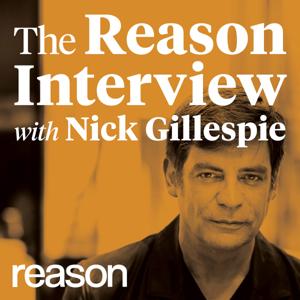
In On Liberty, John Stuart Mill wrote, "he who knows only his own side of the case knows little of that." He was laying out the case for robust, good-faith, and systematic debate as essential to an open society. If you don't test your beliefs by engaging with people who disagree with you, you're more likely to make weak, incomplete, self-serving, or irrelevant arguments, leading to ruinous outcomes in policy matters or acrimonious misunderstandings in social life.
That's where the group Open to Debate comes in. Founded in 2006 as Intelligence Squared U.S., Open to Debate has hosted hundreds of debates with the goal of "restor[ing] critical thinking, facts, reason, and civility to American public discourse." Through a mix of online and in-person events, Open to Debate brings together artists, officials, public intellectuals, scientists, and entrepreneurs from across the ideological spectrum to work through contentious, heated, and seemingly irresolvable issues of the day.
Reason's Katherine Mangu-Ward, for instance, was part of a debate that asked, "Is Capitalism a Blessing?" Over the years, I've argued for legalizing all drugs and against Medicare for All, net neutrality, and forgiving student loan debt. I also moderate debates for them, including one in New York about millennials taking place on June 7. Open to Debate invites audience participation, and it airs all its programming on public radio, YouTube, and the group's own website, where it provides voluminous notes and materials, all designed to help audience members reach independent and informed conclusions.
My guest today is Open To Debate's CEO, Clea Conner, who tells me about her group's mission, its name change, and its push to host actual presidential debates rather than "joint press conferences with really rehearsed talking points."
Today's sponsors:
The post Clea Conner: America Needs More and Better Debates appeared first on Reason.com.
This is the audio version of The Reason Livestream, which takes place every Thursday at 1 p.m. Eastern.
Our topic was the release of and reaction to the Durham report, an investigation into the FBI's probe of possible collusion between former President Donald Trump's campaign and Russian government actors during the 2016 election. Our guest was Eli Lake, host of the Re-Education podcast and a contributor to Commentary and The New York Sun.
"If the Durham report shows anything, it is that the FBI leadership bent over backward to protect [Hillary] Clinton's campaign while launching a full investigation into [Donald] Trump's campaign on the thinnest of pretexts," he wrote in a recent article for The Free Press.
Lake says the 306-page report from special counsel John Durham, released to the public on May 15, is a "black eye for the FBI," which he says was sloppy, inconsistent, and possibly "helped inject what may have been Russian disinformation into the American political discourse."
Related episodes and links:
"The Deep State's 'Political Assassination' of Michael Flynn Was an Epic Abuse of Power"
The post Eli Lake: Trump, Russiagate, and the End of FBI Credibility appeared first on Reason.com.
My guest today is journalist and podcaster Jesse Singal, who first came to national prominence a few years ago when he wrote a cover story for The Atlantic titled "When Children Say They're Trans." The article was meticulously reported but questioned various aspects of contemporary activism and created a firestorm that continues to this day. Since then, he has emerged as a fierce advocate for free speech, open debate, and honesty about the use and limits of social science in journalism and public discourse.
In 2020, he and Katie Herzog started hosting the immensely popular podcast Blocked & Reported. In 2021, he published the excellent book, The Quick Fix: Why Fad Psychology Can't Cure Our Social Ills.
This episode was recorded in front of a live audience at a small gathering in New York City. We talk about Jesse's work and research, how he came by his commitment to truth over advocacy, and how we can all push back against cancel culture and other forms of soft and hard censorship.
Related episodes:
Today's sponsors:
The post Jesse Singal: How To Stay Honest While Doing Journalism appeared first on Reason.com.
This is the audio version of The Reason Livestream that takes place every Thursday at 1 p.m. Eastern.
The topic this week was whether falling birthrates in the United States and other countries are a bad thing that governments should try to reverse. My guests were Reason Senior Editor Elizabeth Nolan Brown, whose June cover story is "Storks Don't Take Orders From the State," and Scott Winship, who runs the American Enterprise Institute's Center on Opportunity and Social Mobility and has written widely on the myths and realities about economic and cultural decline.
We talk about whether past government policies have proven effective in changing birthrates, whether the state should be involved in such decisions from a moral perspective, and why the right and left are increasingly committed to pro-natalist policies.
Today's sponsors:
The post Elizabeth Nolan Brown and Scott Winship: Governments Can't Increase Birthrates. They Shouldn't Even Try. appeared first on Reason.com.
Is the world getting better? Or is it on the verge of collapse?
Stefan Sagmeister emphatically believes that things are looking up, and his art exhibition "Now Is Better" showcases a bold new way to convince the world that he's right. He takes actual paintings from the 18th and 19th centuries, disassembles them, and creates new works by juxtaposing them with data visualizations of just how much things have improved since the good old days.
Some works chart the incredible decline in deaths on the battlefield, from famine, and from natural disasters while others map how much cheaper food and lighting have become in real terms. One piece documents the explosion in the number of guitars per person on the planet—an indicator of growth in leisure and entertainment—while another charts the persistent belief that crime is always rising despite its well-documented decline.
A heralded graphic designer who has designed album covers for Jay-Z, The Rolling Stones, and Lou Reed, Sagmeister has won two Grammy Awards, including one for his design of the Talking Heads' boxed set Once in a Lifetime. Born in Austria in 1962, he's called New York City home since the 1990s. He draws on sources such as Our World in Data, Human Progress, and the work of Steven Pinker, who has written the foreword to a book version of the "Now Is Better" series coming out later this year.
In a wide-ranging conversation, Sagmeister tells me why it's so important to acknowledge and defend material progress, why art and commerce aren't enemies, and what he loves about the New World he's adopted as his homeland and how that ties into the "Now Is Better" project.
The post Stefan Sagmeister: An Artist Who Believes 'Now Is Better' appeared first on Reason.com.
This is the audio version of this week's The Reason Livestream, which takes place every Thursday at 1 p.m. Eastern.
This week's topic is artificial intelligence, or A.I., and my Reason colleague Zach Weissmueller interviews two leading thinkers on the subject.
Jaan Tallinn of the Future of Life Institute organized an open letter calling for a pause on A.I. development that was signed by Elon Musk, Apple co-founder Steve Wozniak, and 27,000 other people. Tallinn is a tech investor, one of the software developers who created Skype and Kazaa, and co-founder of the Future of Life Institute.
On the other side of the issue is George Mason University economist Robin Hanson, who thinks the worries over A.I. are overblown. He says much of today's A.I. anxiety is a more generalized "future fear," which is likely to imperil technological progress that would greatly benefit humanity.
To watch the video version, go here.
The post Jaan Tallinn and Robin Hanson: Should We Pause A.I.? appeared first on Reason.com.
My guest today is one of my favorite people in the world. Vernon Smith is the 2002 winner of the Nobel Prize in Economic Sciences for his pioneering work in experimental economics. He's almost certainly the only male Nobel Prize winner who showed up with a ponytail and an Adam Smith bolo tie. More than anybody else, Smith is responsible for taking economics out of the lecture hall and testing its hypotheses by running actual experiments with living, breathing humans.
Born in Kansas in 1927, Smith has lived a life that sounds like a Bob Dylan song. His mother's first husband died in a freak railroad accident, and she used the insurance money to buy a farm that sustained her family during the darkest days of the Great Depression. An engineering whiz, he graduated from the California Institute of Technology in 1949 and then turned to studying economics, first at Kansas University and then Harvard. He's taught all over the country, especially at places far flung from big cities, doing much of his most important work at Purdue University and the University of Arizona. He's currently at Chapman University in Southern California, where he created the Smith Institute for Political Economy and Philosophy, which seeks to "reintegrate the study of the humanities and economics in the spirit of Adam Smith."
I caught up with Smith recently at Reason Weekend, an annual conference sponsored by the nonprofit that publishes this podcast. We talked about the upcoming 300th birthday of Adam Smith and why The Wealth of Nations author remains absolutely essential to understanding the contemporary world—Vernon gives him a special birthday greeting at the start of this show.
We also talked about the people that he namechecked in his Nobel toast—an inspired group that included his co-Nobelist Daniel Kahneman, Friedrich Hayek, and the poet Kahlil Gibran—and his impressions of former President Jimmy Carter, who won the Nobel Peace Prize the same year that Vernon won the economics prize. Smith calls Carter "the great deregulator" and shares a wonderful story about the former president learning late in life how governments and bureaucracies often get in the way of people trying to help one another.
Today's sponsors:
The post Vernon Smith: Adam Smith's Relevance, Jimmy Carter's Deregulation, and the Fed's Biggest Mistake appeared first on Reason.com.
This is the audio version of The Reason Livestream, which I co-host every Thursday at 1 p.m. Eastern with my Reason colleague Zach Weissmueller.
Today's guest is Jacob Siegel, a journalist who served in the U.S. Army as an intelligence officer in both Iraq and Afghanistan. He's written a fantastic essay for Tablet magazine called, "A Guide to Understanding the Hoax of the Century: Thirteen ways of looking at disinformation."
This is, simply, the best piece I've read about how what Jacob calls "the ruling class" is trying to literally and figuratively control political and cultural discourse about politics, public health, and other pressing topics. Jacob provides a history and a deconstruction of the concept of disinformation, a term borrowed from Cold War spycraft that became ubiquitous in the wake of Donald Trump's presidential victory in 2016.
Along the way, we discuss elite apologetics for suppressing the Hunter Biden laptop story on social media, the revolving door between the national security state and the media, and how tactics devised for use overseas in the global war on terror are now being used against Americans on a daily basis.
The post Jacob Siegel: 'Disinformation' Is the Hoax of the Century appeared first on Reason.com.
For today's episode, I talk with Ben Smith, the first editor in chief of recently shuttered BuzzFeed News, former New York Times media columnist, and founder of Semafor. In his new book Traffic: Genius, Rivalry, and Delusion in the Billion-Dollar Race To Go Viral, Smith charts the rise and fall of Gawker, The Huffington Post, Breitbart News, and his old employer.
In the '00s and early 2010s, these sites dominated news cycles and pulled millions of eyeballs due to their unique abilities to shape media narratives in surprising and irresistible ways. Indeed, it seemed they would define the new century while legacy outlets such as The New York Times would be lucky to survive in the new, massively online mediascape. Yet the rise of Donald Trump, revenge lawsuits, untimely deaths, and the vagaries of the internet ended up disrupting the disrupters.
Ben and I talk about all that, plus his controversial decision at BuzzFeed to publish the Steele Dossier, what the firings of Tucker Carlson and Don Lemon mean for journalism, and his aims for his new media platform, Semafor.
This episode was taped at The Reason Speakeasy, a monthly, unscripted conversation in New York City with outspoken defenders of free thinking and heterodoxy. It always provides a great evening of camaraderie and conversation about cutting-edge topics and ideas. Go here to sign up for future events in New York City.
Today's sponsors:
The post Ben Smith: Why It Matters that Gawker, BuzzFeed News, and Breitbart News Failed appeared first on Reason.com.
Today's guest is Vivek Ramaswamy, an Ohio-based biotech entrepreneur and best-selling author who is running for the Republican presidential nomination. His America First 2.0 platform combines some libertarian elements (prioritizing economic growth, opposing central bank digital currencies, shutting down whole federal agencies) with others that are anything but ("using our military to annihilate Mexican drug cartels").
He tells Zach Weissmueller and me why Donald Trump has accomplished as much as he ever will as president and why Florida Gov. Ron DeSantis—who, like Ramaswamy, opposes woke corporate activities—is simply "responding to what the base wants, jumping like a circus monkey without actually having independent thoughts about what our actual principles ought to be." He discusses why he thinks Julian Assange should be pardoned and why the FBI, IRS, and other federal agencies should be shuttered. And he explains why he no longer calls himself a libertarian.
We also discuss his new book, Capitalist Punishment: How Wall Street Is Using Your Money to Create a Country You Didn't Vote For, a critical analysis of ESG rules and what he calls "lurking state actions" that he says are driving corporations to develop policies to ward off government interference.
This is a podcast version of Reason's weekly livestream, which takes place every Thursday at 1 p.m. Eastern.
The post Vivek Ramaswamy: Why He's Running for President—and Against 'Woke Capitalism' appeared first on Reason.com.
From the publisher's feed
Ranked by our users in the last 21 days

972 Listeners

2,267 Listeners
1,510 Listeners
2,879 Listeners

6,594 Listeners
975 Listeners
792 Listeners
375 Listeners
192 Listeners

599 Listeners

3,824 Listeners
801 Listeners

8,479 Listeners
59 Listeners
132 Listeners
115 Listeners
17 Listeners

1,064 Listeners
218 Listeners