
Sign up to save your podcasts
Or

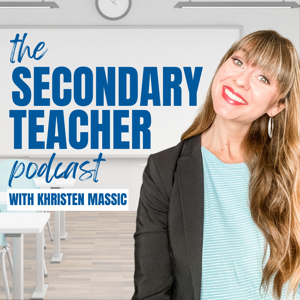


Grab the Secondary Teacher Systems Toolkit here: https://khristenmassic.thrivecart.com/systemstoolkit/?ref=pod
Planning for the next school year? If your day is organized by class period, your planning calendar should be too. Grab my Editable Class Period Calendar here: https://khristenmassic.com/secondarycalendarpod
Get the Planning Period Reset Toolkit—a free set of quick-start tools to help you protect your time, focus faster, and finally finish something… even during chaotic school days. https://khristenmassic.com/reset
Shop my Teachers Pay Teachers store: https://www.teacherspayteachers.com/Store/Khristen-Massic-Cte-Teacher-Coach
Every secondary teacher knows the feeling: you wrap up a long day, head home, and yet “unfinished planning” is still buzzing in your brain. If you’ve ever caught yourself half-watching Netflix while half-building tomorrow’s lesson, or sprinted through bedtime routines just to dive into another round of grading and planning, this one’s for you. This episode of The Secondary Teacher Podcast tackles “what happens when planning stops following you home”—a shift every teacher craves.
The truth is, teacher planning that lingers in your head all evening isn’t a boundary problem—it’s a process problem. Host Khristen Massic gets real about how lesson planning for multiple preps can bleed into your home life, even when you’re not physically working. It’s not just the laptop on your lap; it’s the hum of “what’s tomorrow supposed to look like?” running in the background.
A common mistake? Plugging away on one class, mapping out a whole week or even a unit, and convincing yourself you’re ahead—only to get slammed by that “oh no” moment when you realize your other classes are still up in the air. That false sense of security can leave you scrambling at the last minute, stealing time from your family, hobbies, or just your sanity.
Khristen Massic paints a vivid contrast between two styles of planning. In version one, your planning hour gets sucked up by blank templates, endless Googling, and “just one more resource” rabbit holes. You close your laptop feeling like you barely made progress. Sounds familiar, right? In version two, you work from a clear structure: you decide what students need to achieve, map out the big pieces, identify what you already have, and pinpoint what can actually wait. That way, the big decisions actually get settled, and your mind gets a rare break.
One powerful moment in the episode is Khristen’s memory of Netflix “watching”—really, just background noise while lesson tabs filled the screen and no task got full attention. That’s a teacher-specific exhaustion, and it only multiplies for those managing multiple preps or teaching electives without a textbook or curriculum team.
This episode is gold for any middle or high school teacher who’s tired of lesson planning stealing their evenings—especially if you juggle several classes or subjects. Khristen doesn’t promise that planning will be quick or effortless, but lays out that the goal is “repeatable, not invented.” You don’t need five courses prepped in thirty minutes, but you do need clarity about what’s done, what’s missing, and what can wait without guilt. That’s the difference between always chasing your to-do list and finally being “done” enough for today.
With practical teacher tips and a grounded perspective on work life balance, The Secondary Teacher Podcast dares you to look at your own planning routine and ask: what unfinished planning are you carrying every night? Khristen doesn’t want you to squeeze more work into your day, but to create more clarity during your planning time—so the work stops following you home. That’s how you finish something that makes tomorrow lighter, in the real world of secondary classrooms.
Ready to stop letting planning run the show after hours? The revolution starts here.
Shut the laptop. Let your brain off the hook. You’ve got this.
Grab the Secondary Teacher Systems Toolkit here: https://khristenmassic.thrivecart.com/systemstoolkit/?ref=pod
Planning for the next school year? If your day is organized by class period, your planning calendar should be too. Grab my Editable Class Period Calendar here: https://khristenmassic.com/secondarycalendarpod
Get the Planning Period Reset Toolkit—a free set of quick-start tools to help you protect your time, focus faster, and finally finish something… even during chaotic school days. https://khristenmassic.com/reset
Shop my Teachers Pay Teachers store: https://www.teacherspayteachers.com/Store/Khristen-Massic-Cte-Teacher-Coach
If "teacher planning takes every available minute," you're not alone—and this episode drills into the hard truth every multi-prep secondary teacher needs to hear. The primary keyword phrase for this episode: "planning is deciding, not building from scratch." That’s the shift host Khristen Massic, a legit 10-year high school engineering teacher turned teacher coach, wants you to make. If endless tabs, empty planning periods, and late-night spirals sound familiar, this one's got your name on it.
You know the drill. You sit down to "plan" but end up buried under a mountain of emails, grading, or chasing down the fantasy of the perfect resource. Suddenly, the actual planning happens after hours, when your brain is fried, and your energy is gone. The classic mistake? Believing planning means creating everything new, hunting for the perfect activity, or crafting slides from scratch. Host Khristen Massic calls BS.
Here's the hard-won teacher tip that kicks open the door to classroom sanity: planning is deciding—nothing more, nothing less. It's figuring out what students really need, what you already have, what's missing, and what actually needs your creative labor. Not every activity, not every slide, not every worksheet needs to be invented from the ground up. Khristen’s advice is freeing: split the tasks, get clear, and stop letting planning eat you alive.
Picture this: you know which unit is up next, open up your drive, and get lost in a rabbit hole. Three activities look promising. One “sort of” fits but needs edits; another is pretty, but you’ll have to make a handout. Maybe you even find last year’s half-assed version and wonder why you’re reinventing the wheel. Suddenly you’re not planning—you’re drowning in choices and tasks, and your time? Gone.
That’s not a time problem. It’s a decision problem. Planning is deciding which resources need to be adapted, which can be reused as-is, and which genuinely must be built. The magic is in separating the act of decision-making from the act of creating. Khristen points out that this is especially vital in the secondary classroom when you’re juggling multiple preps without a ready-made curriculum. Your pile of materials isn’t nothing—it’s raw material. Good planning is about sifting, not starting over.
She also drops a hard truth for perfectionists: you do not need ready-for-the-history-books perfection before teaching tomorrow’s lesson. Ask yourself, “Is this unit ready enough to teach?” Not “perfect,” not “finished forever”—just ready enough. Because the real insights come once students are in the room and the unit is actually in motion. What looks good on paper might flop in real life; what feels half-baked might be exactly what those kids need.
If you’re feeling crushed by the pressure to build an entire curriculum every time you plan, this episode’s for you. It’s a battle cry for tired secondary teachers: put work life balance back within reach and make planning serve you, not the other way around.
Next steps? Khristen challenges you to pick one unit—not the most overwhelming, not the blank slate—just one you know you'll need to teach soon. Then, just look at what you’ve already got. Don’t organize it, don’t create, don’t fix—yet. That restraint is going to be your best weapon as you learn to make planning lighter.
In the next episodes, you’ll get into how to bring order to your backlog, start with the end in mind, and figure out what “ready enough” actually looks like. If you’re a middle or high school teacher tired of feeling run by your to-do list, tune in and start treating planning like the art of smart decision-making. Your secondary classroom—and your sanity—will thank you.
This isn’t another call for more hustle. It’s your permission to think different, plan smarter, and finally take back your evenings. So pick that unit, take an honest look, and get ready to plan like a rebel with a cause.
Grab the Secondary Teacher Systems Toolkit here: https://khristenmassic.thrivecart.com/systemstoolkit/?ref=pod
Planning for the next school year? If your day is organized by class period, your planning calendar should be too. Grab my Editable Class Period Calendar here: https://khristenmassic.com/secondarycalendarpod
Get the Planning Period Reset Toolkit—a free set of quick-start tools to help you protect your time, focus faster, and finally finish something… even during chaotic school days. https://khristenmassic.com/reset
Shop my Teachers Pay Teachers store: https://www.teacherspayteachers.com/Store/Khristen-Massic-Cte-Teacher-Coach
Every secondary teacher knows the agony lurking just past that shiny first week of school. Sure, those first few days hum with possibility, routines feel fresh, and your classroom culture system is a well-oiled machine—at least on the outside. But blink, and it’s week three. Suddenly every teaching prep is pulling you in five directions, lesson plans are cobbled together at midnight, and classroom culture quietly slips to the bottom of your overflowing list. If you’re searching for classroom culture teacher planning that lasts all year, you’re not alone.
The biggest mistake? Losing sight of the systems that made your classroom sing in September. Host Khristen Massic pulls back the curtain on why the first week feels so doable—even for multi-prep teachers. The secret isn’t fancy new activities but reusing the same structures that build trust and clarity with every class, every period. When Unit 1 lands and the grind sets in, too many teachers drop the repeatable frameworks that worked so well, scrambling instead for fresh ideas just to keep up.
But what actually builds classroom culture? It’s not the parade of icebreakers or one-and-done activities. It’s putting simple routines on repeat: Think-Write-Pair-Share, community check-ins, “The Way I Learn” surveys. Khristen Massic lays it bare—students don’t crave endless novelty. They crave predictability, routine, and the safety of knowing what’s next. A classroom where the structure is automatic lets students focus their energy on learning rather than logistics.
Take Think-Write-Pair-Share, for example. In week one, it breaks the ice; by week four, it’s a go-to for concept explanations; come week twelve, students move through it with almost zero direction. The routine becomes invisible, freeing up student brainpower to actually grapple with your content. As Khristen says, “the thinking changes, the routine doesn’t”—and that’s the whole point.
Here’s the pivot: the best classroom routines aren’t first-week tricks; they’re yearlong lifelines. Reflection activities, learning surveys, even that community-building prompt—they don’t get shoved in a drawer after September. They evolve and repeat, morphing into mid-year check-ins or unit-close reflections. The more you build on what’s already working, the less you scramble, and the more your students feel that elusive comfort and belonging.
This approach is gold for secondary teachers, especially those teaching multiple preps. Planning lighter means working smarter, not harder. Instead of constantly dreaming up the next cool idea, Khristen challenges teachers to ask: how can I repurpose something students already know? Can this discussion structure anchor the next tough unit? Can this community activity pop up again as a November reset? Suddenly, lesson planning isn’t a midnight monster; it’s a sustainable, even enjoyable, rhythm.
It’s for every teacher who dreads seeing classroom culture fizzle by October. It’s for the veteran who wants real work life balance, and the newbie fighting burnout before Halloween. If you want your secondary classroom to feel safe, vibrant, and consistent—without drowning under reinvention—this episode will flip your script.
Throughout this series, Khristen has been on a mission: show teachers how to ditch one-off activities in favor of resilient frameworks. It’s not about crafting perfect first days. It’s about building systems that stick, routines that support you and your students, and the confidence to keep hitting “repeat” on what works—even in week twenty.
So, what will you carry forward? Which structure could save your sanity and strengthen your classroom culture all year? That answer might be the most important planning decision you make.
You want a classroom that feels like a second home for your students and for you—keep your best routines on heavy rotation. Ditch the innovation hamster wheel, and make tomorrow a little lighter.
Own your classroom, year-round. Rebels build systems that last.
Grab the Secondary Teacher Systems Toolkit here: https://khristenmassic.thrivecart.com/systemstoolkit/?ref=pod
Planning for the next school year? If your day is organized by class period, your planning calendar should be too. Grab my Editable Class Period Calendar here: https://khristenmassic.com/secondarycalendarpod
Get the Planning Period Reset Toolkit—a free set of quick-start tools to help you protect your time, focus faster, and finally finish something… even during chaotic school days. https://khristenmassic.com/reset
Shop my Teachers Pay Teachers store: https://www.teacherspayteachers.com/Store/Khristen-Massic-Cte-Teacher-Coach
Ever find yourself drowning in bell work ideas, Pinterest boards, and well-meaning Facebook threads about “how do I build a classroom and a teaching system when I don’t have one yet?” This episode of The Secondary Teacher Podcast rips the Band-Aid off what’s really keeping secondary teachers — especially those with multiple preps or handed a new course to build — up at night.
Host Khristen Massic sees you hunting for the next “perfect first day activity” or “engaging bell work” hoping one more idea will finally click and unlock a smooth year. But here’s the rub: stockpiling activities isn’t the same as running a course with intention. It might feel productive piling up lesson after lesson, but when you wake up in August with nothing but a heap of resources and no roadmap? That’s overwhelm disguised as progress.
The episode spotlights the real questions teachers are asking in August, not just “What should my bell work be?” or “What do I do if I don’t have a curriculum?” but how to legitimately build a teaching system from the ground up. Khristen gets real about her own experiences being dropped into classes with nothing but a few forgotten Google Classroom assignments to start from scratch.
Instead of grabbing more activities, Khristen challenges teachers to start with purpose. For example, if you’re thinking about bell work, ask yourself — is it there to settle students, recap yesterday, preview today, or boost classroom community? This shift to “why” makes it much easier to choose activities that pull their weight instead of becoming another entry in a never-ending idea graveyard.
For teachers walking into a room without a curriculum, she lays down a clear path: pause. Before running off to download someone else’s unit, ask yourself, “What should students be able to do by the end of this?” Have your end goal, plan backward, and build pathways that move students from Day One to where they need to be. The curriculum isn’t the pile of leftovers from the last teacher. It’s the journey you’re building for your students.
And here’s one for anyone wringing their hands over the “perfect” first day lesson: stop worrying about being the most entertaining act. The first day is your shot to let students experience how learning in your class really feels — maybe with a structured discussion, maybe letting them experience your routines, maybe something simple enough a sub could run it. What matters is that day one starts as you mean to go on.
There’s even a gut-check for those CTE, elective, or multi-course PLCs where everyone teaches something different. Most department meetings nosedive into trading one-off worksheets or projects that don’t fit anyone else’s subject. But when the table turns to sharing systems — like building discussion habits, troubleshooting tough tasks, or fostering independence — suddenly, every teacher can take away something useful. Activities are only as helpful as the system you drop them into. That’s what actually makes classroom routines stick and stops you from reinventing your process every single day.
This is a call out and a call up for secondary teachers who want to stop hunting for silver-bullet strategies and start building systems that actually support work life balance. If you’re tired of planning from scratch, of ideas with nowhere to live, or of feeling like every choice is a new mountain to climb, this episode is for you.
Bottom line: the biggest difference between scrambling and smooth sailing isn’t finding more resources. It’s nailing down that lesson structure, that repeatable routine, that classroom system. Build it once, let your activities plug in, and planning will never feel as heavy again.
Ditch the busywork. Start building what lasts. Let your classroom run itself — and go get your evenings back.
Grab the Secondary Teacher Systems Toolkit here: https://khristenmassic.thrivecart.com/systemstoolkit/?ref=pod
Planning for the next school year? If your day is organized by class period, your planning calendar should be too. Grab my Editable Class Period Calendar here: https://khristenmassic.com/secondarycalendarpod
Get the Planning Period Reset Toolkit—a free set of quick-start tools to help you protect your time, focus faster, and finally finish something… even during chaotic school days. https://khristenmassic.com/reset
Shop my Teachers Pay Teachers store: https://www.teacherspayteachers.com/Store/Khristen-Massic-Cte-Teacher-Coach
Let’s get honest about classroom routines that support classroom culture—the phrase every secondary teacher Googles as the first week sneaks up. Host Khristen Massic cracks open the biggest lie we tell ourselves: if you teach routines on day one, kids will magically remember them on day fifteen. Sound familiar? We’ve all done the opening week blitz: turning in assignments, asking for help, dealing with absences, using equipment, cleaning up after labs—crammed into an info-dump marathon, where eyes glaze over somewhere around basket number three.
It’s easy to forget: our students aren’t living in just our classroom. They’re rotating through seven or eight unique spaces, with seven or eight different systems. Host Khristen Massic shares a “been there” moment we all recognize—diligently explaining those stackable paper baskets for turning in work, only to discover two weeks later that not a single student remembers what the baskets even are. All those routines turn to vapor unless they get put into practice, right when students actually need them.
This episode goes after the root mistake: front-loading everything before it matters. Classroom routines stick when they’re taught in context, just in time. Picture a Thursday afternoon—first major assignment due. That’s when you walk students through the turn-in procedure. Not in the opening whirlwind, but right in the moment when the stakes are real and attention is high. It’s common sense, but not common practice.
The episode lays out the difference between telling and teaching routines. It’s not about explaining the details once and ticking a box. The sweet spot is modeling exactly what success looks like—physically showing where and how to turn in work, demonstrating cleanup before the first messy lab, scaffolding each step until students stop having to guess. That upfront investment pays off when kids just do the thing without a reminder (because they know what to do, and it feels like the natural order).
One core idea: classroom routines aren’t management tricks, they’re foundational to the culture you build. When students can predict what comes next, they quit burning energy on “what do I do now?” and start leaning into deep learning, risk-taking, and collaboration. Psychological safety? That’s built on the scaffolding of predictable routines and structure—not on marathon explanations that vanish after syllabus week.
The discussion pulls advice from the real world of elementary teachers, who rarely try to front-load every rule. They teach the routine right before it comes into play—and secondary teachers can steal this playbook. Instead of endless checklists, anchor each routine to the actual lesson flow. It feels slower at first, but saves hours of chaos, confusion, and repeated explanations later.
This episode is tailor-made for middle and high school teachers, especially those juggling multiple preps and the relentless flux of secondary classroom routines. If your lesson plans run into a wall because students can’t remember your system, this approach turns that around by making routines part of the learning, not an abstract lecture from day one.
You’ll walk away with three practical strategies: match routines to lessons, model what matters, and build in enough practice. Instead of demanding instant mastery, Khristen Massic encourages us to slow down and speed up—more focus now, less re-teaching later. The key takeaway: if you want a calm, consistent classroom, drop the day-one routine dump. Teach each system when students actually need to use it, then reinforce until it runs itself.
No magic bullets, no quick fixes. Just real strategies to anchor your secondary classroom, simplify your routines, and free up space for what matters: teaching and learning. Want your routines to last past week one? Don’t just tell—teach, model, practice, and watch your classroom culture do the heavy lifting.
Be the teacher who rebels against the checklist culture. Make tomorrow lighter—one rock-solid routine at a time.
Grab the Secondary Teacher Systems Toolkit here: https://khristenmassic.thrivecart.com/systemstoolkit/?ref=pod
Planning for the next school year? If your day is organized by class period, your planning calendar should be too. Grab my Editable Class Period Calendar here: https://khristenmassic.com/secondarycalendarpod
Get the Planning Period Reset Toolkit—a free set of quick-start tools to help you protect your time, focus faster, and finally finish something… even during chaotic school days. https://khristenmassic.com/reset
Shop my Teachers Pay Teachers store: https://www.teacherspayteachers.com/Store/Khristen-Massic-Cte-Teacher-Coach
Let’s be real—navigating student accommodations always sounds like one of those “get to it later” tasks. But if you’re like most secondary teachers, especially those wrangling multiple preps, the real chaos begins once that first bell rings. That’s why this episode of The Secondary Teacher Podcast hits where it hurts: how to keep track of student accommodations before the school year steamrolls you. If you’ve ever found yourself buried in paperwork, searching for visual processing needs, or wondering if you missed a key detail, you’re not alone.
The primary keyword phrase every secondary teacher needs to know right now? How to keep track of student accommodations. Forget relying on memory or digging through your student information system during passing period. Host Khristen Massic lays it out plain—waiting until the first week of school to handle accommodations is setting yourself (and your students) up for avoidable mishaps. She recounts that gut-punch moment when a colleague asked about printing handouts on special colored paper. The answer, of course, was no, because the paperwork never actually made it to her. Classic story: kid struggles, never speaks up, teacher feels like they failed—when really, the system failed them both.
A key takeaway? Most accommodation systems are clunky, requiring you to click three screens deep for every kid, every period. That’s not happening in the middle of group activities or when your brain’s split between lesson planning, classroom routines, and a dozen other priorities. Instead, what works? Having one streamlined tracker where everything lives: IEPs, 504 plans, multilingual learner supports, follow-up questions—so you can see, at a glance, exactly what each student needs. This stops those gaps where students fall through, not because teachers don’t care, but because survival mode takes over.
She pushes teachers not to try memorizing every support for every class. Trusting your brain to keep it all straight is a recipe for missed accommodations, overlooked follow-ups, and burning out before October. Build a system when you have time, like during prep days. Go beyond just the paperwork—ask questions, check for incomplete data, and flag students who still have files in limbo. Write your follow-up questions immediately instead of promising yourself you’ll remember (spoiler: you won’t).
One concept discussed was making classroom-wide changes, like printing all handouts on blue paper. It’s a simple shift that doesn’t hurt anyone but makes a world of difference for the one kid who needs it. This is the secondary classroom reality: sometimes the right support for a few actually works for all. Another big point: put everything in one place. Every additional “place” you stash information (emails, notebooks, sticky notes), is another place you’re likely to forget or overlook something critical.
These insights land with every teacher who’s ever gotten roster changes at the last minute, or found themselves with students from multiple schools or specialized programs. If you’re on a tech campus, teaching electives, or managing mixed-level classes, the odds that information gets lost in the shuffle skyrocket. Don’t wait until you’re in the weeds. Set up that tracker. Read through your lists, spot patterns, and identify what might shape your first weeks.
Host Khristen Massic doesn’t sugarcoat it: you’ll never know everything about every student on day one, and you shouldn’t expect to. But you can make sure the essentials don’t slip through while you’re learning your students, and they’re learning you. When you see how easily one student went a semester without the simple support of blue-printed materials—just because information got lost—it stings. That’s the gap a solid accommodation tracker can close.
This episode is for every secondary teacher who juggles multiple rosters and wonders if they’ve missed someone’s accommodation, if they’re actually meeting every 504 or IEP, or if another student is quietly slipping by without support while you scramble through your list. It’s a simple but overlooked part of actual work life balance for teachers: stop relying on memory, start relying on a system, and reclaim those minutes for actually teaching and connecting.
If you want fewer things falling through the cracks, more confidence walking into your first week, and systems that make teaching smoother all year, make the accommodations tracker your new best friend. The payoff is real: more actual student support, less guilt at the end of the semester. Do the thing now so you’re not living with regret by Thanksgiving.
Let memory off the hook—build a system that’s got your back. Don’t wait for a perfect fix; perfect is the enemy of done. Grab your tracker, capture what matters, and give every student the year they deserve.
School chaos is guaranteed; failing to prep your system isn’t. Go make tomorrow lighter, one rebellious tracker at a time.
Grab the Secondary Teacher Systems Toolkit here: https://khristenmassic.thrivecart.com/systemstoolkit/?ref=pod
Planning for the next school year? If your day is organized by class period, your planning calendar should be too. Grab my Editable Class Period Calendar here: https://khristenmassic.com/secondarycalendarpod
Get the Planning Period Reset Toolkit—a free set of quick-start tools to help you protect your time, focus faster, and finally finish something… even during chaotic school days. https://khristenmassic.com/reset
Shop my Teachers Pay Teachers store: https://www.teacherspayteachers.com/Store/Khristen-Massic-Cte-Teacher-Coach
Ever find yourself sweating over your syllabus, trying to anticipate every classroom disaster before a single student has even walked in? You’re not alone. In this episode of The Secondary Teacher Podcast, host Khristen Massic takes a swing at the age-old trap: thinking your syllabus needs to cover every possible rule or scenario. Spoiler alert—the answer to how to write a syllabus that actually matters isn’t more legalese or longer lists.
Let’s cut straight to the heart of it: “what does a syllabus actually do?” is the central question here, and it’s the kind of thing most of us only ask after years of spinning our wheels. Khristen Massic cracks the code early—your syllabus shouldn’t be a catch-all safety net. It needs to do three things, plain and simple: help students understand what the class is about, communicate clear expectations, and show them how to get help. That’s it. When you try to stretch it any further, nobody reads it—students, parents, probably not even you.
There’s a rebellious kind of honesty in admitting—right on the mic—that even we, as teachers and parents, don’t always read those lengthy disclosure documents. For secondary teachers juggling multiple preps, this is a breath of fresh air: you can stop perfecting those endless drafts. Khristen shares how, as both teacher and parent, if a question pops up, you reach out directly, not dig through a pile of paperwork. That moment when you realize the syllabus sits forgotten while real questions happen in the flow of classroom life? That’s a game-changer.
A key theme from this episode is that students don’t absorb your classroom expectations by reading them in a packet. They learn through consistency and experience. If you want a classroom culture that matters, focus on the routines students experience every day, not the fine print on page three. Host Khristen Massic challenges the idea of locking yourself into policies decided in July before you even know your new crew of students. What’s more flexible, responsive, and effective? Treating your syllabus as a living document.
Here’s the better way: Name what’s required (district policies, lab safety, non-negotiables), but leave yourself room to adapt as you meet your students and see what routines actually work for this secondary classroom. The focus shifts to routines and simple, clear expectations—less about controlling chaos before it happens, more about building a consistent environment that students trust and understand.
It’s a wake-up call for teachers facing the first week of school. Stop trying to predict every possible problem—clarify what students really need: what the class is about, what’s expected, how to get help, and confidence that you want them to succeed. That foundation, rooted in classroom routines and authentic interactions, is what sticks and shapes your culture for the year far more than any syllabus line item.
If you’re a middle or high school teacher—especially if you’re running multiple preps or feel like you’re always chasing your tail—this perspective is for you. Forget the fantasy of a perfect, airtight syllabus. Focus on building routines that answer questions before they’re ever asked. Give yourself permission to adjust as you go. That’s what effective, grounded teaching actually looks like.
There’s a moment worth replaying: If a student never read your syllabus, what would they truly learn just by being in your class that first week? If your answer comes from lived experience—routines, communication, consistency—you’re set. Let your practices be your policies.
This episode is for the teachers who know real classroom culture isn’t built on paperwork but on daily experience. Whether you’re updating your course outline or dreading that “syllabus talk,” you’ll come away with practical, gutsy teacher tips to lighten your load and amp up your impact.
Finish something that makes tomorrow lighter. And keep teaching like the rules were made to be rewritten.
Grab the Secondary Teacher Systems Toolkit here: https://khristenmassic.thrivecart.com/systemstoolkit/?ref=pod
Planning for the next school year? If your day is organized by class period, your planning calendar should be too. Grab my Editable Class Period Calendar here: https://khristenmassic.com/secondarycalendarpod
Get the Planning Period Reset Toolkit—a free set of quick-start tools to help you protect your time, focus faster, and finally finish something… even during chaotic school days. https://khristenmassic.com/reset
Shop my Teachers Pay Teachers store: https://www.teacherspayteachers.com/Store/Khristen-Massic-Cte-Teacher-Coach
If you’ve ever found yourself collecting detailed “get to know you” surveys but never actually using them, this episode is your call-out and your game plan. Host Khristen Massic peels back the curtain on why most first week data collection quietly fails in the secondary classroom and what to do instead. The episode’s big question—how to collect and actually use first-week student information—drives every tip, every honest confession, and every practical pivot you’ll hear.
Let’s talk about how most teachers collect information about their students in the first week, but very few ever use it. This isn’t about laziness or apathy—it’s a design problem, not a motivation one. Khristen recounts her own experience: digital surveys stored neatly in her drive, brimming with students’ likes and preferences, forgotten the second the whirlwind of real teaching begins. When it comes time to group students or provide support, who has the bandwidth at 7:45 a.m. to dig through unwieldy forms? The truth is, almost none of us.
The primary keyword phrase, “how you learn about them as learners,” isn’t just for search—it’s at the heart of Khristen’s mission. The conversation challenges the tired script of collecting student interests (what movies they love or if they play basketball) and instead urges you to dig for learning preferences and habits that actually inform your next move. If you know a student does better when they see an example first or needs time to process before sharing, that’s not just trivia—it’s the kind of actionable data that shapes your classroom culture and day-to-day teacher decisions.
A standout moment is when Khristen describes reshaping her own survey process. She moves from gathering likes to “The Way I Learn”—a simple, scannable one-pager where students check boxes, circle group work preferences, and jot down a couple of short answers about their learning needs. No more endless scrolling through Google Forms or parsing out paragraphs. When students reveal they “wait and watch” in class or need step-by-step instructions when stuck, Khristen can grab that info in seconds—actually using it while planning group work, scaffolding complex tasks, or providing targeted support.
Khristen makes a crucial distinction: knowing your students is not the same as knowing how your students learn, and only the latter makes your life easier and your teaching sharper. She walks through ways this shift helps with intentional planning and grouping, from pairing students who need partners to visibly showing instructions for those who’ve asked for them. The point? Use student feedback to drive teacher moves, not as an afterthought.
First week surveys aren’t “one and done”—Khristen advocates revisiting them midsemester to capture how students evolve as learners. Maybe that group work-resister in September is newly open by January, thanks to intentional classroom routines and a culture that feels safer. These comparisons tell you who needs support—and show students you’re still paying attention.
Who needs this episode? Middle and high school teachers in the trenches with multiple preps—anyone who cares less about icebreakers and more about responsible, responsive teaching. Khristen’s rebel streak comes through: classroom culture isn’t built on cutesy activities or delivering a syllabus at lightning pace. It’s about trust, responsiveness, and proving through action that you’re tuned in to how each student learns, not just who they are outside your classroom.
Looking for teacher tips that work in secondary? This is your episode. Khristen talks secondary classroom realities, balancing classroom routines, and the nuts and bolts of executing this mindset shift without burning out. The episode delivers ways to make survey data work for you, rather than one more thing on your to-do list.
So, does your first week set students up to feel understood—or just watched? Khristen leaves you with a challenge for yourself and your classroom, nudging you to close the gap between knowing students and understanding them as learners. One builds familiarity. The other builds trust, and trust is what makes your classroom culture unbreakable.
Finish something that makes tomorrow lighter. Let’s teach like we mean it.
Grab the Secondary Teacher Systems Toolkit here: https://khristenmassic.thrivecart.com/systemstoolkit/?ref=pod
Planning for the next school year? If your day is organized by class period, your planning calendar should be too. Grab my Editable Class Period Calendar here: https://khristenmassic.com/secondarycalendarpod
Get the Planning Period Reset Toolkit—a free set of quick-start tools to help you protect your time, focus faster, and finally finish something… even during chaotic school days. https://khristenmassic.com/reset
Shop my Teachers Pay Teachers store: https://www.teacherspayteachers.com/Store/Khristen-Massic-Cte-Teacher-Coach
Let’s talk about “teaching tips for classroom culture with easy class prompts”—because building a strong secondary classroom culture isn’t about nailing one perfect icebreaker on day one. It’s about threading purposeful classroom routines through your whole year. You know what phrase lands teachers in hot water? “Turn and talk.” Say those words and you risk either unlocking thoughtful discussion or kicking off thirty seconds of dead silence where one kid does all the heavy lifting. If you’re nodding along, you’re not alone.
Here’s the trap: we tell kids “go on, discuss,” and hope magic happens. For years, it seemed like think-pair-share should do the trick, but as revealed in this episode, just telling students to find an elbow partner and chat often flops. The primary keyword phrase—“what makes a first-week activity worth repeating”—shows up early for a reason: because summer icebreakers and one-and-done games are the junk food of classroom culture, and you deserve better.
A better way? Lock in a discussion routine that actually gives every secondary student a real shot. The secret sauce described by host Khristen Massic isn’t some expensive tech or complicated protocol. It’s about adding one overlooked step to your discussion moves: writing. Not just thinking quietly, not just turning and talking, but jamming a quick “write” step right before the share. That move is a game changer for kids who freeze when put on the spot: multilingual learners, quieter kids, those who need extra processing time, and even the ones who get flustered and forget their ideas as soon as the spotlight’s on them.
Here’s how it sounds in real life: students read or hear a prompt, and—wait for it—just think. No pressure. Then, every kid writes down a response, even if it’s just a scribbled sentence or a couple of words. Now when they turn to discuss, nobody’s scraping for something to say. It doesn’t matter if they’re extroverted or barely audible—the writing step puts everyone on a level field. That’s how you move past, “Some kids just can’t discuss,” and shift toward, “I’ve actually taught them how to have a conversation in this classroom.”
It’s not just the prompt structure either. Host Khristen Massic shares that the prompts themselves are everything. Forget, “What did you do this summer?” That kind of prompt shuts conversation down before it starts. Swapping in prompts like, “A class feels easier for me when…” or “One thing I want this class to feel like is…” pulls kids into thinking and sharing about things that matter—building connections inside the secondary classroom, not just filling airtime.
A small tweak packs an extra punch: after pairing up and sharing, have kids jot down one thing they learned from their partner. It’s subtle, but now kids actually listen all the way through—not sitting there waiting to talk, but seeking to really understand. That’s real secondary teacher magic, quietly training students to listen with their eyes up and brains on.
This discussion routine isn’t a first-week stunt—it’s a reusable system made for the real, messy arc of the school year. Why reinvent every week? Keep your classroom routines sturdy, just rotate your prompts. Use it for “getting to know each other,” reflecting on learning, or anchoring right to content when the time comes. Once kids know the steps, all their energy goes into the discussion instead of figuring out what the heck they’re supposed to be doing.
For any middle or high school teacher—especially if you juggle multiple preps—this approach can save your energy and theirs. Tired of hunting down dazzling new activities just to fill time? Swap in a reliable routine, change up your prompts, and focus on what works. The discussion explored why “think-write-pair-share” isn’t just a fix for quiet kids or English language learners; it’s the backbone for secondary classroom conversations that stick.
If your students seem “bad at discussion,” this episode argues that maybe they never saw a real conversation routine modeled, let alone practiced. It’s about changing who gets to participate and making classroom culture accessible, not exclusive. This isn’t about teaching to the test or droning through a syllabus—this is about building work life balance for teachers by installing systems you can lean on all year, freeing you up for the real work of teaching.
So, are your students struggling with conversation, or did they simply never have the structure? One small step—like adding that “write”—can change the way an entire room communicates.
Teaching in the secondary world shouldn’t mean doing all the talking. Set up the right classroom routines once, keep your prompts fresh, and watch your students finally do the heavy lifting.
Light up your classroom with better conversations—ditch the dead air and teach like you mean it.
Grab the Secondary Teacher Systems Toolkit here: https://khristenmassic.thrivecart.com/systemstoolkit/?ref=pod
Planning for the next school year? If your day is organized by class period, your planning calendar should be too. Grab my Editable Class Period Calendar here: https://khristenmassic.com/secondarycalendarpod
Get the Planning Period Reset Toolkit—a free set of quick-start tools to help you protect your time, focus faster, and finally finish something… even during chaotic school days. https://khristenmassic.com/reset
Shop my Teachers Pay Teachers store: https://www.teacherspayteachers.com/Store/Khristen-Massic-Cte-Teacher-Coach
What students learn in the first week of school sets the tone for the entire year, and the way classroom culture is built during those opening days matters more than any syllabus recitation or cutesy icebreaker. In this episode of The Secondary Teacher Podcast, host Khristen Massic dives into the nuts and bolts of engaging lessons to build classroom culture in week one, unraveling the common mistake secondary teachers make—thinking building relationships and teaching content are competing priorities.
Let’s get real: teachers feel the pressure to make that first day memorable. Should you go all-in on the syllabus? Bust out a quick icebreaker? Jump right into curriculum? The truth is, most of us default to those classic get-to-know-you activities—not because they’re great, but because we’re desperate to fill the awkward silence with something, anything. Khristen shares how she used to do everything from bingo to Play-Doh sculptures, only to realize that these one-size-fits-all activities had nothing to do with her engineering class. She found herself recycling ideas that weren’t built for her context, and it showed.
The key insight Khristen offers is this: classroom culture isn’t built when you stop teaching for icebreakers. It’s forged in the learning itself. The strongest first week lessons actually do double duty, showing students what learning in your classroom feels like, how they communicate, how they collaborate, and what kind of thinking you value. If your first day is all about Play-Doh, that’s what students will think your class is about—no matter what you actually teach.
Khristen drops a concrete anecdote about the “Lego hotel challenge,” an activity that was both content-adjacent and engaging. It surfaced how students approached engineering problems, which was a gold mine for understanding their strengths right away. But even great activities have their limits in the secondary classroom. Students talk. Word travels fast. By B day, or worse, the next year, kids already knew the tricks. Multi-prep teachers know the pain—it’s impossible to keep recycling the same activity when your students overlap classes and grade levels.
So how do you build classroom culture in a way that matters and lasts? Khristen challenges you to shift your focus away from “what’s a good icebreaker?” to “what kind of first learning experience do I want my students to have?” She shares three filter questions every teacher should ask before choosing an activity: Does this help me learn something meaningful about my students? Does it foster meaningful connections among them? And could I use this structure again later in the year? The best opening activities, she argues, are repeatable—structures that can reappear in September, March, or anytime students need to reconnect and refocus on learning.
For teachers swamped with multiple preps—or just tired of August panic—this episode is a game changer. It’s especially for secondary classroom educators who are sick of activities with a shelf life less than a week. If you want classroom routines that support work life balance and build real community, you won’t get it from canned icebreakers or activities designed for other people’s classrooms.
If you’re looking for secondary teacher tips that prioritize meaningful learning experiences without sacrificing precious instructional time, this episode is your new playbook. Khristen leaves you with a charge: after the first day, what do you actually want students to know about being a learner in your room? Don’t settle for fun; aim for connection, context, and community—values that will carry your class all year.
Get ready to toss those tired icebreakers and start building the kind of classroom culture that keeps students coming back for more—because in the secondary classroom, culture is everything, and it starts on day one.
From the publisher's feed

10,205 Listeners

7,780 Listeners

1,304 Listeners
1,253 Listeners

6,685 Listeners

111,791 Listeners
725 Listeners
423 Listeners

311 Listeners

10,706 Listeners

2,467 Listeners

19,028 Listeners
61 Listeners
8 Listeners

1,194 Listeners