
Sign up to save your podcasts
Or



We know the Torah gave us a specific mitzvah - to work on our character traits, but how do I change my very basic, underlying emotional makeup? Much like as with any character trait, I didnt wake up in the morning and say, I just want to be a big, fat, arrogant buffoon. I didnt wake up and say, I would like to consider myself the most important human on the planet G-d's gift to humanity. But what can I do? Thats how I feel. Now what?
This Shmuz helps us deal with the gaavah, arrogance, as it functions in our lives.
How do I recognize if I am affected by this trait?
How do I work on this issue?
Understanding our relationship with HASHEM is the first line of defense against arrogance, and as it turns out, the sense of humility is central to all of avodas HASHEM.
By all accounts Noach was a Tzadik. Yet he didnt go into the teivah until the water forced him in. Rashi tells us the reason was that Noach Believed and he didnt believe. Whilst he knew that Hashem was going to bring a mabul, he still doubted it. What seems perplexing is that Hashem spoke to Noach telling him there would be a flood. Not only that, but Noach had spent the last 120 years building a teivah for the flood. How was it possible that he didn't believe that Hashem was actually going to bring the flood?
Through this Shmuz we are introduced to one of the most fundamental concepts in belief, and why in fact true faith is so difficult for us.
We read about the Holocaust, we study about the holocaust, we memorialize the Holocaust, and yet it seems that this question isnt dealt with. Where was G-d during the Holocaust? Yet, isnt this one of the most basic questions a thinking person must deal with?
Tracing the historical rise of Nazism and Adolph Hitler, a strong case is made for seeing the presence of G-d during these horrific times.
What if I just live my life, as any other occupant of this planet? What is so bad about that? Lets say, I am no worse than Joe the UPS driver, or Bob the mechanic, will Hashem really be upset with me?
In this Shmuz we are brought to understand how great the human is, and how much he can accomplish. Within the context of this understanding the question of What am I accomplishing with my life?, becomes much more acute -- if I truly have great potential and I am wasting it- if I am living like a rock, will I be held responsible to answer for this?
Of course we appreciate our parents. Of course we respect them. Isnt that only natural? Doesnt everyone? And yet we dont. We live in a society that doesnt seem to know the meaning of the word respect. There is no respect for authority, no respect for institutions, no respect for elders, and even no respect for ourselves. Unfortunately, we are affected by this, and this lack of respect goes so far as to shape our relationships, and the way we relate even to people that we love.
This Shmuz deals with some of the basic concepts of human relations and introduces us to eye opening insights about respect in general.
It is clear that Hashem wants man to work for a living. But is there a particular profession that I should I be doing to make a living? Does the Torah have a formula for me to figure out exactly what line of work I should pursue? Using the system explained by the Chovos Halevovos we are given clear directions towards finding the right way for me to earn my living.
(Essential hashkafa for a person just starting out on their professional path, as well as for an individual who is already well established.)
What actually happened in the war to recapture the Bais Hamikdash? How many battles were fought? How long did they last? What was it like living in Yerushlayim at the time?
Detailing the story of Chanukah as brought in Megillas Chashmonaim, this Shmuz brings us closer to understanding the events of the time, and appreciating the miracle that unfolded. It then takes us forward in time to some modern miracles that seem to overshadow even those of the Chanukah time period.
We all know that anger is bad and if we have ever gotten into a situation where we lost our temper, we certainly wished that we hadnt --but what can I do? This is the way I react. He said something, I saw red and exploded. That is just my nature. I didnt ask to be born this way, and there is nothing that I can do about it. Right?
In this Shmuz we are introduced to the motivation and the mechanics of doing that most difficult of tasks -really changing ourselves.
While this may be philosophys greatest question, isnt it something that any thinking person must answer: What is my purpose in existence? Drawing from The Path of the Just, this Shmuz focuses us on finding the true meaning and purpose of our life.
What is my purpose in life?
What are my true core values?
What does it mean after death I will live on? I will be dead!
In this introduction to emunah, we are presented with four basic levels of belief: 1. Hashem created the world. 2. Hashem is involved in the really big picture issues - war, famine, life and death. 3. Hashem knows my inner thoughts. 4. Hashem is intimately involved in my day to day life. After outlining and defining the levels, we are given practical techniques to improve our level of belief in all four categories, so that we can not only know in our minds these understandings, but actually feel them.
From the publisher's feed
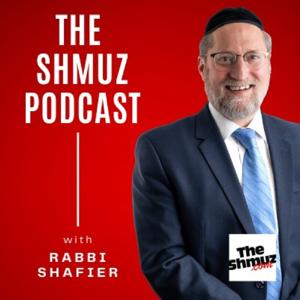
Welcome to The Shmuz Podcast! Here’s your chance to
infuse an inspiring dose of ruchnius, encouragement and positivity into your
day. But don’t just stop here. Go to TheShmuz.com and gain…

152,887 Listeners

556 Listeners

310 Listeners

1,985 Listeners
234 Listeners

3,181 Listeners

1,062 Listeners

818 Listeners
232 Listeners

399 Listeners

1,120 Listeners

373 Listeners
146 Listeners

321 Listeners

910 Listeners