
Sign up to save your podcasts
Or

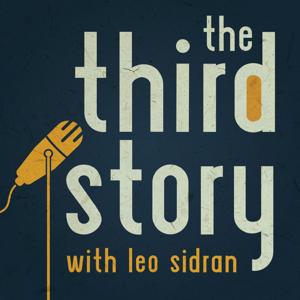


Video editor, bass player, recovering sketch comedy and improv player Mark Hervey on the journey that took him flying "too close to the sun"... twice. Along the way, he discusses why video editing is like playing bass (if it's very noticeable, you're probably doing too much), the alt comedy scene in New York in the 90s, what to do when the best work of your life goes uncredited, and how "death has no satisfactory resolution". It's a real deep dive.
www.third-story.com www.patreon.com/thirdstorypodcast
Mark Guiliana is having at this very moment a profound influence on the way the drums are played. There's a conversation happening in his playing between organic, traditional sounds and electronic music. Part of his innovation is to get his acoustic drums sounding more electronic, and to approach the drums in some ways as though he were a dj or a programmer.
Mark was born and raised in New Jersey, and until six months ago he lived there. Now he lives in LA. But he was in New York for the Winter Jazzfest - he was the artist in residence this year, which meant that he was invited to put together a series of shows and events. Over the course of the week, he did a different show every day with a different group, different configurations, some completely free improvised, some very organized, as is the case with his project Beat Music, his most electronic band.
The sound of Mark's drumming and drums are so identifiable, and here he tells me that he thinks "Sound is everything." He says "If the sound can be right, then you can really play anything."
We got together just before Mark left New York for the airport to fly to Europe, and spoke about Mark's philosophy and approach. He explained his ideas of coincidental interaction, and proactive repetition ("Repetition is one of the most powerful tools that we have in music and in life," he tells me), the importance of familial relationships with his musical partners, how "sound is everything" and why for him "the music does the talking".
www.third-story.com www.patreon.com/thirdstorypodcast
Gilles Peterson is one of the most influential DJs and music curators in the world. Whether as a broadcaster, live DJ, record producer, festival organizer, or music curator, Peterson has devoted his life to finding, contextualizing, and presenting music from around the world. He sees his job as "connecting the dots." One of Peterson's most recent discoveries, Kassa Overall is, in the words of Time Out New York, "a Renaissance man: part chopsy, super-funky jazz drummer, and part rising producer-MC."
www.third-story.com www.patreon.com/thirdstorypodcast
Steven Bernstein, Peter Apfelbaum and Will Bernard are all innovative, creative and boundary pushing musicians who are equally at home in the avant garde as they are in the swamp. It comes as no surprise that they grew up together in Berkeley, California, exploring the edges of the music they loved, finding "controlled substances" in their parents' freezers, and improvising freely.
We recorded this conversation at the Winter Jazzfest in New York. Here they talk about looking forward, looking back, the musical concept of opposition, defying category, broken mirrors, free improvisation, why coffee is so expensive and music is so cheap, the musical conversation between Berkeley and New York, spontaneous composition, rock and roll, Jewish weddings, Sly Stone, Bill Laswell, Trey Anastasio, and why "sex" is still a dirty word in jazz.
www.third-story.com www.patreon.com/thirdstorypodcast
Here is what Caleb Hawley says about himself in his website biography: Caleb Hawley is a Harlem based, Minneapolis-raised singer, songwriter, and producer who has been shoveling Gobstoppers into ears for the past decade. Combining catchy melodies with dark and satirical lyrics, one has to be careful not to slip while dancing in a puddle of their own tears.
I don't know about the Gobstoppers, but the rest of it feels pretty accurate to me.
In our conversation he tells his journey of self discovery, addiction, creativity, Tourette Syndrome, longing, how telling the truth is like a drug, and why it's so hard to write a happy song.
Thanks for listening. If you enjoyed it, please leave a review on iTunes and consider supporting the podcast on Patreon and following the podcast on Twitter, Instagram and Facebook.
https://www.third-story.com https://www.calebhawley.com/
When Ari Herstand first came on the Third Story Podcast in 2016, he was still in the process of becoming. He struggled with the what he saw as a "duality" between being a musician / performing artist and a business person. Would success in one realm undermine success in the other? "I got to the point where I have accepted that I am equally both," he tells me now.
"Success is very personal and nobody can really define success for you," he says. And Ari has spent much of the last decade examining many of the biggest successes in the independent music business, analyzing them, and then teaching them, first through is blog Ari's Take, and then in his book How To Make It In The New Music Business. The Second Edition was published in November of 2019. It remains at the top of the Amazon charts and has been widely adopted by music business schools worldwide.
In fact, because of the success of both the book and the blog, he eventually started Ari's Take Academy, an online music business school that he hopes will eventually compete as an alternative to "the traditional brick and mortar music colleges."
"Collectively we are smarter and more active than any other group or even professional marketing person out there," he says of his Academy. "Because we have so many people working on this stuff and sharing their results with one another."
Ari lives in Los Angeles, but was in New York recently developing the "1973 immersive experience" around his band, "Brassroots District" with some of the team that developed the critically acclaimed immersive show "Sleep No More".
To start out the new year, this conversation covers a lot of ground around the state of the independent music business today. "How can a project be bigger than just the music. What is the story? What is the difference between transparency and authenticity. How does one play to the strengths and limitations of social media platforms? Is the internet a real community? Spotify. Instagram. Tik Tok. It's all here.
There was no way I was going to let Ari off the hook without having him give me a little free advice about my own career and social media game. Last time we talked, he hooked up my website - he pimped my page. And this time I was ready with a specific ask: is it time after five years of doing this podcast - to create Instagram and Twitter accounts for the Third Story. Ari told me unquestionably that it was time. So starting today, you can follow the Third Story Podcast on Instagram, Twitter, and Facebook, all of them @thirdstorypod.
http://www.third-story.com/ http://patreon.com/thirdstorypodcast https://ariherstand.com/ https://aristake.com/
Legendary recording engineer and producer Glyn Johns' career and discography are so extensive that it's very difficult to summarize quickly. The sound of his recordings has had an immeasurable influence on the way we listen to popular music, particularly Rock and Roll. The Rolling Stones, Led Zeppelin, The Who, The Beatles, Eric Clapton... he worked with them all.
Here he talks about his philosophy of recording, producing, and managing a career in record making.
www.third-story.comwww.patreon.com/thirdstorypodcast www.glynjohns.com
boice-Terrel Allen (better known simply as boice) is a podcast host, musician, and writer. His podcast, Talk Music Talk, started in 2014 and features long form conversations with musicians, authors, music psychotherapists and meditation teachers, DJs, musicologists, MacArthur Fellows, Grammy nominees and such from all musical genres.
In 2019 he started his second podcast, The Strandcast, a literary podcast from the Strand Bookstore featuring author interviews, reading recommendations and literary horoscopes.
To celebrate the 200th episode of Talk Music Talk, here the tables are turned and he lays out his personal and professional development, creativity, spirituality, Buddhism, depression, perseverance and love of Tina Turner. We also compare notes on podcast life, techniques, strategies, and ambitions.
www.third-story.comwww.patreon.com/thirdstorypodcast http://www.talkmusictalk.com/
Zev Feldman is an independent record producer who got started in the jazz business as a young man (in his early 20s) and came up through the ranks of sales ("schlepping a bag of CDs"), merchandising, marketing, distribution - all of the pieces of the business as it existed at the end of the last century. Over time he came to settle comfortably in an area of the jazzosphere that focuses on locating, unearthing and releasing previously unknown recordings. Some people know him as "the jazz detective." Variety magazine called him "possibly the most widely admired archival producer working in the jazz field today," Downbeat refers to him as "The Jazz Sleuth" and perhaps most famously, Stereophile Magazine called him "the Indiana Jones of jazz."
He works with almost every major jazz label and many small independent labels, but his primary professional residence is with Resonance Records. He has shepherded the release of previously unknown recordings by the likes of Wes Montgomery, Bill Evans, Thelonious Monk, Eric Dolphy, John Coltrane, Joao Gilberto and many more (including my dad!).
In the conversation it's clear that as big of a jazz fan as he is, he is also in love with the business of jazz records. He goes out of his way to remember and name all of the people in the business who helped him along the way.
Here he talks about becoming a producer ("it was like pouring gasoline on a fire"), the importance of "folklore and mythology" in the world of jazz collecting, why finding the right outlet for a recording is like finding shelter for an orphaned animal, and how he builds relationships.
www.third-story.com www.resonancerecords.org
Vulpeck keyboardist Woody Goss on his early days growing up in the suburbs of Chicago where he learned to elevate rhythm playing to high art, when he connected with the crew that would become his Vulf family at the University of Michigan, how talking about evolutionary psychology is emotional, why organized religion is dubious, where he likes to go bird watching, and who he really is when the spotlight is turned away. This conversation is surprisingly provocative, enlightening, and funny. Woody is not entirely as he appears to be. He is, in fact, much more.
www.third-story.com https://woodygoss.bandcamp.com/ https://www.veryvulfychristmas.com/
From the publisher's feed

37,988 Listeners

6,758 Listeners

5,993 Listeners

3,930 Listeners

1,495 Listeners
4,131 Listeners
15 Listeners

3,159 Listeners
1,998 Listeners

1,013 Listeners
3,609 Listeners
1,958 Listeners
523 Listeners
4,607 Listeners
1,387 Listeners