
Sign up to save your podcasts
Or



Most leaders go through a period where they take stock of the trappings of the life they believe they are “supposed” to live. They examine the assumptions they’ve made, the choices they’ve fallen into, and the circumstances that have shaped their stories.
And they realize—however painfully—that it all needs to be torn down. I’ve been there, too. Brick by brick, they dismantle the details of their lives so that they can carefully and intentionally rebuild.
It takes real courage to lead yourself through a season of dismantling.
And, no, not the Mel Gibson Braveheart courage. But the quiet courage that keeps you putting one foot in front of the other. The unseen courage that chooses a life of uncertainty versus maintaining the status quo of tolerating, doubt, and shame.
It’s not easy to reassess the choices that have gotten you to where you’re at. But without paying close attention to how you’ve ended up merely tolerating the status quo, you can’t ever lift the burdens that keep you from being the leader you want to be.
You have to go through it, not around it.
No matter how cliché, it’s the truth.
My guest today has been through the process of examining and dismantling the details of her life so she could really lead. If you don’t know Ally Fallon, you need to. Ally writes books, helps people write books, and believes a regular practice of writing can change your life. She is the author of 12 books (and counting), is a sought-after public speaker, and a coach to hundreds of authors from New York TimesBestsellers to total beginners. She has spent the last decade coaching hundreds of people to gain confidence, overcome writer’s block, and get their stories on paper.
Listen to the full episode to hear:
Learn more about Ally Fallon:
Learn more about Rebecca:
We push ourselves until we crash.
We people please until we lose ourselves.
We hide our truth until we’re crushed from loneliness and disconnection.
Instead of dealing with the stress of our present, the anxiety of our future, or the trauma of our past, we numb out.
We drink the wine or take the pills or binge on the ice cream—and, oftentimes, we cross the threshold from numbing out to addiction.
Not surprisingly, alcohol is one of the first things many reach for to numb the ache. It’s socially acceptable and it’s easily accessible. It takes the edge off. It makes us feel a little less. It helps us find more calm and clarity.
Similarly, some people shop to soothe their pain. Some eat. Some exercise until they drop to the ground. The things that start off as comfort often lead to addition.
And it works—until it doesn’t.
My guest on this episode is Andrea Owen. Andrea is the founder of Your Kick-Ass Life Coaching and author of How To Stop Feeling Like Shit: 14 Habits That Are Holding You Back From Happiness and 52 Ways to Live a Kick-Ass Life: BS Free Wisdom to Ignite Your Inner Badass and Live the Life You Deserve. She helps high-achieving women let go of perfectionism, control, and isolation and, instead, choose courage and confidence.
Listen to the full episode to hear:
Learn more about Andrea Owen:
Learn more about Rebecca:
Other references:
Leaders are especially good at hiding from love and the vulnerability it brings in ways that look deceptively bold. This can be a dangerous contagion, I’ve found, encouraging others to also hide behind the protectors of Hubris. Individualism. Perfectionism. Hustle.
I’ve seen how spending so much time hiding behind who you think you should be makes you forget who you are, what you value, and what you believe.
And, honestly, it can crush your spirit.
That’s why being able to receive love is foundational to being able to love and lead others well. This means moving through discomfort by feeling through it instead of letting the protectors – fueled by fear – hide your humanity.
My guest today is a force of love—towards herself and others—in both words and actions.
Arielle Estoria is a renaissance woman: a poet, author, speaker, and creative. I first met Arielle at Yellow Conference where she was an MC—a tour de force of love from the stage. I immediately started to follow her work and was moved by her ability to put words to the steady tension of loving ourselves so we can lead ourselves and others well.
Arielle truly lights up any room as an emcee and event host, a body-positive model, and actor. She has shared her work through spoken word, workshops, and themed keynote talks with companies such as Google, Sofar Sounds, Lululemon, Dressember, Tedx, the SKIMS campaign by Kim Kardashian, Hollis Co. by Rachel Hollis, and more.
Arielle’s first EP, a collection of music and poetry called Symphony of a Lioness and her single Magic (In Your Bones) are available on iTunes or Apple Music. She is the co-author of two collections of poetry: Vagabonds and Zealots (2014) and Write Bloody Spill Pretty (2017), which can both be found on Amazon.com.
Listen to the full episode to hear:
Learn more about Arielle Estoria:
Learn more about Rebecca:
Other references:
The past often acts itself out in the present and this can be super frustrating for established leaders—especially when it feels like you’ve already done the work to move past those struggles.
I know it has for me and so many of you, too.
We’ve read the books, gone to therapy, hired a coach, and went to the workshops.
We’ve committed to the deep work so that we can lead, thrive, and create well.
Sometimes, those struggles and challenges still impact the ability to navigate present challenges and growth edges… echoes of that pain linger within the body and nervous system.
But I know that you’re committed to life-long growth—and, of course, growth comes with some semblance of discomfort. When the nervous system is still carrying the burdens of previous pain, then resistance spikes to try and protect us.
It shows up as doubt, comparison, imposter experience, perfectionism, and so many more. And as much as I’d love to say it only takes thinking the resistance and other internal protectors away, it simply doesn’t work that way—instead, we have to feel through the emotions to build our resilience and support the desire to lead with more courage, conviction, and compassion.
Today on the podcast, I’m so pleased to welcome Morgan Harper Nichols. Morgan is an artist, poet, and author of All Along You Were Blooming and has collaborated with a wide range of brands including Anthropologie, Coach, Adobe, Aerie, and more.
Morgan is an unburdened leader who leans on her curiosity and her appreciation for the layers of what it means to be human. She deeply values the role of creativity to healing from the disappointments that come from living a brave life.
Listen to the full episode to hear:
Learn more about Morgan Harper Nichols:
Learn more about Rebecca:
Other references:
Leadership is hard and it is not for the weary.
Leading myself and others in the face of injustice while also staying aligned to my integrity and values has required an immense amount of courage, clarity, confidence—and a lot of deep breaths.
In times of conflict, my ability to stay aligned with my integrity and core values has often been a reflection of the inner work I have done to tolerate criticism, backlash, conflict, being misunderstood, and losing support/business/followers.
Words like ‘integrity’ and ‘values’ can become nebulous and lose meaning when not backed up by consistent—though imperfect—action.
Leading, living, and being human continues to be an ongoing and imperfect process. My desire to seek accountability and justice in the world has required me to swim in the deep end of grace and strive to live this grace.
Allowing myself to take imperfect action has been immensely uncomfortable but rewarding. It has been what I needed to maintain the ongoing process of unburdened leadership.
I’m thrilled to welcome my guest today, J.S. Park. His vulnerability along with his gift of communication is an example of unburdened leadership. J.S. reminds me that we are not robots and how our emotions, if not addressed, can end up overwhelming us, taking us out, and moving us away from what matters most.
J.S. is a hospital chaplain, chaplain for the homeless, 6th-degree blackbelt, ex-atheist, skeptic, son of immigrants, and author of his new book, The Voices We Carry: Finding Your One True Voice in a World of Clamor and Noise.
Listen to the full episode to hear:
Learn more about Pastor J.S. Park:
Learn more about Rebecca:
Somewhere early in my life, I got the message that acknowledging my pain was not okay. Being vulnerable opened me up for attack. It was dangerous. Messages like “never let them see your sweat” often got mixed up with “no pain, no gain.” So there’s a mixture of: don’t show your pain getting the best of you yet show yourself conquering it all.
And it’s not working.
Just look at the stats of those suffering from clinical depression, clinical anxiety, substance use and abuse, suicide attempts and completion, marital and relational distress, and the effects of trauma and post-traumatic stress.
Hiding our pain—avoiding it, even demonizing it—is taking us out because it’s not sustainable.
But when you acknowledge your pain as an inspiration instead of an identity, this is where the gold lies that fuels your meaning and purpose.
On today’s episode, I’m excited to talk with cultural expert, speaker, educator, and consultant, Jess Weiner.
Jess continues to fight against being defined by her struggles, choosing instead to be inspired by them–even when the burdens of recurring struggles take her out. She has identified her blind spots, collected the data, and is now continuing to create and iterate–crediting her original pain story as part of her foundational inspiration.
Jess is the CEO of Talk to Jess, where she advises Fortune 500 companies to help them better reflect people in their media, marketing, advertising, and workforce. She is also an adjunct professor at USC in the Annenberg School of Journalism, an acclaimed author, and was recently named by Fast Company as one of the most creative people in Business in the areas of Diversity and Inclusion.
Listen to the full episode to hear:
Learn more about Jess:
Learn more about Rebecca:
My body was telling me to take a step back and reevaluate.
Five years ago I had pneumonia and I couldn’t really do anything other than prop myself up on the couch and breathe...
...breathe and think about how I ended up in this mess
I’d run myself into the ground. My schedule was full-to-overflowing. My life was packed and stretched to the edges. I had no margin for error, no space to breathe, no time to connect to who and what mattered to me.
What was I really chasing? Why had I packed my life so full? What was really driving me to try to be all the things to all the people?
The trauma of betrayal, abuse, shame, and the constant search to prove myself worthy–it was humbling and frustrating to see these recurring struggles and how they were hijacking my drive.
I needed to do more work to lift those burdens, so I could move forward in a way where my drive was aligned to what matters most to me instead of taking me further away.
In the last episode, Jonathan Merritt and I talked about how sometimes our bodies give us an SOS whether we like it or not. That SOS is an opportunity to take stock and make changes so we can get back to the work of leading.
Today, I am talking with an incredible thinker and one of the most generous leaders I have ever met about what to do when you get slammed into that wall and need to make changes.
Dr. Richard Schwartz created Internal Family Systems (IFS) after years as a systemic family therapist and academic. This framework has been instrumental in my own work as a therapist and coach for leaders.
We dig deep into the story of his own personal journey, what led him to course-correct on his early teaching on healing, and how unchecked drive can hijack other parts of you–your playfulness, your ability to rest, and your ability to handle what comes up when you finally take a break.
Listen to the full episode to hear:
Learn more about Dr. Richard Schwartz:
Learn more about Rebecca:
Leaders often struggle to make time for healing until their body sends out an SOS.
They postpone and avoid the need for deeper healing and then get slammed by illness, exhaustion, or burnout.
And at the heart it? There is usually the burden of unaddressed trauma.
Insomnia, chronic pain, hair and skin issues, digestive distress, mood swings, and illness after illness–if you’re experiencing these symptoms without relief, you might be one of these leaders. The cost of avoiding or bypassing the deep work and healing ends up costing you time, opportunity, and your physical and emotional well-being.
We need more leaders to show up and model what it means to prioritize healing by doing the deeper work to change.
That's why I'm excited to share today’s conversation with Jonathan Merrit.
Jonathan knows a thing or two about the deep work of healing because he has lived this truth in action.
He is a model of tenacity and commitment toward the long-game work of healing. The process has transformed how he is showing up not only when writing about the hard and controversial things around culture and faith but also in his vulnerability when sharing his journey and risking failure when making big life decisions.
Jonathan Merritt is one of America’s most prolific writers focused on religion, culture, and politics. He is the author of Learning to Speak God From Scratch and serves as a contributing writer for The Atlantic and contributing editor for The Week.
Listen to the full episode to hear:
Learn more about Jonathan:
Learn more about Rebecca:
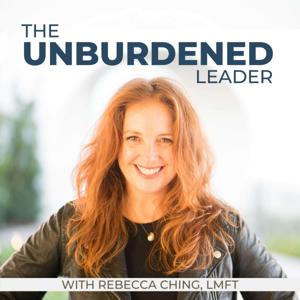
Meet leaders who recognized their own pain, worked through it, and stepped up into greater leadership. Each week, we dive into how leaders like you deal with struggle and growth so that you can lead without burnout or loneliness. If you're eager to make an impact in your community or business, Rebecca Ching, LMFT, will give you practical strategies for redefining challenges and vulnerability while becoming a better leader. Find the courage, confidence, clarity, and compassion to step up for yourself and your others--even when things feel really, really hard.
From the publisher's feed

2,513 Listeners

111,831 Listeners
279 Listeners

365 Listeners

41,346 Listeners
1,105 Listeners

18,895 Listeners

368 Listeners