
Sign up to save your podcasts
Or



Ever had a case where you just knew what was wrong before you even touched the patient - but if someone asked you HOW you know, you couldn’t explain it?
That almost mystical “sixth sense” we develop in practice - that’s exactly what this episode is about.
Our guest is Dr Annie Wayne - a criticalist, educator, and learning strategist—who’s been exploring naturalistic decision making: the cognitive model that explains how experts think in real-time, and how to pass that intuition on.
We talk about what separates expert intuition from novice reasoning, how to break down unconscious diagnostic processes, and how the right kind of mentorship can accelerate the path to expertise. Annie also shares her research on parenting and vet careers, challenging the stigma around pregnancy and parenthood during training.
Here’s what you’ll learn:
This isn’t just about clinical decision-making - it’s about how we teach, how we lead, and how we support each other in a demanding profession.
Lift your clinical game with our RACE approved clinical podcasts at vvn.supercast.com for more clinical confidence and better patient outcomes, or check out our Advanced Surgery Podcast at cutabove.supercast.com.
Get case support from our team of specialists in our Specialist Support Space.
Subscribe to our weekly newsletter here for Hubert's favourite clinical and non-clinical learnings from the week.
Join us in person for our epic adventure CE events at Vets On Tour. (Next up: Japan snow conference!)
Topics and Time Stamps
04:53 What is Naturalistic Decision-Making?
08:36 Expert vs Novice Thinking: Why Mentorship Matters
15:55 Risks of Shortcut Thinking and Balancing with Algorithms
19:11 Speeding Up Expertise: Can We Teach "Sixth Sense" Thinking?
22:47 Mentorship Models: Building Skills and Confidence
34:45 Can AI Help Naturalistic Thinking?
37:20 Parenthood and Veterinary Careers: Breaking Stigma and Building Support
Thinking of trading grey skies for the Australian sun – stethoscope in hand?
Moving to Australia as a vet can change your life, but here’s the truth: it’s not a straight road. Between visa hurdles, the dreaded AVE exams, and adjusting to a new culture (gotta love the Aussie slang!), the journey demands grit, strategy, and support.
In this episode, we talk to Dr. Natalia Gomez , Colombian-born vet and co-founder of Brainy Bilby, a platform dedicated to helping foreign-trained vets prepare for the AVE, about the tips, pitfalls, and success stories learnt from her own her journey, and from the other overseas-trained vets she’s coached through the AVE.
Here’s what you’ll learn:
🎧 Listen now and start mapping your own Aussie vet journey.
Lift your clinical game with our RACE approved clinical podcasts at vvn.supercast.com for more clinical confidence and better patient outcomes, or check out our Advanced Surgery Podcast at cutabove.supercast.com.
Get case support from our team of specialists in our Specialist Support Space.
Subscribe to our weekly newsletter here for Hubert's favourite clinical and non-clinical learnings from the week.
Join us in person for our epic adventure CE events at Vets On Tour. (Next up: Japan snow conference!)
Episode timestamps:
04:32 Why Australia? The Allure for Vets
10:04 The Australian Veterinary Examination (AVE)
16:31 Navigating the English Test and Paperwork
26:35 The Cost and Commitment of the AVE
29:05 Working Under Supervision
36:58 Preparing for the Practical Exam
44:43 Cultural and Language Barriers
You can think of a bunch of things that make your working day (and career!) as a veterinarian more frustrating than you’d like it to be, right? But have you ever considered the role of the software that you use in how frazzled you feel at the end of the day?
And beyond the pure frustration of ‘too many clicks’ and that spinning wheel of doom when you have ten other things to do - have you considered how the very software that feels like it's holding you back could actually help solve some of the systemic challenges that feel like they’re just baked into the vet profession, like low clinical confidence, medical errors, and even burnout?
In this conversation, we speak to emergency vet and tech entrepreneur Dr Caleb Frankel , founder of Instinct Science, about what’s broken in vet tech, what good software should actually do, and why the future of practice might depend on getting this right.
In this episode:
If you’ve ever felt like your tools are working against you, this is the conversation that might just change the way you practice—for good.
Lift your clinical game with our RACE approved clinical podcasts at vvn.supercast.com for more clinical confidence and better patient outcomes, or check out our Advanced Surgery Podcast at cutabove.supercast.com.
Get case support from our team of specialists in our Specialist Support Space.
Subscribe to our weekly newsletter here for Hubert's favourite clinical and non-clinical learnings from the week.
Join us in person for our epic adventure CE events at Vets On Tour. (Next up: Japan snow conference!)
Episode topics and timestamps: 05:55 Why veterinary software is so challenging
11:15 What to look for (and avoid!) in veterinary software
14:26 Cloud vs server-based software?
34:08 Unexpected ways where tech can help with the main challenges in veterinary medicine
37:07 AI in veterinary medicine
48:09 Must-have tech tools for 2025
55:14 Advice for new graduates
We love to hear from you. If you have a question for us or you’d like to give us some feedback please get in touch via our contact form at thevetvault.com, or catch up with us on Instagram.
And if you like what you hear, please share the love by clicking on the share button wherever you’re listening and sending a link to someone who you think should hear this.
I’m never excited when I diagnose a cat with anaemia: vague signs, confusing diagnostics, and what feels like a not-so-great prognoses. But are they really that hopeless?
In this episode, feline medicine specialist Dr Rachel Korman joins us demystify the anaemic cat and offer a clear, practical diagnostic framework that will give you more confidence and better outcomes the next time you see a cat with a low PCV.
Some highlights from this conversation:
This episode will help you approach feline anaemia with more clarity, structure, and - dare we say - optimism.
💡 Proudly supported by Vetnostics Pathology: Australia's largest network of veterinary pathologists and internal medicine consultants. Learn how Vetnostics can support your work-up of complex anaemia cases with comprehensive PCR panels and diagnostic expertise.
🎧 Want more clinical deep dives? Subscribe at vvn.supercast.com for 600+ episodes covering small animal medicine, surgery and ECC.
Upcoming conferences that I’m excited to attend:
Get help with your tricky cases in our Specialist Support Space.
Visit thevetvault.com for show notes and resources related to this episode.
Subscribe to our weekly newsletter here for Hubert's favourite clinical and non-clinical learnings from the week.
Episode Topics and Timestamps05:14 – Categorising anaemia06:00 – Regenerative vs. non-regenerative07:42 – Haemolytic anaemias in cats17:17 – Clinical signs and first tests18:43 – PCV/TP interpretation27:48 – Common causes by age31:38 – Mycoplasma diagnosis and treatment35:04 – Recognising haemolysis39:38 – PCR and anaemia panels48:53 – Bone marrow biopsy tips54:52 – Supportive treatments
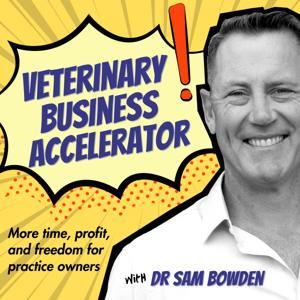
🎙️ Introducing the Veterinary Business Accelerator, our new podcast for veterinary practice owners who want more than just survival - they want to own the practice they dreamed of when they first decided to start a practice - a place that gives them joy and freedom, and where other vets like to work.
In this brand-new series, vet business coach, author, and former Vet Vault guest Dr. Sam Bowden shares the mindset, strategies, and systems he’s used to help hundreds of practice owners transform their clinics into what he calls “abundant practices” - workplaces that are profitable, sustainable, and deeply rewarding.
In Episode 1: Why Even Start a Vet Practice?, we ask the question: Wouldn’t it be easier to just get a job?
When you’re in the thick of it all, it feels that way, doesn’t it?
Especially when you’re knee-deep in payroll, staff issues, client complaints, and wondering if you’ll ever take a proper holiday again.
In this kickoff episode we start with the question every practice owner should revisit regularly: Why are you in business?
Dr Sam Bowden breaks down why most owners start with good intentions: better medicine, a better team, better money - but end up overworked, underpaid, and out of joy. And why the fix begins with something deceptively simple: clarity on that why.
Sam outlines his framework for what he calls an “abundant practice” - the five pillars that any vet business needs to get right if it’s going to support the life you want. And yes, that includes permission to take a holiday.
What You’ll Learn:
If this episode was made just for you, and you’d like to hear more, you can find our other episodes here.
What’s your least favourite part of being a vet?
Is it talking about money?
In this episode, we take on one of the most emotionally charged parts of veterinary life: discussing high-cost treatments with clients.
Our guest is Dr. Bing Zhu, a Small Animal Medicine Specialist from SASH, who’s had these conversations more times than she can count, and she shares her hard-earned wisdom on how to approach these conversations with empathy, clarity, and confidence.
Here’s what we unpack:
Dr. Zhu shares transformative personal stories, communication strategies, and mindset shifts that will help you communicate more clearly, protect your mental health, and better serve your clients and their pets.
Whether you’re still at uni, starting out, or have been in practice for decades, this episode will change the way you handle financial conversations—forever.
Ready to rethink “the money talk”? Hit play now.
Upcoming conferences that I’m excited to attend:
Join our community of Vet Vault Nerds to lift your clinical game and get your groove back with our up-to-date, easy-to-consume clinical episodes at vvn.supercast.com.
Get help with your tricky cases in our Specialist Support Space.
Visit thevetvault.com for show notes and resources related to this episode.
Subscribe to our weekly newsletter here for Hubert's favourite clinical and non-clinical learnings from the week.
Episode Topics and Timestamps
01:45 Presenting the Large Estimate: How Does it Make You Feel?
06:04 The Turning Point: It's Not Your Fault
10:46 Practical Advice For Handling High Cost Estimates
31:04 Stop Avoiding Referral Because You Think You're Saving Your Client Money
36:25 Why Competence Makes Talking Money Easier
38:16 The Cultural Shift Vets Should Make
44:55 Setting Boundaries and Work-Life Balance
55:39 Dr Bing's Podcast Recommendations
56:19 The Pass Along Question
Telemedicine.
What’s your gut reaction when you hear that term?Maybe you think it was just a clever COVID workaround, or second-rate substitute for a “real” vet visit.
Or maybe you’re a bit curious about what it’s like to work in telemedicine— but you’re worried it’ll be boring. Or worse: that you’ll spend your days diagnosing lizards over Zoom.
Whatever you think— chances are, you’re wrong. But don’t worry. This episode will change that. We go deep on the real-world pros and cons of telemedicine, from two key angles:
For curious vets:
For clinic owners:
Our guest is Dr. Shadi Ireifej, a board-certified surgeon, tech entrepreneur, and co-founder of VetTriage, a global teletriage platform.
This one made me rethink what “good vet work” really means. I think it’ll do the same for you.
Join us on the slopes of New Zealand for our winter CPD adventure with Vets On Tour Wānaka 25.
Lift your clinical game with our RACE approved clinical podcasts at vvn.supercast.com for more clinical confidence and better patient outcomes, or check out our Advanced Surgery Podcast at cutabove.supercast.com.
Get case support from our team of specialists in our Specialist Support Space.
Subscribe to our weekly newsletter here for Hubert's favourite clinical and non-clinical learnings from the week.
Topics and Time Stamps
01:43 So you think you want to work in telemedicine?
04:20 Common concerns about telehealth work
06:11 Will I get sued for giving the wrong advice?
10:37 Vets on Tour: Upcoming Events
15:55 Income and Work Hours in Telemedicine
18:35 Will I have to give advice for all sorts of weird animals?21:29 Unexpected Joys of Telehealth
23:44 Future of Telehealth and Technology
29:21 Challenges and Lessons in Telehealth for Practice Owners
36:33 What about the technology?
We love to hear from you. If you have a question for us or you’d like to give us some feedback please get in touch via our contact form at thevetvault.com, or catch up with us on Instagram. And if you like what you hear, please share the love by clicking on the share button wherever you’re listening and sending a link to someone who you think should hear this.
In this solo episode Hugh tackles a bold idea: if you're not currently using AI in your clinical veterinary work, you may be falling behind. And if/when artificial intelligence gets to the point where it reliably has access to all the most up to date information for managing your patients, will you be negligent if you DON’T use it?
Hubert shares how artificial intelligence is quietly but powerfully reshaping veterinary practice. He paints a vivid picture of an AI-powered clinic, shows you practical tools you can start using immediately, and challenges you to rethink the future of your role as a vet.
What you'll discover:
Hubert doesn’t just speculate — he shows you how AI can work in clinics today, and how you can lead instead of lagging behind.
Tune in if you're ready to future-proof your practice, sharpen your skills, and unlock a better way to be a vet.
Try out our AI Blood Gas Assistant
Join us at Vets on Tour Wānaka, NZ, for the most fun CE event you’ll attend this year.
Join our community of Vet Vault Nerds to lift your clinical game and get your groove back with our up-to-date, easy-to-consume clinical episodes at vvn.supercast.com.
Get help with your tricky cases in our Specialist Support Space.
Visit thevetvault.com for show notes and resources related to this episode.
Subscribe to our weekly newsletter here for Hubert's favourite clinical and non-clinical learnings from the week.
Topics and time stamps
03:08 What could the future of clinical practice look like with AI?
12:48 Can I trust it? What does the data say?
18:22 Where does Ai get its information from?
25:20 How I use it: Using 'general' models for clinical decision making
33:29 Building your own Ai tools
34:06 Google Notebook LM
40:58 MyGPT - your own assistant
54:49 What might the role of the future veterinarian look like?
Join us for the Vet Vault's own conference in the snow: Vets On Tour Wānaka, New Zealand, 10-15 August 2025!
Have you ever felt pressured, as a vet, to do more 'stuff' - diagnostics, procedures, and sell more, even when you can’t quite see the clinical justification for it?
In this episode we welcome Dr. Brennen McKenzie-veterinarian, researcher, creator of the SkeptVet blog, author of Placebos for Pets? The Truth About Alternative Medicine in Animals, and all-round lover of science-based thinking. And who better to help us draw the line between solid science and revenue-driven decision making than someone who is known for their scepticism? Dr. McKenzie brings real-world wisdom and refreshing honesty to the debate. Together we explore the often-unspoken pressures of profit-driven care, commission-based pay, and what happens when business incentives conflict with good science. Brennen shares lessons from two decades in practice on how to use Spectrum of care reasoning to make clinical decisions that respect science, client resources, and the needs of your employer.
A must-listen for any vet who’s ever questioned the system—and their place in it.
Find out more about Brennen's current work in longevity at loyal.com.
Join our community of Vet Vault Nerds to lift your clinical game and get your groove back with our up-to-date, easy-to-consume clinical episodes at vvn.supercast.com.
Get help with your tricky cases in our Specialist Support Space.
Visit thevetvault.com for show notes and resources related to this episode.
Subscribe to our weekly newsletter here for Hubert's favourite clinical and non-clinical learnings from the week.
Episode Topics and Timestamps
08:11 The Shift to Profit Driven Veterinary Practice
09:46 A Guide to Evidence-Based Decision Making
12:00 Client Communication and Financial Constraints
17:31 Spectrum of Care: A New Approach
32:15 Overdiagnosis and Screening: A Critical Look
39:09 Cognitive Psychology in Veterinary Decision Making
42:45 The Power of Checklists in Medical Practice
43:18 Balancing Autonomy and Systematic Decision Making
45:52 Clinical Audits: Improving Practice Through Data
48:36 Intuitive vs. Algorithmic Thinking in Veterinary Medicine
51:37 The Pitfalls of Anecdotal Evidence in Veterinary Practice
01:07:40 Communicating with Clients About Unproven Therapies
01:18:17 Pass Along Question and The One Bit of Advice
Veterinary practice can be unpredictable, exhausting, and full of interruptions - not that conducive to getting things done, right? But what if you could handle it all with mind-like-water calm?
In this episode I pick the brain of productivity legend David Allen, creator of Getting Things Done (GTD), to show you exactly how. This isn’t about squeezing more into your day — it’s about cutting mental clutter, regaining focus, and feeling in control, even when it all hits the fan.You'll learn simple, actionable GTD strategies that busy vets can use today:
Master the 5 GTD steps for veterinary practice:
Beat interruptions without losing your mind
Transform team rounds and communication
Join us for Vets On Tour Wānaka, New Zealand, 10-15 August 2025. Limited Early Bird Tickets on sale now.
Join our community of Vet Vault Nerds to lift your clinical game and get your groove back with our up-to-date, easy-to-consume clinical episodes at vvn.supercast.com.
Get help with your tricky cases in our Specialist Support Space.
Visit thevetvault.com for show notes and resources related to this episode.
Subscribe to our weekly newsletter here for Hubert's favourite clinical and non-clinical learnings from the week.
Topics and Timestamps
03:09 Mind Like Water: The Key to Clarity
05:15 Challenges in Veterinary Productivity
20:33 Practical Tips for Capturing Tasks
28:58 Managing Multiple Projects and Tasks
29:26 The Importance of Knowing the Next Step
30:14 Dealing with Task Shifting and Interruptions
32:25 Organizing Physical and Mental Spaces
35:43 Team Dynamics and Productivity
38:02 Effective Rounds42:20 Balancing Defined Roles and Flexibility
47:35 Book recommendations
48:49 Pass along question
From the publisher's feed

398 Listeners
191 Listeners

812 Listeners

757 Listeners
48 Listeners

125 Listeners

556 Listeners

313 Listeners

3,607 Listeners
106 Listeners

386 Listeners
136 Listeners

239 Listeners
31 Listeners
0 Listeners