
Sign up to save your podcasts
Or

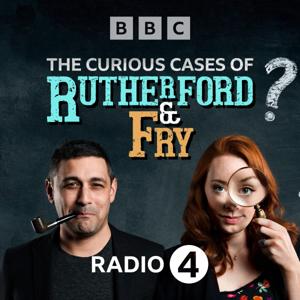

“I don’t really understand why water has so many properties on different scales ranging from very large and cosmic to very small quantum and quarky - Could you help by zooming in and out on water to explain what is known about it?" asks Neil Morton in Stirling.
Rutherford and Fry learn about the special hydrogen bonds that makes water such an unusual liquid.
Quantum physicist Professor Patricia Hunt, at the Victoria University in Wellington in New Zealand explains to Hannah the quantum properties of individual water molecules and how they link up with other water molecules in liquid water and solid ice. She describes the hydrogen bonds that give water some of it’s weird and wonderful properties such as why ice floats, why water is able to store huge amounts of heat and why water has such a strong surface tension.
Science writer and author of ‘H2O – a biography of water’ Philip Ball describes how in the 18th century it was discovered that water was not one of the classical elements, but a compound liquid of water and hydrogen and explains to Adam why there are at least 15 different types of ice.
Physicist Dr. Helen Czerski sets the record straight on how ice forms in oceans and lakes and why water is at its densest at 4 degrees Centigrade and not zero.
Presenters: Hannah Fry & Adam Rutherford
Producer: Fiona Roberts
First broadcast on BBC Radio 4 in October 2021.
 View all episodes
 By BBC Radio 4

4.8
738738 ratings
“I don’t really understand why water has so many properties on different scales ranging from very large and cosmic to very small quantum and quarky - Could you help by zooming in and out on water to explain what is known about it?" asks Neil Morton in Stirling.
Rutherford and Fry learn about the special hydrogen bonds that makes water such an unusual liquid.
Quantum physicist Professor Patricia Hunt, at the Victoria University in Wellington in New Zealand explains to Hannah the quantum properties of individual water molecules and how they link up with other water molecules in liquid water and solid ice. She describes the hydrogen bonds that give water some of it’s weird and wonderful properties such as why ice floats, why water is able to store huge amounts of heat and why water has such a strong surface tension.
Science writer and author of ‘H2O – a biography of water’ Philip Ball describes how in the 18th century it was discovered that water was not one of the classical elements, but a compound liquid of water and hydrogen and explains to Adam why there are at least 15 different types of ice.
Physicist Dr. Helen Czerski sets the record straight on how ice forms in oceans and lakes and why water is at its densest at 4 degrees Centigrade and not zero.
Presenters: Hannah Fry & Adam Rutherford
Producer: Fiona Roberts
First broadcast on BBC Radio 4 in October 2021.

7,913 Listeners

523 Listeners

863 Listeners

1,067 Listeners

296 Listeners

5,576 Listeners
2,113 Listeners

1,952 Listeners

4,873 Listeners

480 Listeners

410 Listeners
227 Listeners

363 Listeners
471 Listeners
346 Listeners

235 Listeners

143 Listeners
326 Listeners

3,245 Listeners

73 Listeners

95 Listeners

689 Listeners

528 Listeners
630 Listeners

191 Listeners

394 Listeners

239 Listeners
54 Listeners
80 Listeners

51 Listeners

96 Listeners