
Sign up to save your podcasts
Or

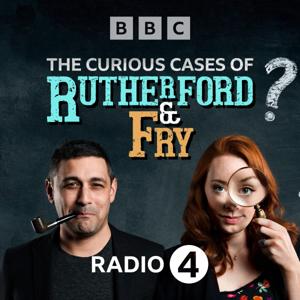

How do winds start and why do they stop? asks Georgina from the Isle of Wight. What's more, listener Chris Elshaw is suprised we get strong winds at all: why doesn't air just move smoothly between areas of high and low pressure? Why do we get sudden gusts and violent storms?
To tackle this breezy mystery, our curious duo don their anoraks and get windy with some weather experts.
Dr Simon Clark, a science Youtuber and author of Firmament, convinces Adam that air flow is really about the physics of fluids, which can all be captured by some nifty maths. The idea of pressure turns out to be key, so Hannah makes her own barometer out of a jar, a balloon and some chopsticks, and explains why a bag of crisps will expand as you walk up a mountain.
Professor Liz Bentley, Chief Executive of the Royal Meteorological Scoiety, reveals how the dynamics of a simple sea breeze – where air over land is heated more than air over water – illustrates the basic forces driving wind of all kinds.
Then everyone gets involved to help Adam understand the tricky Coriolis effect and why the rotation of the Earth makes winds bend and storms spin. And Professor John Turner from the British Antarctic Survey explains why the distinctive features of the coldest continent make its coastline the windiest place on earth.
Producer: Ilan Goodman
 View all episodes
 By BBC Radio 4

4.8
738738 ratings
How do winds start and why do they stop? asks Georgina from the Isle of Wight. What's more, listener Chris Elshaw is suprised we get strong winds at all: why doesn't air just move smoothly between areas of high and low pressure? Why do we get sudden gusts and violent storms?
To tackle this breezy mystery, our curious duo don their anoraks and get windy with some weather experts.
Dr Simon Clark, a science Youtuber and author of Firmament, convinces Adam that air flow is really about the physics of fluids, which can all be captured by some nifty maths. The idea of pressure turns out to be key, so Hannah makes her own barometer out of a jar, a balloon and some chopsticks, and explains why a bag of crisps will expand as you walk up a mountain.
Professor Liz Bentley, Chief Executive of the Royal Meteorological Scoiety, reveals how the dynamics of a simple sea breeze – where air over land is heated more than air over water – illustrates the basic forces driving wind of all kinds.
Then everyone gets involved to help Adam understand the tricky Coriolis effect and why the rotation of the Earth makes winds bend and storms spin. And Professor John Turner from the British Antarctic Survey explains why the distinctive features of the coldest continent make its coastline the windiest place on earth.
Producer: Ilan Goodman

7,696 Listeners

518 Listeners

877 Listeners

1,048 Listeners

296 Listeners

5,530 Listeners
2,108 Listeners

1,923 Listeners
4,881 Listeners

482 Listeners

411 Listeners

220 Listeners

363 Listeners

477 Listeners
367 Listeners

234 Listeners

141 Listeners
315 Listeners

3,173 Listeners

65 Listeners

92 Listeners
819 Listeners

548 Listeners
640 Listeners

188 Listeners

384 Listeners

237 Listeners
57 Listeners
77 Listeners

56 Listeners
73 Listeners