
Sign up to save your podcasts
Or

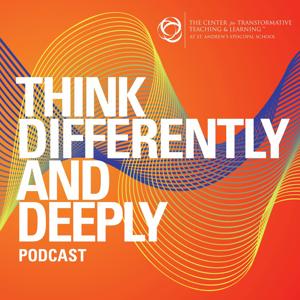


What happens when the science of learning is applied not only to classrooms, but also to a weekly chapel attended by an entire school community? In this episode of the Think Differently and Deeply podcast, host Glenn Whitman talks with Reverend James Isaacs, the middle and upper school chaplain at St. Andrew's Episcopal School, about his journey from clergy member with no traditional classroom teaching experience to an educator deeply informed by the science of learning.
Drawing on Reverend Isaacs's article, Research-Informed Chapel at St. Andrew's Episcopal School, the conversation explores how principles from mind, brain, and education research can shape the design of a chapel. From creating joy and anticipation before students even enter the space to using consistent rituals, moments of silence, student voice, and reflection, Reverend Isaacs describes how he intentionally designs chapel to support attention, engagement, belonging, and meaning.
"I am sort of setting the bar for what joy level is possible." — Reverend James Isaacs.
What You'll Learn:
"You don't have to fix everything all at once, but if you can make incremental changes, then as time goes on, that really overall has a big effect." — Reverend James Isaacs.
—
SUBSCRIBE TO THINK DIFFERENTLY & DEEPLY ON iTUNES/APPLE PODCASTS: https://apple.co/3JCpK1u
And to support our work, please leave us a 5-star review with your feedback on iTunes/Apple Podcasts.
LEARN MORE ABOUT THIS EPISODE: https://www.thecttl.org
———————————
CONNECT WITH US!
———————————
FACEBOOK: https://www.facebook.com/CTTLatSAES
LINKEDIN: https://www.linkedin.com/company/the-cttl
TWITTER: https://twitter.com/TheCTTL
INSTAGRAM: https://www.instagram.com/thecttl
What if the words teachers use before students begin a task can change how they approach it? In this episode, host Glenn Whitman talks with longtime St. Andrew's educator Chuck James about his research into verbal priming and creativity, exploring how intentional language can give students the permission and confidence to think more originally.
Drawing on Chuck's article, "Words That Matter: The Effect of Verbal Priming on Creativity", the conversation moves beyond the study itself into a broader discussion of student agency, problem-driven learning, design thinking, and the relationship between knowledge and creativity. Chuck shares how simple prompts can signal to students that their unusual ideas are worth pursuing, and why cultivating authentic creativity requires more than simply asking students to complete a project.
"Know it to use it." — Chuck James.
What You'll Learn:
"If I'm never asking students for a unique conception of what I've taught them, then I really think I have failed in my role as a teacher." — Chuck James.
—
SUBSCRIBE TO THINK DIFFERENTLY & DEEPLY ON iTUNES/APPLE PODCASTS: https://apple.co/3JCpK1u
And to support our work, please leave us a 5-star review with your feedback on iTunes/Apple Podcasts.
LEARN MORE ABOUT THIS EPISODE: https://www.thecttl.org
———————————
CONNECT WITH US!
———————————
FACEBOOK: https://www.facebook.com/CTTLatSAES
LINKEDIN: https://www.linkedin.com/company/the-cttl
TWITTER: https://twitter.com/TheCTTL
INSTAGRAM: https://www.instagram.com/thecttl
In this episode from Season 2, host Glenn speaks with Lisa Shambaugh about student choice, intrinsic motivation, and the role neuroscience can play in rethinking the admissions process.
They discuss how diversity, equity, and belonging intersect with admissions, the limitations of standardized testing, and why student agency should be a greater priority when evaluating applicants.
Listen in to learn what admissions professionals should understand about the brain, how intrinsic motivation can shape student success, and why it may be time to reimagine an admissions process that has changed very little in decades.
"We didn't know what we would be coming into; we didn't know what school might look like, but we knew for sure that we had to rethink what our admission criteria were." - Lisa Shambaugh.
What You'll Learn:
"We see trends coming before they've totally materialized." - Lisa Shambaugh.
—
SUBSCRIBE TO THINK DIFFERENTLY & DEEPLY ON iTUNES/APPLE PODCASTS: https://apple.co/3JCpK1u
And to support our work, please leave us a 5-star review with your feedback on iTunes/Apple Podcasts.
LEARN MORE ABOUT THIS EPISODE: https://www.thecttl.org
———————————
CONNECT WITH US!
———————————
FACEBOOK: https://www.facebook.com/CTTLatSAES
LINKEDIN: https://www.linkedin.com/company/the-cttl
TWITTER: https://twitter.com/TheCTTL
INSTAGRAM: https://www.instagram.com/thecttl
"I felt very heard. When I was talking, there was feedback and conversations going back and forth, and I could tell that we were respecting each other and learning a lot from each other." - Rose Currie.
What You'll Learn:
"Teachers should be open to flexibility and dynamic teaching and having a good variety between online versus on paper." - Rose Currie.
—
SUBSCRIBE TO THINK DIFFERENTLY & DEEPLY ON iTUNES/APPLE PODCASTS: https://apple.co/3JCpK1u
And to support our work, please leave us a 5-star review with your feedback on iTunes/Apple Podcasts.
LEARN MORE ABOUT THIS EPISODE: https://www.thecttl.org
———————————
CONNECT WITH US!
———————————
FACEBOOK: https://www.facebook.com/CTTLatSAES
LINKEDIN: https://www.linkedin.com/company/the-cttl
TWITTER: https://twitter.com/TheCTTL
There are seasons in a teaching career when the questions shift from "What am I doing in my classroom tomorrow?" to "Who am I becoming as an educator, colleague, and human?" In this episode, veteran third-grade teacher, nurse-turned-educator, and new‑teacher mentor Dale Kynoch invites us into that deeper work through the lens of coaching, theorist‑informed practice, and a relentless belief that both children and adults can change.
Across this conversation with host Glenn Whitman, Dale unpacks how she moved from giving advice as a senior teacher to learning the craft of coaching, including completing a fifteen‑month, twenty‑hours‑per‑week coaching course and integrating those tools into daily life at Saint Andrew's Episcopal School. She shares why she calls herself "a Vygotskian through and through," how she uses responsive classroom structures and clear boundaries to empower third graders, and why she believes coaching can help retain early‑career teachers, support parents, and even shape her future as an alpaca‑owning hobby farmer.
"Part of being in this service industry for me is I love, love, love to see people shine. That absolutely floats my boat." - Dale Kynoch.
What You'll Learn:
"To make those changes, you have to feel it on the inside. You have to create it. And so that's coaching, where the person is coming up with their own plan." - Dale Kynoch.
—
SUBSCRIBE TO THINK DIFFERENTLY & DEEPLY ON iTUNES/APPLE PODCASTS: https://apple.co/3JCpK1u
And to support our work, please leave us a 5-star review with your feedback on iTunes/Apple Podcasts.
LEARN MORE ABOUT THIS EPISODE: https://www.thecttl.org
———————————
CONNECT WITH US!
———————————
FACEBOOK: https://www.facebook.com/CTTLatSAES
LINKEDIN: https://www.linkedin.com/company/the-cttl
TWITTER: https://twitter.com/TheCTTL
INSTAGRAM: https://www.instagram.com/thecttl
There are conversations in education that challenge not just what we do in classrooms, but how we think about learning itself. Today's conversation with educator, researcher, and The Scaffolding Effect co-author Alex Fairlamb was exactly that kind of conversation. Alex joins us at the Center for Transformative Teaching and Learning after a whirlwind stretch of presentations across China, New York, Maryland, and beyond — and somehow still brought clarity, energy, and practicality to one of the most misunderstood ideas in education today: scaffolding.
In this episode, Alex insists that scaffolding is not about lowering expectations or making work easier. It is about maintaining ambitious goals for every learner while thoughtfully removing barriers that prevent students from reaching them. In a moment when schools are wrestling with AI, personalization, differentiation, and equity, Alex offers something refreshingly grounded: responsive teaching rooted in the science of learning, teacher expertise, and a deep belief that all students deserve access to rigorous curriculum and high expectations.
"Success equals motivation. So the more that I saw the success of what I was doing in the classroom with the students, the more that I was motivated to find out more and more and more." - Alex Fairlamb.
What You'll Learn:
"It's about being absolutely and unapologetically ambitious about what each child can do." - Alex Fairlamb.
—
SUBSCRIBE TO THINK DIFFERENTLY & DEEPLY ON iTUNES/APPLE PODCASTS: https://apple.co/3JCpK1u
And to support our work, please leave us a 5-star review with your feedback on iTunes/Apple Podcasts.
LEARN MORE ABOUT THIS EPISODE: https://www.thecttl.org
———————————
CONNECT WITH US!
———————————
FACEBOOK: https://www.facebook.com/CTTLatSAES
LINKEDIN: https://www.linkedin.com/company/the-cttl
TWITTER: https://twitter.com/TheCTTL
INSTAGRAM: https://www.instagram.com/thecttl
Today's guest Kristin Webster taught middle and upper school Latin at St. Andrews for four years and is currently a class dean and Latin teacher at the Nightingale Bamford School in New York City. Kristin has also continued to be a translation group leader at the CTTL'S Annual Science of Teaching and School Leadership Academy, and authored an article for volume four of Think Differently and Eeeply titled Emotion and Cognition: Creating a Positive Classroom Culture.
In this episode, Kristin explains her role when teaching tricky topics and the importance she places on the transparency of her thought process with her students as she teaches. We also talk about how the topic of latin is evolving and which recent research in the science of learning has influenced her teaching style.
"Most of us aren't gonna remember a lot...I am so much happier if you leave and you know how to study, how to advocate for yourself, what are effective strategies, because you're gonna take that to every subject throughout your educational journey." - Kristin Webster
What You'll Learn:
"I want them to feel good about learning and know that they're capable of learning. They just need, might need to pivot on what strategy they're using." - Kristin Webster
—
SUBSCRIBE TO THINK DIFFERENTLY & DEEPLY ON iTUNES/APPLE PODCASTS: https://apple.co/3JCpK1u
And to support our work, please leave us a 5-star review with your feedback on iTunes/Apple Podcasts.
LEARN MORE ABOUT THIS EPISODE: https://www.thecttl.org
———————————
CONNECT WITH US!
———————————
FACEBOOK: https://www.facebook.com/CTTLatSAES
LINKEDIN: https://www.linkedin.com/company/the-cttl
TWITTER: https://twitter.com/TheCTTL
INSTAGRAM: https://www.instagram.com/thecttl
Today host Glenn Whitman talks about practical instructional design with instructional coach Gene Tavernetti. Reading to learn has been an integral part of both of their journeys and they co-authored the article "Let's Talk More About Instructional Design (and the science of learning)."
Gene is also the author of the book "Teach Fast: Focused Adaptable Structured Teaching." In this episode, we discuss Gene's educational journey and the benefits of training in the fast framework method.
Listen in to learn what teachers can learn from coaches and how to "shift the lift."
"Being right was never enough. In fact, thinking you were right all the time was a detriment to assisting teachers to open up to try things." - Gene Tavernetti
What You'll Learn:
"The power of this fast framework is if you just get better at a few of the components you're going to see a change. And the change is in the kids. And that's, that's when I know that I've been successful. - Gene Tavernetti
—
SUBSCRIBE TO THINK DIFFERENTLY & DEEPLY ON iTUNES/APPLE PODCASTS: https://apple.co/3JCpK1u
And to support our work, please leave us a 5-star review with your feedback on iTunes/Apple Podcasts.
LEARN MORE ABOUT THIS EPISODE: https://www.thecttl.org
———————————
CONNECT WITH US!
———————————
FACEBOOK: https://www.facebook.com/CTTLatSAES
LINKEDIN: https://www.linkedin.com/company/the-cttl
TWITTER: https://twitter.com/TheCTTL
INSTAGRAM: https://www.instagram.com/thecttl
It is rare to have St. Andrews students on the podcast, so one of today's guests is a special addition. Daphne is a St. Andrews language teacher and a returning guest on the podcast. In this episode, Daphne brings one of her students along to rethink the concept of homework.
We talk about the ways that teachers can promote collective efficacy through homework assignments and what makes a good or bad homework assignment. We also discuss ways that teachers can reduce barriers to learning and encourage motivation to do school assignments.
Listen to this episode to learn how teachers can learn more from their students and improve the connection between homework assignments and classroom learning.
"Presenting at conferences is a great way to pause and ask myself, what do I believe and how can I communicate that with others." - Daphne Clyburn
What You'll Learn:
"In everything we do as teachers, we need to be incorporating student voice into making our teaching practice stronger. If we're not getting a perspective, then we're missing the mark." - Daphne Clyburn
—
SUBSCRIBE TO THINK DIFFERENTLY & DEEPLY ON iTUNES/APPLE PODCASTS: https://apple.co/3JCpK1u
And to support our work, please leave us a 5-star review with your feedback on iTunes/Apple Podcasts.
LEARN MORE ABOUT THIS EPISODE: https://www.thecttl.org
———————————
CONNECT WITH US!
———————————
FACEBOOK: https://www.facebook.com/CTTLatSAES
LINKEDIN: https://www.linkedin.com/company/the-cttl
TWITTER: https://twitter.com/TheCTTL
INSTAGRAM: https://www.instagram.com/thecttl
Sean Hurney has been the athletic trainer at St. Andrews for over 24 years. In this episode, we discuss his article, "Taking Care of the Whole Student Athlete," and Sean shares what he has learned during his career and how his outlook has changed over time.
We also discuss factors that can impact student-athletes off the playing field and how AI has affected athletic trainers.
"The injury data is showing that these sports specializations are causing injuries. Orthopedics, the amount of office visits, time lost is, are going up at an astronomical rate." - Sean Hurney
What You'll Learn:
"You can pretty much pinpoint when the kids hit their breaking point." - Sean Hurney
—
SUBSCRIBE TO THINK DIFFERENTLY & DEEPLY ON iTUNES/APPLE PODCASTS: https://apple.co/3JCpK1u
And to support our work, please leave us a 5-star review with your feedback on iTunes/Apple Podcasts.
LEARN MORE ABOUT THIS EPISODE: https://www.thecttl.org
———————————
CONNECT WITH US!
———————————
FACEBOOK: https://www.facebook.com/CTTLatSAES
LINKEDIN: https://www.linkedin.com/company/the-cttl
TWITTER: https://twitter.com/TheCTTL
INSTAGRAM: https://www.instagram.com/thecttl
From the publisher's feed

91,022 Listeners

32,046 Listeners

43,359 Listeners
3,475 Listeners
248 Listeners

111,799 Listeners
369,618 Listeners
643 Listeners

849 Listeners

15,882 Listeners
4,492 Listeners

10,759 Listeners

9,344 Listeners