
Sign up to save your podcasts
Or



Based on Podcast App listening data
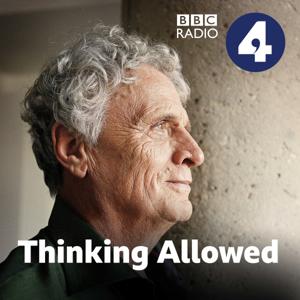
Cities are growing at an enormous rate all over the world. As they wrestle with overcrowding, pollution, resource vulnerability and an increasing gulf between the rich and poor what will be the dominant factor to define them? Which forces will shape the experience of urban life for the individual and will our imagination and creativity enable cities to survive into the future? The sociologist Sophie Watson and the geographer Matthew Gandy join Laurie Taylor to discuss the future of the city.
Why is modern media teeming with vampires, witches, ghosts and ghouls? Laurie Taylor explores representations of the paranormal. Also, how Russia deals with criminal youngsters.
Gardening is the epitome of a peaceful pasttime, associated as it is with semi-somnolent suburban weekends, the sound of hedges being carefully clipped and the reassuring aroma of freshly mown grass. The notion of 'radical' gardening implies little more than a concerted attack on the mass of weeds accumulated in an herbaceous border or a garden makeover culminating in a fully decked patio. However, there is a radical history to gardening and it has been the site of protest and counterculture in Britain from the Levellers and the Diggers in the 17th century to today's so-called Guerrilla Gardeners. On today's Thinking Allowed Laurie is joined by George McKay and Tim Jordan to discuss the protest, politics and plots of the garden.
Is DIY culture and home improvement linked to the ideals of John Ruskin? David Gauntlett, author of Making is Connecting believes it is and he contends that bloggers and online enthusiasts are the inheritors of Britain's creative culture - making communities through their craft in the same way that medieval stone masons used to do. But is posting a skate-boarding dog on YouTube really comparable to carving a gargoyle on a gothic cathedral? The sociologist Richard Sennett joins Laurie Taylor and David Gauntlett to discuss making things, creating communities and what counts as craftsmanship.
A special edition marking the British Sociological Association's 60th anniversary. Laurie Taylor considers some of the seminal figures who've changed the face of sociology in the UK over more than half a century. He also highlights some of the most interesting research to emerge from this year's BSA conference, including Professor Valerie Walkerdine's study of the demise of breadwinning masculinity in a former South Wales steel town. How do men cope when few options are available other than 'women's work' in supermarkets and industrial cleaning? In addition, he hears about Dr Vicki Harman's exploration of ballroom dancing and traditional gender roles. Is it possible to be a feminist as well as being twirled around in a cloud of chiffon and sequins?
In the wake of the murder of Ronan Kerr, a Catholic police officer in Omagh, Laurie talks to Dr Mary Gethins about her research into the Catholic police officers who have joined the Police Service of Northern Ireland (PSNI). She conducted a survey of 300 serving officers followed by in depth interviews with 70 current, trainee and officers and explored the rewards for doing a job which can isolate people from their communities, expose them to prejudice from colleagues and always carries the risk of violence from dissident republicans. Community policing is an enduring problem for the force with some Catholic communities utterly rejecting the legitimacy of the police. Will the PSNI eventually becoming an integrated force, respected by Catholics and Protestants alike? Perhaps the strong reaction against the murder of Ronan Kerr will help establish the authority of the police force across Northern Irish society.
Also on Thinking Allowed, Facebook in Trinidad. Laurie talks to Danny Miller about his ethnographic study of Facebook users in the Caribbean island. He finds it can wreck your marriage, put your job in jeopardy but actually bolsters community and augments many of the positive aspects of modern life.
Producer: Charlie Taylor.
In 1905 Russians gathered at 6 different points to march on the Winter Palace and the streetscape of St Petersburg contributed enormously to their success. The Russian poor were cheek by jowl with the rich and this inflamed a class consciousness which - despite industrialisation - the poor suburbs of Europe did much to dissapate. How does urban geography effect the way societies develop? What have streets given to politics? As street protests continue to challenge authority across the Middle East and violence characterises the marches in our own capital, Laurie is joined by Leif Jerram and John Clarke from the Open University to discuss the role the street in the history of politics. Also on the programme Jeffrey Alexander discusses how the revolution was 'performed' for Egypt and for the rest of the world from Cairo's central square. That compelling drama provided a powerful symbol which was enough to bring down the government.
Woodstock did not have a sponsor, people flooded to Hyde Park for a free concert from the Rolling Stones but now a top price ticket to see Bon Jovi - the 'Diamond Circle VIP Experience' - can cost you something approaching $2,000. What has happened to live music to transform it into the industry it has become? How have concert performances become a successful way of funding music when recorded music has been in retreat? Laurie Taylor speaks to two authorities in the field of popular music studies, Simon Frith and Martin Cloonan, to discuss the social and economic changes which have brought music performance to the fore.
Will power and prosperity shift to the frozen North? A new book predicts that Iceland, Greenland, Denmark, Sweden, Finland, and Russia will be the beneficiaries of a new world order. By 2050, four megatrends - climate change, rising population, globalisation and resource depletion - will lead to the rise of 'The New North', as migration, energy bonanzas and international trade turn the world upside down. The geographer, Professor Laurence Smith, tells Laurie Taylor why these projections amount to more than planetary palm reading. Also, does the morality of the 19th century Temperance movement influence modern day attitudes to drinking? The law lecturer, Henry Yeomans, argues that prohibitionism - contrary to popular belief - lives on in 'binge drinking' Britain.
The Prime Minister recently criticised what he called 'state multiculturalism' and said it had failed, arguing that Britain needs a stronger national identity. Is it time to turn our backs on the multi-cultural idea? And what would a stronger national identity mean to people who feel at the cultural margins of our society? As the politicians debate, Laurie Taylor speaks to Britain's leading cultural theorist, Stuart Hall. They discuss culture, politics, race and nation in a special edition of Thinking Allowed.
From the publisher's feed
New research on how society works

7,606 Listeners

371 Listeners

877 Listeners

1,044 Listeners

5,478 Listeners

1,793 Listeners
1,881 Listeners
863 Listeners
725 Listeners

297 Listeners

1,821 Listeners

1,034 Listeners

2,100 Listeners

1,902 Listeners

489 Listeners

398 Listeners

69 Listeners

835 Listeners

162 Listeners

85 Listeners

62 Listeners
3,217 Listeners

710 Listeners
1,004 Listeners