
Sign up to save your podcasts
Or

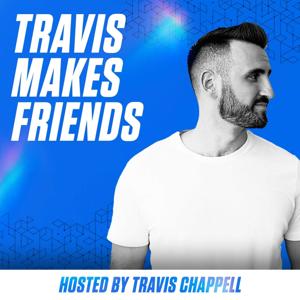


On this solo episode, Travis breaks down how to design a realistic, sustainable morning routine that actually supports your energy, focus, and productivity instead of becoming a four-hour checklist you feel guilty about skipping. Drawing from years of experimenting with different habits, he shares what truly moves the needle—especially if you’re a self-described night person who wakes up feeling behind.
On this episode we talk about:
Why over-engineered, four-hour morning routines can hurt your day more than help it.
The core pillars of an effective routine: hydration, sunlight, and movement.
Practical ways to move your body in the morning without being a “gym rat.”
How journaling, meditation, and even cold showers or sauna can support your mental state.
The importance of starting with just one habit and sometimes skipping everything to do your most important work first.
Top 3 Takeaways
An effective morning routine should change your state, not become a rigid box-checking exercise that makes you feel behind or guilty when life happens.
Simple habits like electrolytes and water, getting 15–20 minutes of sunlight, moving your body, and staying off your phone can dramatically improve focus, mood, and sleep.
Start with one habit that makes other habits easier—like waking up at a consistent time—and build from there while remembering that sometimes the best move is to wake up and do your most important work first.
Notable Quotes
"You do not want to have a crazy four-hour long morning routine. It can actually be more detrimental to your day than not having a morning routine at all."
"The entire goal here is not to check boxes. The entire goal is to set yourself up to be in a state that allows you to have a productive and positive day."
"Start with one thing, and make that one thing the thing that makes other things easier once you've accomplished the first thing on the list."
Connect with Travis:
Instagram: https://instagram.com/travischappell
Other: https://travischappell.com
Learn more about your ad choices. Visit megaphone.fm/adchoices
In this episode of the Travis Makes Money Podcast, Travis and producer Eric explore the relationship between luck, competence, humility, and success through lessons from Conan O’Brien, Danny McBride, and Patton Oswalt. They discuss why successful people can be tempted to take too much credit for their wins, how ego can prevent people from reinventing themselves, and why staying grounded while continuing to develop your skills is one of the best ways to build a lasting career.
On this episode we talk about:
Why successful people should acknowledge the role luck plays in their accomplishments
How to balance humility about your circumstances with confidence in your own competence
Why ego can prevent entrepreneurs from taking risks, trying new things, or reinventing themselves
The importance of continuing to create, develop your skills, and focus on work you genuinely enjoy
How staying grounded and maintaining a sense of play can lead to more opportunities and long-term success
Top 3 Takeaways
Success is a combination of competence and luck. Skills, knowledge, relationships, timing, and hard work all matter, but luck is part of the equation too. Recognizing that doesn't diminish your accomplishments—it can help keep your ego in check.
Don't let your ego take you out of the game. Whether it's avoiding a game because you might lose or refusing to pursue a new career path because you might not immediately be great at it, protecting your ego can prevent you from doing things you actually enjoy and discovering new opportunities.
Focus on the work, not just the outcome. The people who continue to succeed are often those who stay focused on creating things they care about rather than becoming obsessed with how others perceive their careers. Building a body of work and continuing to improve gives you something you can control regardless of whether the next big break arrives.
Notable Quotes
"Successful people commit first, and then they figure it out."
"It's not all luck. It's not a hundred percent luck."
"Why take myself out of the game just because it's a challenge to my own ego?"
Connect with Travis Chappell:
Instagram: instagram.com/travischappell
Other: travischappell.com
A Word from Our Sponsors:
- Go to Leesa.com for 25% OFF select mattresses (through August 23, 2026) PLUS get an extra $50 off with promo code TMM, exclusive for my listeners
Learn more about your ad choices. Visit megaphone.fm/adchoices
Andy Henriquez, known as the Master Storyteller, is a business storytelling coach, keynote speaker, and founder of the Master Storyteller Academy. He helps entrepreneurs, executives, and organizations use strategic storytelling to build stronger connections, elevate their brands, and drive revenue growth. The author of Show Up for Your Life, Andy has worked with organizations including NASA, Accenture, Pratt & Whitney, Bacardi, and Google. In this episode, he shares how a chance conversation at a gas station changed the trajectory of his career, how he turned his real estate knowledge into his first information product, and why storytelling and personal investment can be powerful tools for creating opportunities.
On this episode we talk about:
How a random conversation at a gas station led Andy into real estate and ultimately changed his career
Turning knowledge and expertise into seminars, information products, and revenue
Why storytelling is one of the most powerful ways to build genuine connections
The difference between being in the right place at the right time and being the right person at the right time
Andy's life-changing decision to invest $30,000 in coaching with legendary speaker Les Brown
Why you shouldn't wait for someone else to give you an opportunity—you should create your own stage
How investing in yourself can build confidence, accountability, and long-term results
Top 3 Takeaways
Create your own opportunities. Don't sit around waiting for someone to give you a seat at the table. Put yourself in environments where opportunities can happen, then be prepared to act when they do.
Become the right person for the opportunity. Being in the right place at the right time isn't enough. Your mindset, preparation, and willingness to act determine whether you'll recognize and capitalize on an opportunity.
Invest in yourself at the level of the results you want. Andy's $30,000 investment in coaching forced him to take his goals seriously and become more accountable. Even when an investment doesn't immediately produce the expected result, the lessons and experience can become part of the process that eventually pays off.
Notable Quotes
"The shortest distance between you and the person that you're either looking to connect with or the person that you're looking to influence is really like a story."
"You have to invest at the level in which you expect results."
"Successful people commit first, and then they figure it out."
Connect with Andy Henriquez:
LinkedIn: Andy Henriquez
Instagram: Show Up for Your Life
Other: Master Storyteller Academy
A Word from Our Sponsors:
- Go to Leesa.com for 25% OFF select mattresses (through August 23, 2026) PLUS get an extra $50 off with promo code TMM, exclusive for my listeners
Learn more about your ad choices. Visit megaphone.fm/adchoices
Travis flies solo in this episode to break down his personal blueprint for getting dramatically better at sales in a short amount of time. Drawing from years of experience in door-to-door sales, closing, and outside sales, he shares a practical, no-fluff approach to mastering the fundamentals, building confidence, and converting more conversations into customers.
On this episode we talk about:
Why finding the top performer and copying their process is the fastest way to improve.
How volume, repetition, and script practice build real sales skill.
Why tonality, body language, and delivery matter as much as the words you say.
The power of asking for the sale and then sitting in silence.
How empathy, discovery, and good questions make closing easier.
Top 3 Takeaways
Don’t reinvent the wheel—study the best performer, copy their approach, and practice it at scale.
The best salespeople create trust by asking better questions and truly understanding the prospect’s situation.
Silence is a tool, and over-talking after the close can hurt more deals than it helps.
Notable Quotes
“Find the top performer, do your best impression.”
“Outperform everyone else's volume.”
“Ask for the sale and be silent.”
Connect with Travis Chappell:
LinkedIn: https://www.linkedin.com/in/travischappell
Instagram: https://www.instagram.com/travischappell/
Other: https://www.travischappell.com/
Learn more about your ad choices. Visit megaphone.fm/adchoices
In this episode of the Travis Makes Money Podcast, Travis Chappell and producer Eric take a skeptical—and surprisingly nuanced—look at NFTs, Gary Vaynerchuk’s continued belief in digital assets, and the difference between a failed trend and an emerging technology that may still have lasting value. They break down why most NFTs were always likely to become worthless, why a small number could potentially become valuable digital collectibles, and how entrepreneurs can recognize opportunities in overlooked markets without confusing speculation with sound investing.
On this episode we talk about:
Why Gary V remains one of the most influential entrepreneurial voices and why Travis and Eric disagree with some of his NFT takes
The difference between an NFT's underlying utility and simply using an NFT as a digital membership or collectible
Why the vast majority of NFT projects were—and likely will remain—worthless
The comparison between the NFT boom and the dot-com bubble, including how a few winners can emerge from a massive speculative market
Why alternative investments like NFTs, collectibles, and altcoins should be treated as speculative “play money” rather than dependable investments
Top 3 Takeaways
Not every failed trend means the underlying technology is worthless. Just as most dot-com companies failed while Amazon, Google, and eBay survived, a small number of NFT projects could ultimately become valuable digital assets.
Separate utility from speculation. An NFT can provide access to experiences, communities, events, or other benefits, but that doesn't automatically make the asset itself a good investment.
Know what you're risking. If you're investing in NFTs, collectibles, altcoins, or other alternative assets, treat the money as speculative capital—not money you need for your financial future.
Notable Quotes
"Ninety-nine percent of these are going to zero."
"This is called fucking math."
"The question is, are you good enough to pick the winners? That's hard."
Connect with Travis Chappell:
Instagram: https://instagram.com/travischappell
Other: https://travischappell.com
A Word from Our Sponsors:
- Go to Leesa.com for 25% OFF select mattresses (through August 23, 2026) PLUS get an extra $50 off with promo code TMM, exclusive for my listeners
Learn more about your ad choices. Visit megaphone.fm/adchoices
Chris Hill is the host of Money Unplugged and a veteran of the podcasting world, having started at The Motley Fool in 2009 and gone on to host and executive produce more than 3,500 episodes. He has interviewed some of the biggest names in business and media, including Michael Lewis, Mark Cuban, and Malcolm Gladwell, and he also narrates Morgan Housel’s bestselling books The Psychology of Money and The Art of Spending Money. In this conversation, Chris shares what more than a decade in podcasting has taught him about building an audience, controlling costs, preparing for great interviews, and using a podcast as one of the most powerful networking tools available.
On this episode we talk about:
How Chris helped launch one of the earliest major investing podcasts during the 2009 financial crisis
Why keeping podcast production costs low is critical to building a profitable show
The evolution of podcasting from an early, computer-based medium to YouTube and multi-platform distribution
How a podcast can become a powerful networking and relationship-building tool
Why thorough interview preparation can transform a conversation and help guests get off autopilot
The connection between money and personal experiences, emotions, relationships, and psychology
Top 3 Takeaways
Keep your podcast costs proportional to your goals. Chris emphasizes setting a specific financial allocation for a side hustle or podcast and avoiding the temptation to continually invest more money when things aren't working.
Use your podcast to build relationships, not just an audience. Inviting someone onto a podcast gives you a legitimate reason to connect with people you admire, expand your network, and create conversations that might never happen over a traditional coffee chat.
Preparation creates better conversations. The goal isn't simply to book impressive guests—it's to make the conversation memorable. Researching a guest deeply allows you to ask questions they haven't heard before and move beyond their standard talking points.
Notable Quotes
"The less expensive your podcast is to produce, the more profitable it's gonna be."
"Personal finance is more personal than finance."
"They will be delighted if you're not asking the same four questions or telling the same three stories that they tell on all the other interviews."
Connect with Chris Hill:
Website: https://www.moneyunpluggedpodcast.com/
Other: Money Unplugged — available wherever you listen to podcasts, with new episodes every Friday
A Word from Our Sponsors:
- Go to Leesa.com for 25% OFF select mattresses (through August 23, 2026) PLUS get an extra $50 off with promo code TMM, exclusive for my listeners
Learn more about your ad choices. Visit megaphone.fm/adchoices
This solo episode features Travis Chappell, a veteran podcaster and founder who has helped thousands of people learn the mindset and habits required to earn more. Drawing from his own journey of lifestyle creep, debt awareness, and building multiple income streams, Travis breaks down simple, practical habits anyone can adopt—no degree, big savings, or special skills required—to start moving their bank account in the right direction over the next 3–6 months.
On this episode we talk about:
Why checking your bank account balance daily changes your money awareness and urgency.
How to delay purchases for at least an hour to avoid impulse spending and emotional decisions.
Eating at home to reverse lifestyle creep and stop letting restaurant and delivery bills quietly drain your income.
Going to monthly in‑person events so “the more hands you shake, the more money you make.”
Changing your inputs (podcasts, YouTube, conversations) so your environment pushes you toward earning more.
Top 3 Takeaways
Daily money awareness—like checking your bank balance or using tools such as Rocket Money—keeps your real financial situation in front of you and creates the urgency to go earn more.
Small habits like delaying purchases for an hour and eating at home can quietly free up thousands of dollars a month that you can redirect toward debt payoff and savings.
Your environment and relationships matter: attending monthly events, consuming business content, and talking openly about money with your spouse or close friends increases opportunities and motivation to build the life you want.
Notable Quotes
“What you focus on, you get more of—so put your bank balance in front of your eyes every single day.”
“It’s never been easier to make money, but it’s also never been easier to get distracted and to spend it.”
“The more hands you shake, the more money you make.”
Connect with Travis Chappell:
LinkedIn: https://www.linkedin.com/in/travischappell
Twitter/X: https://twitter.com/traviscchappell
Instagram: https://www.instagram.com/travischappell/
Other: Website – https://travischappell.com
Learn more about your ad choices. Visit megaphone.fm/adchoices
Eric, Travis’s producer and a fellow long-term podcaster, joins him in studio for a candid conversation about the advantage most people overlook: consistency. Drawing on years of podcasting and firsthand experience building content, Travis and Eric unpack why creators abandon opportunities too early, why buying a course does not create results, and how simply following through can make you stand out.
On this episode we talk about:
Why tougher YouTube monetization hurdles can create opportunity for persistent creators
The simple competitive advantage of continuing when other people quit
Why people buy courses, gym memberships, and resources but fail to use them
Lessons from nearly a decade of podcasting and watching shows disappear
How to set expectations, responsibilities, and ownership before launching a podcast with co-hosts
Reframing overwhelm and doing the next piece of work even when you are tired
Top 3 Takeaways
The most reliable way to separate yourself is to keep showing up after other people stop. Consistency is a real competitive advantage.
Information and purchases do not produce results on their own. Turn every course, tool, or plan into a specific next action.
Treat a co-hosted show like a business partnership from day one: clarify responsibilities, financial commitments, and ownership before problems arise.
Notable Quotes
“The key to success in most areas is literally to just not stop when other people are stopping. It’s to outlast.”
“You’re not competing with anyone.”
“The bad news is that most people aren’t willing to do the work, but the good news is if you are, then you can stand out really easily.”
Connect with Travis:
Instagram: https://instagram.com/travischappell
Other: https://travischappell.com
A Word from Our Sponsors:
- Go to Leesa.com for 25% OFF select mattresses (through August 23, 2026) PLUS get an extra $50 off with promo code TMM, exclusive for my listeners
Learn more about your ad choices. Visit megaphone.fm/adchoices
Olivia Fox Cabane is the best-selling author of The Charisma Myth and a former director of innovative leadership at Stanford. She has coached leaders at companies including Apple, Google, JPMorgan, and Airbnb, and has spent years studying the science behind charisma. In this episode, Olivia explains why charisma isn't an innate personality trait but a learnable skill, how presence, power, and warmth work together, and why mastering charisma may become even more valuable as AI makes knowledge and information increasingly accessible.
On this episode we talk about:
Why charisma is a learned behavior rather than an innate personality trait
The three core components of charisma: presence, power, and warmth
How to practice charisma in low-stakes situations and make presence a daily habit
The potential downsides of charisma, including manipulation, envy, and convincing people when you're actually wrong
How vocal fluctuation, online communication, and AI are changing the way charisma is perceived
Top 3 Takeaways
Charisma can be learned. Like any other skill, charisma may feel unnatural at first, but consistent practice can make it feel effortless over time.
Start with presence. In a distracted world, simply giving someone your full attention can dramatically increase your impact. Olivia recommends practicing in everyday, low-stakes interactions.
Use charisma with the right intent. Charisma can be incredibly powerful, but it can also manipulate or mislead people. The goal should be to create a better experience for everyone involved, not simply to control an interaction.
Notable Quotes
“Charisma is a series of learned behaviors.”
“The world becomes your lab and every person you meet is a chance to experiment.”
“If your intent is good and your impact is good, use everything at your disposal.”
Connect with Olivia Fox Cabane:
Instagram: https://www.instagram.com/oliviafoxcabane/
Other: The Charisma Myth
Website: https://www.oliviafoxcabane.com/
A Word from Our Sponsors:
- Go to Leesa.com for 25% OFF select mattresses (through August 23, 2026) PLUS get an extra $50 off with promo code TMM, exclusive for my listeners
Learn more about your ad choices. Visit megaphone.fm/adchoices
In this solo episode, Travis digs into old notes from his phone to unpack why humans are wired for fear—evolutionary survival that now fuels anxiety and stalled dreams. He shares his "rocking chair test" for big risks (like a six-figure filming project with legends) and how fearing regret beats fearing failure every time.
On this episode we talk about:
Human evolution: 99% of our 100,000-year history as hunter-gatherers made fear our survival edge—now it creates worry over non-threats like embarrassment or loss.
Reptilian brain vs. subconscious supercomputer: You can't override it, but awareness lets you redirect fear (e.g., fear of mediocrity > fear of failing once).
Jocko Willink wisdom: "Every failure that does not lead to death is psychological"—nothing to lose by swinging again.
Travis's risk framework: Worst-case (lose money)? Renewable. Best-case? Dream life. Time isn't—don't wait for the "perfect" moment.
Rocking chair test: At 98, will you regret not acting more than failing? Past risks always led to growth, win or lose.
Top 3 Takeaways
1. Fear is inevitable—choose the right one: Fear living subpar > fear one failure; money renews, time doesn't. 2. Worst-case scenarios rarely kill you; engage fear directly to shrink it, then act—upside crushes downside. 3. Build proof through risks: One success unlocks confidence; even "failures" spark hyper-growth and problem-solving.
Notable Quotes
"Worry is simply faith that something bad is going to happen... Hope is faith that something good is going to happen."
"Everybody gives in to fear. Whether it's the fear of failing at making your dreams come true or the fear of never making your dreams come true, the one you give into will determine how you live your life."
"I fear that state of regret so much more than I fear risking embarrassment now."
Learn more about your ad choices. Visit megaphone.fm/adchoices
From the publisher's feed

2,713 Listeners

581 Listeners

10,634 Listeners

16,624 Listeners
2,288 Listeners

10,885 Listeners

27,835 Listeners

2,639 Listeners
5,835 Listeners

18,797 Listeners