
Sign up to save your podcasts
Or

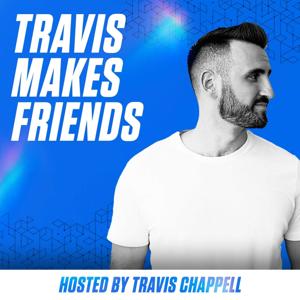


Travis and producer Eric are back in the studio for a conversation about celebrity brands, marketing strategy, and what happens when a product’s positioning doesn’t match the audience it’s trying to reach. Using Sydney Sweeney’s lingerie brand, Siren, as a case study, they discuss the importance of understanding your customer, creating marketing that speaks directly to the people who will actually buy, and why one failed product doesn’t necessarily mean a brand has lost its ability to succeed.
On this episode we talk about:
Why marketing needs to align with the audience you’re actually trying to reach
Sydney Sweeney’s Siren lingerie brand and the criticism surrounding its marketing
The difference between selling a celebrity’s image and selling a product
How brands like SKIMS have successfully positioned products for their target customers
Why a failed product or campaign doesn’t necessarily mean someone has lost their ability to build successful brands
What businesses can learn from brands that miss the mark with their target demographic
Top 3 Takeaways
Know exactly who you’re marketing to. A product can have an incredibly recognizable founder or spokesperson, but that doesn’t automatically mean their existing audience is the right customer for the product.
Market the product, not just the person behind it. Celebrity recognition can generate attention, but effective marketing still needs to communicate why the customer should actually want or use the product.
One failed product doesn’t define a brand. Businesses take swings, and some ideas don’t work. As Travis points out, even highly successful entrepreneurs and brands have launched products that failed. The important thing is to learn from the miss and keep moving.
Notable Quotes
“Sometimes you have an idea, you execute it, and it doesn’t go the way you want it to go, and that doesn’t mean that your power to build brands is gone.”
“You step up to the plate and you swing and you strike out.”
“You get back up.”
Connect with Travis Chappell:
Instagram: @travischappell
Other: travischappell.com
A Word from Our Sponsors:
- The most successful business owners don't do it all themselves — they delegate. Upwork lets you build a team of highly skilled specialists for every function your business needs, so you can focus on what you do best and let experts handle the rest. Visit Upwork.com right now and post your job for free!
- Scribe captures workflows as work happens and automatically generates step-by-step guides with screenshots and instructions, so no one has to sit down and write documentation from scratch. Learn more at scribe.how/tmm and mention Travis Makes Money for your first month of Scribe Capture free on select plans.
- When you need a legal hand, visit LegalZoom. Go to LegalZoom.com to get started!
Learn more about your ad choices. Visit megaphone.fm/adchoices
Dr. Ricardo Valerdi is an engineer, social entrepreneur, sports scientist, and engineering professor at the University of Arizona who specializes in helping teams think clearly and make confident decisions. His work has helped organizations including SpaceX, the U.S. Army, Major League Baseball, and the NCAA, while his nonprofit Science of Sport has used sports to make STEM education more engaging for more than 700,000 students. Ricardo joins Travis to explore the intersection of data, intuition, sports, and decision-making—and how the lessons learned on the field can translate to business and life.
On this episode we talk about:
The tension between data-driven analysis and gut instinct when making decisions
How baseball provides a unique way to teach math, science, and data literacy to young people
Why confirmation bias can cause people to prioritize what they want to be true over what the data actually says
The importance of focusing on what you can control while accepting that outcomes involve uncertainty and luck
Why sometimes doing less can produce a better outcome than doing more
Ricardo’s “Five Tool Team” framework for building teams with complementary strengths
Top 3 Takeaways
Use data without ignoring context. The best decisions don't always come from choosing data or intuition exclusively. Understanding when to trust each—and recognizing when they conflict—is part of effective decision-making.
Control the controllables. You can control the quality of your decisions and your preparation, but you can't always control the outcome. Focusing on what you can influence helps you keep moving forward when circumstances don't go your way.
Build teams that fill your gaps. You don't need to personally possess every skill required for a great decision. Ricardo's Five Tool Team approach emphasizes bringing together people with complementary strengths so the team can collectively make better decisions.
Notable Quotes
“How do you make the best decision you can? Do you favor your gut or do you favor the data?”
“Desire creates blind spots.”
“Ultimately what changes your life is the decisions that you make with the card that you are dealt.”
Connect with Dr. Ricardo Valerdi:
Website: RicardoValerdi.com
Book: The Five Tool Team
Other: Science of Sport
A Word from Our Sponsors:
- The most successful business owners don't do it all themselves — they delegate. Upwork lets you build a team of highly skilled specialists for every function your business needs, so you can focus on what you do best and let experts handle the rest. Visit Upwork.com right now and post your job for free!
- Scribe captures workflows as work happens and automatically generates step-by-step guides with screenshots and instructions, so no one has to sit down and write documentation from scratch. Learn more at scribe.how/tmm and mention Travis Makes Money for your first month of Scribe Capture free on select plans.
- When you need a legal hand, visit LegalZoom. Go to LegalZoom.com to get started!
Learn more about your ad choices. Visit megaphone.fm/adchoices
In part two of this conversation, Travis Chappell and producer Eric Skwarczynski unpack the tension between ambition and skepticism. They explore how to pursue meaningful work, build a comfortable business, and learn from successful people without blindly buying into anyone’s “secret formula.” The conversation moves from creative comparison and coaching to the value of timeless principles, healthy discernment, and keeping enough belief to take action.
On this episode we talk about:
Top 3 Takeaways
Notable Quotes
Connect with Travis Chappell:
A Word from Our Sponsors:
- The most successful business owners don't do it all themselves — they delegate. Upwork lets you build a team of highly skilled specialists for every function your business needs, so you can focus on what you do best and let experts handle the rest. Visit Upwork.com right now and post your job for free!
- Scribe captures workflows as work happens and automatically generates step-by-step guides with screenshots and instructions, so no one has to sit down and write documentation from scratch. Learn more at scribe.how/tmm and mention Travis Makes Money for your first month of Scribe Capture free on select plans.
Learn more about your ad choices. Visit megaphone.fm/adchoices
Sally Gimon is a tax-saving expert who discovered the power of beneficial spendthrift trusts after facing a hefty tax bill on her real estate investments. She now helps business owners and investors understand how they can legally minimize their taxes and build generational wealth using strategies often employed by the ultra-rich.
On this episode we talk about:
- How Sally Gimon transitioned from real estate wholesaling to specializing in tax-saving strategies.
- The history and legality of beneficial spendthrift trusts and business trusts.
– How these trusts can help business owners and investors save significantly on federal and state taxes.
– The privacy and asset protection benefits of using trusts.
– Real-life examples of how these trusts have helped clients achieve their financial goals.
Top 3 Takeaways
1. Beneficial spendthrift trusts and business trusts can be powerful tools for legally minimizing taxes for business owners, entrepreneurs, and investors.
2. These trusts offer not only tax savings but also privacy and protection from lawsuits.
3. Setting up a trust can enable you to keep more of your earnings.
Connect with Sally Gimon:
LinkedIn: https://www.linkedin.com/in/sally-gimon-46142928a
**A Word from Our Sponsors:
- The most successful business owners don't do it all themselves — they delegate. Upwork lets you build a team of highly skilled specialists for every function your business needs, so you can focus on what you do best and let experts handle the rest. Visit Upwork.com right now and post your job for free!
- Scribe captures workflows as work happens and automatically generates step-by-step guides with screenshots and instructions, so no one has to sit down and write documentation from scratch. Learn more at scribe.how/tmm and mention Travis Makes Money for your first month of Scribe Capture free on select plans.
Learn more about your ad choices. Visit megaphone.fm/adchoices
Travis and producer Eric break down one of Jim Rohn’s classic lessons: the importance of asking. After joking about Rohn’s dramatic delivery, they explore why asking is such a powerful skill, from being clear about what you want to approaching goals with both intelligence and faith. The conversation also dives into the tension between adult skepticism and childlike optimism, and why some of the most successful people Travis has interviewed share an unusual willingness to believe they can accomplish something before they have much evidence that they can.
On this episode we talk about:
Jim Rohn’s philosophy on asking and why asking is the beginning of receiving
Why being clear and specific about what you want can help direct your actions
The difference between asking intelligently and simply hoping for something
How skepticism and experience can diminish the optimism we have as children
Why childlike belief can be valuable when pursuing ambitious goals
The common mindset Travis has noticed among people who have achieved extraordinary success
Balancing realistic planning with the belief that something is possible
Why you don’t always need to understand exactly how something will work before taking action
Top 3 Takeaways
Ask clearly for what you want. Vague goals make it difficult to know what actions to take. Get specific about what you're pursuing and what success looks like.
Pair adult planning with childlike belief. Experience can make you more skeptical, but maintaining some of that willingness to believe something is possible can help you pursue goals that initially seem unrealistic.
You don't need every answer before you begin. Understanding the mechanics behind something can be useful, but overcomplicating the process can become an excuse for inaction. Sometimes it's enough to know what works and start doing it.
Notable Quotes
“Asking is the beginning of receiving.”
“Make plans like an adult and believe in them like a child.”
“You don't know what you don't know.”
Connect with Travis Chappell:
Instagram: https://www.instagram.com/travischappell/
Other: https://travischappell.com/
A Word from Our Sponsors:
- The most successful business owners don't do it all themselves — they delegate. Upwork lets you build a team of highly skilled specialists for every function your business needs, so you can focus on what you do best and let experts handle the rest. Visit Upwork.com right now and post your job for free!
- Scribe captures workflows as work happens and automatically generates step-by-step guides with screenshots and instructions, so no one has to sit down and write documentation from scratch. Learn more at scribe.how/tmm and mention Travis Makes Money for your first month of Scribe Capture free on select plans.
Learn more about your ad choices. Visit megaphone.fm/adchoices
Trevor Cowley is a 38-year-old serial entrepreneur, investor, writer, and podcaster. He’s a co-owner in 5 businesses that collectively produce over eight figures. He co-hosts a top 100 business podcast on iTunes called Real Business Owners. Trevor is committed to helping entrepreneurs succeed.
A Word From Our Sponsors:
- The most successful business owners don't do it all themselves — they delegate. Upwork lets you build a team of highly skilled specialists for every function your business needs, so you can focus on what you do best and let experts handle the rest. Visit Upwork.com right now and post your job for free!
- Scribe captures workflows as work happens and automatically generates step-by-step guides with screenshots and instructions, so no one has to sit down and write documentation from scratch. Learn more at scribe.how/tmm and mention Travis Makes Money for your first month of Scribe Capture free on select plans.
Learn more about your ad choices. Visit megaphone.fm/adchoices
Travis and producer Eric dive into the controversy surrounding Robert Kiyosaki’s reported $1.2 billion in debt and why a single headline rarely tells the full story. They break down leverage, real estate debt, cash flow, asset values, and the difference between personal debt and debt tied to businesses or investment entities. The conversation also explores the psychology of carrying massive amounts of debt, the concept of being “too big to fail,” and why assumptions about someone’s financial situation can be misleading without the underlying numbers.
On this episode we talk about:
Why $1.2 billion in debt doesn't tell you whether Robert Kiyosaki's financial strategy is working
The importance of looking at asset values, cash flow, and debt structure before judging an investment
How business entities, partnerships, LLCs, and other structures can change the way debt is held
The concept of being “too big to fail” and how bailouts can affect large companies differently than small businesses
Why Kiyosaki's success with Rich Dad Poor Dad and related business ventures matters when considering his overall financial picture
The tendency to dismiss successful people as incompetent or assume criticism comes from jealousy
Why having someone else's lifestyle isn't necessarily the same as wanting specific aspects of their success
Travis's thoughts on fame, financial success, and what a fulfilling life actually looks like
Top 3 Takeaways
Look beyond the headline. A large debt number by itself doesn't tell you whether a financial strategy is good or bad. You need to understand the assets, cash flow, interest costs, ownership structure, and who is actually responsible for the debt.
Don't confuse criticism with jealousy. Disagreeing with or criticizing someone's actions doesn't automatically mean you want what they have. It's possible to recognize someone's success while deciding that their lifestyle isn't something you'd want for yourself.
Success isn't one-size-fits-all. A massive exit, wealth, or fame might be appealing in certain ways without making you want the entire life that comes with it. It's worth separating the specific outcomes you admire from the lifestyle required to achieve them.
Notable Quotes
“There’s a lot of variables in $1.2 billion dollars in debt that could say whether or not it’s a good idea or a bad idea.”
“I cannot imagine just being comfortable with that much debt.”
“To assume that it just means that he doesn’t know what he’s doing is silly.”
Connect with Travis Chappell:
Instagram: https://www.instagram.com/travischappell/
Other: https://travischappell.com/
A Word from Our Sponsors:
- The most successful business owners don't do it all themselves — they delegate. Upwork lets you build a team of highly skilled specialists for every function your business needs, so you can focus on what you do best and let experts handle the rest. Visit Upwork.com right now and post your job for free!
- Scribe captures workflows as work happens and automatically generates step-by-step guides with screenshots and instructions, so no one has to sit down and write documentation from scratch. Learn more at scribe.how/tmm and mention Travis Makes Money for your first month of Scribe Capture free on select plans.
Learn more about your ad choices. Visit megaphone.fm/adchoices
Angelo Poli is the founder of MetPro, a concierge nutrition and fitness coaching company that uses metabolic science and personalized coaching to help clients transform their health and bodies. With more than 20 years of experience, Angelo has coached Olympic athletes, NFL MVPs, business leaders, and thousands of other clients. A TEDx speaker featured in major media outlets, Angelo built MetPro around the idea that sustainable health comes from individualized strategies, measurable data, accountability, and focusing on what actually moves the needle.
On this episode we talk about:
Why investing in your health can have a direct impact on your productivity, longevity, and ability to enjoy the fruits of your work
The importance of accountability, measurable goals, and having someone help you focus on what matters most
Why your health and fitness goals need to become non-negotiables rather than things you do only when you have time
How simplifying your nutrition and fitness strategy can make long-term progress more sustainable
MetPro's approach to metabolic profiling, baseline testing, and personalizing nutrition based on individual data
Adaptive thermogenesis and how the body adapts to changes in energy intake
Why one-size-fits-all diets and generic nutrition advice don't work equally well for everyone
How conditioning your metabolism can help you increase your food intake while still working toward specific body-composition goals
Top 3 Takeaways
Make health a non-negotiable. If exercise and nutrition only happen when you have extra time, they are unlikely to remain consistent. Treat your health like other commitments you make regardless of how busy you are.
Simplify the goal and focus on what matters. Instead of trying to overhaul everything at once, identify the most important behaviors and cut the plan down to something realistic enough to consistently execute.
Use data and accountability to personalize your approach. Rather than blindly following generic fitness advice, track meaningful metrics, understand how your body responds, and adjust your strategy based on actual results.
Notable Quotes
“The question is when do I get to see you? Before, after.”
“It has to make its way into the non-negotiables. And I’m not the first expert... but it’s a truthful pattern.”
“I want you to give me your fitness and nutrition, and I want to fall into that non-negotiable category, and then they tell me what they’re gonna do, and I say, Great, now cut it in half.”
“Your metabolic rate is not fixed. You can condition it.”
“What to do, what not to do. And then once I got there, I needed someone that would hold me accountable.”
Connect with Angelo Poli:
Website: metpro.co/travis
LinkedIn: https://www.linkedin.com/in/angelo-poli/
Other: MetPro offers a free consultation through the link above
A Word from Our Sponsors:
- The most successful business owners don't do it all themselves — they delegate. Upwork lets you build a team of highly skilled specialists for every function your business needs, so you can focus on what you do best and let experts handle the rest. Visit Upwork.com right now and post your job for free!
- Scribe captures workflows as work happens and automatically generates step-by-step guides with screenshots and instructions, so no one has to sit down and write documentation from scratch. Learn more at scribe.how/tmm and mention Travis Makes Money for your first month of Scribe Capture free on select plans.
Learn more about your ad choices. Visit megaphone.fm/adchoices
Travis and producer Eric explore why leaving your hometown and familiar environment can be such a powerful catalyst for growth. Using a discussion about Logan Paul’s experience leaving Ohio as a jumping-off point, they unpack the difference between being genuinely content with where you are and staying somewhere simply because change feels uncomfortable. They also share stories from their own travels and discuss how experiencing new places, cultures, languages, and challenges can expand your perspective, build resilience, and create greater empathy for people whose lives look different from your own.
On this episode we talk about:
Why leaving your hometown can expose you to opportunities and experiences you may never encounter otherwise
The difference between being genuinely happy where you are and using comfort or fear as a reason not to change
How traveling can force you to become more adaptable and comfortable solving unexpected problems
Travis’s experiences moving from Lancaster to Fresno and eventually Las Vegas
Traveling on a budget, including staying in hostels and finding inexpensive ways to see the world
How experiencing different cultures and environments can broaden your perspective and increase empathy
Why you can benefit from traveling even if you ultimately decide to return home
Top 3 Takeaways
Challenge the reasons you stay comfortable. There can be legitimate reasons to stay in a familiar place, but it’s worth asking whether you genuinely want to stay or whether fear of the unknown is making the decision for you.
Get outside your familiar environment. Traveling and experiencing new places forces you to adapt, solve problems, and interact with people who see the world differently. Those experiences can accelerate personal growth in ways that are difficult to replicate from home.
You don't have to move permanently to expand your world. If relocating isn’t right for you, start by taking trips and exploring new places. Seeing how other people live can give you perspective and help you make more informed decisions about the life you want.
Notable Quotes
“I think that everybody should aspire to leave their hometown, even if it's your goal to come back to that place later.”
“If you're just afraid of what life looks like outside of that, that's a really, really bad excuse.”
“The minute you step outside the confines of what you know and go somewhere, it feels like it just skyrockets your growth in a lot of ways.”
Connect with Travis Chappell:
Instagram: https://www.instagram.com/travischappell/
Other: https://travischappell.com/
A Word from Our Sponsors:
- The most successful business owners don't do it all themselves — they delegate. Upwork lets you build a team of highly skilled specialists for every function your business needs, so you can focus on what you do best and let experts handle the rest. Visit Upwork.com right now and post your job for free!
- Scribe captures workflows as work happens and automatically generates step-by-step guides with screenshots and instructions, so no one has to sit down and write documentation from scratch. Learn more at scribe.how/tmm and mention Travis Makes Money for your first month of Scribe Capture free on select plans.
Learn more about your ad choices. Visit megaphone.fm/adchoices
Evan Schlossman is a principal at Neostellar, where he focuses on artificial intelligence and emerging technologies, particularly the infrastructure powering AI systems, including compute platforms, data infrastructure, and enabling technologies. Before joining Neostellar, Evan worked in business intelligence at the Lifetime Value Company and as a consultant at Deloitte. With an MBA from Northwestern University’s Kellogg School of Management and a background in economics from Cornell, Evan brings a unique perspective on the intersection of technology, finance, startups, and investing.
On this episode we talk about:
How Evan discovered his interest in technology, business, and investing from an early age
Why young people should experiment with different careers, internships, and side projects before deciding what they want to do
Evan’s transition from pre-med to consulting, startups, and eventually venture capital
The rise of “boring” Main Street businesses like laundromats, car washes, roofing, and HVAC companies as potential entrepreneurial opportunities
How AI can modernize the back-office operations of traditional businesses and increase their leverage
Why Neostellar focuses on the infrastructure powering AI rather than simply betting on the next consumer-facing AI application
The investment thesis behind AI infrastructure, including compute, data, memory, and storage
Evan’s perspective on evaluating businesses based on cash flow, opportunity cost, career stage, and personal goals
Top 3 Takeaways
Experiment before committing to a career path. You don't need to know at 18 what you want to do for the rest of your life. Internships, side projects, freelance work, and conversations with people in different industries can help you discover what actually interests you.
Look beyond the obvious AI companies. Rather than trying to predict which consumer-facing AI application will win, consider the foundational infrastructure that all of these technologies need, such as compute, data, memory, and storage.
Don't overlook the value of your own time. When evaluating a business opportunity, especially a small service-based business, consider the opportunity cost of your time and what it would cost to hire someone else to operate the business. Your real economic return isn't simply the business's cash flow.
Notable Quotes
"It's a matter of talking to people, keeping your options open, right? Trying to identify what's out there, what do you like doing, what sort of fits that intersection of interests and what you're good at."
"Don't, you know, undervalue your time, right? Because if you are running this business and that's your day-to-day job, there's an opportunity cost for your time."
"No matter what products end up winning in two, three years... what are the foundational components that they are going to need to be a part of?"
Connect with Evan Schlossman:
LinkedIn: https://www.linkedin.com/in/evanschlossman/
Other: Neostellar — portfolio, team, white papers, quarterly earnings calls, and company information
A Word from Our Sponsors:
- The most successful business owners don't do it all themselves — they delegate. Upwork lets you build a team of highly skilled specialists for every function your business needs, so you can focus on what you do best and let experts handle the rest. Visit Upwork.com right now and post your job for free!
- Scribe captures workflows as work happens and automatically generates step-by-step guides with screenshots and instructions, so no one has to sit down and write documentation from scratch. Learn more at scribe.how/tmm and mention Travis Makes Money for your first month of Scribe Capture free on select plans.
Learn more about your ad choices. Visit megaphone.fm/adchoices
From the publisher's feed

2,713 Listeners
581 Listeners

10,634 Listeners

16,624 Listeners
2,288 Listeners

10,885 Listeners

27,835 Listeners

2,639 Listeners
5,835 Listeners

18,797 Listeners