
Sign up to save your podcasts
Or

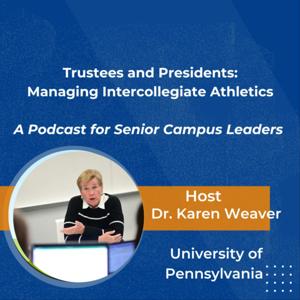


We are joined today by Sports and Data Rights Attorney Michael Clohisy. He is a Boston-based sports attorney, business executive, board member, and former certified National Football League (NFL) player-agent, who has advised clients and matters involving: data rights, privacy and protection in sport; athletes’ digital, publicity (US) – name, image, and likeness—NIL, image (UK) and personality (EU) rights; structuring and negotiating contracts for professional athletes, coaches and senior front office executives; sports technology; the National Football League (NFL) and National Football League Players Association (NFLPA); anti-doping, integrity and ethics; the National Collegiate Athletic Association (NCAA); EU and UK football/soccer players and clubs; mediation and arbitration hearings; and gaming and gambling enterprises.
Some of his high profile clients include basketball superstars George "The Iceman" Gervin and Lynette Woodard.
Michael's efforts also involve IOWNME.
IOWNME has created a new paradigm for individuals to manage digital assets, privacy, identity, and brand underpinned by digital identity and data rights ownership.
Asset values of digital identity and data rights are rising and will continue to grow, especially for athletes, artists, musicians, and other celebrities.
Establishing ownership and authenticity are critical to monetizing these assets. IPrivata puts the individual in control.
Own and authenticates digital identity and data rights.
Monetize these crucial assets.
Protect these assets under well-established IP-based laws worldwide
Higher Ed scholars and faculty are near unanimous in their agreement—the job of being a college or university president today is as difficult as ever. With stressors from finances, to enrollment and state-wide politics, every day is a new adventure. For those whose presidencies are in states like Florida and Texas, the pressures on both presidents and trustees from governors and legislatures is even higher.
My guest today studies higher education from a policy and governance perspective. Michael S. Harris is a professor of higher education and Chair of the Department of Education Policy and Leadership in the Simmons School of Education and Human Development at Southern Methodist University. He will serve as the SMU Faculty Senate President and Faculty Representative to the Board of Trustees during 2023-2024. His primary research interests consider the culture, strategy, and behavior of higher education institutions. His work has been published in leading higher education journals such as The Journal of Higher Education, Research in Higher Education, Higher Education, Innovative Higher Education, Higher Education Policy, and reported by the Chronicle of Higher Education and The Atlantic.
Michael and I have a wide-ranging conversation about athletics, politics, faculty oversight, and discuss his upcoming role leading the faculty senate at SMU, while throwing in a few thoughts on what a future in the Pac-12 might look like.
From the perspective of the NCAA's National Office, no one has seen more change in the last 35 years than former VP Dan Dutcher. From 2 Divisions to 3, all the while working with countless coaches, presidents, athletics directors and colleagues, Dan has seen it all. He joins me today to talk about the challenges facing Division III institutions (and their leaders) today.
The overwhelming number of Division III institutions are small, private, liberal arts institutions. Faced with shifting demographics in the North East and Upper Midwest, enrollment managers have begun to partner with coaches and athletics departments to co-curate incoming classes of students. It's a shift that has only materialized in the last five years and will only grow in importance over the next decade. How are the NCAA members adjusting to the new landscape of athletes becoming a crucial part of the financial success and survival of many of these well-known schools.
Dan retired as the NCAA Vice President for Division III in early 2021, concluding a distinguished thirty-five-year career with the Association. He currently serves as a collegiate athletics consultant.
He led Division III, the NCAA’s largest division, for 25 years. In that role, he served as chief staff liaison to the Division III Presidents Council and Division III Management Council and oversaw the division’s 30 other committees. He was directly responsible for Division III’s strategic plan, policy process, and its $30M annual budget. He also served on the NCAA President’s Cabinet.
We know college athletics is undergoing a substantive transformation. And partially due to Covid and other factors, including demographic shifts across the nation, so is higher education. College presidents are under tremendous pressure to CHANGE and REINVENT their campuses, yet what they are initially hired to do often is not what they end up doing. Case in point-Temple University's now former president, Jason Wingard, resigned after just two years of campus challenges, many of which were somewhat out of his individual control.
My guests today will share some of their insights and general conversations they have with university presidents daily. From managing the board of trustees, to dealing with college athletics, the job has never been more challenging. I've invited them back because they add value to our discussions around leadership and college athletics.
Adrienne Larmett is a principal in Baker Tilly’s risk advisory practice, with more than 17 years of professional consulting experience. Adrienne specializes in providing services to higher education and research institutions, working with clients to provide guidance in the areas of internal audit, risk advisory, enterprise risk management, sponsored research compliance and fraud investigation related services.
As the firm’s higher education practice leader, Dave Capitano provides oversight to more than 200 team members serving over 400 public and private colleges, universities, research institutions and academic medical centers across the United States. Dave has more than 30 years of experience working with college and university leadership and boards in a variety of strategic advisory and accounting areas. He takes a hands-on approach working collaboratively with institutional leadership to provide guidance and advice to be sustainable and resilient.
NOTE: This podcast was recorded before the LSU v Iowa national championship game-congrats LSU! 😊
Much has been covered about NIL and college athletes, but one topic we don't hear much about is---taxes. If you make over $600 in a year from NIL, an athlete should receive a 1099. However, the categories of how athletes are being paid vary---from cash, to Venmo, to crypto to NFTs. How does this work? And what about athletes that are starting their own microbusinesses, like Caitlyn Clark (Iowa), who launched a popcorn business and Caleb Love (UNC) who started an ice cream enterprise? How should they plan ahead for the inevitable tax bill?
And asking athletes to organize their finances and file during the height of tax season (and March Madness) can add to the frustration.
Lisa Greene-Lewis is a CPA and tax expert for TurboTax. Lisa has over 20 years of experience in tax preparation. Her success is attributed to being able to interpret tax laws and help clients better understand them. She has held positions as a public auditor, controller, and operations manager. Lisa has appeared on the Steve Harvey Show, the Ellen Show, and major news broadcasts to break down tax laws and help taxpayers understand what tax laws mean to them. For Lisa, getting timely and accurate information out to taxpayers to help them keep more of their money is paramount. Visit her blog here.
Eric Barron’s career has been built on innovation. From his time as Dean of the College of Earth and Mineral Sciences (and as founding director of the Earth System Science Center), to his presidencies at both Florida State University and Penn State University, he has focused broadly on how to do things better.
At both Penn State and Florida State, he has dealt with high profile Division I athletics programs. He is deeply aware of the challenges and opportunities inherent in today’s athletics landscape, and believes the expanded college football playoff to 12 teams offers the best chance to provide both more athletes the opportunity to compete and for the new revenues to be dedicated to athlete health and wellness, among many other pressing issues.
Now a member of the Knight Commission on Intercollegiate Athletics, Barron’s work once again puts him in a place where innovation and creativity are key. He joins me for a fascinating and honest conversation about big-time college sports today. We start with a discussion of his insightful op-ed for the Sports Business Journal.
My guests today hold two crucial roles in the modernization of DIII athletics. Gerard Rooney is the President at St. John Fisher University in New York. Chuck Mitrano is the Commissioner of the Empire 8 Conference and the Chair of the NCAA DIII Championships Committee.
Our topic? How DIII leaders are centering the athlete experience around well-rounded mind and body wellness and defining the collective good for all of Division III. The Empire 8 has one of the strongest presidentially driven governance structures in the nation, and has created a culture of accountability and support. The council actively monitors members for “viability”, using metrics developed in house. This proactive approach allows for an early read on what the needs are for the membership.
If you’ve wondered whether it matters if you have a proactive group of presidents to stabilize a conference, as well as the significance of an engaged commissioner, this is a wealth of good information for new presidents and trustees.
We all have it. Whether we like the color red over blue, or like a sports car over an SUV, we all have preferences. It's what makes us unique. But when we make decisions about situations and personnel that are based purely on our perception (or, our bias) about what a woman "should do" or a man "should behave", we are treading into the turbulent waters of "implicit bias".
My guest today is an expert in how gendered implicit bias impacts college athletics and higher education. Tom Newkirk, an attorney from Des Moines, Iowa, has successfully tried and won numerous cases and settlements for coaches and others on the issue of bias. He is a national trainer, providing workshops including:
Des Moines Foundation: Bias Training
Iowa CASA: Implicit Bias
NAACP, Justice and Disparity: Implicit Racial Bias
Labor and Employment: The Art of a Closing Argument in Employment Cases
National NELA: Moving Implicit Bias Theory from The Classroom to The Courtroom
For the 2023 Super Bowl alone, an estimated $16 billion was spent on legalized gambling, including mobile apps, live casinos and other technologies. With 21 states now allowing gambling on sports, the activity is in its infancy in the U.S. The next big sporting event-NCAA March Madness, promises to add to the amount of money changing hands between sports books and fans, leading to positive tax revenues directed to State treasuries. Each State is different, with some taxing video terminals at a much higher rate than mobile apps. In West Virginia, the legislature decided to tax mobile betting at a much lower rate than in person casino betting, leaving a massive gap between them and other States like New York. This revenue gap is likely to have a significant impact on funding for education, including higher education, once the Covid relief funds from Congress expire.
My guest today has studied the revenues and tax implications for higher education from all forms of gambling for most of his academic career. Brad Humphreys is a professor of economics at West Virginia University. His research on the economics and financing of professional sports, and the economics of gambling has been published in academic journals in economics and policy analysis. He twice testified before the United States Congress on the economic impact of professional sports teams and facilities. He has also testified before the Massachusetts legislature and Washington DC City Council on the financing of sports facilities.
Brad joins me for a conversation that crystalizes the challenges gambling, gaming, media and technology bring to college athletics and higher education. This is an important topic for senior leaders to get their arms around.
"In 2014, Noriana Radwan, then a women’s soccer player at the University of Connecticut (“UConn”) and recipient of a one-year athletic scholarship, raised her middle finger to a television camera during her team’s post-game celebration after winning a tournament championship. The game was being nationally televised and Radwan’s gesture was captured on the broadcast. Although she initially was suspended from further tournament games for that gesture, Radwan was ultimately also punished by UConn with a mid-year termination of her athletic scholarship."-Radwan v. Manuel
The United States Court of Appeals for the Second Circuit published a significant ruling recently that college administrators should be aware of. Joining the podcast to walk thru the case is Jacob Sapp, a former institutional compliance officer/Title IX administrator, and now an attorney with Bricker and Eckler law firm. Jake wrote 3 articles on the firm's website on the specifics of this case, he joins me for a conversation providing important takeaways for higher education leaders.
This podcast attempts to address this question- in 2023, just what are a college athlete's rights when it comes to the First Amendment, procedural due process, and Title IX when the athletics department imposes its own disciplinary processes?
From the publisher's feed

31,909 Listeners
50 Listeners

147 Listeners

20,173 Listeners
152 Listeners
150 Listeners

9,062 Listeners

6,071 Listeners

195 Listeners
64 Listeners