
Sign up to save your podcasts
Or

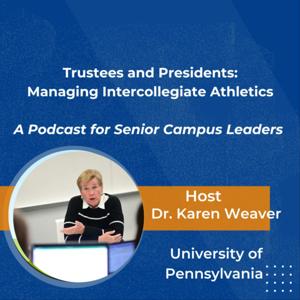


Two years ago, America was embroiled in racial and social justice protests, kicked off by the murder of George Floyd in Minneapolis by a police officer. Higher education, like so many other industries, took the opportunity to look inward and ask, “how are we doing when it comes to racial and gender equity”?
For the Presidents of the West Coast Conference and Commissioner Gloria Nevarez, this was a time that needed more than hand wringing and platitudes. It required the resolve to do better. One area they choose to hold themselves to a higher standard was diversifying the hiring of coaches, staff and administrators on both the campuses and in the conference office.
I invited Nevarez and University of San Diego President James T. Harris to join me on my podcast to talk about the recently released data, measuring how effective they’ve been in matching the method to the message.
(Please note that Gloria joined the podcast by phone)
You can read my companion article for Forbes here.
Over the past few months, there have been at least five high-profile student athlete suicides on campuses across the nation. It’s a frightening and sobering trend that requires colleges and universities to take a serious look at their infrastructure in place to support the mental health and wellbeing of athletes as well as the broader student population. Universities and colleges are aware that they need to continue to combat the stigma around mental health and ensure that they have the resources and professionals in place for those who need it, but post-pandemic, this is just one of many challenges vying for limited resources and attention of university leadership.
Many institutions “think” they have the appropriate structure and processes in place to support student mental well-being, but do they really “know” that? Some institutions may have “deep” resources available, but students aren’t necessarily accessing them.
There are creative ways to tackle this important issue and I have two guests today who are working with colleges and universities to do just that. From fully evaluating existing risk and compliance programs, to helping bring together varied student activism and grass roots initiatives, they help provide a lens to universities to clearly evaluate the issue and offer actionable solutions to formalize structures for positive behavioral interaction and support.
Universities need to identify the gaps in their safety net and make sure that mental health resources are being deployed and used efficiently and effectively.
Rachel Baribeau, a former sports broadcaster and founder of the movement, I’m Changing the Narrative Since 2018, Rachel has been visiting college campuses to speak with student athletes, coaches, administrators, etc., to promote the importance of mental health, leadership, self-care, domestic violence prevention, social justice, life after sports, and interpersonal relationships. As a mental health advocate, Rachel works to fight stigma and creates a willingness within the college community to build an environment that supports mental well-being through her on campus speaking engagements, and continual follow-ups with tangible materials and resources.
Adrienne Larmett, senior manager in Baker Tilly’s risk advisory practice, specializing in higher education. Adrienne focuses on what steps institutions need to take to offer the resources college athletes and students need. Additionally, she assesses risk and completes regulatory assessments to ensure campuses are proactively aligning their efforts to be impactful, and in compliance.
Additional resources mentioned in the podcast:
IACS Standards - International Accreditation of Counseling Services (iacsinc.org)
In NCAA Division I, New Data Shows Burnout Is Rampant Among Administrators
Vanderbilt University Athlete 'Letter to College Sports'
Photo by Tim Gouw on Unsplash
Since the Great Recession of 2008-2010, enrollment in Pennsylvania's 14-campus state university system has notably changed, with some campuses growing in enrollment, and others losing students precipitously. The Commonwealth's annual system funding was recently ranked 46th out of 50 states, a dismal statistic. Yet, there are "help wanted" signs everywhere from employers who want to hire college educated employees. What gives?
Pennsylvania is far from alone in facing a challenge of increasing costs and fewer graduates. Other state systems around the country are in various stages of the same existential crisis. The solution cannot be just to raise tuition and fees-national research shows student debt is averaging $30,000.
To complicate things further, intercollegiate athletics plays a crucial role in attracting, retaining and engaging students on campus. Many of these campuses have highly successful NCAA Division II (and I) athletic programs, with some sports winning NCAA titles. All have loyal alumni and faculty who care deeply about good teaching.
Next year, six of the 14 campuses will integrate into two entities, and will show off new names and administrative structures. No campuses were closed. The hope is these reimagined universities will be more responsive to the needs of their regional workforces and the 21st century economy, attracting a scholar and an athlete who wants a dynamic education at an affordable price. All will keep their NCAA athletic teams and identity, no small accomplishment. There are many good lessons in this conversation for other higher education system professionals and for those who work on system campuses to absorb.
My guests today are two of the leaders, the CEO and the Board Chair, Daniel Greenstein and Cynthia Shapira. Dr. Greenstein is the chancellor of Pennsylvania’s State System of Higher Education. Since 2018, Dan has served as the chief executive officer of the State System (PASSHE), which operates Pennsylvania’s 14 public universities, serving nearly 100,000 degree-seeking students and thousands more enrolled in certificate and other career-development programs. The chancellor works with the Board of Governors to recommend and develop overall policies for the System.
Dr. Shapira is Chair of the Board of Governors, and president of the David S. and Karen A. Shapira Foundation, leading the development and implementation of the foundation's philanthropic initiatives. She was appointed by Governor Tom Corbett to the Pennsylvania Commission on Women and served on Governor Wolf's Advisory Board on Education and Workforce Development. In 2017, she was honored as a Distinguished Daughter of Pennsylvania.
Dan and Cindy were recently recognized by "City and State Politics and Policy" as recipients of the 2022 Higher Education Power 100 in Pennsylvania.
Mentioned in the podcast (and recommended by both Dan and Cindy): Arthur Levine's new book, The Great Upheaval: Higher Education's Past, Present, and Uncertain Future, a complimentary read for this conversation.
The term used by Cindy refers to the National Center for Higher Education Management Systems.
NIL Collectives have exploded in the last few months. Defined as a group of donors/boosters/fans and others who pool their money to reward a college athlete for enrolling/succeeding or transferring to your favorite school, the evolution in this area of NIL is confusing to say the least.
Today on the podcast, I’m joined by an expert in this area, attorney Mit Winter. Mit is with Kennyhertz Perry in Kansas City, MO. Mit is recognized as a leading college athlete name, image, and likeness lawyer and is sought out by clients and the media for this expertise. In combination with his background as a former Division I college basketball player at the College of William and Mary, Mit is uniquely suited to assist and advise athletes, universities, and other clients with legal matters surrounding name, image, and likeness opportunities and businesses.
In addition to NIL issues, Mit and I discuss the evolution of intellectual property for both the institution and the athlete, and whether the NIL deals might get so big for some athletes that they might forgo entering the pro sports landscape a bit longer (because the deals in college could be HUGE).
We’re coming off a spectacular 2022 season called March Madness, where all of America stops and pays attention to college basketball, whether its men’s or women’s. If we’re lucky, fans can be treated to magical moments, even magical runs where a team plays well above its tournament seeding.
In 2022, Saint Peter’s University from New Jersey made one of those magical runs as the 15th seed, upsetting perennial tourney favorite Kentucky in their opening game, followed by another upset of Murray State. Almost immediately, social media and journalists crowed that these two wins would elevate Saint Peter’s financially and reputationally. Wild claims were asserted about what impact a Cinderella run might mean.
Conjecture is one thing, but actual analysis and research is quite another. My guests today have done the research on the benefits of a run through the NCAA tournament, winning at least 2 games as the lower seed. They will walk us through what the statistics show, and the actual benefits of, a winning streak in the post season. This is especially important for senior campus leaders who want to separate fact from fiction.
My Forbes article on Saint Peters.
My guests today have led three different institutions, and have written two books on leadership and the presidency: their new book is called “Leadership Matters: Confronting the Hard choices Facing Higher Education”, as well as their previous book, “How to Run a College”, both from Johns Hopkins Press. Joseph King is the past president at Lyon College (MO) and Brian Mitchell is the current president of Academic Innovators, and a past president at Bucknell University (PA) and Washington and Jefferson College (PA). They also talk frankly about future presidents and their need to be strategic when it comes to implementing change.
There are a few moments in the life of a university where an event overtakes the local and national narrative about who and what your campus represents. When the news broke in 2010 of an academic scandal on the campus of the University of North Carolina-Chapel Hill involving the football team, few knew that the issue would eventually expand to include over 3100 students and student-athletes taking 200 classes offered by the African and Afro-American Studies Department. Among many other outcomes, UNC Chapel Hill was put on probation by the regional accreditation association, the Southern Association of Colleges and Schools. Several years later, both the NCAA and the SACS deferred on whether to hold the institution in violation of their bylaws.
My guest today is Holden Thorp. He was the 10th Chancellor at UNC-Chapel Hill from 2008-2013. Currently, he is the Editor-in-Chief of the Science family of journals since 2019. He came to Science from Washington University, where he was provost from 2013 to 2019, and where he is Rita Levi-Montalcini Distinguished University Professor and holds appointments in both chemistry and medicine. He is a venture partner at Hatteras Venture Partners, a consultant to Ancora, and is on the board of directors of PBS, the College Advising Corps, and Artizan Biosciences.
He talks frankly about what presidents and trustees should know about college athletics. It's an eye opening conversation.
Colleges and Universities are always seeking partnerships to extend their brand via brand marks, brand identity, logos, colors, etc. All form the tool kit for Chief Marketing Officers and Athletic Departments to raise awareness. With the changes in technology, social media and the abundance of platforms today, the opportunities can overwhelm Senior Leadership teams to decide how to promote their institutions and generate revenues.
Today's discussion centers on revenue possibilities for Historically Black College and Universities, commonly known as HBCUs. There are so many great things going both on and for HBCUs that this seems like the perfect moment to catch lightning in a bottle and super charge their brands. Football legend Deion Sanders is drawing attention to Jackson State University and Vice-President Kamala Harris has brought Howard University into the national discussion, just to name a few.
We have the perfect person to talk about the tremendous growth opportunities in licensing HBCUs institutions today. Cory Moss is the Chief Executive Officer at CLC. Cory has more than 25 years at the company-his focus is delivering continued growth of the licensing business through meaningful connections between collegiate brands and their fans.
Cory currently serves on the Board of Directors for the John McLendon Minority Scholarship Foundation, which administers scholarships through the National Association of Collegiate Directors of Athletics. He is a proud graduate of Hampton University.
This is an important discussion for institutions who want to find new resources for both their students, athletes and their bottom line.
Today, more than ever, it is crucial for colleges and universities to hire the right leaders for the right moment in time. Higher Education is facing many complex challenges, and finding the person to lead your campus through the next 5-10 years (or longer) may be one of the top responsibilities for members of Boards of Trustees.
In December 2021, the Trustees announced the selection of Neeli Bendapudi, currently the President at the University of Louisville, as the next President at Penn State University. She will assume the role from Eric Barron at the end of the Spring 2022 semester.
There are many good reasons why understanding how a President is selected is so important. First, those who lead the process are important fiduciaries of the University. Secondly, Penn State underwent a large, inclusive listening process involving many constituencies, including James Franklin, the head football coach. I’m joined today by two members of the Pennsylvania State University Board of Trustees, who each played important, yet different roles in the search process of locating and hiring their new President. The search culminates a months long process of the committee, search firm and other key players working collaboratively to arrive at this moment. We also talk about the new Board Task Force on Intercollegiate Athletics, and the important topics they are wrestling with this year.
My guests today are David Kleppinger, vice chair of the Board of Trustees (search committee co-chair) and Barbara Doran, trustee, two of the 19 Board members entrusted with this important task. The search was also aided by SpencerStuart, an executive search firm. As much as they are allowed to, they will share the process of looking for a great fit in a President.
My article for Forbes expands on the conversation.
(Full disclosure, I was an athletics director at Penn State Abington from 2006-2012).
As far as Division I sports are concerned, the next few months are where the sausage gets made. Division I’s Transformation Group, led by the SEC's Greg Sankey and Ohio U's Julie Cromer, will have to get into the nitty-gritty of putting values into action, while remaining under tremendous pressure from state and federal lawmakers who are concerned that the organization can't fix itself.
For several years, the Knight Commission has worked to create a sustainable and educationally focused model for Division I members to consider and perhaps adopt the C.A.R.E. model. Privately, many Division I athletics directors, commissioners and presidents agree that a change in emphasis and direction is crucial to regain the public trust. But publicly, they appear to say something else.
To help us understand the nuances of this financial proposal, and why it could work to the benefit of institutions and student-athletes, I’m joined on the podcast by CEO of the Knight Commission on Intercollegiate Athletics Amy Perko, and Commission member and former Chief Financial Officer of Major League Baseball, Jonathan Mariner.
From the publisher's feed

31,909 Listeners
50 Listeners

147 Listeners

20,173 Listeners

152 Listeners

150 Listeners

9,062 Listeners

6,071 Listeners

195 Listeners
64 Listeners