
Sign up to save your podcasts
Or

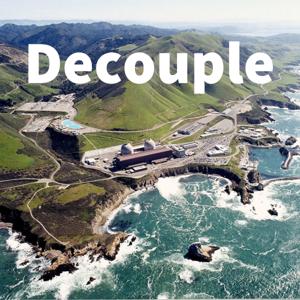

Grant Isaac, President and COO of Cameco, joins Decouple to explain why uranium behaves unlike any other commodity. With essentially zero fundamental in-year demand, a spot market that reports prices rather than discovering them, and a long-term contracting structure that ties producers directly to the utilities using the fuel, uranium operates by rules that confound anyone who approaches it through the lens of oil, gas, or base metals. Grant walks through Cameco's history as an integrated nuclear fuel company spanning mining, milling, conversion, and now fuel fabrication and reactor services through its Westinghouse partnership, explaining why that vertical integration reflects genuine customer intimacy rather than financial engineering.
The conversation covers the full sweep of uranium market cycles from the post-Atoms for Peace inventory buildup through the post-Fukushima bear market, Cameco's decision to curtail 70% of its production rather than sell into a floor, and what is structurally different about the current cycle. The historic secondary supply buffer that held prices down for 30 years is gone, Kazakhstan has learned the lesson that producing more into a weak market destroys national asset value, and geopolitical fragmentation is bifurcating what was once a seamlessly globalized commodity into distinct western and non-western supply chains. Grant argues that the long-term price signal, steady rather than saw-toothing, reflects a more durable demand base than any previous cycle.
Listen to Decouple on:
• Spotify: https://open.spotify.com/show/6PNr3ml8nEQotWWavE9kQz
• Apple Podcasts: https://podcasts.apple.com/us/podcast/decouple/id1516526694?uo=4
• Overcast: https://overcast.fm/itunes1516526694/decouple
• Pocket Casts: https://pca.st/ehbfrn44
• RSS: https://anchor.fm/s/23775178/podcast/rss
Website: https://www.decouple.media
 View all episodes
 By Dr. Chris Keefer

4.9
143143 ratings
Grant Isaac, President and COO of Cameco, joins Decouple to explain why uranium behaves unlike any other commodity. With essentially zero fundamental in-year demand, a spot market that reports prices rather than discovering them, and a long-term contracting structure that ties producers directly to the utilities using the fuel, uranium operates by rules that confound anyone who approaches it through the lens of oil, gas, or base metals. Grant walks through Cameco's history as an integrated nuclear fuel company spanning mining, milling, conversion, and now fuel fabrication and reactor services through its Westinghouse partnership, explaining why that vertical integration reflects genuine customer intimacy rather than financial engineering.
The conversation covers the full sweep of uranium market cycles from the post-Atoms for Peace inventory buildup through the post-Fukushima bear market, Cameco's decision to curtail 70% of its production rather than sell into a floor, and what is structurally different about the current cycle. The historic secondary supply buffer that held prices down for 30 years is gone, Kazakhstan has learned the lesson that producing more into a weak market destroys national asset value, and geopolitical fragmentation is bifurcating what was once a seamlessly globalized commodity into distinct western and non-western supply chains. Grant argues that the long-term price signal, steady rather than saw-toothing, reflects a more durable demand base than any previous cycle.
Listen to Decouple on:
• Spotify: https://open.spotify.com/show/6PNr3ml8nEQotWWavE9kQz
• Apple Podcasts: https://podcasts.apple.com/us/podcast/decouple/id1516526694?uo=4
• Overcast: https://overcast.fm/itunes1516526694/decouple
• Pocket Casts: https://pca.st/ehbfrn44
• RSS: https://anchor.fm/s/23775178/podcast/rss
Website: https://www.decouple.media
3,075 Listeners

1,967 Listeners

2,447 Listeners
1,247 Listeners
401 Listeners

1,443 Listeners
127 Listeners

264 Listeners
462 Listeners
1,347 Listeners
645 Listeners
433 Listeners
278 Listeners
419 Listeners
153 Listeners