
Sign up to save your podcasts
Or

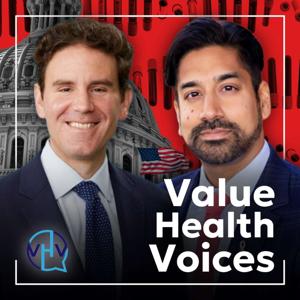


In this episode of Value Health Voices, hosts Anthony Paravati and Amar Rewari welcome Matt Wetzel, a trustee at the American Health Law Institute, to discuss the complex regulatory environment surrounding healthcare. The conversation covers insights from the JPMorgan Healthcare Conference, changes in NIH grant funding, Medicaid spending, and the future of FDA regulations. Wetzel emphasizes the importance of understanding the nuances of healthcare policy and encourages listeners to look beyond sensational headlines to grasp the underlying issues affecting the industry.
Takeaways
Matt Wetzel is a lawyer specializing in medical technology and life sciences. The JPMorgan Healthcare Conference is a key networking event in the industry. The Trump administration is focused on efficiency in healthcare regulation. NIH has implemented a cap on indirect costs for grants. There is a debate within the industry about the appropriateness of indirect cost caps. Medicaid spending is a politically sensitive issue that may face cuts. The FDA's regulatory environment is evolving, with potential for increased efficiency. Personnel changes in government can significantly impact healthcare policy. The media often sensationalizes healthcare regulatory changes. Understanding the details of regulations is crucial for stakeholders.
Chapters
00:00 Introduction to the Regulatory Landscape 04:53 Insights from the JPMorgan Healthcare Conference 10:16 Changes in NIH Grant Funding 20:33 Medicaid Spending and Work Requirements 24:03 Understanding Federal Health Programs 28:24 Navigating Regulatory Challenges 32:47 The Strategic Landscape of Healthcare Policy 38:23 The Future of Leadership in Healthcare 42:59 Key Takeaways for Navigating Change
In this episode, Dr. Anthony Paravati and Dr. Amar Rewari discuss the aggressive expansion of private equity (PE) in the U.S. healthcare system, highlighting its detrimental effects on quality care and patient safety. They explore how PE firms prioritize profits over patient care, leading to significant financial burdens on healthcare facilities. Through various case studies, they illustrate the negative consequences of PE ownership, including hospital closures and reduced services. The conversation also addresses the regulatory gaps that allow PE firms to operate with minimal oversight, ultimately calling for action to protect healthcare quality.
We are back after the holiday break with Episode 6 which covers the rapidly evolving landscape of AI in healthcare. Is AI just another weapon for payers and providers to bludgeon each other or will it becpme a force for immeasurable public good? In this episode, Dr Anthony Paravati and Dr Amar Rewari discuss the transformative impact of AI in healthcare, exploring its potential to improve patient care, streamline insurance claims, and the ways it is used in clash between providers and insurers over the almighty dollar. They highlight success stories in cancer detection and stroke care, while also addressing the challenges and legal implications of AI in claims processing and denials. The conversation concludes with insights into future trends and the importance of ethical considerations in AI deployment.
Every November, Medicare proposes physician pay cuts and every December, Congress tries to walk them back. But why? Dr Anthony Paravati and Dr Amar Rewari break down the hidden budget rules forcing specialties to fight over a fixed pie, why the much-celebrated MACRA law of 2015 did nothing to fix it, and how successful health systems are adapting their strategy. This episode is short and sweet but there's something for everyone. From basic, but often flubbed, must-know facts about the Medicare program to critical insights into payer contracting and service line decisions. Knowledge is power - especially when billions are at stake.
Chapters
00:00 Introduction to Medicare Cuts 03:47 Understanding the RVU and Conversion Factor 09:18 The Impact of Legislation on Physician Payments 14:13 The Role of MACRA and Future Considerations 19:40 The Broader Implications for Patient Care
In this episode, Drs. Amar Rewari and Anthony Paravati discuss the nomination of RFK Jr. as the head of the Department of Health and Human Services. They explore his controversial views on vaccines, public health implications, agricultural policies, and the pharmaceutical industry. The conversation delves into the complexities of chronic disease management, the debate over fluoride in water, and the potential impacts of RFK Jr.'s policies on public trust in science and health.
Chapters
00:00 Introduction 03:24 Early Career and Background on RFK Jr. 04:23 Vaccine Controversies and Scientific Denialism 14:36 Agricultural Policies, Raw milk and Health Implications 17:18 Wellness and Chronic Disease Management 25:29 The Influence of Pharmaceutical Lobbying 27:45 Pharmaceutical Benefit Managers and Drug Pricing 29:31 Fluoride in Water: A Complex Debate 32:25 CPT Codes and the RUC: The Role of the AMA in Healthcare 36:16 Navigating Bureaucracy: Challenges Ahead for RFK Jr. 38:09 Summary
In this week's episode of the VHV podcast we'll take a comprehensive look at utilization management (UM) and prior authorization (PA). Utilization management is the healthcare industry term for the various techniques health insurance companies employ to pay for care on their terms, according to their guidelines. Many times, their utilization management approach is in line with what physicians recommend. However, many times it is not. And when it's not, patients suffer delays in their care and physicians and their staff end up mired in extra work to make sure their patients get the care they have determined is best.
In this timely episode, Dr. Anthony Paravati and Dr. Amar Rewari break down the healthcare implications of a Trump or Harris presidency. From prescription drug pricing and Medicare reforms to Medicaid block grants and the Affordable Care Act, this episode provides a nonpartisan, in-depth analysis of each candidate's position on healthcare. Discover what the future could hold for U.S. healthcare policies, costs, and patient access depending on the election's outcome. This is a can't miss episode before heading to the polls.
Drs. Anthony Paravati and Amar Rewari delve into the complexities of Medicare Advantage, exploring its appeal to seniors, the financial mechanisms behind its low premiums, and the challenges faced by providers. They discuss the demographics of Medicare Advantage enrollees, the revenue structures that sustain these plans, and the implications for healthcare providers. The conversation also highlights the pros and cons of Medicare Advantage for beneficiaries and speculates on the future sustainability of the program amidst tightening margins and regulatory pressures.takeaways
In this VHH fundamentals episode, we provide a primer on the basics of Traditional Medicare (Parts A, B, and D) and Medicare Advantage (Part C) for physicians and healthcare leaders. We explore key differences in out-of-pocket costs, premiums, and coverage between the two, preparing you for a deeper dive into health policy and healthcare finance on our full podcast episode. Whether you're leading a practice or guiding patient care, understanding the fundamentals of Medicare is essential for navigating today's healthcare landscape. Don't miss this overview to better support your patients and organization! #MedicarePrimer #HealthcareLeaders #MedicareAdvantage #HealthPolicy #HealthcareFinance
From the publisher's feed

31,922 Listeners

30,659 Listeners

4,323 Listeners

87,200 Listeners

2,443 Listeners

111,800 Listeners

56,388 Listeners
491 Listeners

7,911 Listeners

6,067 Listeners

10,100 Listeners

29,036 Listeners

16,033 Listeners

10,703 Listeners

8,477 Listeners