
Sign up to save your podcasts
Or



Based on Podcast App listening data
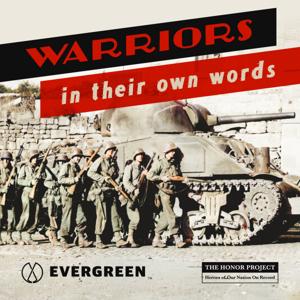
In 1944, the Allies fought their way from the beaches of Normandy towards German soil. Their sites were firmly set on pushing all the way to Hitler's capital Berlin and putting an end to WWII. Robert Weiss was a US Army forward observer. His mission was to move ahead of the troops and find targets for the artillery, but being out in front placed him closer to the enemy and a greater risk of being cut off from his comrades. These are his experiences In His Own Words.
Learn more about your ad choices. Visit megaphone.fm/adchoices
Toward the end of 1944, it was clear that Germany was losing WWII. Low on fuel, munitions and morale, the ability of the Nazis was slipping away. Still Hitler burned with a passion for one more mad assault. In December, 1944, 600,000 Germans surged into the western front. The stage was set for total Allied defeat. Hitler could count the thousands of guns, the tons of munitions and the hundreds of tanks, but he failed to grasp the most important element, the unfailing courage and valor of the Allied troops
Learn more about your ad choices. Visit megaphone.fm/adchoices
By 1942, the skies over Germany were aflame with German fighters battling Allied bombers for the survival of Europe and the free world. Central to victory were the fighter planes of the Allies. At first they were obsolete and woefully inadequate. But with the advent of aircraft like the P-47 Thunderbolt and the P-51 Mustang, the tide of war was about to change. In this episode we hear the words of fighter aces Clarence "Bud" Anderson in his revolutionary P-51 and Francis "Gabby" Gabreski, flying the P-47
Learn more about your ad choices. Visit megaphone.fm/adchoices
In this episode of Warriors In Their Own Words, veterans of the 3rd Armored Division, Belton Cooper and Bertrand Close, transport us to the Race Across Europe in World War Two.
Learn more about your ad choices. Visit megaphone.fm/adchoices
On December 8th, 1941, Japanese forces attacked Wake Island. The Americans were outmanned and out gunned, but fought hard for 15 days before surrendering. Sgt. Pearsall and his fellow Marines were taken as prisoners of war, and spent 3 ½ years at a prison camp in China during WWII.
Sergeant John Edward ‘Swede’ Pearsall served in the Marines as a part of the 1st Defense Battalion, D Battery on Wake Island in 1941.
Wake Island is located 2,458 miles west of Hawaii in the Pacific Ocean. The U.S. knew a Japanese attack was coming, so men were stationed on the island to protect it.
On December 8th, 1941, the day after the attack on Pearl Harbor, the Japanese attacked Wake Island. The Battle of Wake Island lasted for a little over two weeks until American forces surrendered in order to protect civilian lives.
After the surrender, Sgt. Pearsall and his fellow Marines were almost executed before the Japanese decided to take them as prisoners. They would eventually be taken on a prison ship to Yokohama Harbor, and then transported to Wusong China, where they would spend three and a half years in a prison camp.
At the camp, conditions were brutal. They had little water to drink or bathe with, were beaten often, were not adequately fed, and were forced to do physical labor. During the interview, Pearsall had this to say about the camps:
“Starvation, I found, was the toughest thing. The beatings you took. Almost daily, you took beatings from the Japanese, but you kind of became punch-drunk, so to speak. You expected them and you lived with them. But starvation you don't live with. When you're hungry, you're hungry 24 hours a day. You go to sleep hungry. You wake up during the night hungry, and you're hungry all day. Starvation is one of the toughest things we found to face. The work and labor that they made us do was tough, but the food was totally inadequate for the work and to sustain life. Myself, I went from a 200 pound Marine. When the war ended, I weighed somewhere around 85 pounds, so that when the war finally came to end, there wasn't much left of us. We couldn't have sustained life, under the food we were getting, much longer.”
Finally on Easter Sunday, 1945, American forces arrived and liberated the camp, saving Sgt. Pearsall and his fellow prisoners. Upon arriving home, Pearsall was awarded the Purple Heart.
To learn more about J. Edward Pearsall and the Battle of Wake Island, check out Son of Wake Island. It's written by J. Edward Pearsall's son, David Pearsall, with the help of his father and the other surviving defenders of Wake island.
Learn more about your ad choices. Visit megaphone.fm/adchoices
Warning: This episode contains depictions of corpses, substance abuse, a suicide attempt, and some foul language. Viewer discretion is advised.
Kris Goldsmith is an Army combat Veteran who served in Iraq. As a 19 year-old, he was assigned the task of photographing corpses and documenting mass graves. He developed severe PTSD, and in 2007, as the result of a suicide attempt that caused him to miss redeployment, he was given a less-than-honorable discharge. After years of legal battles, that discharge was upgraded. Kris went on to become an advocate for veterans with “bad paper” discharges, and helped pass crucial legislation that helps them receive the benefits they deserve.
Learn more about your ad choices. Visit megaphone.fm/adchoices
Colonel Leo Thorsness served as a fighter pilot in Vietnam. He was a Wild Weasel, whose missions required them to draw surface-to-air (SAM) missiles away from bombers, and then destroy the SAM sites. This meant that Weasels spent sometimes more than 20 minutes over the target, as opposed to the one or two minutes bomber pilots spent.
On one mission, COL Thorsness’ wingman was shot down, forcing him to eject. As he parachuted to the ground, rescue helicopters were called in to rescue him, but they were threatened by encroaching enemy fighters. Despite being incredibly low on fuel, Thorsness fought off the enemy, saving his wingman and the rescue helicopters.
Eleven days later, Thorsness was shot down and captured by the North Vietnamese Army. He was captured, and became a prisoner of war. During his first three years in captivity, torture was common. After six years, he was released and sent home.
Shortly after returning to the United States, COL Thorsness was awarded the Medal of Honor for saving his wingman.
Learn more about your ad choices. Visit megaphone.fm/adchoices
Every other week, we'll be re-releasing an episode we think deserves more attention. Today, we'll hear about The Candy Bomber.
After World War Two, Germany was split up and occupied by the United States, France, Britain and the Soviet Union. In June of 1948, the U.S., France, and Britain announced they were creating a unified West German currency. Joseph Stalin opposed this unification, and cut off land routes from Berlin to West Germany.
In order to bypass the land routes, bombers transported supplies (primarily food) and delivered them to West Berlin in what was called Operation Vittles. Colonel Gail S. Halvorsen was one of several pilots recruited to fly these missions.
One day, after sneaking out and flying to Berlin for some R&R, COL Halvorsen met some local children who were survivors of the war. Talking with them changed his life, and he decided he wanted to do something to help them. He returned to base, gathered as much candy and gum as he could, fashioned parachutes with handkerchiefs, and put all the goodies inside. The next day, he flew over West Berlin and dropped the parachutes full of candy out of his bomb bay.
The children were delighted. COL Halvorsen did this several more times, and gained international acclaim for his actions.
To learn more about COL Halvorsen, check out his book, The Berlin Candy Bomber.
Learn more about your ad choices. Visit megaphone.fm/adchoices
Colonel John Folsom served in the Marine Corps from 1980 to 2010. He was trained as a CH-46 helicopter pilot and a Forward Air Controller, but never flew combat missions. Instead he did staff work at various levels of command.
In this interview, Folsom gives an honest look into the lives of non-combat military personnel. He also talks about his work with the Dunham House, a unique assisted living facility for combat-wounded veterans.
Learn more about your ad choices. Visit megaphone.fm/adchoices
Lieutenant Commander Mike Smith served in the Navy as an F/A-18 pilot. He deployed 3 times between 2002 and 2014, and was stationed in Japan, Italy, Virginia, Mississippi, Texas, and Florida.
He was also Strike/Fighter Pilot of the Year in 2009.
Learn more about your ad choices. Visit megaphone.fm/adchoices
From the publisher's feed
Ranked by our users in the last 21 days

333 Listeners

3,980 Listeners

1,676 Listeners
1,241 Listeners

508 Listeners

78 Listeners

97 Listeners

89 Listeners

3,998 Listeners

98 Listeners

1,866 Listeners

3,647 Listeners

777 Listeners

88 Listeners

423 Listeners

541 Listeners

1,674 Listeners

583 Listeners
1,280 Listeners
927 Listeners
1,800 Listeners
792 Listeners

93 Listeners
101 Listeners