
Sign up to save your podcasts
Or

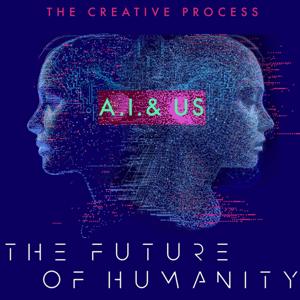

"Even when I send a query to chat GPT. I always say, 'Hi, can I please ask you something?' And when it replies, I say, 'Thank you.' As if I am kind of treating it as a person who cares about whether I say hi or thank you, although I don't think that it does. I had the privilege to be a part of this group, an interdisciplinary group of philosophers, neuroscientists, and computer scientists. 'Thank It' was led by Patrick Battling and Robert Long, and we met and discussed and corresponded over the possibility of consciousness in AI. We, the field of consciousness studies, relying on theories of consciousness and asking in humans, what are the critical functions that have been ascribed by these theories to conscious processing?
So now we can say, give me an AI system. Let me check if it has the indicators that we, in this case, our group has put together as critical for consciousness. If it does have all these factors, all these indicators, I would say that there is at least a good chance that it is either conscious or can develop consciousness. And with that exercise, current AI systems might have 1, 2, 3 indicators out of the 14 that we came up with, but not all of them. It doesn't mean that they cannot have all of them. We didn't find any substantial barrier to coming up with such systems, but currently, they don't. And so I think that although it's very tempting to think about GPT as conscious, it sounds sometimes like a human being, I think that it doesn't have the ability to experience. It can do amazing things. Is there anyone home? so to speak. Is anyone experiencing or, qualitatively, again, for the lack of a better word, experiencing the world? I don't think so. I don't think we have any indication of that."
How we think, feel, and experience the world is a mystery. What distinguishes our consciousness from AI and machine learning?
Liad Mudrik studies high level cognition and its neural substrates, focusing on conscious experience. She teaches at the School of Psychological Sciences at Tel Aviv University. At her research lab, her team is currently investigating the functionality of consciousness, trying to unravel the depth and limits of unconscious processing, and also researching the ways semantic relations between concepts and objects are formed and detected.
https://people.socsci.tau.ac.il/mu/mudriklab
https://people.socsci.tau.ac.il/mu/mudriklab/people/#gkit-popup
www.creativeprocess.info
www.oneplanetpodcast.org
IG www.instagram.com/creativeprocesspodcast
 View all episodes
 By The Creative Process Original Series: Artificial Intelligence, Technology, Innovation, Engineering, Robotics & Internet of Things

4.7
1414 ratings
"Even when I send a query to chat GPT. I always say, 'Hi, can I please ask you something?' And when it replies, I say, 'Thank you.' As if I am kind of treating it as a person who cares about whether I say hi or thank you, although I don't think that it does. I had the privilege to be a part of this group, an interdisciplinary group of philosophers, neuroscientists, and computer scientists. 'Thank It' was led by Patrick Battling and Robert Long, and we met and discussed and corresponded over the possibility of consciousness in AI. We, the field of consciousness studies, relying on theories of consciousness and asking in humans, what are the critical functions that have been ascribed by these theories to conscious processing?
So now we can say, give me an AI system. Let me check if it has the indicators that we, in this case, our group has put together as critical for consciousness. If it does have all these factors, all these indicators, I would say that there is at least a good chance that it is either conscious or can develop consciousness. And with that exercise, current AI systems might have 1, 2, 3 indicators out of the 14 that we came up with, but not all of them. It doesn't mean that they cannot have all of them. We didn't find any substantial barrier to coming up with such systems, but currently, they don't. And so I think that although it's very tempting to think about GPT as conscious, it sounds sometimes like a human being, I think that it doesn't have the ability to experience. It can do amazing things. Is there anyone home? so to speak. Is anyone experiencing or, qualitatively, again, for the lack of a better word, experiencing the world? I don't think so. I don't think we have any indication of that."
How we think, feel, and experience the world is a mystery. What distinguishes our consciousness from AI and machine learning?
Liad Mudrik studies high level cognition and its neural substrates, focusing on conscious experience. She teaches at the School of Psychological Sciences at Tel Aviv University. At her research lab, her team is currently investigating the functionality of consciousness, trying to unravel the depth and limits of unconscious processing, and also researching the ways semantic relations between concepts and objects are formed and detected.
https://people.socsci.tau.ac.il/mu/mudriklab
https://people.socsci.tau.ac.il/mu/mudriklab/people/#gkit-popup
www.creativeprocess.info
www.oneplanetpodcast.org
IG www.instagram.com/creativeprocesspodcast

32,003 Listeners

229,169 Listeners

87,348 Listeners

112,408 Listeners

8,549 Listeners
278 Listeners

15,931 Listeners

2 Listeners

149 Listeners

545 Listeners

154 Listeners

610 Listeners

26 Listeners
51 Listeners
55 Listeners
46 Listeners
35 Listeners

7 Listeners
88 Listeners
33 Listeners

13 Listeners

7 Listeners
18 Listeners

33 Listeners

39 Listeners

82 Listeners

11 Listeners
35 Listeners
2 Listeners

3 Listeners

8,608 Listeners

1,088 Listeners