
Sign up to save your podcasts
Or



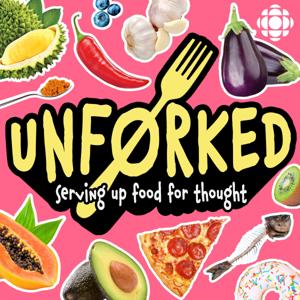
It is possible. Flavours have been lost to the past, as culinary physicist Lenore Newman explains. She points to the extinction of the passenger pigeon — a species numbering in the billions throughout North America — as an example. In 1914, Martha, the last passenger pigeon, died at the Cincinnati zoo — and in place of the pigeon, came the industrialized farming of chicken. Newman says we're now transitioning to lab-raised food — a technology capable of pushing a global history of scarcity into one of abundance, all the while easing land usage. She calls it the "food singularity."
 View all episodes
 By CBC

4.6
282282 ratings
It is possible. Flavours have been lost to the past, as culinary physicist Lenore Newman explains. She points to the extinction of the passenger pigeon — a species numbering in the billions throughout North America — as an example. In 1914, Martha, the last passenger pigeon, died at the Cincinnati zoo — and in place of the pigeon, came the industrialized farming of chicken. Newman says we're now transitioning to lab-raised food — a technology capable of pushing a global history of scarcity into one of abundance, all the while easing land usage. She calls it the "food singularity."

248 Listeners

424 Listeners

110 Listeners

48 Listeners

214 Listeners
375 Listeners

199 Listeners

70 Listeners

764 Listeners

65 Listeners

17 Listeners

27 Listeners

21 Listeners

166 Listeners

95 Listeners

238 Listeners

419 Listeners

16 Listeners
28 Listeners

236 Listeners

10 Listeners

83 Listeners

344 Listeners

4 Listeners

21 Listeners

65 Listeners

112 Listeners
4 Listeners

5 Listeners

4 Listeners

3 Listeners