
Sign up to save your podcasts
Or

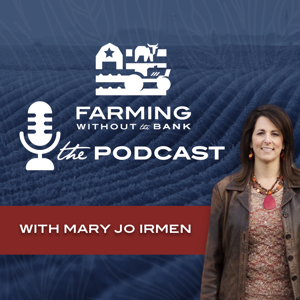

Banks classify your life insurance as an asset, so why do so many people treat it like an expense? In this episode, we break down how dividend-paying whole life can be your warehouse of wealth without feeding inflation like the banking system does.
👉 Follow Mary Jo Here: https://www.youtube.com/channel/UCXYvzroUouEMsTGKFw5nJHQ 👉 Get the book: https://www.farmingwithoutthebank.com/book
Chapter 1 of Building Your Warehouse of Wealth (Nelson Nash) hits hard: government programs, fractional reserve banking, and how we've become "part of the problem" by chasing cheap loans and rates of return.
We contrast banks (who lend money that doesn't exist) with mutual life insurance companies (who don't inflate money and invest conservatively).
You'll learn why policy loans aren't withdrawals, why whole life beats UL/IUL/VUL for guarantees and control, and how to classify your policy correctly... as an asset with liquidity, control, and a tax-advantaged end-of-life benefit.
Key Takeaways: ◦ Classify correctly: Whole life is an asset, not an expense. ◦ Banks vs Insurers: Banks inflate; mutual insurers don't. ◦ Policy loans ≠ withdrawals: Your cash value keeps compounding while you borrow against it. ◦ Owner priority: You outrank every other borrower for your policy's cash value. ◦ Avoid rate-chasing: UL/IUL/VUL = non-guaranteed costs and moving parts; IBC prioritizes liquidity, control, and guarantees. ◦ Don't be part of the problem: Think twice about HELOCs/premium financing/velocity banking to fund policies.
Chapters: 00:00 Asset or Expense? Reframing Life Insurance 01:17 Nelson's Roots & the IBC Basics 02:24 Government, Banks & Fractional Reserve 05:56 What Really Drives Inflation 08:26 Are We Part of the Problem? (Loans & Leverage) 12:16 How Insurers Invest + Why It Matters 15:37 Policy Loans 101: Borrowing vs Withdrawing
Want to build your own warehouse of wealth the right way? 👉 Grab the book/bundle and follow along with the study: 📘 https://www.farmingwithoutthebank.com/book
 View all episodes
 By Mary Jo Irmen

4.8
246246 ratings
Banks classify your life insurance as an asset, so why do so many people treat it like an expense? In this episode, we break down how dividend-paying whole life can be your warehouse of wealth without feeding inflation like the banking system does.
👉 Follow Mary Jo Here: https://www.youtube.com/channel/UCXYvzroUouEMsTGKFw5nJHQ 👉 Get the book: https://www.farmingwithoutthebank.com/book
Chapter 1 of Building Your Warehouse of Wealth (Nelson Nash) hits hard: government programs, fractional reserve banking, and how we've become "part of the problem" by chasing cheap loans and rates of return.
We contrast banks (who lend money that doesn't exist) with mutual life insurance companies (who don't inflate money and invest conservatively).
You'll learn why policy loans aren't withdrawals, why whole life beats UL/IUL/VUL for guarantees and control, and how to classify your policy correctly... as an asset with liquidity, control, and a tax-advantaged end-of-life benefit.
Key Takeaways: ◦ Classify correctly: Whole life is an asset, not an expense. ◦ Banks vs Insurers: Banks inflate; mutual insurers don't. ◦ Policy loans ≠ withdrawals: Your cash value keeps compounding while you borrow against it. ◦ Owner priority: You outrank every other borrower for your policy's cash value. ◦ Avoid rate-chasing: UL/IUL/VUL = non-guaranteed costs and moving parts; IBC prioritizes liquidity, control, and guarantees. ◦ Don't be part of the problem: Think twice about HELOCs/premium financing/velocity banking to fund policies.
Chapters: 00:00 Asset or Expense? Reframing Life Insurance 01:17 Nelson's Roots & the IBC Basics 02:24 Government, Banks & Fractional Reserve 05:56 What Really Drives Inflation 08:26 Are We Part of the Problem? (Loans & Leverage) 12:16 How Insurers Invest + Why It Matters 15:37 Policy Loans 101: Borrowing vs Withdrawing
Want to build your own warehouse of wealth the right way? 👉 Grab the book/bundle and follow along with the study: 📘 https://www.farmingwithoutthebank.com/book

149 Listeners

130 Listeners

227 Listeners

355 Listeners

439 Listeners

519 Listeners

123 Listeners

403 Listeners
348 Listeners

117 Listeners

1,014 Listeners

234 Listeners
46 Listeners

79 Listeners

1,698 Listeners