
Sign up to save your podcasts
Or



Based on Podcast App listening data
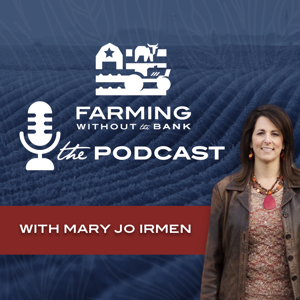
Is it really THAT easy to borrow against life insurance? Yes — and Mary Jo Irmen proves it in this Farming Without the Bank Q&A.
Mary Jo answers the comments from her Farming for Profit clip, breaks down exactly how a policy loan works when structured correctly for infinite banking (pay premium, access whole life insurance cash value in 10 days, fill out an online form, ACH to your account — no payback date, no what-is-it-for questions), and why borrowing is completely different than withdrawing.
Plus: what is a 1035 exchange and when you should NOT do one (real $70-80k case study from this week), what happens to clients when Mary Jo retires, and why doing business face-to-face locally doesn't mean you're getting expert advice.
Black Sheep Summit clients: Check your email! Client-only summit is this January — held only once every 3 years. With Kody Anderson, Flint Rasmussen + client panel.
Buy the book: https://www.FarmingWithoutTheBank.com/Book Email Mary Jo: [email protected]
Audio Production by Podsworth Media - https://podsworth.com
Real meetings, real numbers, real lessons. Mary Jo recaps recent client meetings — from a 64 and 65-year-old couple buying land for their boys, to a 22-year-old starting with a $4,000 policy, to $100,000+ policies.
You'll hear why leaving land without a plan leaves debt + operating expenses to the kids, why helping one child and not the other creates future fights, why divided interest beats undivided interest, how two guys who quit drinking turned their financial lives around, how a 50s entrepreneur beat Parkinson's Law with '08-'09 rentals, storage units and businesses, and why a timber farm shrank from 10,000+ acres by selling land to solve problems.
It doesn't matter where you start — $4,000 or $100,000 — just get started.
Learn infinite banking , estate planning , and financial freedom for farming and agriculture families with Farming Without the Bank.
Buy the book: https://www.FarmingWithoutTheBank.com/book Email Mary Jo: [email protected]
Chapters: 00:00 $4K to $100K policies — just get started 00:31 Welcome back — why I'm recapping real meetings 01:43 64 & 65 buying land — kids inherit debt + operating costs 04:23 Fairness trap — helping the struggling kid only 05:49 Divided vs undivided interest — will they farm together? 07:34 Quit drinking, turned life around — love these clients 08:10 Trucker income jump — trailer rentals for cash flow 09:10 Farm hand buyout opportunity — navigating transition 12:03 22-year-old county + farm + side jobs — $4K starter + skid steer 12:45 50s multi-millionaire — handicapped daughter + market risk 14:02 Beat Parkinson's Law — '08-'09 rentals to storage to business 15:36 3D printers in front of you — stop being paralyzed, move 16:57 Excavation + multi-state ranches run like a business 18:48 Surgeon buys farm — chasing rate of return vs control 20:03 Only ag-focused IBC practitioner — farmers think generations ahead 22:25 Timber farm 10,000 to small thousands acres — insurance as operating expense 24:39 Wrap — not all will start, some super ready 25:11 Schedule with Mary Jo or John
Audio Production by Podsworth Media - https://podsworth.com
Is a MEC really as bad as everyone in infinite banking says?
In Farming Without the Bank Episode 373, Mary Jo Irmen and John Hasche break down when a Modified Endowment Contract actually makes sense.
Most life insurance agents will tell you: never MEC, never MEC, never MEC. But what if you just sold a dairy, a farm, or a business and have a one-time lump sum of $2-3 million with no future cash flow to pay premiums? Mary Jo and John walk through a real client case study — 54-year-old son and 82-year-old dad splitting ~$3M after liquidating a California dairy — and compare the numbers.
In this episode:
If you came into a large lump sum and want a single-pay premium without paying premiums forever, don't guess if a MEC is right for you. Book a meeting and walk through the numbers.
Chapters: 00:00 MECs Aren't Always Bad 00:29 How MEC Taxation Works 03:45 Age Matters With MECs 04:27 Avoiding Accidental MECs 06:36 Client Case Lump Sum 09:24 Single Pay MEC Numbers 11:46 Basis Reset And Taxes 15:11 Alternative Insure Dad 18:25 When MEC Strategy Fits 20:41 More MEC Use Cases 23:04 Client Education Matters 26:12 Wrap Up And Next Steps
Buy the book: https://www.FarmingWithoutTheBank.com/book Email Mary Jo: [email protected]
Audio Production by Podsworth Media - https://podsworth.com
Are boomer farmers actually greedy? Or are younger farmers stuck in victim mentality?
In Episode 372 of Farming Without the Bank, Mary Jo Irmen tackles the generational war in agriculture head-on — silent generation, boomers, Gen-X, millennials, and Gen Z. Young farmers say boomers are greedy for wanting top dollar for land. Boomers say millennials and Gen Z are lazy. Both sides are wrong.
Mary Jo breaks down why farmland is retirement, how auctions set the price, why no one owes you a discount, and how small to mid-size farms ARE making money when they run it like a business. Plus the rental house story, the free corn stalks story, and how to actually buy the neighbor's farm by building relationships and using buying farmland strategies with farming without the bank .
Stop categorizing. Start building. Learn how to fund farm succession and buy land without begging the bank.
Buy the book: https://www.FarmingWithoutTheBank.com/book Email Mary Jo: [email protected]
Chapters: 00:00 - Stop Calling Boomers Greedy 01:45 - Why This Episode Had To Happen 03:00 - Victim Mentality Gets You Nowhere 04:30 - It's Their Land, It's Their Retirement 06:30 - Auctions Set The Price, Not Greed 08:15 - The Rental House and Free Corn Stalks Stories 10:15 - Small Farmers ARE Making Money 12:00 - Side Gigs and Off-Farm Jobs To Get Started 13:30 - You Won't Buy Land By Insulting The Owner 15:00 - Millennials and Gen Z Are NOT Lazy 16:30 - How To Actually Buy The Farm
Audio Production by Podsworth Media - https://podsworth.com
It's TROLL DAY on Farming Without the Bank Ep 371 with Mary Jo Irmen — and the trolls brought their best hate comments.
Mary Jo reads them all and answers back: charging her own son 9% interest (vs 11% at the bank), helping a client farm 6,000 acres from scratch, why dividend-paying whole life insurance beats parking cash, and why the rich get richer when money is redistributed.
If you've ever been told "never finance anything," "never charge your kids interest," or "no one buys a farm as an investment" — this episode breaks down the broke mindset vs. abundance mindset behind those comments, and how to use infinite banking and farm finance principles to keep control of your money.
Buy the book: https://www.FarmingWithoutTheBank.com/book Email Mary Jo: [email protected]
Chapters: 00:00 Why Comment At All 00:17 Welcome To Troll Day 01:34 Rocky And Ray On Debt 03:21 Policy Question And Scam Claims 04:25 Money Skills And Wealth Mindset 07:09 Farm Investment Trolls 09:35 Charging Kids Interest Explained 13:02 Victim Mentality Vs Abundance 16:49 Final Thoughts And Book Plug
Audio Production by Podsworth Media - https://podsworth.com
Lending money to your kids from ONE policy is a recipe for a family fight. In this episode, Mary Jo Irmen shares 2 creative strategies she used this week to solve real client problems around kids, money, and fairness.
If you have 3 kids and help one start a business and another go to college — how do you make it fair to the third kid when you die? And what do you do when your 16-year-old has $30K from 4-H/cattle sales but can't own a policy or do extra premium in year one?
Mary Jo breaks down exactly what to do.
IN THIS EPISODE:
Chapters: 00:00 Why Strategy Matters 00:47 Podcast Intro and Focus 01:17 Three Kids Unequal Help 02:44 Separate Policies Per Child 04:06 Limits Insuring Adult Kids 05:34 Minor Money Workaround 09:15 Ownership and Cash Value 10:32 Insurance Value Rules 12:03 Experience Drives Creativity 13:51 Wrap Up and Next Steps
Buy the book: https://www.farmingwithoutthebank.com/book Email Mary Jo: [email protected]
Audio Production by Podsworth Media - https://podsworth.com
Mary Jo's back with three money topics every farmer and rancher needs to hear. The thread running through all of them: it's not how much money you make — it's how you USE it.
In this episode: the private equity news making headlines in the life insurance world (and why Mary Jo's clients don't need to panic), the "no medical exam up to $4 million" hook being pitched to farmers on Instagram, and the scarcity mindset that's holding back the entire agriculture industry — including why letting your hired man run a few cows might be the smartest move you make.
What you'll learn:
⏱️ Chapters: 0:00 Intro & What's On Today's Mind 1:12 Private Equity in Life Insurance (Mass Mutual in the News) 4:05 The "$4M No-Medical" Hook Targeting Farmers 11:19 It's Not What You Make, It's How You Use It 15:08 Let Your Hired Man Run Cows? The Scarcity Mindset 21:23 Wrap-Up & How to Reach Mary Jo
📧 Questions or a topic you want covered? Email Mary Jo at [email protected] 📚 Grab the books: https://www.farmingwithoutthebank.com/book
#FarmingWithoutTheBank #InfiniteBanking #ScarcityMindset #Agriculture #AmericanFarming
Audio Production by Podsworth Media - https://podsworth.com
The biggest threat to your farm's legacy isn't the bank — it's an unplanned long-term care event. In this episode, Mary Jo Irmen sits down with long-term care expert Michelle Prather, author of Who's Wiping Your Assets?, to unpack why modern long-term care insurance is nothing like the outdated "flip phone" policies you may be picturing.
Michelle breaks down the reality most families ignore until it's too late: there's a 91% chance you or your spouse will need care — and care today can run $8,000 to $15,000 a month, fast liquidating the very assets you spent a lifetime building. For the agriculture community — often "land rich, cash poor" and laser-focused on legacy — the stakes are even higher.
You'll learn:
- Why long-term care isn't just for the elderly — cancer, strokes, and farm accidents don't check your age first - The difference between old rigid policies and new flexible ones (including home care and caregiver respite) - How to fund coverage tax-efficiently using IRA distributions or cash-value life insurance — sometimes saving six figures versus paying premiums traditionally - Why lifetime coverage matters, especially for couples and women - The critical reason you must plan before a crisis — as Michelle puts it, "my house is already on fire" is no time to shop for coverage
Long-term care isn't about nursing homes. It's about protecting your assets, your family, and your dignity — so the next generation inherits the farm, not the bills.
Get the book: https://FarmingWithoutTheBank.com Email: [email protected]
Schedule an appointment with Michelle: https://link.captivationhub.com/widget/bookings/without-the-bank-care-income-planning
Chapters: 00:00 Introduction 00:46 Meet Michelle Prather — Long-Term Care Expert 01:15 Why Long-Term Care Planning Matters for Farmers 02:30 Premium Examples: What Coverage Actually Costs 05:00 Payment Options: Single-Pay vs. 10-Pay vs. 20-Pay 07:30 What Triggers a Long-Term Care Payout 14:56 Lifetime Coverage vs. Limited Benefit Periods 25:00 Old "Flip Phone" Policies vs. New Flexible Policies 29:45 Why Having a Good Agent Matters 34:59 Are Long-Term Care Premiums Tax-Deductible? 37:59 Funding Premiums with IRAs & Annuities 43:50 The Death Benefit in New Policies 48:50 Health Conditions & Eligibility: When It's Too Late 53:00 Elimination Periods & Paying Family for Care 1:04:45 Premium Waivers & Joint Policies 1:07:00 Long-Term Care for the Wealthy 1:15:52 Long-Term Care with Limited Assets & Medicaid 1:24:58 Paying Premiums with Cash-Value Life Insurance 1:41:27 Michelle on Working with the Farming Community 1:49:30 Final Thoughts & Contact Info
Buying a whole life insurance policy for infinite banking? Many agents have no idea what they're actually selling you — and it could cost you decades of compound growth.
In this episode, Mary Jo breaks down the 5 things you MUST check before you sign anything, based on a real client who bought from a local agent instead of coming to her first (and what he got wrong):
1️⃣ Does it have cash value in Year 1? (If not, you bought traditional whole life — not a policy designed for infinite banking) 2️⃣ Is there a Paid-Up Additions (PUA) rider — and how flexible is it? 3️⃣ Is there term insurance riding on it, and does the death benefit drop off later? 4️⃣ Is it a dividend-paying policy, and where are those dividends going? 5️⃣ Is your agent talking about a "rate of return"? (If so, it's not whole life — run)
Mary Jo also shares the real story of her husband's policy losing $500,000 in death benefit overnight when a level term rider dropped off — a mistake she now makes sure her clients never repeat.
⏱️ TIMESTAMPS 0:00 – Why Mary Jo won't give advice on a policy she didn't sell you 1:46 – The 5 things to check before buying a whole life policy 8:12 – How her husband's policy lost $500K in death benefit overnight 14:35 – Recap: the 5-point checklist 15:57 – Why "just tell me how to use it" doesn't work that way
Want Mary Jo or John to review an illustration you've already been sold — or one someone's trying to sell you? Email the show. We'll tell you exactly what to watch for.
📚 Grab the books: Farming Without the Bank + Becoming Your Own Banker (bundle available)
#InfiniteBanking #WholeLifeInsurance #infinitebankingsystem #infinitebankingconcept
Audio Production by Podsworth Media - https://podsworth.com
Mary Jo Irmen walks through a real whole life insurance policy illustration for a 27-year-old client paying just $6,000 a year — and the numbers might surprise you.
In this episode, Mary Jo breaks down what the cash value growth actually looks like year by year, what happens when you add extra premium in year one, and why so many people have been waiting too long to get started when they didn't need to.
What you'll learn in this episode:
- Why $500/month ($6,000/year) is enough to build serious cash value over time - How compound interest and dividends work once your policy "crosses over" (around year 4) - The paid-up additions rider and why it accelerates your break-even point to year 7 - What happens if you put in an extra $11,000 in year one — and how that impacts your cash value at age 82 - Why paying in $211,000 over a lifetime can result in $843,000+ in accessible cash value - How health ratings affect death benefit (not cash value as much as you think) - Why you should stop waiting until you "have enough" — and just start
Ready to get started? 📧 Email Mary Jo: [email protected] 📧 Email John: [email protected] 📚 Grab the book bundle (Farming Without the Bank + BYOB + Life): https://www.farmingwithoutthebank.com/book
Chapters: 00:00 Cash Value vs Death Benefit 00:44 Why Start Small Now 03:19 Case Study Setup 03:46 6000 Premium Walkthrough 06:10 When Cash Value Overtakes Premium 06:34 Avoiding MEC and Long Term Results 07:47 Using Cash Value Loans 08:51 Term Blend and Death Benefit 09:37 Adding Extra Year One 11:37 Break Even Faster 14:22 Age and Health Impact 16:51 Dividend Assumptions and Next Steps 17:53 Books and Contact Info 18:56 Closing Remarks
Audio Production by Podsworth Media - https://podsworth.com
From the publisher's feed
Ranked by our users in the last 21 days
147 Listeners
130 Listeners

222 Listeners
359 Listeners
436 Listeners
518 Listeners

125 Listeners
386 Listeners
354 Listeners
118 Listeners

982 Listeners
235 Listeners
46 Listeners
77 Listeners
1,694 Listeners