
Sign up to save your podcasts
Or



Based on Podcast App listening data
Send us Fan Mail
The infamous Belle Starr—a pistol-packing outlaw queen of the Wild West or a misunderstood historical figure whose legend overshadows reality? This fascinating exploration of Myra Maybel Shirley Starr reveals the stark contrast between the woman herself and the sensationalized "Bandit Queen" who captured America's imagination.
Born in 1848 Missouri to a prosperous family, young May Shirley straddled two worlds—receiving a refined classical education at Carthage Female Academy while simultaneously developing remarkable riding and shooting skills under her beloved brother Bud's guidance. This duality would define her life, creating a woman comfortable in multiple spheres and unwilling to conform to 19th-century expectations of femininity.
The Civil War shattered the Shirleys' comfortable existence. Missouri's brutal guerrilla conflict exposed May to violence, betrayal, and a moral code that existed outside conventional law. When her idolized brother Bud was killed by Union soldiers in 1864 and their hometown of Carthage burned, the family fled to Texas, joining countless displaced Southerners seeking new beginnings. This dramatic downward mobility—from affluence to a primitive dugout dwelling in lawless Scyene, Texas—became the crucible that transformed an educated young woman into a figure who would associate with notorious outlaws.
Through meticulous historical research, we unravel how the seeds of the Belle Starr legend were planted in this tumultuous period of American history. The podcast examines how personal tragedy, war trauma, and frontier justice shaped not just Belle's trajectory but the wider cultural fascination with outlaws who defied authority in the post-Civil War era. What emerges is a captivating portrait of resilience, reinvention, and the complex dynamics between historical truth and American mythmaking.
Follow our four-part series on Belle Starr and other remarkable women who shaped Western narratives. Subscribe now to journey with us through the untamed territories of fact, fiction, and the compelling gray areas where legends are born.
Support the show
If you'd like to buy one or more of our fully illustrated dime novel publications, you can click the link I've included.
Send us Fan Mail
The sprawling plains of North America once thundered with the hoofbeats of countless bison and horses belonging to the Kiowa Nation – a people experiencing a golden age of cultural flourishing in the early 19th century. From their origins near the Yellowstone and Missouri Rivers, the Kiowa embarked on an epic southward migration that transformed them into masters of the Southern Plains landscape.
Step into this vibrant world through the story of Satanta, known initially as "Big Ribs" and later as "White Bear." Born between 1815-1820 to the revered Chief Red Tipi, Satanta entered a society of remarkable complexity. His father stood at the pinnacle of Kiowa leadership, serving both as a powerful band chief and as keeper of the Tai Mi – the tribe's most sacred object and centerpiece of their Sundance ceremony. This extraordinary heritage placed Satanta on a path toward prominence within a society structured around intricate kinship networks, spiritual power, and warrior accomplishments.
The Kiowa way of life reveals sophisticated adaptations to plains existence. Their masterful horsemanship revolutionized hunting, warfare, and trade, while their deep connection to buffalo provided sustenance, shelter, and tools. Through bilateral kinship systems and a clear social hierarchy based on horse wealth and spiritual authority, the Kiowa organized themselves into bands led by prestigious chiefs from the aristocratic onde class. The spiritual world centered on Dawdaw – a sacred life force permeating all existence – accessed through vision quests and embodied in the ten sacred medicine bundles guarded by hereditary priests.
Discover how this cultural context shaped Satanta's formative years and set the stage for his emergence as one of the most significant Kiowa leaders during a period of profound change and challenge. By understanding the rich tapestry of beliefs, traditions, and social structures that defined Kiowa life, we gain insight into a sophisticated indigenous society whose legacy continues to resonate in Native American history. Subscribe now for an immersive journey into one of the most fascinating chapters of the American West.
Support the show
If you'd like to buy one or more of our fully illustrated dime novel publications, you can click the link I've included.
Send us Fan Mail
Step back in time to the American frontier where five extraordinary women defied expectations and carved their names into history.
The vast expanses of the American West weren't just shaped by cowboys and outlaws – they were transformed by women of remarkable courage, talent, and determination. Our journey begins with Annie Oakley, whose unparalleled sharpshooting skills captivated audiences worldwide while she maintained a carefully crafted feminine image that made her revolutionary talents acceptable to Victorian sensibilities. We contrast her approach with Calamity Jane, who boldly rejected feminine norms, embracing masculine attire and behavior to create opportunities in a world that offered women few paths to independence.
The notorious Belle Starr emerges as the compelling "Bandit Queen" whose practical buckskins, boots, and armed presence challenged conventional womanhood and captured public imagination through sensationalized stories that both celebrated and simplified her complex reality. We then explore Sacajawea's crucial but undercompensated contributions to westward expansion – her indigenous knowledge of plants, languages, and diplomacy proved essential to the Lewis and Clark expedition's survival, revealing how Native expertise enabled American colonization. Finally, Sarah Winnemucca's powerful advocacy illuminates indigenous resistance through her groundbreaking public speaking career and autobiography that challenged harmful stereotypes while navigating the precarious position of cultural mediator.
These women weren't merely passive witnesses to history – they were active architects of the American West, challenging our understanding of frontier life through their exceptional skills, defiance of restrictive norms, and tireless advocacy. Their stories reveal how media and mythology both elevated and constrained them, creating legends that sometimes overshadowed the complex realities of their lives. By examining these five remarkable women beyond the archetypes that often define them, we gain profound insights into female agency, resilience, and the multifaceted nature of fame in a transformative era.
Don't miss our special announcement about the upcoming 65th annual Dodge City Days festival celebrating "Women of the West" – subscribe now to hear about exciting events leading up to this unforgettable celebration of Western heritage!
Support the show
If you'd like to buy one or more of our fully illustrated dime novel publications, you can click the link I've included.
Send us Fan Mail
A single mechanical failure changed the course of Western history on a hot July night in 1870. When Medal of Honor recipient Private John Kile pressed his Army Remington against Wild Bill Hickok's head and pulled the trigger, the hammer fell with a dull click instead of a fatal blast. That misfire in Paddy Welch's Saloon set off a desperate struggle that would leave Kiley dead, his companion wounded, and add another chapter to Hickok's growing legend.
Hays City in 1870 stood at a crossroads, transforming from a chaotic railroad terminus into a fledgling settlement while still harboring the volatile energy of the untamed frontier. Into this powder keg came three men whose collision course was perhaps inevitable: Wild Bill Hickok, no longer sheriff but still carrying his deadly reputation; Private John Kile, whose Medal of Honor couldn't outshine his troubled past marked by desertion and discipline problems; and Private Jeremiah "Jerry" Lonergan, renowned for his formidable fighting prowess.
Their confrontation erupted with stunning violence. Lonergan trapped Hickok in a powerful bear hug while Kile pressed his revolver to Hickok's head. When the gun misfired, Hickok managed to draw his own weapons despite being restrained, shooting Kiley fatally and wounding Lonergan before making a dramatic escape through a glass window. He fled to Boot Hill Cemetery with a Winchester rifle and 100 rounds of ammunition, leaving town the next day while authorities—both military and civilian—declined to press charges against him.
This authenticated incident, documented in military records yet largely overlooked in popular history, reveals the razor-thin margins between life and death on the frontier and how practical considerations often outweighed strict legal procedure. Join us as we uncover this forgotten chapter in Western history, where a single mechanical failure altered destinies and added another extraordinary tale to the Wild Bill Hickok legend.
Support the show
If you'd like to buy one or more of our fully illustrated dime novel publications, you can click the link I've included.
Send us Fan Mail
"Edward Masterson and the Texas Cowboys," penned by Michael King, takes readers on an exhilarating ride through the American West, focusing on the lively and gritty cattle town of Dodge City, Kansas. This thrilling dime novel plunges into the action-packed year of Ed Masterson's life as a lawman, set against the backdrop of the chaotic cattle trade, filled with fierce conflicts, shifting loyalties, and rampant lawlessness. You can order the book on Amazon.
Often eclipsed by his more famous brother, Bat Masterson, Edward carved out his own legacy of bravery and an unwavering commitment to justice. His journey through the wild frontier was not without its challenges and triumphs, culminating in a heart-pounding showdown that underscored the perilous life of a lawman on the frontier.
Join Michael King as he uncovers the riveting story of Edward Masterson, highlighting his fearless spirit, loyalty, and ultimate sacrifice. Explore his crucial role in the vibrant community of Dodge City, where danger lurked around every corner. With meticulous research, King illuminates Edward's significant contributions to law enforcement during a transformative era. This often-overlooked tale is essential for anyone eager to grasp the complexities of the American West and the enduring legacy of a lion-hearted lawman. Buckle up for a captivating journey into the heart of the Wild West! Check new content on Ed Masterson at World Famous Gunfighters Legends of Dodge City
Support the show
If you'd like to buy one or more of our fully illustrated dime novel publications, you can click the link I've included.
Send us Fan Mail
Get ready to saddle up and dive into the Wild West like never before! Introducing the dynamic duo, Sam Bass and Calamity Jane, your thrilling new hosts for the extended content of the Wild West Podcast. Adventure awaits as they bring the legendary tales of the frontier to life!
The frontier settlement of Dodge City earned its nickname "Bibulous Babylon" honestly in 1873. With no formal law enforcement and a population explosion of buffalo hunters and railroad workers, violence flourished—15 to 30 people died violently that first year alone. Boot Hill Cemetery filled quickly with those who "died with their boots on."
Enter Billy Brooks, a man whose reputation preceded him. Already known as "Bully Brooks," he'd been a buffalo hunter, stagecoach driver renowned for delivering mail through flooded creeks, and briefly served as Newton's city marshal where he'd been shot three times yet still chased his attackers for miles. When concerned Dodge City businessmen needed someone to impose order without official backing, Brooks seemed the perfect solution—a man whose mere presence might deter troublemakers.
Legend claims Brooks engaged in a staggering 15 gunfights during his brief tenure, reportedly killing seven or eight men. But when we examine the historical record closely, a different picture emerges. Most of these alleged confrontations lack names, dates, or any primary documentation. What we can verify are just two significant incidents: shooting railroad yardmaster Brownie through the head (who surprisingly survived) and more tellingly, backing down from Kirk Jordan in a public confrontation that shattered his fearsome image. After hiding under a bed until nightfall, Brooks left town, his effectiveness as a lawman permanently compromised.
His life spiraled downward from there—returning to stagecoach driving before losing his job, then turning to horse theft, which led to his arrest and eventual lynching by vigilantes in 1874. Brooks' story perfectly encapsulates the contradictions of frontier justice: hired to impose order through intimidation, he ultimately fell victim to the same extra-legal violence he represented.
What does our fascination with figures like Brooks reveal about our relationship with the American frontier? Why do we cling to the 15 gunfights legend despite limited evidence? Join us as we separate Wild West myth from documented reality, and consider what stories like his tell us about ourselves.
Ready to explore more frontier tales? Subscribe to our podcast and check out our illustrated dime novel publications through the link in our description.
Support the show
If you'd like to buy one or more of our fully illustrated dime novel publications, you can click the link I've included.
Send us Fan Mail
Get ready to saddle up and dive into the Wild West like never before! Introducing the dynamic duo, Sam Bass and Calamity Jane, your thrilling new hosts for the extended content of the Wild West Podcast. Adventure awaits as they bring the legendary tales of the frontier to life! A dust highway stretching across the plains moved six million cattle and reshaped America forever. The Western Cattle Trail emerged from economic necessity after the Civil War, when Texas found its millions of longhorns worth pennies locally but commanding up to $40 per head in northern markets. This price gap launched an unprecedented economic engine that would fundamentally alter the American West.
Following the path blazed by John T. Lytle in 1874, the trail stretched from the Texas Hill Country through Indian Territory (now Oklahoma), into Kansas and Nebraska, eventually reaching Montana, Wyoming, and even Canada. For two decades, this corridor moved more livestock than all other cattle trails combined, becoming the literal lifeblood of the western economy.
The reality of trail life stripped away romantic notions of cowboy existence. Young men—a diverse mix of Southern whites, freed slaves, and Mexican vaqueros—endured brutal conditions for $30 monthly wages. They faced constant dangers: stampedes triggered by lightning storms, treacherous river crossings, and complex negotiations with Native American tribes whose lands they crossed. Upon reaching destinations like Dodge City—"the wickedest little city in America"—these trail-weary cowboys created an economic ecosystem catering specifically to their needs and desires.
Beyond moving cattle, the trail catalyzed transformative development across multiple industries. Railroads expanded to service the cattle trade. Meatpacking centers in Chicago and Kansas City exploded with growth. The trail established America's dominance in beef production while fundamentally changing the nation's diet. Though the era ended in the 1890s—ironically made obsolete by the very development it created through barbed wire, expanding railroads, and changing consumer preferences—its legacy pervades American culture and economy today.
What seemingly simplistic economic corridors might be reshaping our world right now, their impacts not yet fully visible? Listen as we explore the remarkable story of how moving cows across the plains built modern America.
Support the show
If you'd like to buy one or more of our fully illustrated dime novel publications, you can click the link I've included.
Send us Fan Mail
Get ready to saddle up and dive into the Wild West like never before! Introducing the dynamic duo, Sam Bass and Calamity Jane, your thrilling new hosts for the extended content of the Wild West Podcast. Adventure awaits as they bring the legendary tales of the frontier to life! Step back in time to the vast, untamed expanse of 1867 Kansas, where the nearest neighbor might be half a day's ride away and survival demanded extraordinary grit. Through the eyes of Civil War veteran Elias Thorne, we uncover the raw, unfiltered reality of frontier life that exists beyond the romantic myths and simplified histories.
The Kansas prairie tested human endurance to its limits. From carving homes literally from the earth—the legendary "soddy" with its mud-dripping ceilings and unwelcome snake visitors—to the backbreaking labor of breaking virgin prairie soil with primitive tools, nothing came easy. We explore how settlers like Elias faced relentless environmental challenges: howling blizzards that imprisoned homesteaders for days, devastating prairie fires that could destroy everything in minutes, and the constant psychological weight of profound isolation.
What makes this journey particularly compelling is witnessing how Thorne's personal struggle unfolded against the backdrop of momentous historical shifts. The Kansas Pacific Railway pushed westward, forever altering the landscape. The Medicine Lodge Treaty negotiations attempted to reshape relationships with Plains tribes like the Cheyenne and Comanche, whose entire way of life faced existential threat. These weren't distant headlines for frontier settlers but immediate realities that shaped their daily existence.
The heart of this story isn't about conquest or heroics, but about quiet endurance—the day-by-day perseverance required to transform "free land" into a sustainable home through ingenious adaptation and stubborn determination. Whether it's rationing dwindling firewood during a multi-day blizzard or carefully preserving every scrap of food for the lean months ahead, we witness the extraordinary resourcefulness that frontier survival demanded.
What modern frontiers do we face today that require similar resilience? Where do we need that same adaptability and grit in our own lives? Join us for this immersive journey into America's past that reveals timeless truths about human endurance against seemingly impossible odds.
Support the show
If you'd like to buy one or more of our fully illustrated dime novel publications, you can click the link I've included.
Send us Fan Mail
Step back in time to autumn 1877, where the whispers of history echo beneath the branches of an oak tree at Sawlog Creek. Frank Buskirk and his fellow drovers have just completed their cattle drive from Texas, setting up camp near Dodge City when a stranger named Bob Shaw rides into their midst. What begins as a chilling campfire tale about two men—one guilty, one innocent—hanged from the very oak tree above their heads, becomes a haunting prelude to violence that will soon unfold.
Shaw's story of frontier justice gone wrong serves as a dark foreshadowing when the cowboys venture into Dodge City the following day. Inside the bustling Lone Star Saloon, past grievances collide with present tensions as Shaw confronts Texas Dick in a display of frontier fury that erupts into a shootout. Deputy Marshal Ed Masterson intervenes, but not before bullets fly and blood is spilled, leaving multiple men wounded and forever changed by the encounter.
Through Buskirk's firsthand account, we witness not only the violent reality of Western life but also how these stories were recorded and sometimes distorted in the pages of frontier newspapers. The Dodge City Times reports the incident with errors and omissions, highlighting the gap between lived experience and published history—a reminder that the Wild West we think we know may be built on incomplete truths.
This gripping narrative excavates the complex nature of frontier justice, the bonds formed between men on cattle drives, and the thin line between order and chaos in places where law was still taking root. Beyond the gunsmoke and bloodshed lies a meditation on how stories shape our understanding of history and ourselves.
Ready to dive deeper into authentic tales from America's frontier? Subscribe to our premium content for just $3 monthly and join us in uncovering the real stories that defined the West. Connect with us across all major podcast platforms and social media—each episode brings you one step closer to understanding the true spirit of the American frontier.
Support the show
If you'd like to buy one or more of our fully illustrated dime novel publications, you can click the link I've included.
Send us Fan Mail
The forgotten heroes who shaped the American West emerge through the harrowing tale of the 1867 cattle drive that would later inspire the beloved "Lonesome Dove" narrative. As northeastern cities expanded in the 19th century, feeding their growing populations became increasingly problematic. The solution came in the form of the Long Drive—an economic revolution where small teams of cowboys moved massive herds of Texas longhorns over 600 miles to Kansas railheads, creating the foundation for a national food market.
Behind this economic transformation were extraordinary individuals whose courage defined the frontier spirit. When Charles Goodnight and Oliver Loving embarked on their second cattle drive in 1867, they faced challenges that modern Americans can hardly comprehend—from stampedes during electrical storms to deadly encounters with indigenous warriors. African American cowboy Bose Ickard emerged as "one of the best night riders" in Goodnight's crew, demonstrating remarkable skill during a dangerous nighttime stampede. His cautious response—"I wasn't certain who had this herd till I saw you. I thought maybe the Indians had them"—reveals the constant vigilance required on these perilous journeys.
The centerpiece of this episode recounts the fateful decision that would claim Oliver Loving's life. Against Goodnight's advice, Loving rode ahead to secure a business contract at Fort Sumner, accompanied only by the remarkable "One-Armed Bill" Wilson. Their subsequent battle with over a hundred Indians, Wilson's miraculous escape swimming down the Pecos River, and Loving's tragic death reveal the extraordinary human cost behind the economic development of the West. Perhaps most compelling is how these historical events inspired fictional characters like Joshua Deets in "Lonesome Dove," based on the real-life Bose Ickard—a testament to how African American cowboys found respect in communities that valued skill over race. Join us as we reclaim these overlooked stories and discover how the American West has always been more diverse than popular culture suggests. Subscribe to our podcast for more untold tales that shaped our nation's history!
Support the show
If you'd like to buy one or more of our fully illustrated dime novel publications, you can click the link I've included.
From the publisher's feed
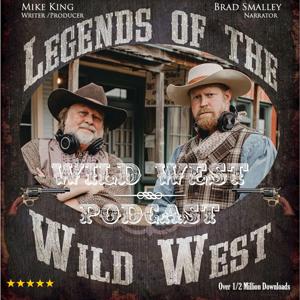
Welcome to the Wild West Podcast, winner of the 2026 Best of Western Podcast award, where fact and legend merge. We present the true accounts of individuals who settled in towns built out of hunger…
Ranked by our users in the last 21 days
44,984 Listeners
4,711 Listeners
1,785 Listeners

1,677 Listeners

2,772 Listeners

1,498 Listeners

3,986 Listeners

6,174 Listeners

19,147 Listeners

3,637 Listeners

19,093 Listeners

2,936 Listeners
777 Listeners
927 Listeners

1,592 Listeners