
Sign up to save your podcasts
Or

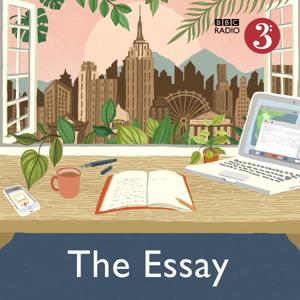

Virginia Woolf spent the First World War on the Home front mainly in London. It was an anxious time; she lost several cousins in the conflict, and her brother-in-law Cecil Woolf died at the Front; in 1915 she suffered a mental breakdown.
For Woolf the war had changed everything, and her three novels written soon after it - Jacob's Room (1922), Mrs Dalloway (1925) and To the Lighthouse (1927) - display a marked shift in style. 'There had to be new forms for our new sensations', she wrote in a 1916 essay, and in 1923 went further:
In 1925, Woolf's brilliant novel Mrs Dalloway would amaze readers with its literary techniques and its counterpointing of society hostess Clarissa Dalloway and war veteran Septimus Warren-Smith. Here was a work of fiction in which the principal characters never meet, where the Victorian staples of plot and family relationships are eclipsed by a new emphasis on what the characters think rather than what they do or say.
For Dame Gillian Beer this thronging novel with its cast of war profiteers, war casualties, and passers-by ultimately has a positive message. In Mrs Dalloway Virginia Woolf draws the reader and the novel's characters together: "Whether known or unknown to each other, in a shared humanity," she says, "her work draws us all alongside, across time.".
 View all episodes
 By BBC Radio 3

4.2
8282 ratings
Virginia Woolf spent the First World War on the Home front mainly in London. It was an anxious time; she lost several cousins in the conflict, and her brother-in-law Cecil Woolf died at the Front; in 1915 she suffered a mental breakdown.
For Woolf the war had changed everything, and her three novels written soon after it - Jacob's Room (1922), Mrs Dalloway (1925) and To the Lighthouse (1927) - display a marked shift in style. 'There had to be new forms for our new sensations', she wrote in a 1916 essay, and in 1923 went further:
In 1925, Woolf's brilliant novel Mrs Dalloway would amaze readers with its literary techniques and its counterpointing of society hostess Clarissa Dalloway and war veteran Septimus Warren-Smith. Here was a work of fiction in which the principal characters never meet, where the Victorian staples of plot and family relationships are eclipsed by a new emphasis on what the characters think rather than what they do or say.
For Dame Gillian Beer this thronging novel with its cast of war profiteers, war casualties, and passers-by ultimately has a positive message. In Mrs Dalloway Virginia Woolf draws the reader and the novel's characters together: "Whether known or unknown to each other, in a shared humanity," she says, "her work draws us all alongside, across time.".

7,913 Listeners

143 Listeners

1,067 Listeners

5,576 Listeners

1,808 Listeners

303 Listeners

1,729 Listeners

1,018 Listeners

1,952 Listeners

488 Listeners

585 Listeners

70 Listeners

410 Listeners
306 Listeners
756 Listeners

841 Listeners

129 Listeners

62 Listeners

241 Listeners
55 Listeners

52 Listeners

181 Listeners

4,186 Listeners

3,245 Listeners