
Sign up to save your podcasts
Or

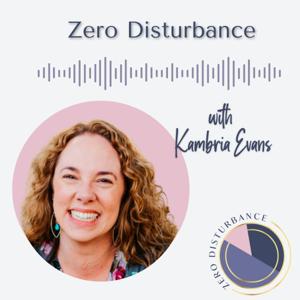


In this thought-provoking episode of the Zero Disturbance Podcast, we continue on our empowering series, Why Women Go to Therapy, by diving deep into the transformative concept of parts work. Listen as we unpack how women develop internal “parts” throughout their lives—often in response to external pressures, trauma, or survival needs—and how these parts, though created with good intentions, can become outdated and energy-draining over time.
Using relatable metaphors, personal stories, and clinical insight, we highlight how understanding and honoring these parts can free women from perfectionism, caretaking burnout, body shame, and more. Drawing from modalities like Internal Family Systems (IFS), EMDR, and Brainspotting to explain how therapy helps women reclaim their energy, re-author old narratives, and reconnect with their authentic Self—free from internalized societal messaging.
The Zero Disturbance podcast is for educational purposes and is not a replacement for a therapeutic relationship or individualized mental health or medical care. All stories, examples, and characters shared are fictionalized or composite representations. Any resemblance to actual persons or situations is purely coincidental and intended solely for educational illustration.
Want to learn more about empowering yourself to experience therapy or coaching on your terms? If you appreciated this episode, you wont want to miss out on The Client Workbook + supporting videos! https://www.zerodisturbance.com/client-workbook
We also offer free resources for clients and therapists! https://www.zerodisturbance.com/free-resources
Get access to our free client resource library for the most up-to-date tools and resources for your own journey. Therapists, access our favorite free resources for designing high-value offers in The Zero Disturbance Welcome Bundle.
With a Masters in Education from Vanderbilt, Kambria has been creating trainings and teaching adult learners for over 20 years. As the Director of Education and Quality Improvement at Stanford Medical School, she created ease in complex systems, thereby giving medical trainees successful learning experiences. Now, as a dedicated mom, therapist, and EMDR Consultant, Kambria knows what it means to do things efficiently, effectively, and in a learner-centered way. When she isn't podcasting or creating online courses, you can find Kambria playing with her twins on a beach in California.
In this powerful episode of the Zero Disturbance Podcast, we dive deep into the transformative world of Brainspotting—a brain-based, somatic therapy that helps access and heal trauma, especially the kind stored before we even had language. Kambria shares her surprising journey from EMDR skeptic to Brainspotting advocate, explaining how this technique—developed by Dr. David Grand—uses eye position to access “trauma spots” and “resource spots” in the brain. Through personal insight, clinical expertise, and rich storytelling, we outline why brainspotting can be especially profound for women navigating complex trauma, patriarchal programming, and early childhood wounds.
1) The difference between EMDR and Brainspotting
2) How Brainspotting reaches preverbal memory networks
3) Why talk therapy may be “speaking gibberish” to younger parts of self
4) The profound shifts we experience personally through Brainspotting
5) Why combining EMDR + Brainspotting is a game-changer for therapists and clients alike
If you’ve ever felt stuck in therapy, overwhelmed by the pace of healing, or disconnected from your body’s wisdom—this episode is your invitation to explore something radically different!
The Zero Disturbance podcast is for educational purposes and is not a replacement for a therapeutic relationship or individualized mental health or medical care. All stories, examples, and characters shared are fictionalized or composite representations. Any resemblance to actual persons or situations is purely coincidental and intended solely for educational illustration.
Want to learn more about empowering yourself to experience therapy or coaching on your terms? If you appreciated this episode, you wont want to miss out on The Client Workbook + supporting videos! https://www.zerodisturbance.com/client-workbook
We also offer free resources for clients and therapists! https://www.zerodisturbance.com/free-resources
Get access to our free client resource library for the most up-to-date tools and resources for your own journey. Therapists, access our favorite free resources for designing high-value offers in The Zero Disturbance Welcome Bundle.
With a Masters in Education from Vanderbilt, Kambria has been creating trainings and teaching adult learners for over 20 years. As the Director of Education and Quality Improvement at Stanford Medical School, she created ease in complex systems, thereby giving medical trainees successful learning experiences. Now, as a dedicated mom, therapist, and EMDR Consultant, Kambria knows what it means to do things efficiently, effectively, and in a learner-centered way. When she isn't podcasting or creating online courses, you can find Kambria playing with her twins on a beach in California.
In this episode, we explore why EMDR (Eye Movement Desensitization and Reprocessing) is particularly powerful for women and how it serves not just as a healing tool, but as a form of personal and social revolution. Discussion on how EMDR helps clients target not only trauma and disturbing memories but also deeply embedded societal programming around safety, power, control, and worth. For women, many of these beliefs are tied to patriarchal, narcissistic structures that have historically denied them autonomy and value. EMDR offers a path to reclaim those beliefs by helping women internalize new, positive narratives in both mind and body.
Key themes include:
1) Why traditional diagnoses like anxiety and depression often miss the bigger picture: these symptoms may be responses to oppressive environments, not personal defects.
2) How brain-based therapies like EMDR and Brainspotting work differently than talk therapy by including body-based processing and belief reprogramming.
3) The impact of generational trauma: many women carry survival strategies taught by mothers and grandmothers who lived with fewer rights and opportunities.
4) The feminist and activist lens of EMDR: reprogramming beliefs like “I am safe” or “I have power” is a radical act in a society that often withholds those truths from women.
5) Empowerment beyond trauma: Women aren’t just healing pain—they’re expanding into strength, clarity, and agency.
The Zero Disturbance podcast is for educational purposes and is not a replacement for a therapeutic relationship or individualized mental health or medical care. All stories, examples, and characters shared are fictionalized or composite representations. Any resemblance to actual persons or situations is purely coincidental and intended solely for educational illustration.
Want to learn more about empowering yourself to experience therapy or coaching on your terms? If you appreciated this episode, you wont want to miss out on The Client Workbook + supporting videos! https://www.zerodisturbance.com/client-workbook
We also offer free resources for clients and therapists! https://www.zerodisturbance.com/free-resources
Get access to our free client resource library for the most up-to-date tools and resources for your own journey. Therapists, access our favorite free resources for designing high-value offers in The Zero Disturbance Welcome Bundle.
With a Masters in Education from Vanderbilt, Kambria has been creating trainings and teaching adult learners for over 20 years. As the Director of Education and Quality Improvement at Stanford Medical School, she created ease in complex systems, thereby giving medical trainees successful learning experiences. Now, as a dedicated mom, therapist, and EMDR Consultant, Kambria knows what it means to do things efficiently, effectively, and in a learner-centered way. When she isn't podcasting or creating online courses, you can find Kambria playing with her twins on a beach in California.
Have you ever asked yourself, “Am I good enough?” If so, you’re not alone. In this episode of the Zero Disturbance Podcast, we deep dive into this question, exploring how so many women struggle with self-doubt and the journey to reclaim their inherent worth.
Every woman is born with her own unique goodness, and that worth is non-negotiable. Despite the external pressures, criticisms, and messages we encounter throughout life, our value remains constant. In this empowering episode, Kambria challenges the idea of seeking validation from others and instead encourages us to embrace our own value system—one that is free from societal standards and rooted in our true selves.
We explore how many of these feelings of inadequacy are formed early in life—often before we’re five years old—and how they can be reprogrammed through therapy. Releasing the need to prove our worth and embracing self-compassion allows us to heal from feelings of shame and inadequacy.
The core message? Your goodness belongs to you, and always has. Anyone who tries to confuse that is trying to control or objectify you.
We hope to inspire listeners to build their own value systems, one that’s grounded in their true selves and impervious to the judgment of others. If you’ve ever struggled with self-doubt or felt like you were never enough, this episode is packed with powerful insights on how to move past those limiting beliefs and confidently live in your truth.
The Zero Disturbance podcast is for educational purposes and is not a replacement for a therapeutic relationship or individualized mental health or medical care. All stories, examples, and characters shared are fictionalized or composite representations. Any resemblance to actual persons or situations is purely coincidental and intended solely for educational illustration.
1. The therapeutic journey of reclaiming your inherent goodness and understanding how external influences have shaped the way women perceive themselves.
2. How every woman is born with her own inherent goodness. Despite the pressures and messages, we receive throughout life, our worth is non-negotiable and always belongs to us.
3. Women are often conditioned to seek validation and approval from others, but it's essential to embrace our own value system, rather than relying on someone else's standards of "good enough."
4. How early negative beliefs about goodness are formed, and how these beliefs can be reprogrammed through therapy to help women move past feelings of shame, defectiveness, and inadequacy.
5. The power of surrender—letting go of the need to prove our worth and choosing instead to embrace our goodness and self-worth as we are.
6. How to build our own value system, rooted in their true selves, which helps us develop a strong sense of self that is impervious to external judgment.
Want to learn more about empowering yourself to experience therapy or coaching on your terms? If you appreciated this episode, you wont want to miss out on The Client Workbook + supporting videos! https://www.zerodisturbance.com/client-workbook
We also offer free resources for clients and therapists! https://www.zerodisturbance.com/free-resources
Get access to our free client resource library for the most up-to-date tools and resources for your own journey. Therapists, access our favorite free resources for designing high-value offers in The Zero Disturbance Welcome Bundle.
With a Masters in Education from Vanderbilt, Kambria has been creating trainings and teaching adult learners for over 20 years. As the Director of Education and Quality Improvement at Stanford Medical School, she created ease in complex systems, thereby giving medical trainees successful learning experiences. Now, as a dedicated mom, therapist, and EMDR Consultant, Kambria knows what it means to do things efficiently, effectively, and in a learner-centered way. When she isn't podcasting or creating online courses, you can find Kambria playing with her twins on a beach in California.
Ever felt like you’re giving so much to others that you forget to take care of you? You're not alone.
In this episode of the Zero Disturbance podcast, Kambria Evans shines a light on why so many women seek therapy—and it’s not because something’s “wrong” with us. It’s because we’ve been conditioned to ignore our own internal signals for far too long.
In this eye-opening conversation, come learn why women often feel disconnected from our emotions, bodies, and true selves. From a young age, we’re taught to prioritize external validation and caregiving, leading us to lose touch with our inner needs and desires. This can leave us feeling out of sync with our own power, even as we continue to give to others.
But here’s the truth: women's therapy shouldn't be about fixing an internal problem —it’s about reconnecting with our inner wisdom. We call for an updated approach to women's therapy—one that goes beyond the traditional labels and diagnoses. Instead, it’s all about tuning into your body, emotions, and intuition to rebuild trust in yourself.
This isn’t just theory—it’s a call to action. This approach empowers women to trust their inner safety systems, make decisions that honor their well-being, and live in alignment with their truest selves. So, if you’re ready to hear how therapy can be the ultimate tool for self-empowerment, check out this game-changing episode. The insight will inspire you to reconnect with the most important person in your life: YOU.
The Zero Disturbance podcast is for educational purposes and is not a replacement for a therapeutic relationship or individualized mental health or medical care. All stories, examples, and characters shared are fictionalized or composite representations. Any resemblance to actual persons or situations is purely coincidental and intended solely for educational illustration.
1. The foundational reasons why women seek therapy, emphasizing the importance of internal safety systems, self-attachment, and emotional connection.
2. How women are often taught from an early age to focus on external validation and caregiving, which can lead to a disconnection from their own internal needs, emotions, and bodies.
3. Women eventually come to therapy seeking to understand who they truly are and what their purpose is—questions that should ideally be explored throughout their lives but are often neglected due to societal conditioning.
4. It's time for an updated approach to women's therapy, one that goes beyond traditional diagnoses like those found in the DSM, which often pathologize emotions and experiences instead of seeing them as important information.
5. Therapists, it's your job to help women reconnect with their internal safety systems—tuning into their emotions, body sensations, and intuitive responses. These connections, when nurtured, empower women to trust their inner wisdom and make decisions that prioritize their well-being, safety, and peace.
Want to learn more about empowering yourself to experience therapy or coaching on your terms? If you appreciated this episode, you wont want to miss out on The Client Workbook + supporting videos! https://www.zerodisturbance.com/client-workbook
We also offer free resources for clients and therapists! https://www.zerodisturbance.com/free-resources
Get access to our free client resource library for the most up-to-date tools and resources for your own journey. Therapists, access our favorite free resources for designing high-value offers in The Zero Disturbance Welcome Bundle.
With a Masters in Education from Vanderbilt, Kambria has been creating trainings and teaching adult learners for over 20 years. As the Director of Education and Quality Improvement at Stanford Medical School, she created ease in complex systems, thereby giving medical trainees successful learning experiences. Now, as a dedicated mom, therapist, and EMDR Consultant, Kambria knows what it means to do things efficiently, effectively, and in a learner-centered way. When she isn't podcasting or creating online courses, you can find Kambria playing with her twins on a beach in California.
Family vacations often bring up images of relaxation and bonding, but for families with neurodivergent children, they can feel stressful, frustrating, and even impossible. Many parents find themselves torn between the desire to create lasting memories and the fear of overwhelming sensory experiences or meltdowns in unfamiliar environments.
This struggle is all too real for both parents and therapists working with neurodivergent families.
On this week’s episode, we’re looking into the world of travel through a neurodivergent lens, offering a fresh perspective on how to approach family vacations. We explore the concept of "sensory cups" and how understanding this framework can transform your travel planning. From rethinking traditional vacation spots to discovering hidden gems that cater to neurodivergent needs, this episode is packed with insights that challenge conventional wisdom about family travel.
For therapists, this episode provides valuable tools to support clients in expanding their comfort zones and building confidence in new environments. And for parents, it offers a roadmap to turn potential vacation pitfalls into opportunities for growth and connection. We discuss practical strategies for advocating for accommodations, creating positive associations with travel, and celebrating small victories along the way.
Tune in to discover how reframing your approach to family vacations can lead to more joyful, less stressful experiences for everyone involved. Whether you're a parent looking to plan your next trip or a therapist seeking new ways to empower your clients, this episode will equip you with the knowledge and inspiration to make travel more accessible and enjoyable for neurodivergent families.
The Zero Disturbance podcast is for educational purposes and is not a replacement for a therapeutic relationship or individualized mental health or medical care.
Want to learn more about empowering yourself to experience therapy or coaching on your terms? If you appreciated this episode, you wont want to miss out on The Client Workbook + supporting videos!
We also offer free resources for clients and therapists! Get access to our free client resource library for the most up-to-date tools and resources for your own journey.
Therapists, access our favorite free resources for designing high-value offers in The Zero Disturbance Welcome Bundle.
With a Masters in Education from Vanderbilt, Kambria has been creating trainings and teaching adult learners for over 20 years. As the Director of Education and Quality Improvement at Stanford Medical School, she created ease in complex systems, thereby giving medical trainees successful learning experiences. Now, as a dedicated mom, therapist, and EMDR Consultant, Kambria knows what it means to do things efficiently, effectively, and in a learner-centered way. When she isn't podcasting or creating online courses, you can find Kambria playing with her twins on a beach in California.
Throughout your day, your invisible cup fills with sensory information, emotions, and cognitive demands. But what happens when that cup overflows? For those with Autism or ADHD, this overflow can be particularly intense and frequent—yet it's an experience we all share to varying degrees.
The energy cup framework offers a new approach to understanding our daily experiences with stress and stimulation. But this concept isn't just for those with neurodivergent traits. It’s a universal tool that can benefit everyone, providing insights into why we sometimes feel overwhelmed, unfocused, or in need of a break.
By recognizing that our energy cups naturally fill multiple times a day, we can strip away judgment about how we're wired or what we can tolerate. And this can empower us, encouraging us to take ownership of our well-being by tuning into our internal states.
But how do we effectively empty our cups when they're full? And how can this framework transform our approach to self-care, workplace productivity, and even parenting?
This week on the podcast, we explore the practical applications of the energy cup concept. We’ll talk about how this simple idea can reshape your understanding of regulation and help you or your child advocate for your needs without shame. Whether you're a therapist, a parent, or someone looking to improve your own well-being, this episode offers valuable insights into managing your energy and creating a more balanced life.
It's time to understand your cup, recognize when it's full, and find effective ways to empty it.
The Zero Disturbance podcast is for educational purposes and is not a replacement for a therapeutic relationship or individualized mental health or medical care.
Want to learn more about empowering yourself to experience therapy or coaching on your terms? If you appreciated this episode, you won't want to miss out on The Client Workbook + supporting videos!
We also offer free resources for clients and therapists! Get access to our free client resource library for the most up-to-date tools and resources for your own journey.
Therapists, access our favorite free resources for designing high-value offers in The Zero Disturbance Welcome Bundle.
With a Masters in Education from Vanderbilt, Kambria has been creating trainings and teaching adult learners for over 20 years. As the Director of Education and Quality Improvement at Stanford Medical School, she created ease in complex systems, thereby giving medical trainees successful learning experiences. Now, as a dedicated mom, therapist, and EMDR Consultant, Kambria knows what it means to do things efficiently, effectively, and in a learner-centered way. When she isn't podcasting or creating online courses, you can find Kambria playing with her twins on a beach in California.
We're constantly inundated with information, experiences, and sensory input from all directions—in school, at work, at home, and anywhere else we go throughout our day. Without time to process and absorb, how can we effectively learn, grow, or heal? Enter the concept of integration time, a powerful tool for both therapists and clients that's often overlooked in our daily lives.
Integration time allows us to digest new information and experiences without feeling overwhelmed. It's essential for enhancing our capacity to learn, adapt, and heal—whether in therapy sessions, personal growth journeys, or everyday situations. And this concept is especially important for those with neurodivergent traits or diagnoses like ADHD and Autism, who tend to get overstimulated or overwhelmed quickly.
This week, we’re exploring the significance of integration time across various aspects of therapy and life experiences. We'll look at its role in EMDR sessions, parenting neurodivergent children, acquiring new skills, and creating accommodations. You’ll learn how integration time can reshape our approach to processing and growth.
We'll share practical strategies for incorporating integration time into therapeutic practices and personal development so you can create an environment for yourself or clients that nurtures true absorption and integration of experiences.
This episode offers valuable insights for therapists aiming to refine their methods and individuals seeking to support their own growth process.
By understanding and implementing this concept, we can more effectively put our experiences to use and create lasting positive change. Which is what we’re all looking for, right?
The Zero Disturbance podcast is for educational purposes and is not a replacement for a therapeutic relationship or individualized mental health or medical care.
Want to learn more about empowering yourself to experience therapy or coaching on your terms? If you appreciated this episode, you won't want to miss out on The Client Workbook + supporting videos!
We also offer free resources for clients and therapists! Get access to our free client resource library for the most up-to-date tools and resources for your own journey. Therapists, access our favorite free resources for designing high-value offers in The Zero Disturbance Welcome Bundle.
With a Masters in Education from Vanderbilt, Kambria has been creating trainings and teaching adult learners for over 20 years. As the Director of Education and Quality Improvement at Stanford Medical School, she created ease in complex systems, thereby giving medical trainees successful learning experiences. Now, as a dedicated mom, therapist, and EMDR Consultant, Kambria knows what it means to do things efficiently, effectively, and in a learner-centered way. When she isn't podcasting or creating online courses, you can find Kambria playing with her twins on a beach in California.
Urges drive our actions, yet we're often taught to suppress them. This constant battle against our natural inclinations can lead to frustration, shame, and a profound sense of disconnection from our authentic selves. Many of us struggle silently, believing our urges are inherently wrong or shameful, unaware of the toll this takes on our mental health and overall well-being.
Our relationship with urges shapes our experiences, behaviors, and even our mental health. The pain of misunderstood urges can manifest in various ways—from the overwhelmed child forced to sit still in class, to the adult grappling with addictive behaviors. This misunderstanding often leads to a cycle of suppression and eventual outbursts, leaving us feeling out of control and misunderstood.
In this week’s podcast episode, we confront the often-taboo topic of urges head-on. We explore how embracing our urges, rather than judging or suppressing them, can lead to personal growth and healing. And through the lens of EMDR therapy, we discover how to safely process and complete urges that may have been blocked in the past, offering a path to the calm, control, and authenticity that many desperately seek.
For parents and educators, this conversation provides a compassionate perspective on supporting neurodivergent children. We discuss the heartache of watching children struggle to mask their natural inclinations and offer hope through creating environments that celebrate their unique ways of moving, sensing, and learning.
Adults grappling with addictive behaviors or feeling alienated from themselves will find solace and guidance in examining their relationship with urges. By exploring the middle ground between harsh restriction and unbridled indulgence, we open the door to more integrated, fulfilling lives.
For therapists, this episode offers a framework and language for some of the most powerful interweaves and interventions possible in EMDR therapy.
This episode challenges listeners to reconsider societal norms around urges and offers practical, empathetic ways to incorporate urge awareness into daily life and therapy practice.
The Zero Disturbance podcast is for educational purposes and is not a replacement for a therapeutic relationship or individualized mental health or medical care.
Want to learn more about empowering yourself to experience therapy or coaching on your terms? If you appreciated this episode, you wont want to miss out on The Client Workbook + supporting videos!
We also offer free resources for clients and therapists! Get access to our free client resource library for the most up-to-date tools and resources for your own journey.
Therapists, access our favorite free resources for designing high-value offers in The Zero Disturbance Welcome Bundle.
With a Masters in Education from Vanderbilt, Kambria has been creating trainings and teaching adult learners for over 20 years. As the Director of Education and Quality Improvement at Stanford Medical School, she created ease in complex systems, thereby giving medical trainees successful learning experiences. Now, as a dedicated mom, therapist, and EMDR Consultant, Kambria knows what it means to do things efficiently, effectively, and in a learner-centered way. When she isn't podcasting or creating online courses, you can find Kambria playing with her twins on a beach in California.
As a caretaker, you've learned to put others first. But what if the greatest gift you could give others is learning to love yourself expansively?
Love and secure attachment is the foundation of every relationship we have, with others and with ourselves. But have you ever considered that the way you love might be holding you back? As an EMDR therapist with over 10,000 sessions under my belt, I've noticed a universal theme that emerges in every single session: the struggle between expansive and restrictive love.
And knowing how to navigate this struggle creates a framework that can change how you understand yourself, your relationships, and your place in the world. Whether you're a parent, a teacher, a therapist, or someone on their own journey of self-discovery, this episode is going to challenge your understanding of love and attachment, and open up new possibilities for growth.
I've seen three main groups of people grappling with this concept:
Sound familiar? This pattern is deeply ingrained in our attachment styles and blueprints for connection. It starts in childhood and shapes every relationship we form thereafter.
But here's the exciting part: we can change this programming. Through EMDR, we can reprogram our brains to implement the expansive love model. Imagine a world where you're free to follow your thoughts, feelings, and desires without restriction. Where you can trust yourself implicitly and show up authentically in every interaction.
For my neurodivergent listeners, this concept is particularly powerful. It's an invitation to honor your unique needs and challenges without masking or conforming to neurotypical expectations.
In this episode, we're looking at the difference between expansive and restrictive love, exploring how our early experiences shape our love blueprints, and examining the impact of love styles on attachment and relationships. We'll discuss practical steps to reprogram for expansive love, with special considerations for the neurodivergent community.
Are you ready to transform your relationship with yourself and others? To break free from restrictive patterns and embrace a more expansive, authentic way of loving? Then buckle up, because this episode is going to be a game-changer for all of us.
Remember, this journey toward expansive love isn't easy, but it's incredibly rewarding. By the end of this episode, you'll have a new perspective on attachment, love and practical tools to implement in your daily life.
The Zero Disturbance podcast is for educational purposes and is not a replacement for a therapeutic relationship or individualized mental health or medical care.
Want to learn more about empowering yourself to experience therapy or coaching on your terms? If you appreciated this episode, you won't want to miss out on The Client Workbook + supporting videos!
We also offer free resources for clients and therapists! Get access to our free client resource library for the most up-to-date tools and resources for your own journey.
Therapists, access our favorite free resources for designing high-value offers in The Zero Disturbance Welcome Bundle.
With a Masters in Education from Vanderbilt, Kambria has been creating trainings and teaching adult learners for over 20 years. As the Director of Education and Quality Improvement at Stanford Medical School, she created ease in complex systems, thereby giving medical trainees successful learning experiences. Now, as a dedicated mom, therapist, and EMDR Consultant, Kambria knows what it means to do things efficiently, effectively, and in a learner-centered way. When she isn't podcasting or creating online courses, you can find Kambria playing with her twins on a beach in California.
From the publisher's feed

90,399 Listeners

43,330 Listeners
682 Listeners

12,658 Listeners

112,271 Listeners

14,885 Listeners

69,559 Listeners

3,170 Listeners
311 Listeners

362 Listeners

28,901 Listeners
41 Listeners

18,924 Listeners