
Sign up to save your podcasts
Or



Based on Podcast App listening data
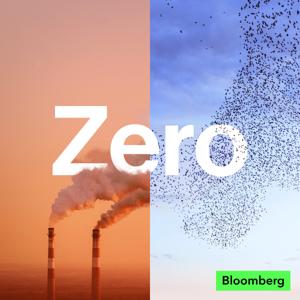
It is now cheaper to save the world than destroy it. But is capitalism up to the challenge of preventing the climate crisis?
In his new book Climate Capitalism, Zero host Akshat Rathi introduces a dozen people who are already steering capitalism to solve the climate crisis: from the engineer who shaped China's electric car policies and the politician who helped make net-zero a UK law to the CEO who fought off a takeover attempt so he could stick with a sustainability strategy. Akshat argues that not only is capitalism capable of taking on the climate crisis, but harnessing it is the only way to solve the climate crisis in the time we have available.
And yet while some improvements have been made over the past few years, the world is off track to meet its 2050 climate targets. So today on Zero, Bloomberg’s Greener Living editor Kira Bindrim sits down with Akshat to discuss his new book, and asks him: If climate capitalism is so doable, why does it seem so difficult?
Read more:
Zero is a production of Bloomberg Green. Our producer is Oscar Boyd and our senior producer is Christine Driscoll. Special thanks to Anna Mazarakis, Gilda di Carli and Kira Bindrim. Thoughts or suggestions? Email us at [email protected]. For more coverage of climate change and solutions, visit bloomberg.com/green.
See omnystudio.com/listener for privacy information.
The rise of electric cars is staggering. In 2016, just 700,000 electric cars were sold worldwide, this year it’ll be over 14 million. However, we are still off-track to meet climate goals. Colin McKerracher, head of Advanced Transport at BloombergNEF, joins Zero to discuss how electric cars can get on track to meet net-zero targets, why China has succeeded where others haven’t, and when we’ll finally see more electric cars on the roads than those burning fossil fuels.
Read more:
Zero is a production of Bloomberg Green. Our producer is Oscar Boyd and our senior producer is Christine Driscoll. Special thanks to Kira Bindrim. Thoughts or suggestions? Email us at [email protected]. For more coverage of climate change and solutions, visit bloomberg.com/green.
See omnystudio.com/listener for privacy information.
Brynn O’Brien not only reads corporate climate plans, she crunches the numbers. When they don’t add up, she calls her friends who manage trillions of dollars in assets and they all ask to speak to the manager. Brynn is the Executive Director of the Australasian Centre for Corporate Responsibility, a shareholder activist organization that works to ensure that publicly traded companies with net zero goals are conducting their coal mining, electricity generation, and other activities in a way that ensures we hit the 1.5C Paris target. Recently, ACCR has replaced part of a board, brought forward coal plant closures, and filed a lawsuit that’s taking on greenwashing.
Listen to other episodes:
Read More:
Zero is a production of Bloomberg Green. Our producer is Oscar Boyd and our senior producer is Christine Driscoll. Special thanks to David Stringer and Kira Bindrim. Thoughts or suggestions? Email us at [email protected]. For more coverage of climate change and solutions, visit bloomberg.com/green.
See omnystudio.com/listener for privacy information.
Are two wheels better than four? Can cutting commuting cap carbon consumption? And where’s all the clean energy coming from? There are many climate numbers out there that we don’t get to talk about on Zero but that deserve attention. In this bonus episode, host Akshat Rathi and producers Christine Driscoll and Oscar Boyd talk about some of their favorite stats showing people taking action on the climate crisis.
More Links:
Zero is a production of Bloomberg Green. Our producer is Oscar Boyd and our senior producer is Christine Driscoll. Special thanks to Kira Bindrim. Thoughts or suggestions? Email us at [email protected]. For more coverage of climate change and solutions, visit bloomberg.com/green
See omnystudio.com/listener for privacy information.
Setting world records. Combing through warehouses of old electronics. Seeding the Chinese solar industry from afar. This is the life of Martin Green, a professor at the University of New South Wales in Sydney and the director of the Australian Centre for Advanced Photovoltaics. Green’s work on solar panel design made the modern solar industry possible: 90% of solar panels made last year were based on his designs. He’s still going strong, too, regularly breaking new records in the pursuit of the perfect solar panel. This week on Zero, Akshat Rathi sits down with the man many call “the godfather of solar” to hear firsthand how it happened, the next record he wants to break and whether solar panels are destined for space.
Read more:
Zero is a production of Bloomberg Green. Our producer is Oscar Boyd and our senior producer is Christine Driscoll. Special thanks to Jill Namatsi, David Stringer, Jenny Chase and Kira Bindrim. Thoughts or suggestions? Email us at [email protected]. For more coverage of climate change and solutions, visit bloomberg.com/green.
See omnystudio.com/listener for privacy information.
Cleantech is hard. Farming is harder. This week, Akshat Rathi visits entrepreneurs doing both.
GroGrace in Singapore and Jungle in Paris are two vertical farming companies taking agriculture indoors, and trying to grow crops efficiently and profitably. While the technology to do this has been around since the 1990s, the business model has yet to be perfected, and several other vertical farms have closed down or laid off staff this year. As the world faces rising energy prices, water scarcity, and hotter temperatures, can the entrepreneurs in Paris and Singapore avoid the problems of their compatriots?
Read more:
Listen to related episodes of Zero:
Zero is a production of Bloomberg Green. Our producer is Oscar Boyd and our senior producer is Christine Driscoll. Special thanks to Sheryl Tian Tong Lee, Natasha White and Kira Bindrim. Thoughts or suggestions? Email us at [email protected]. For more coverage of climate change and solutions, visit bloomberg.com/green.
See omnystudio.com/listener for privacy information.
Trillions of dollars are needed to fund the climate transition, with both the private sector and governments required to contribute. Australia’s answer is the Clean Energy Finance Corporation (CEFC), the world’s largest green bank.
Established by the government in 2012 with an initial funding of A$10 billion ($6.5 billion), it was tasked with financing green projects and ambitious Australian climate startups at a time when large-scale investments in things like wind and solar were still seen as too risky for most private banks. Despite early efforts by opposition parties to abolish the bank, over the past 10 years it has made itself an essential part of Australia's energy transition and, in June, received an extra A$20.5 billion to help the country meet its target of 82% renewables by 2030.
This week on Zero, Akshat Rathi sits down with CEFC chief executive officer, Ian Learmonth, to learn how this huge amount of money will be spent, why the CEFC had so many enemies early on, and what kind of innovative startups and clean-tech projects the organization is looking to fund.
For more:
Zero is a production of Bloomberg Green. Our producer is Oscar Boyd and our senior producer is Christine Driscoll. Special thanks to Gilda Di Carli and Kira Bindrim. Thoughts or suggestions? Email us at [email protected]. For more coverage of climate change and solutions, visit bloomberg.com/green
See omnystudio.com/listener for privacy information.
The concept of a “carbon footprint” began as a distraction from Big Oil: get people to focus on their own actions rather than the impact of large emitters. Oil companies come up with PR campaigns all the time, but the carbon footprint took off because it taps into a question we keep coming back to, can our choices lower emissions? If so, how? And if they don’t, why bother? This week, Akshat is joined by Kira Bindrim, the editor of Bloomberg Greener Living, which focuses on consumer choices, to talk about what she’s noticed in a year of editing stories about products, misconceptions, and how much people just love to read about electric cars. Plus, we break down her carbon footprint.
Read more:
Listen to related episodes of Zero:
Zero is a production of Bloomberg Green. Our producer is Oscar Boyd and our senior producer is Christine Driscoll. Special thanks to Gilda Di Carli and Kira Bindrim. Thoughts or suggestions? Email us at [email protected]. For more coverage of climate change and solutions, visit bloomberg.com/green
See omnystudio.com/listener for privacy information.
This week, a visit to the energy startup trying to replace coal with a very cheap battery. Form Energy has attracted nearly $900 million in investments and is building its first manufacturing facility in the US. Its big innovation relies on rust. Really. The materials scientists at Form have taken the same process that’s a symbol of time slowly passing and turned it into electricity. It’s one of the first big bets that batteries could help push the grid closer to running without fossil fuels altogether.
You can read more about Form Energy and see what the battery looks like here.
Read a transcript of this episode, here.
Zero is a production of Bloomberg Green. Our producer is Oscar Boyd and our senior producer is Christine Driscoll. Special Thanks to Kira Bindrim and Blake Maples.
Thoughts or suggestions? Email us at [email protected]. For more coverage of climate change and solutions, visit https://www.bloomberg.com/green
See omnystudio.com/listener for privacy information.
Methane is a potent greenhouse gas, with 80 times the warming potential of carbon dioxide over a 25-year period. However, it also degrades much more quickly than CO2, meaning cuts in emissions now can have a quick and significant effect on reducing global warming. On this bonus episode of Zero, producer Oscar Boyd talks with host Akshat Rathi about the methane problem and the ways to solve it.
Read more:
Zero is a production of Bloomberg Green. Our producer is Oscar Boyd and our senior producer is Christine Driscoll. Special thanks to John Fraher, Meg Szabo and Kira Bindrim. Thoughts or suggestions? Email us at [email protected]. For more coverage of climate change and solutions, visit https://www.bloomberg.com/green
See omnystudio.com/listener for privacy information.
From the publisher's feed
Ranked by our users in the last 21 days

4,107 Listeners

406 Listeners

2,176 Listeners

1,971 Listeners

421 Listeners
350 Listeners

1,245 Listeners

404 Listeners

969 Listeners

193 Listeners

127 Listeners

458 Listeners

102 Listeners

61 Listeners

30 Listeners

82 Listeners

178 Listeners

635 Listeners

4 Listeners

282 Listeners

58 Listeners

233 Listeners

62 Listeners

73 Listeners

84 Listeners

402 Listeners

19 Listeners

12 Listeners

140 Listeners

7 Listeners

2 Listeners

137 Listeners

116 Listeners