
Sign up to save your podcasts
Or

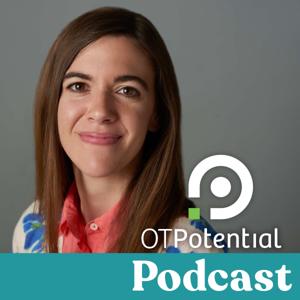

It’s no secret that I believe occupation therapy is entering its prevention era.
We are starting to leverage our skillset not after a terrible health incident has occurred, but at the first sign of trouble.
As I imagine this not-too-distant reality, there is one deeply personal area that I am so eager to see us shift our energy toward:
Cancer prevention.
Across the healthcare community, we are learning more and more about the specific lifestyle and environmental factors that put people at a higher risk for cancer. Case in point: My own county in rural Nebraska, where above-average pediatric cancer rates have been associated with high levels of nitrates in our water.
On today’s podcast, we are lucky to be joined by Dr. Jesse E. Bell, one of the world’s leading experts on water and human health and the Claire M. Hubbard Professor of Water, Climate, and Health in the University of Nebraska Medical Center’s Department of Environmental, Agricultural, and Occupational Health.
Dr. Bell—who also is the author of the paper we will discuss during this episode—will help us understand where the science stands on the connection between nitrates and multiple health conditions. We’ll talk through ways the medical community can provide education on these risks—as well as the simple solutions OTs could potentially bring to high-risk families to help address this basic ADL safety concern.
This episode is meant to highlight the cutting edge of what’s becoming possible—where new large datasets on environmental health risks converge with new opportunities in value-based care to create pathways for OTs to intervene earlier than we ever thought possible.
Support the show
 View all episodes
 By Sarah Lyon, OTR/L

4.9
8282 ratings
It’s no secret that I believe occupation therapy is entering its prevention era.
We are starting to leverage our skillset not after a terrible health incident has occurred, but at the first sign of trouble.
As I imagine this not-too-distant reality, there is one deeply personal area that I am so eager to see us shift our energy toward:
Cancer prevention.
Across the healthcare community, we are learning more and more about the specific lifestyle and environmental factors that put people at a higher risk for cancer. Case in point: My own county in rural Nebraska, where above-average pediatric cancer rates have been associated with high levels of nitrates in our water.
On today’s podcast, we are lucky to be joined by Dr. Jesse E. Bell, one of the world’s leading experts on water and human health and the Claire M. Hubbard Professor of Water, Climate, and Health in the University of Nebraska Medical Center’s Department of Environmental, Agricultural, and Occupational Health.
Dr. Bell—who also is the author of the paper we will discuss during this episode—will help us understand where the science stands on the connection between nitrates and multiple health conditions. We’ll talk through ways the medical community can provide education on these risks—as well as the simple solutions OTs could potentially bring to high-risk families to help address this basic ADL safety concern.
This episode is meant to highlight the cutting edge of what’s becoming possible—where new large datasets on environmental health risks converge with new opportunities in value-based care to create pathways for OTs to intervene earlier than we ever thought possible.
Support the show
2,319 Listeners
6,713 Listeners

4,946 Listeners
9,194 Listeners
3,173 Listeners

442 Listeners

13,326 Listeners

4,839 Listeners
2,234 Listeners

27,584 Listeners
233 Listeners

29,272 Listeners

6,469 Listeners

20,222 Listeners
2 Listeners