
Sign up to save your podcasts
Or

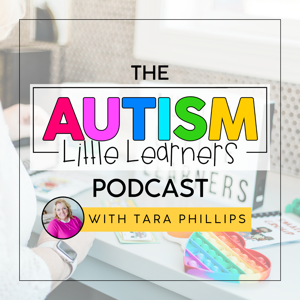

This episode is back as a replay because the conversation is still incredibly relevant—and the questions around PECS and AAC haven't gone away.
In this episode, we take a thoughtful, nuanced look at the Picture Exchange Communication System (PECS) and its role in supporting autistic communication. While PECS has been widely used for decades, growing research, lived experience, and neurodiversity-affirming practice are prompting professionals to ask deeper questions about autonomy, flexibility, and what true communication really looks like.
I'm joined by speech-language pathologists Paulina Elias and Dr. Amanda Blackwell from Natural Communication for a powerful discussion about how PECS originated, what it does well, and where it can fall short—especially when communication is limited to requesting or tightly controlled exchanges.
We explore why many clinicians are shifting toward multimodal, child-led AAC approaches that support regulation, self-expression, and authentic connection. You'll hear us unpack topics like honoring a child's right to say "no," moving away from hand-over-hand prompting, and choosing communication tools that grow alongside a child rather than restricting them.
Whether you're a parent, educator, or therapist, this replay episode offers updated perspectives that may challenge old assumptions—and help you feel more confident in supporting communication that is respectful, functional, and truly empowering.
🎥 Watch on YouTube: https://youtu.be/Tu4rKeAM0dc
📖 Read the blog here: https://autismlittlelearners.com/pecs-autism/
Key TakeawaysPECS was developed in the 1980s as a structured system rooted in behavior-based principles and primarily supports requesting.
Communication is more than asking for wants—autistic children deserve access to tools that support commenting, protesting, refusing, and expressing feelings.
Rigid communication systems can unintentionally limit autonomy and authentic self-expression.
Hand-over-hand prompting raises concerns about consent and agency; hand-under-hand support allows for greater learner control.
AAC should be multimodal, flexible, and adaptable to a child's evolving communication needs.
Children must have the freedom to say "no" and communicate disagreement in order for communication to be meaningful.
Relationship, trust, and emotional safety are foundational to successful communication development.
Communication tools should grow with the child rather than requiring a complete "switch" later on.
Neurodiversity-affirming AAC honors individuality, regulation needs, and multiple communication styles.
Family insight and lived experience are critical pieces of evidence-based practice.
Access to AAC resources in multiple languages increases equity and meaningful participation for families.
The field is moving away from rigid systems toward child-led, respectful, and empowering communication supports—and that shift matters.
You may also be interested in these supports:
Visual Support Starter Set
Visual Supports Facebook Group
Autism Little Learners on Instagram
Autism Little Learners on Facebook
 View all episodes
 By Tara Phillips

4.8
115115 ratings
This episode is back as a replay because the conversation is still incredibly relevant—and the questions around PECS and AAC haven't gone away.
In this episode, we take a thoughtful, nuanced look at the Picture Exchange Communication System (PECS) and its role in supporting autistic communication. While PECS has been widely used for decades, growing research, lived experience, and neurodiversity-affirming practice are prompting professionals to ask deeper questions about autonomy, flexibility, and what true communication really looks like.
I'm joined by speech-language pathologists Paulina Elias and Dr. Amanda Blackwell from Natural Communication for a powerful discussion about how PECS originated, what it does well, and where it can fall short—especially when communication is limited to requesting or tightly controlled exchanges.
We explore why many clinicians are shifting toward multimodal, child-led AAC approaches that support regulation, self-expression, and authentic connection. You'll hear us unpack topics like honoring a child's right to say "no," moving away from hand-over-hand prompting, and choosing communication tools that grow alongside a child rather than restricting them.
Whether you're a parent, educator, or therapist, this replay episode offers updated perspectives that may challenge old assumptions—and help you feel more confident in supporting communication that is respectful, functional, and truly empowering.
🎥 Watch on YouTube: https://youtu.be/Tu4rKeAM0dc
📖 Read the blog here: https://autismlittlelearners.com/pecs-autism/
Key TakeawaysPECS was developed in the 1980s as a structured system rooted in behavior-based principles and primarily supports requesting.
Communication is more than asking for wants—autistic children deserve access to tools that support commenting, protesting, refusing, and expressing feelings.
Rigid communication systems can unintentionally limit autonomy and authentic self-expression.
Hand-over-hand prompting raises concerns about consent and agency; hand-under-hand support allows for greater learner control.
AAC should be multimodal, flexible, and adaptable to a child's evolving communication needs.
Children must have the freedom to say "no" and communicate disagreement in order for communication to be meaningful.
Relationship, trust, and emotional safety are foundational to successful communication development.
Communication tools should grow with the child rather than requiring a complete "switch" later on.
Neurodiversity-affirming AAC honors individuality, regulation needs, and multiple communication styles.
Family insight and lived experience are critical pieces of evidence-based practice.
Access to AAC resources in multiple languages increases equity and meaningful participation for families.
The field is moving away from rigid systems toward child-led, respectful, and empowering communication supports—and that shift matters.
You may also be interested in these supports:
Visual Support Starter Set
Visual Supports Facebook Group
Autism Little Learners on Instagram
Autism Little Learners on Facebook

3,356 Listeners

3,650 Listeners

968 Listeners

6,708 Listeners

12,085 Listeners
419 Listeners

69,649 Listeners

9,246 Listeners

444 Listeners

1,896 Listeners
421 Listeners

41,675 Listeners

20,649 Listeners

4,280 Listeners

13,114 Listeners