
Sign up to save your podcasts
Or

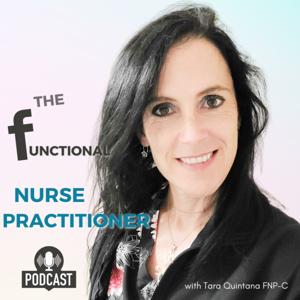

Today we are zeroing in on the two lipoproteins that are the key players of a lipid panel – LDL and HDL. We have all heard that there is good and bad cholesterol – but what is it that makes them good or bad? Are all LDL and HDL created equal? Last week we talked broadly about what exactly cholesterol is and why it matters. We went in depth about cholesterol synthesis, the role it plays with our hormones, why we need cholesterol – though of course it has to be in balance. We discussed that cholesterol cannot travel throughout the body on its own – it needs a friend. We are jumping into the deep end and today’s show will hopefully open your eyes to all of the things in healthcare we are not usually looking at – which may in fact be the biggest influence with regards to our cardiovascular health!
Just a quick disclaimer that this podcast is meant for educational purposes only and is not meant to diagnose or be a substitute for medical advice from your practitioner.
** Follow me on Instagram: https://www.instagram.com/thefunctionalnursepractitioner/
** Level up your products: https://www.ewg.org/ewgverified/
** Find a certified Functional Medicine Practitioner: https://www.ifm.org/find-a-practitioner/
** Interesting articles for more information**
Biochemistry, LDL Cholesterol: https://www.ncbi.nlm.nih.gov/books/NBK519561/
Role of HDL-Associated Proteins and Lipids in the Regulation of Inflammation: https://www.intechopen.com/chapters/53776
Glycation Reduces the Stability of ApoAI and Increases HDL Dysfunction in Diet-Controlled Type 2 Diabetes: https://www.ncbi.nlm.nih.gov/pmc/articles/PMC5800833/
Antioxidative activity of high-density lipoprotein (HDL): Mechanistic insights into potential clinical benefit: https://www.sciencedirect.com/science/article/pii/S2214647417300326
HDL Particle Subspecies and Their Association With Incident Type 2 Diabetes: The PREVEND Study: https://www.ncbi.nlm.nih.gov/pmc/articles/PMC8118359/
Is High Serum LDL/HDL Cholesterol Ratio an Emerging Risk Factor for Sudden Cardiac Death? Findings from the KIHD Study: https://www.ncbi.nlm.nih.gov/pmc/articles/PMC5453685/pdf/jat-24-600.pdf
Overview of OxLDL and Its Impact on Cardiovascular Health: Focus on Atherosclerosis: https://www.frontiersin.org/articles/10.3389/fphar.2020.613780/full
Oxidized Low Density Lipoprotein: https://www.sciencedirect.com/topics/medicine-and-dentistry/oxidized-low-density-lipoprotein
Physiological and pathological implications of cholesterol: https://www.imrpress.com/journal/FBL/19/3/10.2741/4216
Dietary Cholesterol and the Lack of Evidence in Cardiovascular Disease: https://www.ncbi.nlm.nih.gov/pmc/articles/PMC6024687/
Serum Cholesterol Levels and Risk of Cardiovascular Death: A Systematic Review and a Dose-Response Meta-Analysis of Prospective Cohort Studies: https://www.ncbi.nlm.nih.gov/pmc/articles/PMC9316578/
 View all episodes
 By Tara Quintana

4.4
1414 ratings
Today we are zeroing in on the two lipoproteins that are the key players of a lipid panel – LDL and HDL. We have all heard that there is good and bad cholesterol – but what is it that makes them good or bad? Are all LDL and HDL created equal? Last week we talked broadly about what exactly cholesterol is and why it matters. We went in depth about cholesterol synthesis, the role it plays with our hormones, why we need cholesterol – though of course it has to be in balance. We discussed that cholesterol cannot travel throughout the body on its own – it needs a friend. We are jumping into the deep end and today’s show will hopefully open your eyes to all of the things in healthcare we are not usually looking at – which may in fact be the biggest influence with regards to our cardiovascular health!
Just a quick disclaimer that this podcast is meant for educational purposes only and is not meant to diagnose or be a substitute for medical advice from your practitioner.
** Follow me on Instagram: https://www.instagram.com/thefunctionalnursepractitioner/
** Level up your products: https://www.ewg.org/ewgverified/
** Find a certified Functional Medicine Practitioner: https://www.ifm.org/find-a-practitioner/
** Interesting articles for more information**
Biochemistry, LDL Cholesterol: https://www.ncbi.nlm.nih.gov/books/NBK519561/
Role of HDL-Associated Proteins and Lipids in the Regulation of Inflammation: https://www.intechopen.com/chapters/53776
Glycation Reduces the Stability of ApoAI and Increases HDL Dysfunction in Diet-Controlled Type 2 Diabetes: https://www.ncbi.nlm.nih.gov/pmc/articles/PMC5800833/
Antioxidative activity of high-density lipoprotein (HDL): Mechanistic insights into potential clinical benefit: https://www.sciencedirect.com/science/article/pii/S2214647417300326
HDL Particle Subspecies and Their Association With Incident Type 2 Diabetes: The PREVEND Study: https://www.ncbi.nlm.nih.gov/pmc/articles/PMC8118359/
Is High Serum LDL/HDL Cholesterol Ratio an Emerging Risk Factor for Sudden Cardiac Death? Findings from the KIHD Study: https://www.ncbi.nlm.nih.gov/pmc/articles/PMC5453685/pdf/jat-24-600.pdf
Overview of OxLDL and Its Impact on Cardiovascular Health: Focus on Atherosclerosis: https://www.frontiersin.org/articles/10.3389/fphar.2020.613780/full
Oxidized Low Density Lipoprotein: https://www.sciencedirect.com/topics/medicine-and-dentistry/oxidized-low-density-lipoprotein
Physiological and pathological implications of cholesterol: https://www.imrpress.com/journal/FBL/19/3/10.2741/4216
Dietary Cholesterol and the Lack of Evidence in Cardiovascular Disease: https://www.ncbi.nlm.nih.gov/pmc/articles/PMC6024687/
Serum Cholesterol Levels and Risk of Cardiovascular Death: A Systematic Review and a Dose-Response Meta-Analysis of Prospective Cohort Studies: https://www.ncbi.nlm.nih.gov/pmc/articles/PMC9316578/
21,950 Listeners

10,951 Listeners
5,240 Listeners
3,375 Listeners
84 Listeners
38 Listeners
1,704 Listeners
337 Listeners
164 Listeners
521 Listeners
106 Listeners
108 Listeners
186 Listeners

20,649 Listeners
1,286 Listeners