
Sign up to save your podcasts
Or

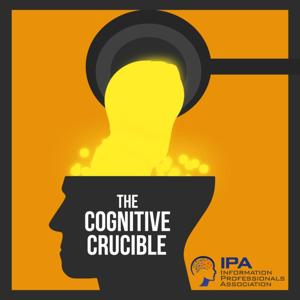

The Cognitive Crucible is a forum that presents different perspectives and emerging thought leadership related to the information environment. The opinions expressed by guests are their own, and do not necessarily reflect the views of or endorsement by the Information Professionals Association.
During this episode, Doug Wilbur discussed propaganda, information warfare, and strategic optimism–emphasizing society's capability for problem-solving. He defined propaganda as any communication intended to influence behavior in the propagandist's favor, distinguishing it from persuasion. Wilbur concluded the Vietnamese were the most successful propagandists, effectively delegitimizing the South Vietnamese government as a US puppet, which made the 1968 Tet Offensive a psychological victory despite military defeat. He explained that communism relies on a messianic eschatology, promising a utopian future. Wilbur also addressed modern threats, noting that AI increases the vulnerability of open societies to personalized disinformation, compounding the challenge of combating propaganda due to people relying on fast-thinking heuristics.
Recording Date: 6 Feb 2026
Research Question: Doug Wilbur suggests an interested student or researcher examine what are the Chinese telling external audiences and what effect is it having?
Resources:
Link to full show notes and resources
Guest Bio: Douglas S Wilbur, Ph.D. (University of Missouri, School of Journalism, 2019), is a communication scientist who specializes in propaganda, information warfare and strategic communication. He is also a retired U.S. Army Information Operations Officer with four deployments. He works full-time in the information technology industry but is an adjunct professor of Marketing at the University of Maryland Global Campus.
About: The Information Professionals Association (IPA) is a non-profit organization dedicated to exploring the role of information activities, such as influence and cognitive security, within the national security sector and helping to bridge the divide between operations and research. Its goal is to increase interdisciplinary collaboration between scholars and practitioners and policymakers with an interest in this domain.
For more information, please contact us at [email protected].
Or, connect directly with The Cognitive Crucible podcast host, John Bicknell, on LinkedIn.
Disclosure: As an Amazon Associate, 1) IPA earns from qualifying purchases, 2) IPA gets commissions for purchases made through links in this post.
 View all episodes
 By Information Professionals Association

4.9
5757 ratings
The Cognitive Crucible is a forum that presents different perspectives and emerging thought leadership related to the information environment. The opinions expressed by guests are their own, and do not necessarily reflect the views of or endorsement by the Information Professionals Association.
During this episode, Doug Wilbur discussed propaganda, information warfare, and strategic optimism–emphasizing society's capability for problem-solving. He defined propaganda as any communication intended to influence behavior in the propagandist's favor, distinguishing it from persuasion. Wilbur concluded the Vietnamese were the most successful propagandists, effectively delegitimizing the South Vietnamese government as a US puppet, which made the 1968 Tet Offensive a psychological victory despite military defeat. He explained that communism relies on a messianic eschatology, promising a utopian future. Wilbur also addressed modern threats, noting that AI increases the vulnerability of open societies to personalized disinformation, compounding the challenge of combating propaganda due to people relying on fast-thinking heuristics.
Recording Date: 6 Feb 2026
Research Question: Doug Wilbur suggests an interested student or researcher examine what are the Chinese telling external audiences and what effect is it having?
Resources:
Link to full show notes and resources
Guest Bio: Douglas S Wilbur, Ph.D. (University of Missouri, School of Journalism, 2019), is a communication scientist who specializes in propaganda, information warfare and strategic communication. He is also a retired U.S. Army Information Operations Officer with four deployments. He works full-time in the information technology industry but is an adjunct professor of Marketing at the University of Maryland Global Campus.
About: The Information Professionals Association (IPA) is a non-profit organization dedicated to exploring the role of information activities, such as influence and cognitive security, within the national security sector and helping to bridge the divide between operations and research. Its goal is to increase interdisciplinary collaboration between scholars and practitioners and policymakers with an interest in this domain.
For more information, please contact us at [email protected].
Or, connect directly with The Cognitive Crucible podcast host, John Bicknell, on LinkedIn.
Disclosure: As an Amazon Associate, 1) IPA earns from qualifying purchases, 2) IPA gets commissions for purchases made through links in this post.

32,100 Listeners

2,367 Listeners
14,277 Listeners
26,250 Listeners

1,064 Listeners

776 Listeners
717 Listeners
425 Listeners
406 Listeners
15,592 Listeners

15,950 Listeners

22 Listeners
496 Listeners

295 Listeners
267 Listeners