
Sign up to save your podcasts
Or


The Italo-Greek War, which began as a purely regional conflict in October 1940, would transform into a broader European confrontation as both Germany and Britain made the fateful decision to intervene in Greece. For the Germans, concerns about protecting vital Romanian oil fields from potential British air attacks, combined with fears of Italian collapse, drove the planning of Operation Marita, an invasion designed to secure the Balkans before the launch of Barbarossa. Meanwhile, Churchill and the British leadership saw Greece as an opportunity to distract Axis forces, demonstrate support for smaller nations, and potentially build a Balkan alliance with Yugoslavia and Turkey. Greek leader Metaxas initially resisted British ground forces, fearing they would provoke German intervention, but his death in January 1941 led to a shift in policy under his successor. As German forces moved into Romania and Bulgaria throughout early 1941, and British RAF squadrons began arriving in Greece, both sides prepared for a confrontation that would expand the war far beyond the mountains of Albania where Italian and Greek forces had been locked in bitter combat.
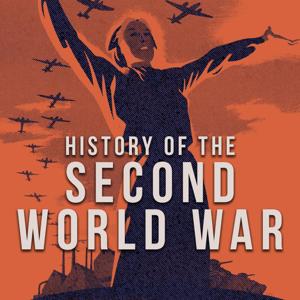
History of the Second World War is part of the Airwave Media podcast network.
Learn more about your ad choices. Visit megaphone.fm
Learn more about your ad choices. Visit megaphone.fm/adchoices
 View all episodes
 By Wesley Livesay

4.5
546546 ratings
The Italo-Greek War, which began as a purely regional conflict in October 1940, would transform into a broader European confrontation as both Germany and Britain made the fateful decision to intervene in Greece. For the Germans, concerns about protecting vital Romanian oil fields from potential British air attacks, combined with fears of Italian collapse, drove the planning of Operation Marita, an invasion designed to secure the Balkans before the launch of Barbarossa. Meanwhile, Churchill and the British leadership saw Greece as an opportunity to distract Axis forces, demonstrate support for smaller nations, and potentially build a Balkan alliance with Yugoslavia and Turkey. Greek leader Metaxas initially resisted British ground forces, fearing they would provoke German intervention, but his death in January 1941 led to a shift in policy under his successor. As German forces moved into Romania and Bulgaria throughout early 1941, and British RAF squadrons began arriving in Greece, both sides prepared for a confrontation that would expand the war far beyond the mountains of Albania where Italian and Greek forces had been locked in bitter combat.
History of the Second World War is part of the Airwave Media podcast network.
Learn more about your ad choices. Visit megaphone.fm
Learn more about your ad choices. Visit megaphone.fm/adchoices
3,987 Listeners

4,716 Listeners
1,867 Listeners

1,109 Listeners

1,855 Listeners
1,261 Listeners

1,142 Listeners

4,791 Listeners

1,518 Listeners

848 Listeners

1,413 Listeners
4,029 Listeners

447 Listeners

1,508 Listeners

2,887 Listeners

1,036 Listeners
367 Listeners

1,415 Listeners

353 Listeners

3,358 Listeners

537 Listeners

926 Listeners

321 Listeners

711 Listeners
350 Listeners

1,598 Listeners
785 Listeners

166 Listeners

85 Listeners
96 Listeners

110 Listeners