
Sign up to save your podcasts
Or

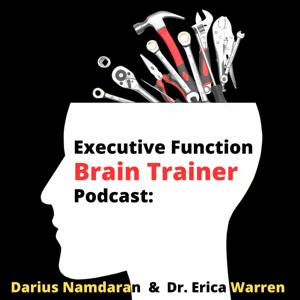

In this episode of the Executive Function Braintrainer Podcast, hosts Darius Namdaran and Dr. Erica Warren explore the relationship between AI and executive functioning, arguing that as AI becomes more capable, human value will increasingly center on agency and executive skills, setting goals, choosing missions, and directing resources like a conductor leading an orchestra. Darius shares how his tool ivvi (IVVI.app) uses AI to turn meeting audio into live, interactive mind maps for visual thinkers, and the hosts discuss why explicit instruction in executive function skills is becoming essential for students and workers. They examine practical classroom use of AI through a case example of a student who resists AI but benefits from using NotebookLM to study more efficiently by compiling answers from slides, generating podcasts, mind maps, flashcards, and practice tests, while still learning content. The conversation also considers how future AI agents could support complex real-world tasks, such as parents advocating for children with dyslexia, by tracking education plans, drafting communications, tutoring homework, and supporting routines, and emphasizes that benevolent outcomes depend on how people choose to use these tools. The episode closes with a call for cognitive flexibility and “fatalistic optimism,” framing AI’s growth as inevitable and encouraging listeners to build executive function to navigate and shape what comes next.
Links:
Brought to you by:
 View all episodes
 By Darius Namdaran and Dr Erica Warren

4.7
3434 ratings
In this episode of the Executive Function Braintrainer Podcast, hosts Darius Namdaran and Dr. Erica Warren explore the relationship between AI and executive functioning, arguing that as AI becomes more capable, human value will increasingly center on agency and executive skills, setting goals, choosing missions, and directing resources like a conductor leading an orchestra. Darius shares how his tool ivvi (IVVI.app) uses AI to turn meeting audio into live, interactive mind maps for visual thinkers, and the hosts discuss why explicit instruction in executive function skills is becoming essential for students and workers. They examine practical classroom use of AI through a case example of a student who resists AI but benefits from using NotebookLM to study more efficiently by compiling answers from slides, generating podcasts, mind maps, flashcards, and practice tests, while still learning content. The conversation also considers how future AI agents could support complex real-world tasks, such as parents advocating for children with dyslexia, by tracking education plans, drafting communications, tutoring homework, and supporting routines, and emphasizes that benevolent outcomes depend on how people choose to use these tools. The episode closes with a call for cognitive flexibility and “fatalistic optimism,” framing AI’s growth as inevitable and encouraging listeners to build executive function to navigate and shape what comes next.
Links:
Brought to you by:

38,062 Listeners

43,528 Listeners

1,337 Listeners

2,100 Listeners
12,754 Listeners

8,748 Listeners
420 Listeners

9,231 Listeners
2,870 Listeners
715 Listeners
644 Listeners
55 Listeners

29,207 Listeners

19,524 Listeners
97 Listeners